
When Yield Guild Games announced its first published title, a lot of people looked twice. YGG has backed Web3 games for years, but creating and publishing one on its own is a different move. In May 2025, the group rolled out LOL Land, a simple online board game that sits on Abstract Chain. What seemed small at first got real attention fast.
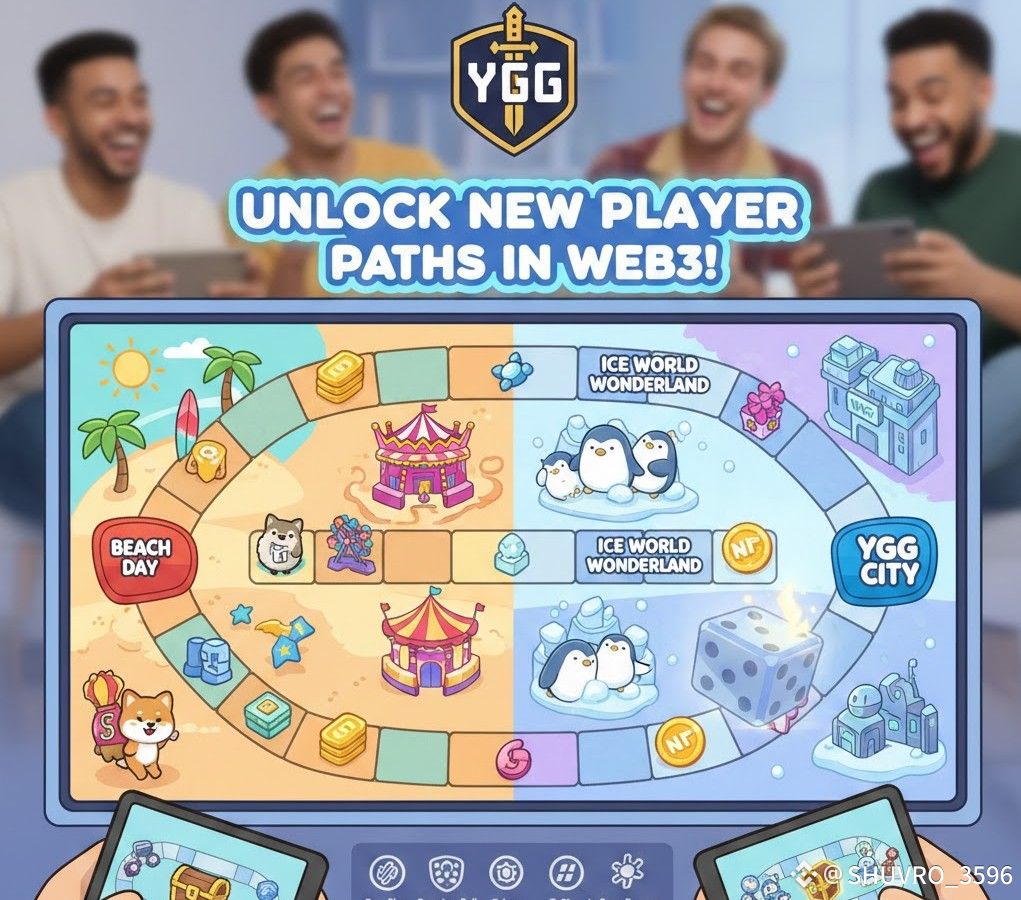
LOL Land is not a deep strategy game. It does not try to be one. You roll, move, collect items, and sometimes win rewards. The team wanted something light that still links to crypto, so users who already enjoy memes, coins, and NFT culture can jump in without a long learning curve. The layout feels familiar, very board-game-night, though with brighter colors and fast action.
Four maps launched on day one. “YGG City” shows some guild flavor. “Beach Day” is sunny and cheerful. “Carnival” is packed with bright bits and small surprises. “Ice World Wonderland” mixes with Pudgy Penguins, which gave the game a crossover spark. You can play for free with no rewards or try paid rolls that unlock tokens, NFTs, and in-game bonuses. That split lets curious players test it without pressure, and those who want rewards can go deeper.
The launch numbers surprised even long-time Web3 watchers. Before the public release more than 116,000 people had signed up. A couple of months later reports showed 631,000 monthly users. Not the kind of wave you expect from a casual browser game yet here it was. Revenue climbed as well, crossing 2.5 million dollars in the first stretch. YGG even used part of that income to buy back its own token, which says they see a long game here, not a quick spike.
Part of the draw seems obvious: the game does not ask much from anyone. No heavy install, no steep learning curve, no pressure to grind. Plenty of crypto games in the past aimed high but made newcomers feel lost. LOL Land goes in the opposite direction. It tries to meet players where they already are. If someone knows how to roll dice, they know how to move. If they want rewards, they can choose premium rolls. If not, they can just wander through the maps.
There is also the Abstract Chain factor. The chain keeps things light and does not make sign-ins or actions feel like work. For Web3, that level of simplicity still feels rare. Many chains only claim to be easy. Abstract, at least in this case, gives LOL Land room to stay accessible without dropping the blockchain layer.
But success brings questions. A board game, even a flashy one, cannot run on charm forever. Players want new boards, new items, or seasonal twists. YGG will need to keep adding something, even small touches, to keep people returning. Crypto rewards also depend on the market. Tokens rise and fall, and that affects how players feel about paid rolls.
There is also the matter of who this game is really for. YGG calls the group they target “Casual Degens,” which is a funny but honest label. These are people who enjoy memes, NFTs and online culture but may not have time for demanding games andthe idea seems to be that Web3 can have playful spaces, not only high-skill or high-stakes projects. If LOL Land keeps its charm, it might shape a new lane for Web3 games that do not need complex systems to be fun.
Another interesting detail is how the community shapes early momentum. NFT groups, meme communities, and Web3 fans pulled the game into their circles quickly. Pudgy Penguins’ presence helped too. These micro-communities often move faster than mainstream audiences and once they latch on and a project can grow in strange but strong ways.
What stands out most in this case is how YGG shifted. They spent years as a guild that helped players join other games, train, and earn. Publishing their own title changes how the group fits in the Web3 space. They are not only supporting games now, they are building them. That change suggests YGG wants more control over the player experience and how rewards work. Maybe they learned from years of watching other projects rise and fade. Maybe they saw that a lighter game with a wide funnel could reach more players than any hardcore title.
Looking ahead, LOL Land’s path depends on how steady the team stays. Web3 players can be excited today and bored next week. Games that last usually have a rhythm of updates, community input, and fresh features. YGG hinted that more boards are coming and that LOL Land is only the first game under their YGG Play arm. If they treat this early success as a foundation instead of a finish line, they might set a pattern for future releases.
LOL Land is simple, but the shift it represents is not. It shows that Web3 gaming does not have to chase complex systems. It can be a light, colorful board game that people open during a short break. It can reward users without demanding their entire day. And it can still pull in serious numbers.
This integration between LOL Land and YGG makes a quiet point: sometimes the best way to move Web3 forward is not with bigger ideas, but with smaller, friendlier ones that people actually want to play. If the team keeps building with that mindset, this little board game may end up shaping more of the space than its size suggests.
@Yield Guild Games #YGGPlay $YGG
