$XUSD: Assessing Entry Quality When Volume Surges
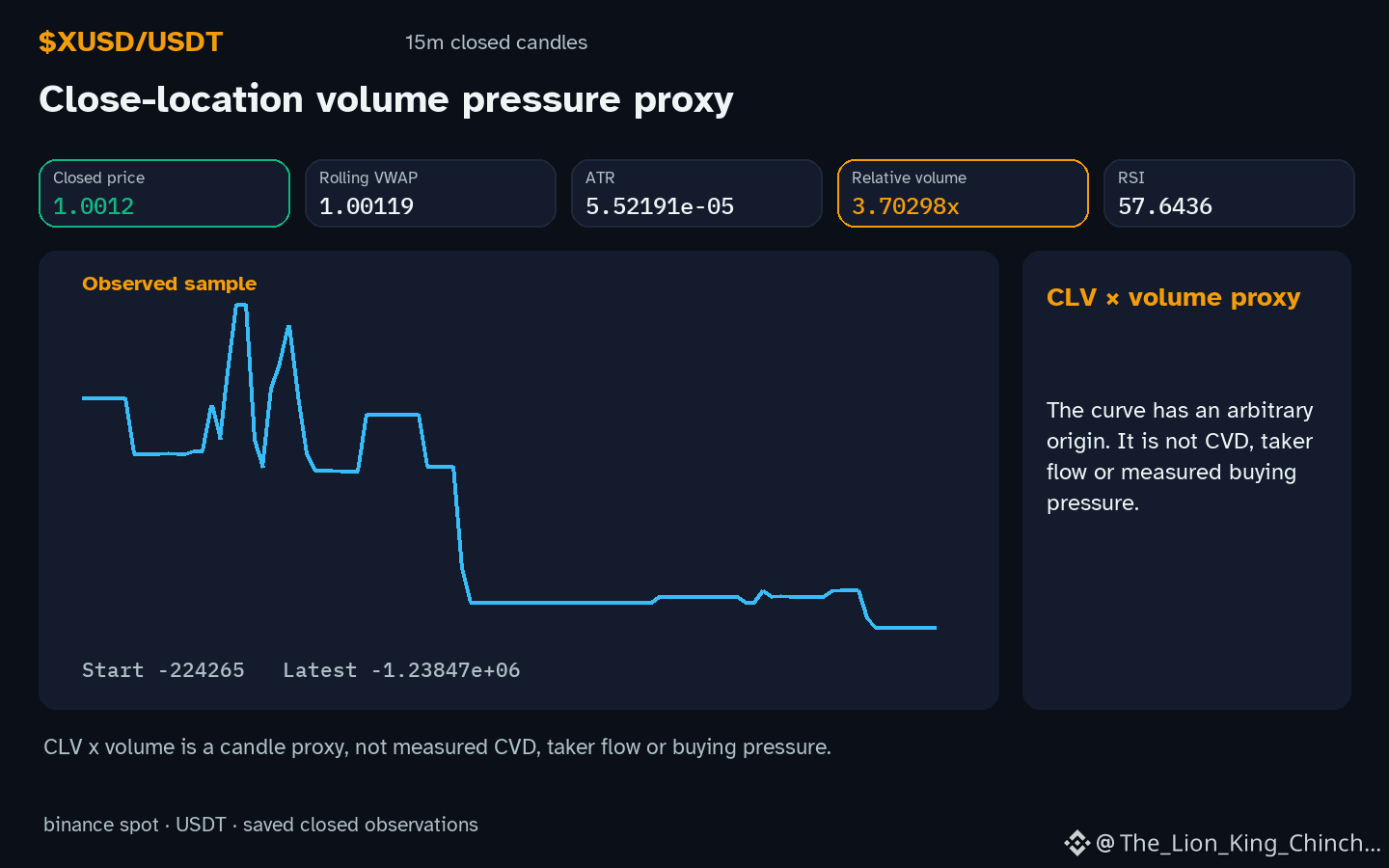
$XUSD: XUSD is trading inside its recorded range while hourly direction points up and volume sits above baseline. Does the higher relative volume suggest a more reliable entry, or does it merely tempt a trader to chase a fleeting move?
The observation shows a calm price picture but a volume spike of 3.70x baseline. One way to think about this is a thought experiment: imagine two traders who both watch the same candle. Trader A waits for the price to pull back toward the lower bound of the range before entering, accepting a later entry but potentially a better risk‑reward ratio. Trader B jumps in as soon as the hourly direction turns up, hoping to capture the full move but risking a wider stop because the pull‑back has not been tested.
If the price later reverses sharply, Trader A’s entry near support may have provided a tighter stop, while Trader B could face a larger loss. Conversely, if the uptrend continues, Trader A might miss the initial upside. A practical self‑check is to watch the next closed candle: if the price breaches the lower range bound with volume still elevated, the pull‑back scenario gains credibility and the entry quality improves. If the candle closes above the midpoint without a pull‑back, the chasing bias may be justified.
The key limitation is that volume alone does not confirm intent; it only shows heightened activity. Future evidence of a sustained pull‑back or a breakout will help invalidate one interpretation and reinforce the other.
Probabilistic market research, not a recommendation or guaranteed return.
#XUSD #RiskManagement