

Peer-to-peer (P2P) trading gives you direct control over how you buy and sell digital assets using your preferred local payment methods. Yet for many sellers, that moment right before tapping the release button brings a familiar spike of hesitation—especially when a buyer claims they have already paid and urges you to hurry.
Understanding how P2P fraud actually operates removes that guesswork. When you know what red flags to look for and how platform safeguards work behind the scenes, you can spot social engineering tricks early and keep your crypto protected on every trade.
The Common Misconception: Does Escrow Protect You After You Hit Release?
A widespread misunderstanding among newer P2P traders is that escrow acts like an insurance policy that can reverse a crypto transfer if a buyer turns out to be dishonest. Another common belief is that receiving a payment screenshot or a text notification from a counterparty is reliable proof that fiat funds have arrived.
In reality, escrow protection only works while your digital assets remain locked inside the order. Once you manually confirm receipt of payment and release the crypto, ownership transfers permanently to the buyer, and blockchain transactions cannot simply be undone by customer support. Scammers know this, which is why almost every P2P fraud tactic focuses on tricking you into clicking that release button prematurely.
How It Actually Works: Inside Binance P2P Escrow
When you open a sell order on Binance P2P, the platform's escrow service automatically places your cryptocurrency in temporary custody while the trade is pending. Think of it like a neutral safety deposit box at a bank: the buyer can see that your crypto is secured and ready, while you remain in full control of when the box unlocks.
During this window, the fiat payment happens externally through your chosen bank transfer or payment app, completely separate from the blockchain. Because Binance cannot directly view your private bank balance, the system relies on you to independently confirm that cleared funds have landed in your account before unlocking escrow. If a dispute arises while the funds are still held in escrow, Binance's support team can review the official order evidence and step in to resolve the case fairly.
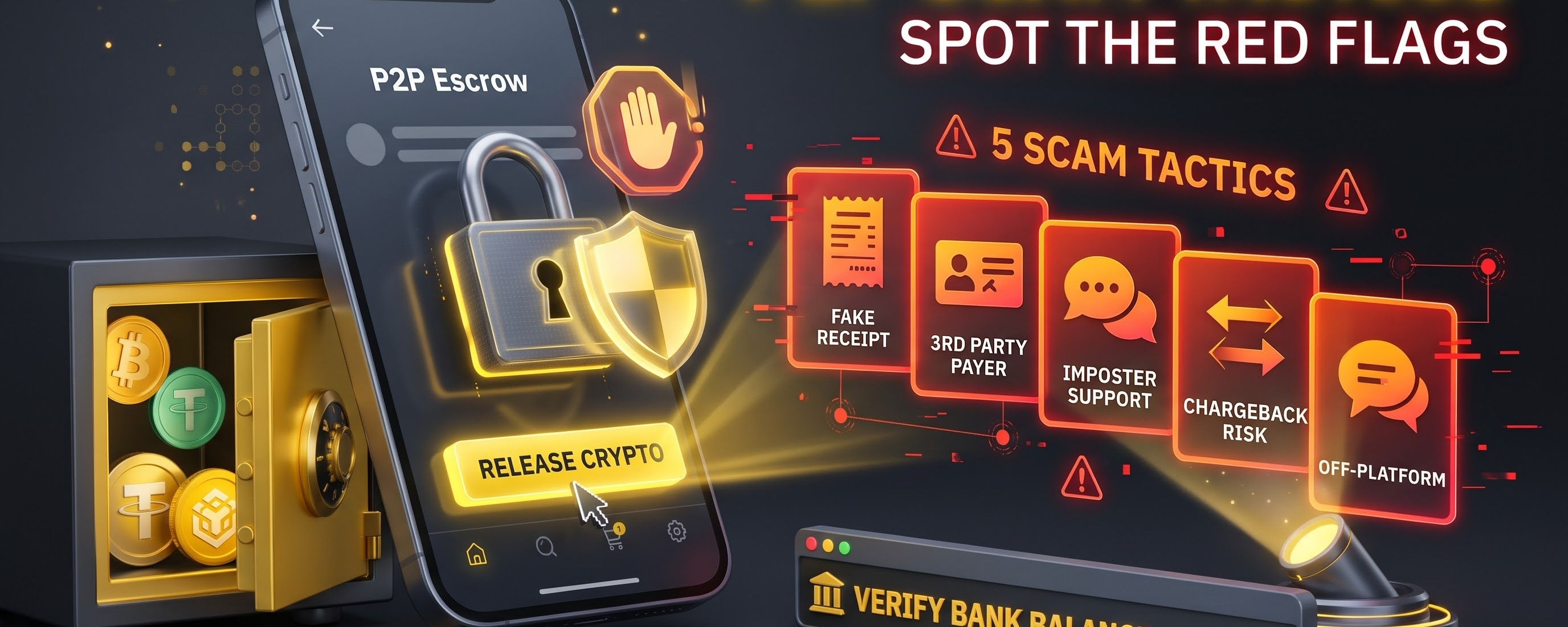
Practical Walkthrough: 5 P2P Scam Tactics to Watch Out For
Fraudsters rarely try to hack escrow smart contracts; instead, they rely on psychological pressure and deceptive paperwork. Recognizing the five patterns below will help you stop most attempts before any harm is done.
1. Fake Proof-of-Payment Screenshots and Spoofed Alerts
In a fake receipt scam, a buyer marks the order as paid and uploads a digitally altered bank transfer slip or sends a spoofed SMS alert claiming the money is on the way. Look closely at these images and you will often notice subtle inconsistencies, such as mismatched fonts, misaligned text, or spelling errors. Rather than inspecting the screenshot for clues, treat every receipt as unverified until you log directly into your own banking app and see the updated balance.
2. Third-Party Payments and Triangle Scams
Sometimes money actually appears in your bank account, but the sender's legal name does not match the buyer's verified name on Binance. This often signals a third-party payment or a "triangle" scam, where a fraudster tricks an unrelated victim into wiring money to your bank account while collecting your released crypto for themselves. Accepting third-party transfers exposes you to bank account freezes and fraud investigations, so you should never release crypto if the payer's identity does not match the order profile.
3. Fake Customer Support and Impersonation Messages
Scammers frequently pose as Binance customer service agents—either through deceptive text inside the order chat, fake emails, or unsolicited phone calls—claiming that your crypto will be released automatically once the buyer's payment clears a fictional security check. Legitimate Binance support staff will never call your personal phone or message you inside a trade chat demanding that you release your assets. Always ignore urgent instructions from unverified accounts and verify your order status strictly through official Binance interface prompts.
4. Overpayment and Chargeback Reversal Traps
In this scenario, a counterparty sends more than the agreed fiat amount—or uses a reversible payment method—and asks you to either release the crypto quickly or refund the extra money to a different account. Shortly after you release the cryptocurrency, the scammer contacts their bank to report unauthorized account access or an erroneous transfer, triggering a chargeback that pulls the original deposit back out of your account. If an unexpected overpayment arrives, pause the trade immediately and open an official appeal rather than issuing manual refunds.
5. Off-Platform Chat Invites and Artificial Urgency
A counterparty may ask you to move the conversation to WhatsApp, Telegram, or text messaging, often dangling a slightly better exchange rate or claiming they have trouble uploading screenshots in the app. Moving off-platform strips away the verifiable chat log that Binance relies on during dispute reviews, making it far easier for a bad actor to deny what was agreed upon. Pair that with artificial urgency—such as claiming a medical emergency or an expiring banking window—and the goal becomes clear: rushing you past your normal verification routine.
Best Practices & Risk Awareness Before Every Release
Building a consistent verification routine is the strongest defense against P2P fraud. Before every trade, review the counterparty's completion rate, total order history, and user feedback, and treat offers priced dramatically above or below market value with healthy skepticism.
Once a buyer marks an order as paid, open your bank or payment wallet independently—never via links sent in chat—and verify both the exact settled amount and the sender's full name. Keep every message and payment record inside the official Binance P2P chat window, and take screenshots of your completed transactions so you have clear documentation ready if a dispute ever arises. If anything feels off or a buyer pressures you to cancel after you have already paid, do not cave in; instead, select Appeal so Binance Customer Support can review the evidence while escrow keeps the funds secure.
Trade With Confidence: Verification Always Comes First
P2P trading remains one of the most flexible ways to enter and exit crypto markets, provided you treat your release button with the same care as a physical vault key. By relying on your own banking app rather than screenshots, matching sender identities, and keeping all communication inside Binance P2P, you neutralize the vast majority of social engineering tactics before they can succeed.
Take a moment before your next trade to review the safety guidelines and appeal rules available on Binance Academy and the Binance Support Center. Staying patient and verifying every detail ensures you remain in complete control of your digital assets from start to finish.

