
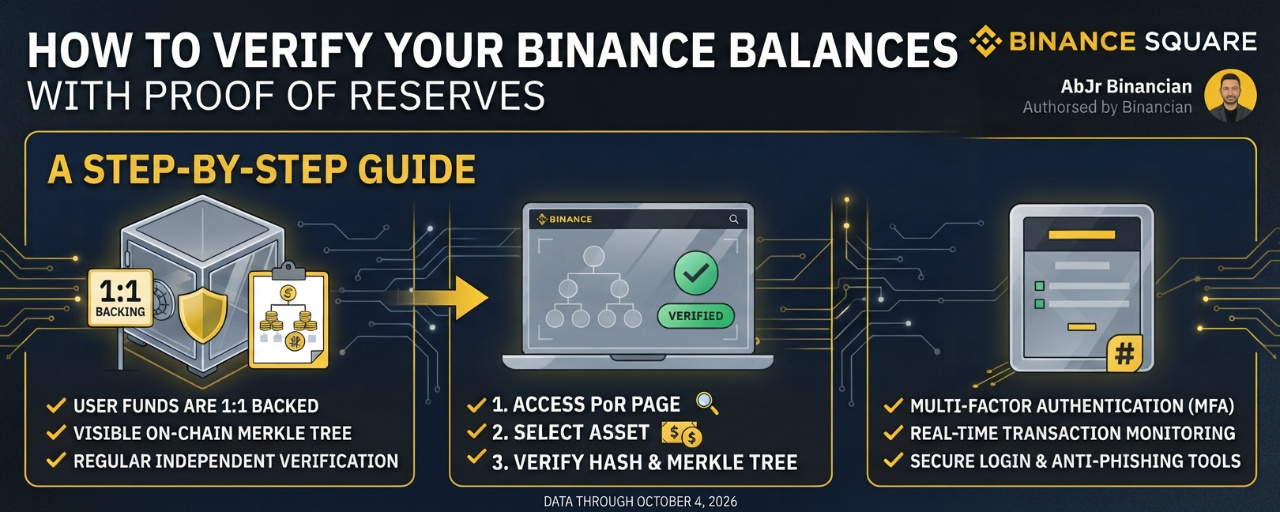
Don't just read about Proof of Reserves. Learn how to verify your own balance.
When choosing a cryptocurrency exchange, one important question is whether the platform holds sufficient assets to back eligible customer balances.
Binance addresses this through its Proof of Reserves (PoR) system, which uses cryptographic verification methods, including Merkle Trees and zk-SNARKs.
The purpose is to give users a way to independently check whether their eligible account balances are included in a published reserves snapshot.
And the best part?
You can perform the verification without publicly revealing your personal account balances.
Let's walk through the process.
1. What Is Proof of Reserves?
Proof of Reserves is a verification mechanism designed to demonstrate that an exchange holds sufficient assets to cover specified customer liabilities at a particular snapshot in time.
Binance's system uses two important technologies.
Merkle Trees
A Merkle Tree is a cryptographic structure that combines multiple pieces of information into a single verifiable root.
For Proof of Reserves, account information is organized into a structure that allows individual users to verify whether their account records are included.
Instead of publishing every user's personal information, the system allows users to check their own inclusion through a verification record.
zk-SNARKs
Zero-Knowledge Succinct Non-Interactive Arguments of Knowledge (zk-SNARKs) allow certain mathematical statements to be verified without exposing all the underlying information.
In Binance's PoR system, this technology helps verify the correctness of the reserve calculation and relevant constraints without publicly disclosing individual user data.
Together, these technologies provide a way to verify reserve information while preserving user privacy.
2. What Do You Need Before Starting?
Before beginning, make sure you have:
Access to your Binance account.
A device with internet access.
The official Binance Proof of Reserves page.
Your available verification information, such as the Merkle Leaf and Record ID.
The official verification instructions and corresponding verification files.
Always use official Binance resources when downloading verification tools or files.
Official Proof of Reserves page:
https://www.binance.com/en/proof-of-reserves
3. Step-by-Step: How to Verify Your Balance
Step 1: Visit Binance Proof of Reserves
Open the official page:
https://www.binance.com/en/proof-of-reserves
Review the available assets, published snapshot date and verification information.
Suggested screenshot: Binance Proof of Reserves homepage.
Step 2: Access Your Verification Information
Log in to your Binance account.
Navigate to:
Wallet → Verification
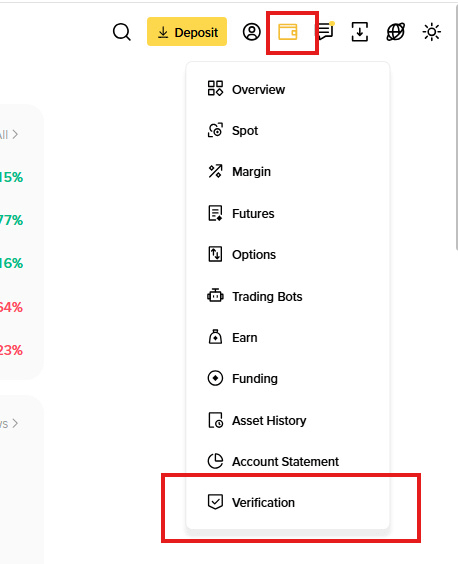
Here, you can access the verification information associated with the available snapshot.
Depending on the interface and snapshot, this may include your Merkle Leaf and Record ID.
Suggested screenshot: Binance Wallet Verification page.
Step 3: Select the Relevant Snapshot
Choose the Proof of Reserves snapshot you want to verify.
Pay attention to the reporting date.
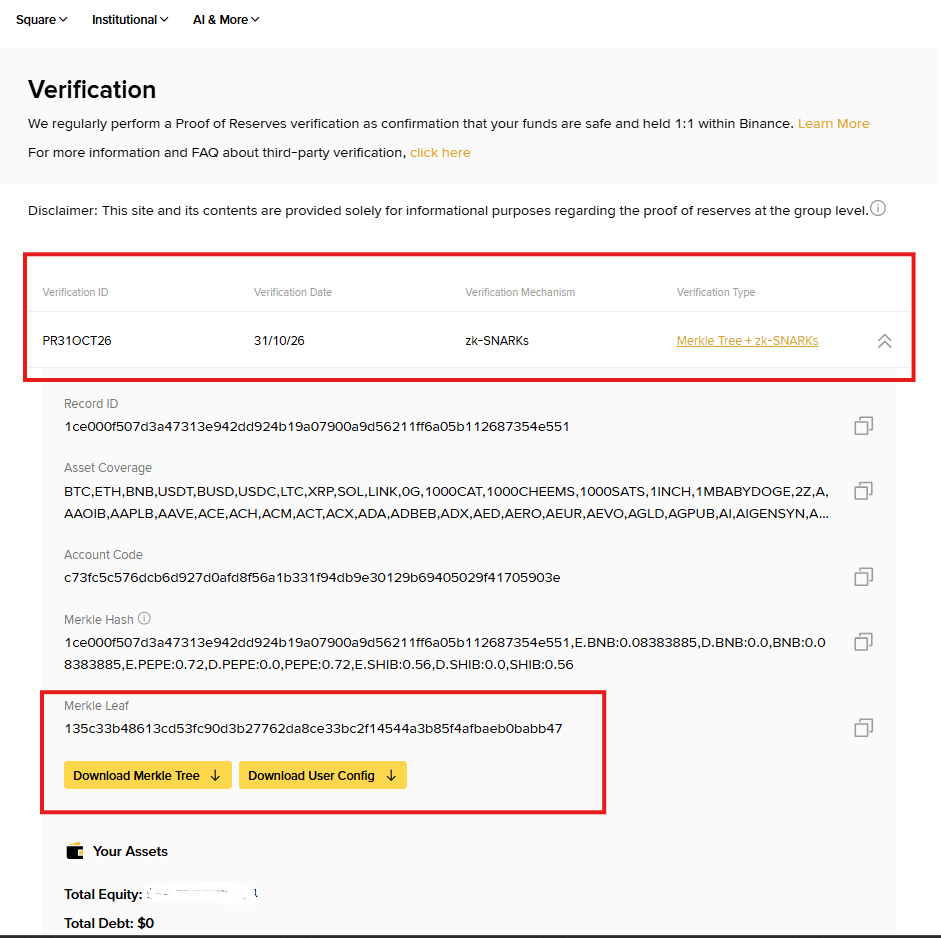
Your account balance should be compared with the relevant snapshot, not necessarily your current live balance.
This distinction is important because deposits, withdrawals, trading activity and market movements can change your balance after the snapshot was taken.
Suggested screenshot: Snapshot selection and verification details.
Step 4: Download the Official Verification Resources
Follow Binance's official guide to obtain the corresponding verification files and verifier instructions.
Use only resources linked from Binance's official website or its official verification repository.
Avoid downloading tools from unofficial websites or third-party messages.
Suggested screenshot: Official verification download page.
Step 5: Run the Verification
Follow the instructions to execute the verification using the official verifier.
The process checks whether your account information is included in the relevant Merkle Tree and whether the corresponding zero-knowledge proof validates.
Review the result and any verification errors carefully.
Suggested screenshot: Verification tool and successful result.
Step 6: Review What the Result Means
A successful inclusion check indicates that your eligible balance information is included in the selected published snapshot.
The broader reserve verification provides evidence that the published reserve calculations satisfy the relevant cryptographic checks.
It is important to understand that these are related but different checks.
4. What Does a Successful Verification Actually Prove?
A successful verification provides meaningful evidence, but it is important not to misunderstand its scope.
It can help establish:
Whether your eligible account balance is included in the selected snapshot.
Whether the corresponding Merkle inclusion proof is valid.
Whether the relevant zero-knowledge proof validates the published reserve calculation.
However, Proof of Reserves does not automatically establish:
That every possible customer liability is included.
That all assets are immediately available for withdrawal.
That the exchange has no other financial obligations.
That assets are protected against every operational or cybersecurity risk.
That the exchange is guaranteed to remain solvent in the future.
Proof of Reserves is a transparency tool, not a complete substitute for a comprehensive financial audit.
5. Why Does This Matter for Cryptocurrency Users?
Many users rely on an exchange to store and manage their cryptocurrency.
While convenience is important, understanding how an exchange reports and verifies its reserves is equally valuable.
Proof of Reserves gives users an additional way to examine information about the platform's asset backing.
It also encourages a more informed approach to exchange selection.
Instead of relying entirely on marketing statements, users can examine the available verification information themselves.
6. Three Important Habits to Maintain
Check updated snapshots: A verification result applies to the particular reporting snapshot, not every future date.
Understand the methodology: Learn which assets and liabilities are covered by the published report.
Maintain personal security: Never share your login credentials, authentication codes, private keys or recovery phrases to complete a verification.
Final Thoughts: Transparency Is More Valuable When You Can Verify It
Proof of Reserves is an important development in cryptocurrency exchange transparency.
Binance's combination of Merkle Trees and zk-SNARKs gives users a way to verify their eligible balance inclusion while helping preserve the privacy of individual account information.
But the real value of the system is not simply that the technology exists.
It is that users can learn how to use it.
Take the time to review the official verification instructions, check the relevant snapshot and understand what the result actually demonstrates.
Your funds deserve more than promises. They deserve transparency that you can independently examine.
Official resources:
Binance Proof of Reserves:
https://www.binance.com/en/proof-of-reserves
How to Verify Your Binance Balance:
https://www.binance.com/en/support/faq/detail/815b25f0cb054bdd9d35eccc408fe981
#Binance #ProofOfReserves #Binancesecurity #MerkleTrees #zkSNARKs