

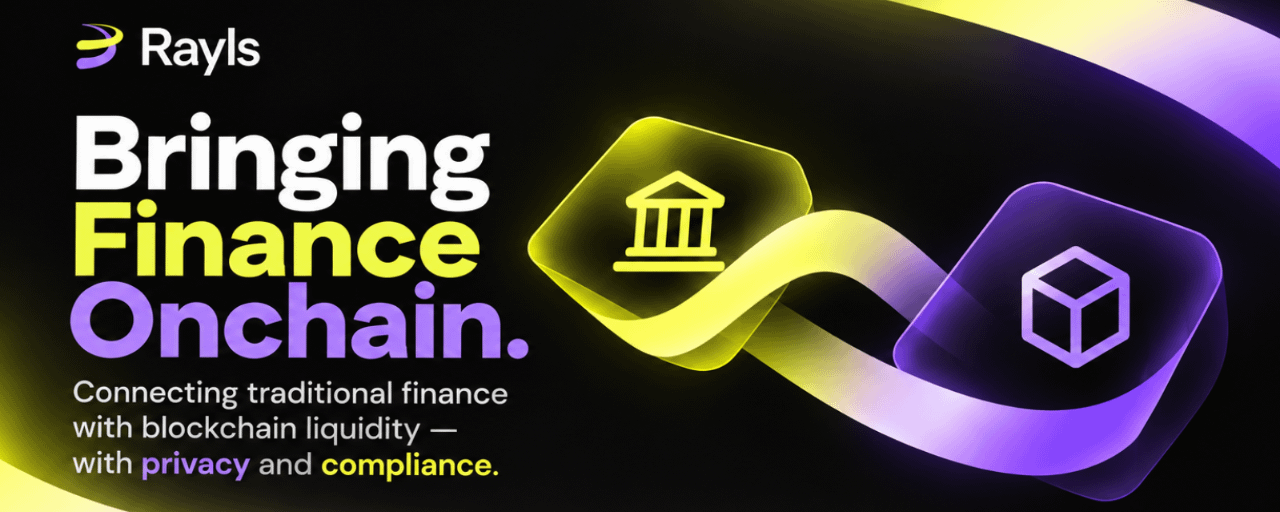

I’ve been learning about Rayls recently, and one question caught my attention:
How can financial institutions access blockchain liquidity while maintaining privacy and compliance?
This is one of the challenges that makes bringing traditional finance onchain interesting. Public blockchains offer access to digital assets, developers, and global liquidity, but financial institutions also need privacy, control, and ways to meet regulatory requirements.
This is where Rayls gets interesting.
The Challenge: Privacy Meets Blockchain
Financial institutions cannot simply put sensitive customer information on a public blockchain and expect it to work like their existing systems.
Balances, transactions, and other financial data may require restricted access and appropriate privacy protections.
At the same time, institutions want to benefit from blockchain technology, including digital assets, programmable transactions, and access to wider blockchain liquidity.
The challenge is finding a way to connect these two worlds without ignoring the requirements of regulated finance.
How Rayls Approaches the Problem
Rayls uses an architecture that brings together institutional environments and a public blockchain ecosystem.
Rayls Sovereign provides institutions with their own EVM-compatible environment, supporting institutional control and privacy requirements.
Meanwhile, the Rayls Public Chain connects institutions, developers, assets, and liquidity with the broader Web3 ecosystem.
These components serve different purposes, but together they support Rayls' broader vision of connecting traditional finance with blockchain infrastructure.
Instead of treating private institutional systems and public blockchain networks as completely separate worlds, Rayls aims to connect them.
Why Privacy Matters: Rayls Enygma
Another part of Rayls that caught my attention is Enygma, its privacy technology.
Financial transactions can involve information that should not be publicly visible to everyone. For institutions, maintaining appropriate confidentiality while supporting verification and compliance is especially important.
Rayls Enygma is designed to support private transactions while allowing authorised parties to verify relevant information.
This is an important area to understand when exploring how blockchain technology could be used in financial applications.
Privacy is not just about hiding information. It is also about ensuring that the right information is available to the right parties when necessary.
My Takeaway
What interests me most about Rayls is its approach to connecting traditional finance with blockchain liquidity while taking privacy and compliance into account.
I'm still learning about the technology, but I find the underlying idea worth exploring: financial institutions should be able to benefit from blockchain infrastructure without overlooking the requirements of their industry.
Rayls brings several important concepts together:
Finance: Supporting institutional use cases.
Blockchain liquidity: Connecting with the wider Web3 ecosystem.
Privacy: Protecting sensitive transaction information.
Compliance: Addressing the needs of regulated financial environments.
Of course, the real impact will depend on how the technology is implemented, adopted, and used in practice.
But the direction is interesting.
Rayls Bringing Finance Onchain.