


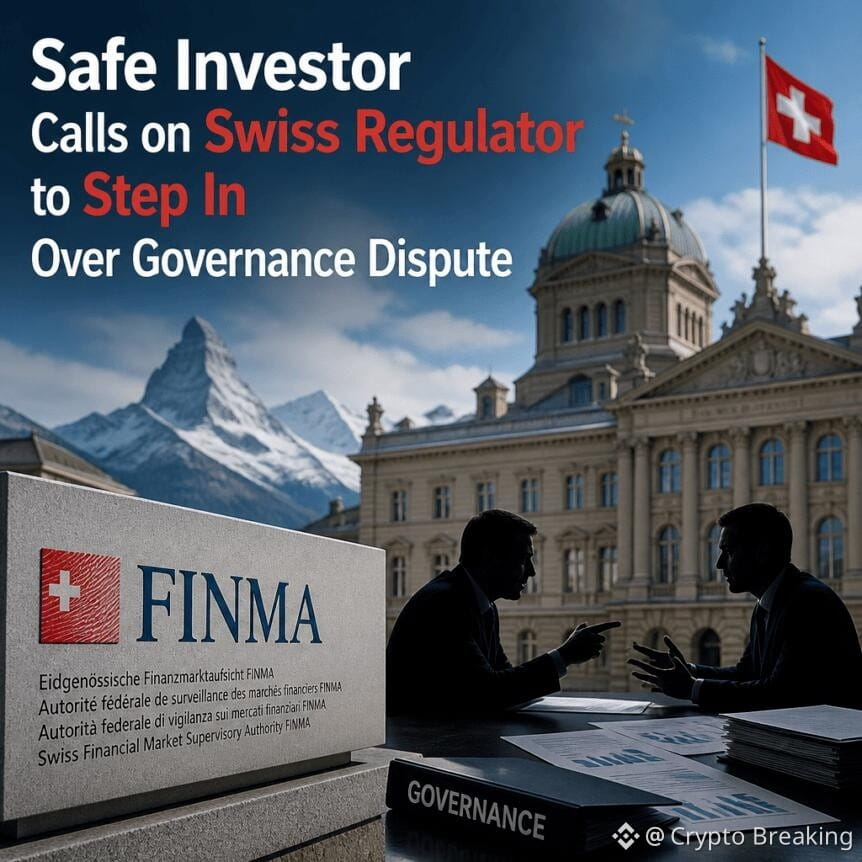
Greenfield Capital, an investor in Safe, says it has escalated its governance concerns by filing a supervisory complaint with Switzerland’s foundation regulator, the Federal Supervisory Authority for Foundations (ESA). The move follows months of engagement with the Safe Ecosystem Foundation that, according to Greenfield, failed to address questions about how the foundation is run.
In an open letter to the Safe community published on Sunday, Greenfield founding partner Jascha Samadi said the complaint seeks changes to the foundation’s board, arguing that Safe is unlikely to realize its goals under the current governance structure. The filing arrives as Safe pursues aggressive financial targets for 2026, including break-even and plans to substantially increase revenue.
Key takeaways
Greenfield Capital has filed a supervisory complaint with Switzerland’s ESA over the governance of the Safe Ecosystem Foundation.
Greenfield says months of direct engagement did not resolve its concerns about board composition and independence.
The investor points to Safe’s weakening share of stablecoin holdings and slower growth versus wider DeFi and stablecoin trends.
Greenfield alleges potential conflicts of interest linked to specific board members and their professional ties.
The dispute centers on whether the foundation should implement governance corrective measures and add more independent expertise.
Greenfield moves from engagement to regulatory oversight
Greenfield’s supervisory complaint targets the Safe Ecosystem Foundation’s governance structure. Samadi wrote that after “more than a year” of research, dialogue, and patience, his firm concluded that Safe cannot reach its potential with the current board setup.
While Greenfield does not frame the issue as a sudden disruption, it argues that the underlying governance approach has failed to keep pace with the sector’s direction since at least early 2025. In particular, the firm says it has become increasingly concerned about a lack of independent voices on the board and the decision-making experience represented there.
The open letter places the governance dispute against the backdrop of Safe’s business ambitions. In February, the Safe project outlined a path toward break-even and reported that the ecosystem had achieved more than $10 million in project-wide annualized revenue at the end of 2025. The broader objective extends further, with Safe describing an ambition to reach $100 million in annual recurring revenue by 2030.
Revenue targets clash with Greenfield’s growth concerns
Greenfield acknowledges Safe’s stated targets, but argues the foundation’s governance has not helped translate ambition into market traction. The firm points to reported second-quarter revenue of $1.98 million, which it describes as an annualized run rate of $8 million—framed as substantially below a $20 million expectation for 2026.
To support its argument that Safe is losing ground even as crypto markets expand, Greenfield cites multiple datasets. It says that from January 2024 to August 2026, the total value held in Safe accounts dropped from $66 billion to $30 billion, a decline of more than 50%. The comparison is drawn against growth in broader DeFi activity, with Greenfield stating that total value locked in DeFi increased by 40% over the same period, referencing Dune data for Safe accounts via dune.com/safe/all.
Greenfield also highlights stablecoin dynamics. Using DefiLlama’s stablecoin supply data as context (defillama.com/stablecoins), it says total stablecoin supply grew by roughly 135% from January 2024 to August 2026. Yet it claims stablecoins held in Safes on Ethereum rose only 11% and that Safe’s share of USDC in circulation fell from 12.8% to 2.5%.
Greenfield’s core claim is that Safe is underperforming specifically in areas where it is positioned to lead—self-custody infrastructure and wallet-related usage. Samadi summarized this concern in the open letter, saying Safe “has been losing ground” for about two and a half years in a category that has grown most and where self-custody infrastructure is seen as particularly relevant.
Claims about board independence and alleged conflicts
A central element of Greenfield’s complaint is board composition. Samadi argues that the foundation lacks independent board members with “experienced decision-making,” which he says is necessary to guide Safe through its next phase.
Greenfield also alleges conflicts of interest tied to board members. The open letter specifically cites Stefan George’s role at Gnosis and says fellow board member Richard Meissner has ties to companies developing and operating Safe products.
Greenfield says it attempted to push for governance changes before approaching regulators. According to the firm, it spent months asking the foundation to restructure governance, including replacing George and expanding the board with additional independent members recruited externally. It says the proposed independent expertise would cover areas such as finance, risk management, and business strategy.
With those discussions reportedly failing to produce the restructuring it sought, Greenfield now asks the Swiss watchdog to review Safe Ecosystem Foundation governance and determine whether corrective steps are needed.
Why this dispute matters for Safe users and investors
Governance decisions are often treated as an internal matter, but Greenfield’s framing links board oversight to performance outcomes—particularly around traction in stablecoin and account value metrics. Whether the ESA finds governance deficiencies could influence how quickly Safe can adjust its strategy, board oversight, and accountability mechanisms.
At the same time, the dispute underscores a tension between targets and execution. Safe’s revenue ambitions and break-even trajectory—outlined in February and tied to revenue reporting—face scrutiny from an investor pointing to slower-than-expected growth indicators and a shrinking share in stablecoin circulation.
For builders, integrators, and users relying on Safe infrastructure, the regulatory process is less about day-to-day technical operations and more about the long-run leadership and incentives behind the ecosystem foundation. Any governance changes requested by the regulator could also affect how confidently stakeholders interpret Safe’s roadmap and institutional priorities.
Readers should watch for how the ESA responds to the complaint and whether Safe Ecosystem Foundation agrees to governance changes without further escalation. Just as importantly, the market will likely continue to test Safe’s position against broader stablecoin and DeFi growth as the project moves deeper into 2026’s revenue expectations.
This article was originally published as Safe Investor Calls on Swiss Regulator to Step In Over Governance Dispute on Crypto Breaking News – your trusted source for crypto news, Bitcoin news, and blockchain updates.