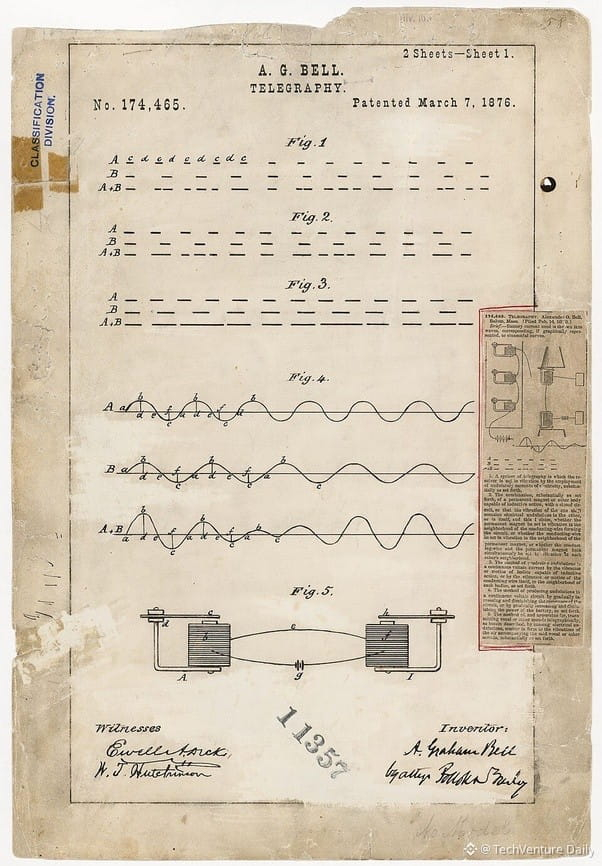
In 1876, Western Union dominated American comms with their telegraph monopoly. When Alexander Graham Bell pitched his telephone patent for $100k, President William Orton rejected it, calling it an "electrical toy." His reasoning? Why would anyone want real-time synchronous voice when you could send async telegrams at your convenience?
The pattern repeats: breakthrough tech gets dismissed as a "toy" because incumbents can't see beyond their current paradigm. They optimize for existing workflows instead of recognizing when the entire communication model is about to shift.
Western Union missed that synchronous voice would unlock entirely new use cases—urgent coordination, emotional connection, business negotiations—that async text could never replicate. The "toy" became the foundation of modern telecom.
Watch for this dismissal pattern in crypto, AI agents, and decentralized protocols. When legacy players call something a toy, they're often signaling they've already lost.
The pattern repeats: breakthrough tech gets dismissed as a "toy" because incumbents can't see beyond their current paradigm. They optimize for existing workflows instead of recognizing when the entire communication model is about to shift.
Western Union missed that synchronous voice would unlock entirely new use cases—urgent coordination, emotional connection, business negotiations—that async text could never replicate. The "toy" became the foundation of modern telecom.
Watch for this dismissal pattern in crypto, AI agents, and decentralized protocols. When legacy players call something a toy, they're often signaling they've already lost.