

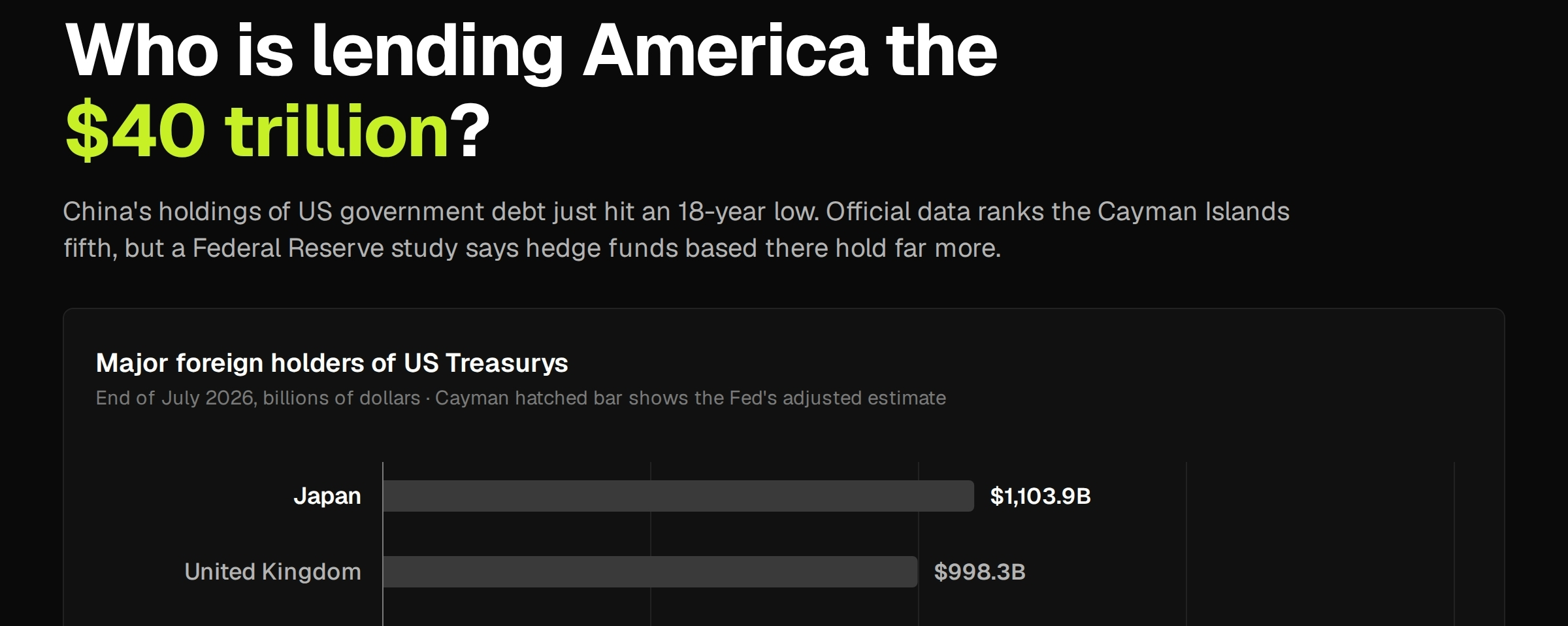

In a recent interview with TIME magazine, President Donald Trump sparked an intense macroeconomic debate by suggesting that "certain levels of inflation" could help pay off the $40 trillion U.S. national debt "very rapidly."
While everyday consumers look at inflation as a financial burden, governments see it through a completely different lens. The strategy is known as "inflating away the debt". But how does it work, and more importantly, who is actually financing this debt relief? Let’s break it down. 👇
1. The Math: How Inflation Alters the Debt
When a government borrows money, it issues bonds (Treasuries) at fixed nominal amounts. If it borrows $1 billion today, it owes exactly $1 billion in the future. Inflation changes the rules of the game:
Cheaper Repayment: Inflation dilutes the purchasing power of the fiat dollar. The government pays back its older, long-term bonds using "cheaper" dollars than those it originally borrowed.
Surging Nominal Tax Revenues: As inflation pushes up consumer prices, nominal wages, and corporate profits, the government’s tax collection naturally rises. Because the face value of the existing debt stays the same, the debt becomes smaller relative to the size of the expanding nominal economy (the Debt-to-GDP ratio).
2. The Surprising Reality: Who is Financing It? 👥
The most critical part of this strategy isn't the economic math—it is who pays for it. When a government inflates away its debt, it implicitly transfers wealth from the creditors (lenders) to the debtor (the government).
The entities financing this implicit wealth transfer include:
Foreign Sovereigns: International lenders holding trillions in U.S. Treasuries receive lower real returns as the dollar devalues.
Domestic Institutions: Retirement pension funds, insurance companies, and commercial banks absorb the economic loss on fixed-income assets.
Everyday Citizens & Savers: Inflation acts as a "hidden tax." While it shrinks government liabilities on paper, it simultaneously eats away at the purchasing power of citizens' cash savings and outpaces real wage growth.
3. The Dangerous Side Effects ⚠️
While inflating debt sounds like an easy fix, it is a highly volatile strategy with long-term consequences:
Skyrocketing Interest Costs: Investors demand higher yields on new government debt to protect against inflation. With the national debt past $40 trillion, net interest servicing costs already exceed $1 trillion annually. Higher inflation forces borrowing costs to stay elevated, which ironically accelerates deficit spending.
The Federal Reserve Dilemma: To curb inflation, the central bank usually raises interest rates—a move Trump has openly criticized, arguing that high rates hurt economic growth more than inflation itself.
💡 The Big Takeaway for Crypto Investors
For the digital asset ecosystem, this macroeconomic backdrop directly reinforces the utility of hard money. When global superpowers rely on monetary debasement to manage sovereign debt burdens, capital historically migrates toward decentralized, mathematically scarce assets like Bitcoin (BTC) as a hedge against inflation.
What do you think? Will inflating the debt save the fiat system, or will it accelerate the global rotation into Bitcoin?
#CryptoMarket #Bitcoin #MacroEconomics #FinanceNews #WriteToEarn