

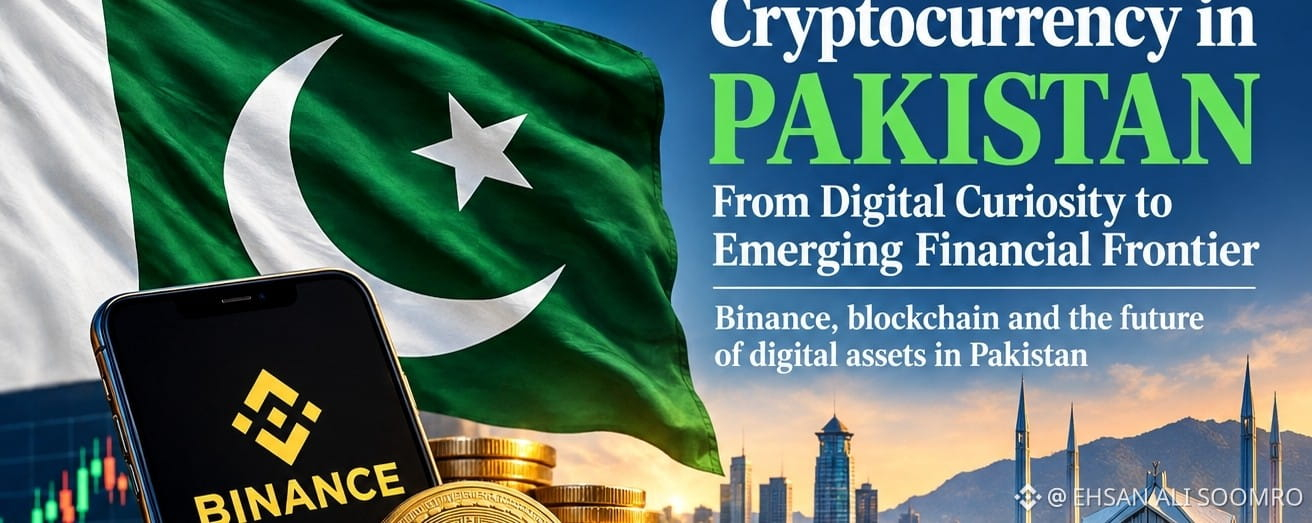

Binance, blockchain and the future of digital assets in Pakistan
Cryptocurrency is no longer merely a technological experiment discussed by computer enthusiasts. Over the past decade, digital currencies such as Bitcoin and Ethereum have developed into a global financial phenomenon, while blockchain technology has opened new possibilities in payments, finance, business and digital services.
For Pakistan, this emerging sector presents both an opportunity and a challenge. The country has a large young population, rapidly expanding internet usage and a growing interest in digital financial services. At the same time, cryptocurrency remains a highly volatile and technically complex field in which inadequate knowledge can expose individuals to substantial financial losses.
Pakistan and the Crypto Revolution
Pakistan has emerged as one of the world's important cryptocurrency markets. The country's high level of grassroots adoption demonstrates that many Pakistanis are already interested in digital assets. Young people, freelancers, entrepreneurs and technology enthusiasts are increasingly exploring cryptocurrencies as an alternative digital financial instrument.
The popularity of platforms such as Binance has contributed to this growth. Binance provides access to cryptocurrency markets, including spot trading and futures trading. While spot trading involves buying and selling digital assets, futures trading allows traders to speculate on price movements, including through leveraged positions.
This distinction is crucial. Futures trading can potentially generate profits in both rising and falling markets, but leverage also magnifies losses. A relatively small movement in the market can therefore have a much larger impact on a trader's capital.
The Promise Beyond Trading
The real potential of cryptocurrency in Pakistan may extend far beyond buying and selling coins.
Blockchain technology could contribute to areas such as digital payments, international remittances, financial technology, smart contracts, digital identity and online businesses. Pakistani software developers and entrepreneurs could also participate in the global blockchain economy by developing applications and services rather than simply speculating on cryptocurrency prices.
Stablecoins may also become increasingly relevant to cross-border digital transactions, although their use must remain subject to applicable Pakistani laws and regulatory requirements.
A New Regulatory Era
One of the most significant developments is Pakistan's movement toward a formal regulatory framework for virtual assets. The establishment of the Pakistan Virtual Assets Regulatory Authority (PVARA) and the introduction of the Virtual Assets Act 2026 represent an important step toward regulating the sector.
A clear regulatory framework can provide greater certainty for businesses and users while establishing requirements concerning consumer protection, anti-money-laundering measures, cybersecurity and responsible operation of virtual-asset businesses.
Binance has also announced its regulatory engagement in Pakistan. However, users should distinguish between different forms of registration, authorization and licensing and should verify the current regulatory status of any service before using it.
The Risk Behind the Opportunity
The rapid growth of cryptocurrency should not create the impression that it is an easy path to wealth.
Crypto markets can experience extreme price movements. Futures trading adds another layer of risk because leverage can result in liquidation. Poor risk management, excessive borrowing, emotional trading, scams and lack of financial knowledge can turn a promising opportunity into a serious financial loss.
For this reason, financial literacy is likely to be just as important as technological development. Anyone entering the cryptocurrency market should understand volatility, leverage, liquidation, transaction costs, security and applicable regulations before committing money.
What Lies Ahead?
The future of cryptocurrency in Pakistan will depend on how effectively innovation can be balanced with regulation and consumer protection.
If Pakistan succeeds in developing a transparent regulatory environment while encouraging technological innovation, the country could see greater participation in the global blockchain economy. Universities, software companies, fintech entrepreneurs and young professionals could potentially become important contributors to this emerging sector.
The most significant opportunity may therefore not be cryptocurrency trading itself. It could lie in building the digital infrastructure, applications and businesses that use blockchain technology.
Cryptocurrency is still a developing financial and technological field. Its future cannot be guaranteed, nor can future prices of individual digital assets be predicted with certainty. But one thing is increasingly clear: digital assets and blockchain technology have become too significant to ignore.
For Pakistan, the challenge now is to transform growing public interest into knowledge, innovation, responsible participation and regulated digital economic activity.
The future of crypto in Pakistan may ultimately be determined not by how many people trade digital coins, but by how effectively the country learns to use the technology behind them.