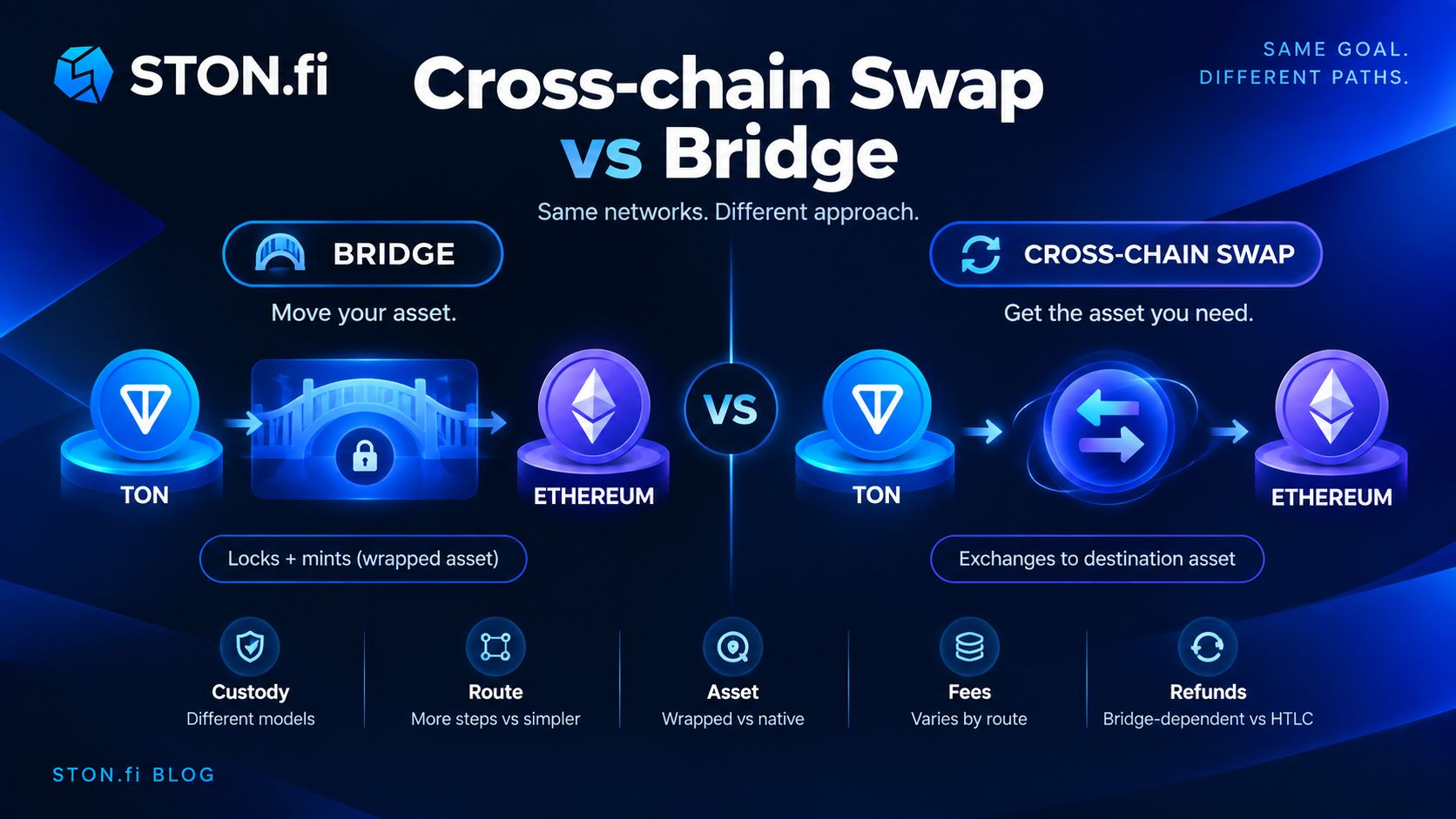
𝗖𝗿𝗼𝘀𝘀-𝗰𝗵𝗮𝗶𝗻 𝗦𝘄𝗮𝗽 𝘃𝘀 𝗕𝗿𝗶𝗱𝗴𝗲: 𝗪𝗵𝗮𝘁’𝘀 𝘁𝗵𝗲 𝗗𝗶𝗳𝗳𝗲𝗿𝗲𝗻𝗰𝗲?
They may look similar, but the architecture is different.
𝗕𝗿𝗶𝗱𝗴𝗲
Moves an asset between chains. The source token may be locked while a wrapped or represented version is issued on the destination.
𝗖𝗿𝗼𝘀𝘀-𝗰𝗵𝗮𝗶𝗻 𝗦𝘄𝗮𝗽
Exchanges your source asset for the asset you actually want on the destination chain.
For example:
TON USDT → Ethereum USDC
With a resolver-based swap, the destination asset can be delivered directly rather than creating a wrapped version of the source asset.
𝗧𝗵𝗲 𝗺𝗮𝗶𝗻 𝗱𝗶𝗳𝗳𝗲𝗿𝗲𝗻𝗰𝗲𝘀:
• Asset: wrapped representation vs destination asset
• Route: bridge + possible swap vs direct cross-chain execution
• Trust: depends on the bridge or swap architecture
• Refunds: depend on how failed execution is handled
• Fees: vary by route, network and liquidity
𝗪𝗵𝗲𝗿𝗲 𝗢𝗺𝗻𝗶𝘀𝘁𝗼𝗻 𝗙𝗶𝘁𝘀
Omniston uses a resolver-based model with paired HTLCs.
The goal is simple: the source and destination sides are cryptographically linked, with an all-or-nothing settlement and a refund path if execution does not complete.
So the key question isn't simply “bridge or swap?”
It's:
𝗪𝗵𝗮𝘁 𝗮𝘀𝘀𝗲𝘁 𝗱𝗼 𝗜 𝗻𝗲𝗲𝗱, 𝗵𝗼𝘄 𝗶𝘀 𝗶𝘁 𝗱𝗲𝗹𝗶𝘃𝗲𝗿𝗲𝗱, 𝗮𝗻𝗱 𝘄𝗵𝗮𝘁 𝗵𝗮𝗽𝗽𝗲𝗻𝘀 𝗶𝗳 𝘀𝗲𝘁𝘁𝗹𝗲𝗺𝗲𝗻𝘁 𝗳𝗮𝗶𝗹𝘀?
Source: STON.fi Blog.
They may look similar, but the architecture is different.
𝗕𝗿𝗶𝗱𝗴𝗲
Moves an asset between chains. The source token may be locked while a wrapped or represented version is issued on the destination.
𝗖𝗿𝗼𝘀𝘀-𝗰𝗵𝗮𝗶𝗻 𝗦𝘄𝗮𝗽
Exchanges your source asset for the asset you actually want on the destination chain.
For example:
TON USDT → Ethereum USDC
With a resolver-based swap, the destination asset can be delivered directly rather than creating a wrapped version of the source asset.
𝗧𝗵𝗲 𝗺𝗮𝗶𝗻 𝗱𝗶𝗳𝗳𝗲𝗿𝗲𝗻𝗰𝗲𝘀:
• Asset: wrapped representation vs destination asset
• Route: bridge + possible swap vs direct cross-chain execution
• Trust: depends on the bridge or swap architecture
• Refunds: depend on how failed execution is handled
• Fees: vary by route, network and liquidity
𝗪𝗵𝗲𝗿𝗲 𝗢𝗺𝗻𝗶𝘀𝘁𝗼𝗻 𝗙𝗶𝘁𝘀
Omniston uses a resolver-based model with paired HTLCs.
The goal is simple: the source and destination sides are cryptographically linked, with an all-or-nothing settlement and a refund path if execution does not complete.
So the key question isn't simply “bridge or swap?”
It's:
𝗪𝗵𝗮𝘁 𝗮𝘀𝘀𝗲𝘁 𝗱𝗼 𝗜 𝗻𝗲𝗲𝗱, 𝗵𝗼𝘄 𝗶𝘀 𝗶𝘁 𝗱𝗲𝗹𝗶𝘃𝗲𝗿𝗲𝗱, 𝗮𝗻𝗱 𝘄𝗵𝗮𝘁 𝗵𝗮𝗽𝗽𝗲𝗻𝘀 𝗶𝗳 𝘀𝗲𝘁𝘁𝗹𝗲𝗺𝗲𝗻𝘁 𝗳𝗮𝗶𝗹𝘀?
Source: STON.fi Blog.