

Risk Management in Crypto: How to Balance Your Portfolio Using Stocks & BStocks
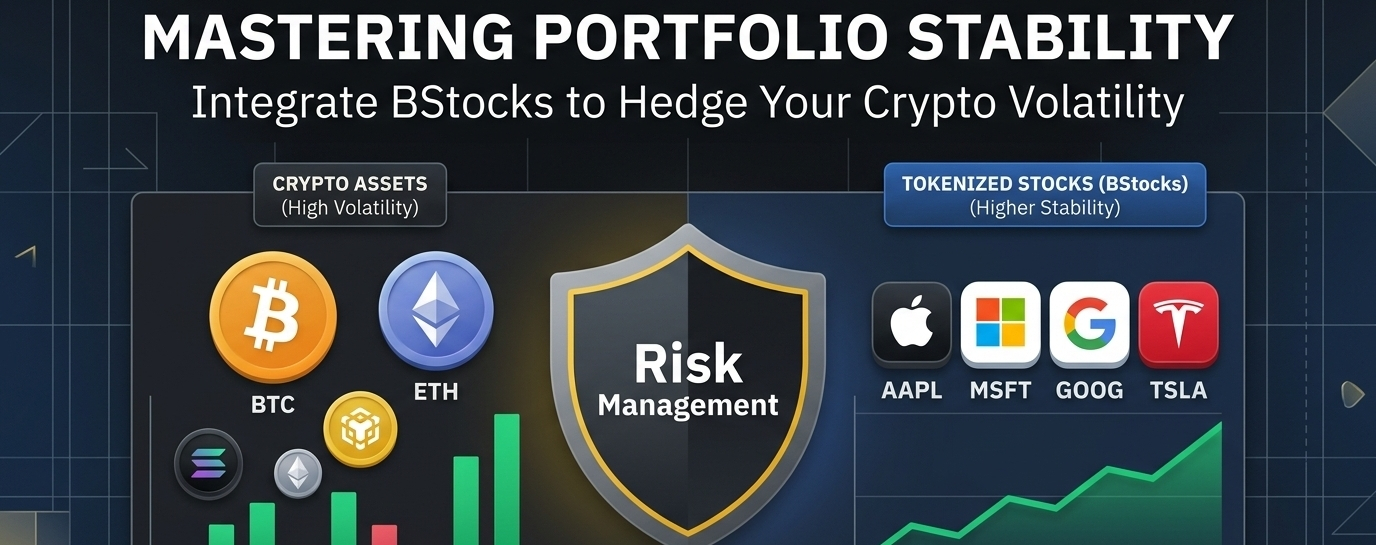
In trading, survival is paramount. While the cryptocurrency market offers unprecedented growth potential, its inherent volatility can easily destroy an unhedged portfolio during market downturns. The key to long-term profitability lies in risk management and asset allocation. One of the most effective strategies to smooth out equity curves is integrating equities—specifically BStocks—into a crypto-heavy portfolio.
Understanding the Volatility Gap
Cryptocurrencies are risk-on, high-volatility assets driven by rapid technological cycles, sentiment shifts, and macroeconomic liquidity. On the other hand, traditional equities represent established businesses with physical assets, clear revenue models, and decades of financial data.
When crypto markets experience severe pullbacks or prolonged consolidation phases, holding 100% of your capital in digital assets exposes you to maximum drawdown. By allocating a portion of your portfolio to equity markets via BStocks, you create a defensive cushion that protects your capital.
How Equities Balance Crypto Portfolios
Non-Correlated Growth Drivers While crypto markets often move together based on Bitcoin's market dominance, stock performance is tied to real-world corporate earnings, consumer demand, and sector-specific trends. Investing in tech giants (like Microsoft or Apple) or defensive sector stocks provides exposure to value drivers that operate independently of crypto cycles.
Hedging Against Market Downturns During a crypto "bear market," capital often flees risky digital assets in search of safe-haven investments. By rebalancing crypto profits into BStocks, traders can lock in gains while preserving exposure to real-world equity appreciation without converting to physical fiat currency.
Capital Efficiency & Seamless Execution In the past, hedging crypto into stocks required converting crypto to fiat, withdrawing funds to a local bank, depositing into a brokerage, and executing trades. This multi-step process incurred heavy friction, withdrawal fees, and time delays. BStocks streamline this process entirely: traders can pivot between crypto assets and tokenized stocks instantly within the Binance ecosystem.
Implementing a Balanced Allocation Strategy
A pragmatic approach for crypto traders looking to mitigate risk includes:
Core Holdings (50-60%): Major crypto assets (e.g., BTC, ETH) for core exposure.
Equities / BStocks (25-35%): Top-tier tech or defensive equities to reduce overall portfolio volatility and capture steady market growth.
Stablecoins / Cash (10-15%): Dry powder reserved for market dips or emergency liquidity.
Conclusion
Successful trading is not about predicting every market move; it is about managing risk so effectively that you remain profitable over time. Incorporating BStocks into your trading toolkit allows you to enjoy the high-upside opportunities of crypto while maintaining the structural stability of traditional financial markets.