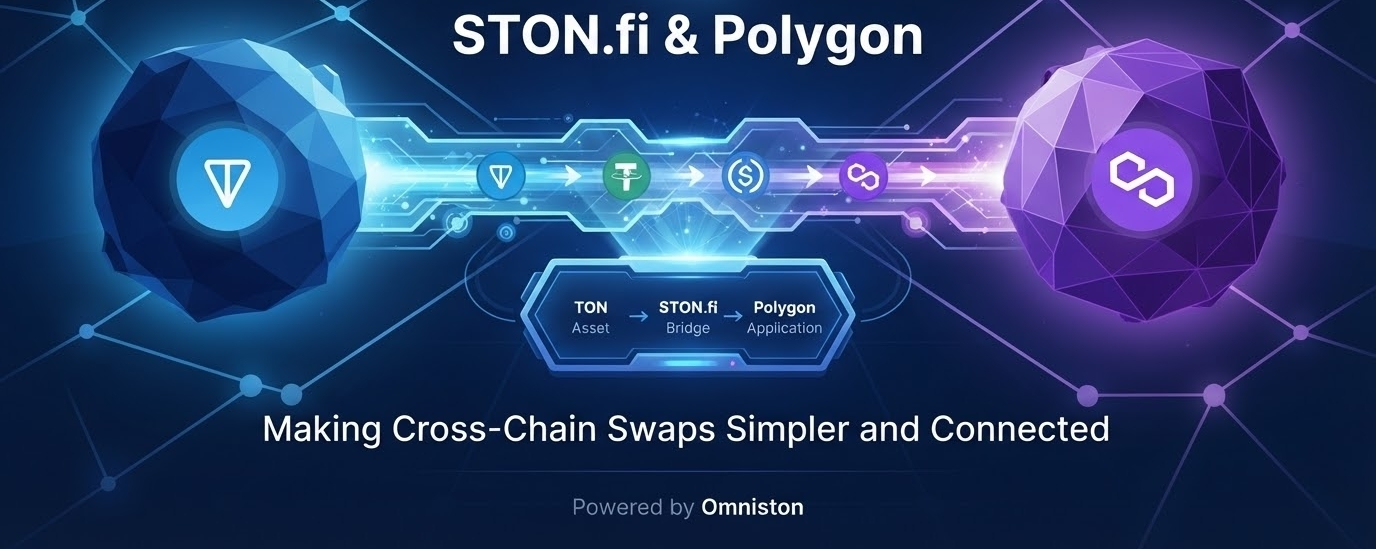

Blockchain ecosystems are becoming increasingly connected but moving assets and liquidity between networks can still be unnecessarily complicated.
The integration of Polygon with STON.fi addresses part of that problem by giving users a simpler route between TON and the broader Polygon ecosystem.
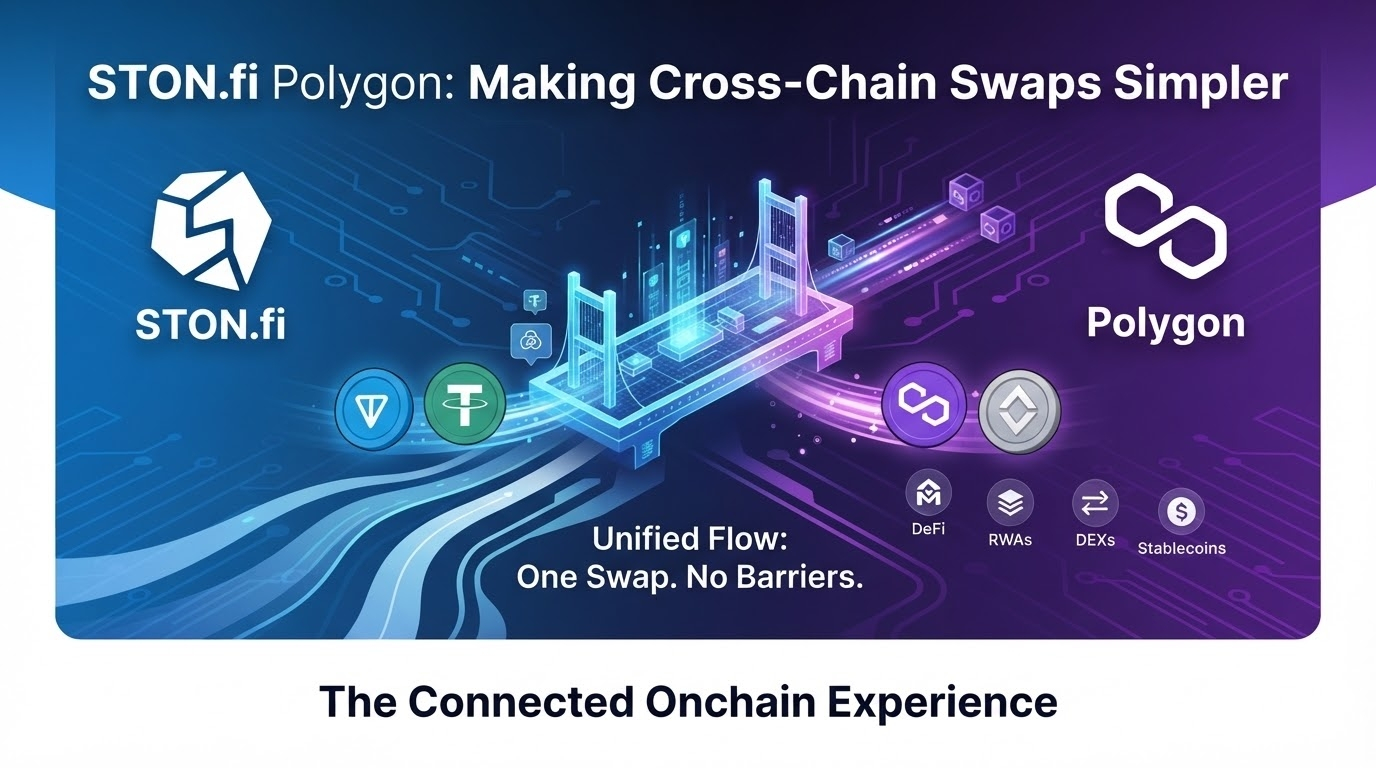
Why Polygon matters to TON users
Polygon is an established EVM ecosystem with activity across decentralized finance, stablecoins, payments, real-world assets, decentralized exchanges, prediction markets and consumer applications.
For someone holding assets on TON that creates a practical opportunity.
The liquidity, token or application they need may exist on Polygon rather than TON.
Without cross-chain infrastructure, accessing it can mean finding a bridge, checking whether the asset is supported, connecting to another interface, waiting for transactions and potentially completing another swap afterward.
Each additional step adds friction.
How cross-chain swaps simplify the process
STON.fi’s cross-chain infrastructure is designed to make this experience more straightforward.

Instead of manually managing every part of the journey, users can select a supported asset, choose the destination network, review the transaction details and confirm the swap.
The underlying infrastructure handles the complexity required to coordinate the transaction across networks.
This is where Omniston plays an important role.
Omniston provides the routing and liquidity coordination layer behind STON.fi’s cross-chain swap experience, helping connect liquidity across supported ecosystems.
For the user the objective is simple:
Choose → review → confirm → receive.
More than moving tokens
The value of cross-chain infrastructure goes beyond transferring assets.
When networks become easier to access from one another, users can interact with applications and liquidity that previously required several separate steps.
For TON users Polygon can provide access to opportunities within a large EVM ecosystem.
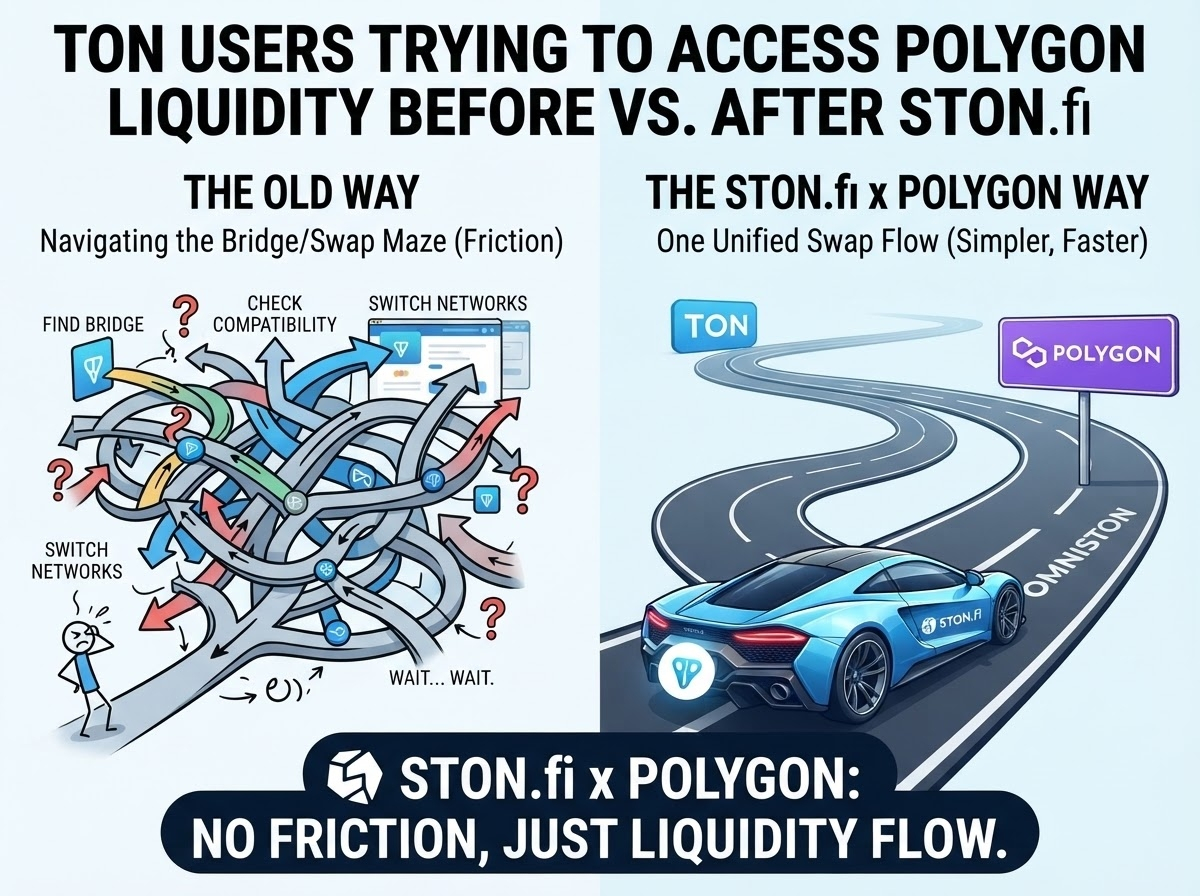
At the same time users coming from Polygon and other supported networks can access the TON ecosystem through a more connected experience.
This creates a two-way flow of liquidity and users rather than keeping ecosystems isolated.
Why cross-chain connectivity matters
The long-term direction of Web3 is increasingly about interoperability.
Different blockchains have different applications, liquidity sources, communities and technical strengths. Users should not necessarily have to understand every underlying infrastructure layer just to move between them.
Cross-chain protocols help abstract some of that complexity.
The important question is no longer only Which blockchain are you using?
It is also:
How easily can you access what you need across different networks?
STON.fi’s connection with Polygon is part of that broader shift toward a more connected onchain experience as more networks and liquidity sources become interoperable the potential value is straightforward: fewer barriers between ecosystems, easier access to liquidity and more ways for users to participate across Web3.
Cross-chain infrastructure is ultimately about making blockchain ecosystems feel less like isolated networks and more like parts of one connected onchain economy.