


A useful comparison between Solana and Ethereum requires more than looking at price charts. In real financial environments, the important questions are often less visible: how systems are operated, how predictable their interfaces are, how developers interact with them, how monitoring is handled, and how easily activity can be examined by operators, auditors, and compliance teams.
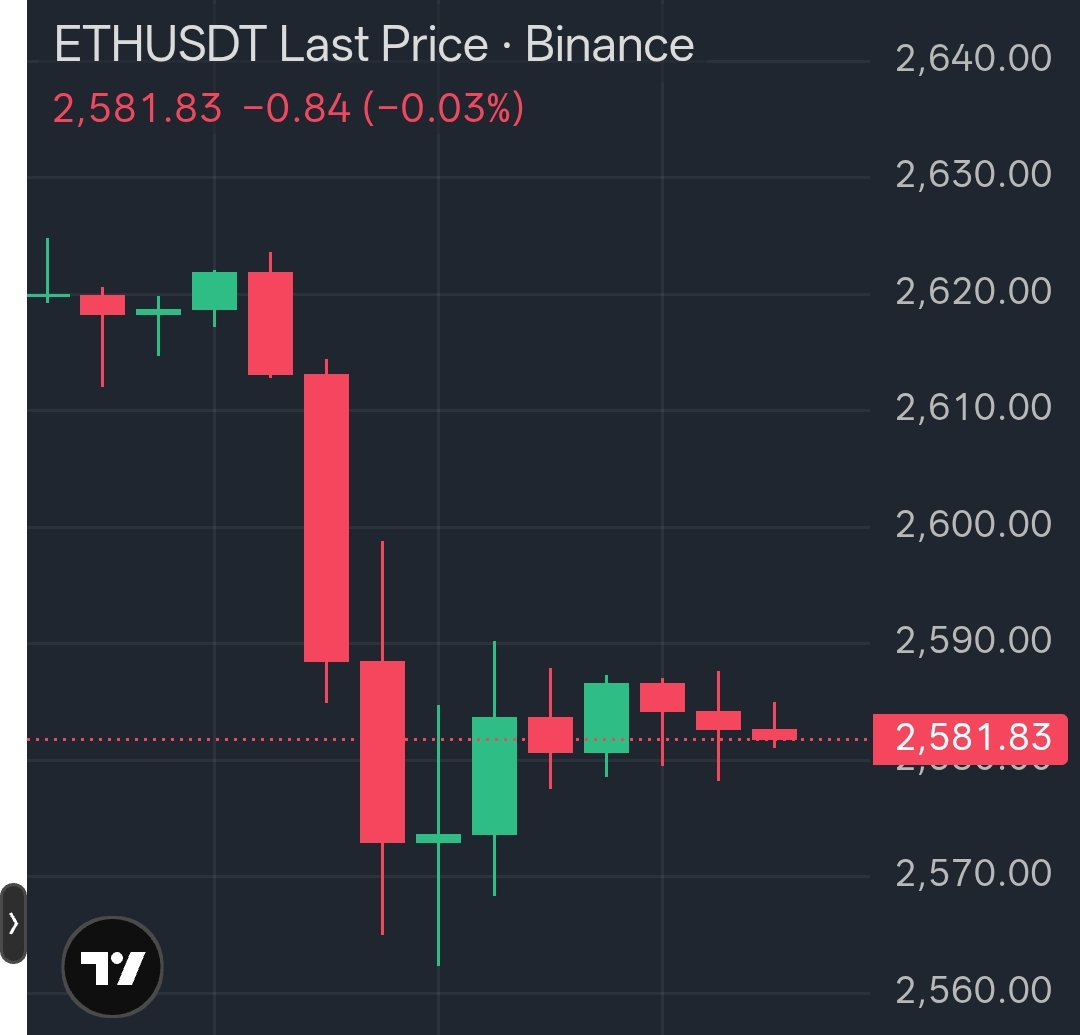
The material provided here, however, does not contain technical or architectural information about Ethereum. It contains market data and a 15-minute SOLUSDT chart. That distinction matters. A credible comparison should not fill those gaps with assumptions.
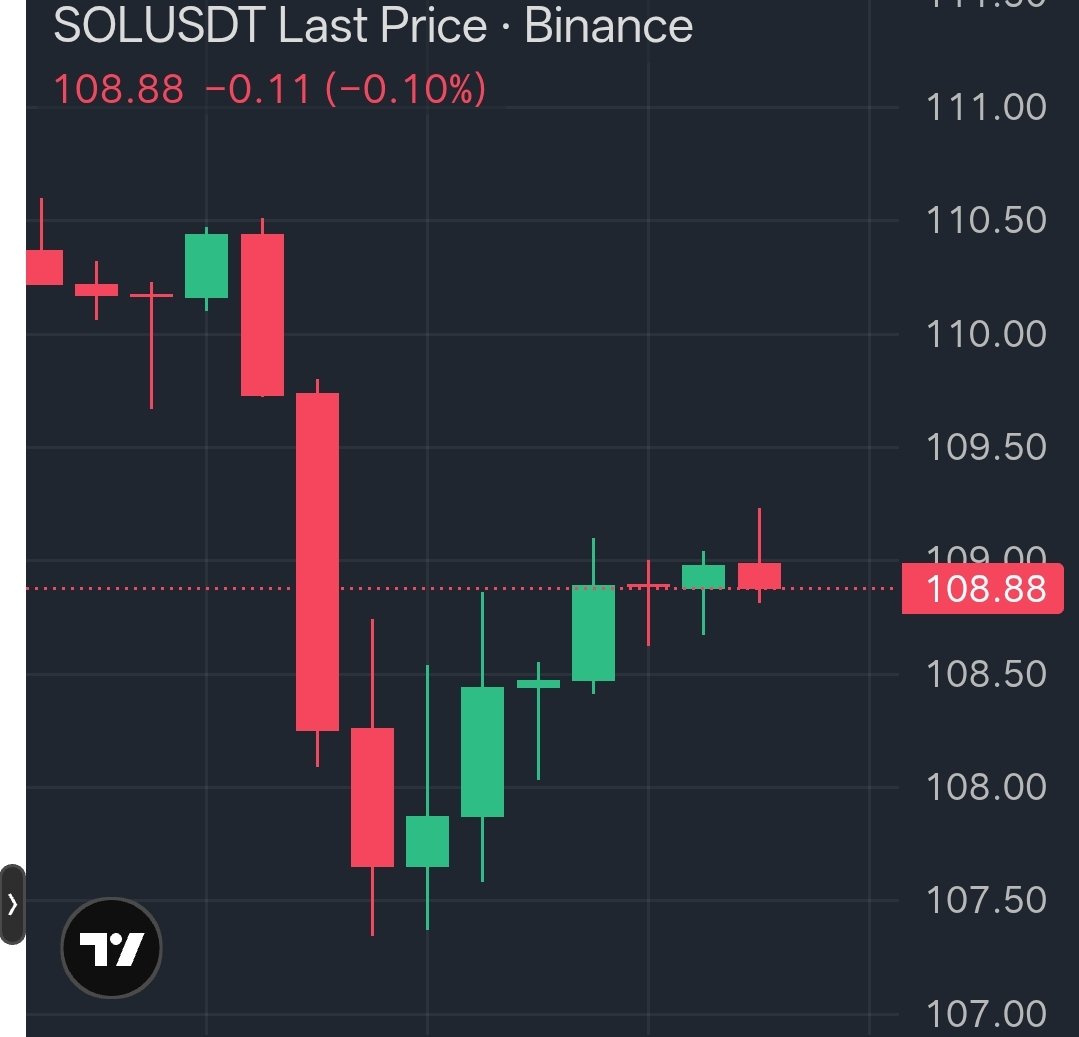
What the SOL material does show is a system being observed through a conventional market interface. SOL is shown at 108.88, with a 24-hour high of 112.98 and low of 107.34. The displayed 24-hour volume is 15.55 million SOL and 1.72 billion USDT. The chart is set to a 15-minute timeframe.
The short-term structure is also visible. SOL experienced a sharp decline from above 110 before finding support around the 107.3–107.5 area. Several subsequent candles show a recovery toward 109, followed by relatively small movements around that level. The chart therefore provides a concrete example of why monitoring and predictability matter in practice. Operators and traders are not only interested in the direction of a market. They need reliable observations of what the system is doing, when conditions change, and whether a move is continuing or stabilizing.
This is one of the less glamorous parts of financial infrastructure. A chart, API, order interface, market-data feed, or monitoring system may appear simple when everything is working. Under pressure, however, small operational details become much more important. Clear defaults, consistent data, understandable interfaces, and dependable monitoring reduce the amount of interpretation required from the person operating the system.
The screenshots also show separate last and mark prices: 108.88 and 108.89. That distinction is small on the screen, but it illustrates why precise terminology and observable system behavior matter. In a leveraged trading environment, different reference values can have practical consequences for how participants understand their positions and market conditions.
Privacy and transparency require the same discipline. The supplied material does not describe either SOL or ETH's privacy architecture, audit model, compliance controls, or developer APIs. It would therefore be misleading to assign characteristics to either network that are not contained in the evidence.
The same applies to infrastructure reliability. A market interface displaying live information demonstrates that users can observe market conditions through that interface, but it does not by itself establish broader conclusions about network reliability, operational resilience, or auditability.
That limitation is important for an institutional comparison.
For engineers, the relevant question is not simply which asset is moving. It is whether the underlying system provides sufficiently clear behavior and tooling for people who have to build, monitor, troubleshoot, and maintain applications around it.
For auditors, the question becomes whether system activity and operational behavior can be examined using reliable evidence.
For compliance teams, predictability and transparency matter because processes often depend on being able to understand what happened and reconstruct events accurately.
For infrastructure operators, the concern is even more practical: whether the system and its surrounding tools remain understandable when conditions become difficult.
The SOL chart gives us a small but useful example of this mindset. After a rapid move lower, the market does not immediately return to the previous level. Instead, the subsequent candles show a gradual recovery and then tighter movement near 109. An observer has to distinguish between a visible rebound and evidence of sustained continuation. The interface provides the information, but interpretation still requires discipline.
That is also why a serious SOL-versus-ETH comparison should resist reducing the discussion to speed, fees, or price performance. Those measurements can be useful, but they do not describe the complete operational experience.
The supplied evidence simply does not establish enough to make that broader judgment.
What it does establish is more modest: SOL is being observed through a trading environment with clearly displayed market data, multiple price references, volume information, and short-term charting. Those are ordinary tools, but ordinary tools are often where real operational workflows begin.
A deeper SOL-versus-ETH article would need documented material on both systems' architecture, APIs, tooling, monitoring, auditability, privacy model, and operational procedures before drawing further conclusions.
For now, the most defensible observation is that good infrastructure is often defined by the details that become noticeable only when people have to rely on it under pressure.


#XRPExchangeReservesHitSevenYearLow #BOJRaisesRatesTo31YearHigh #BTCBreaks80K