
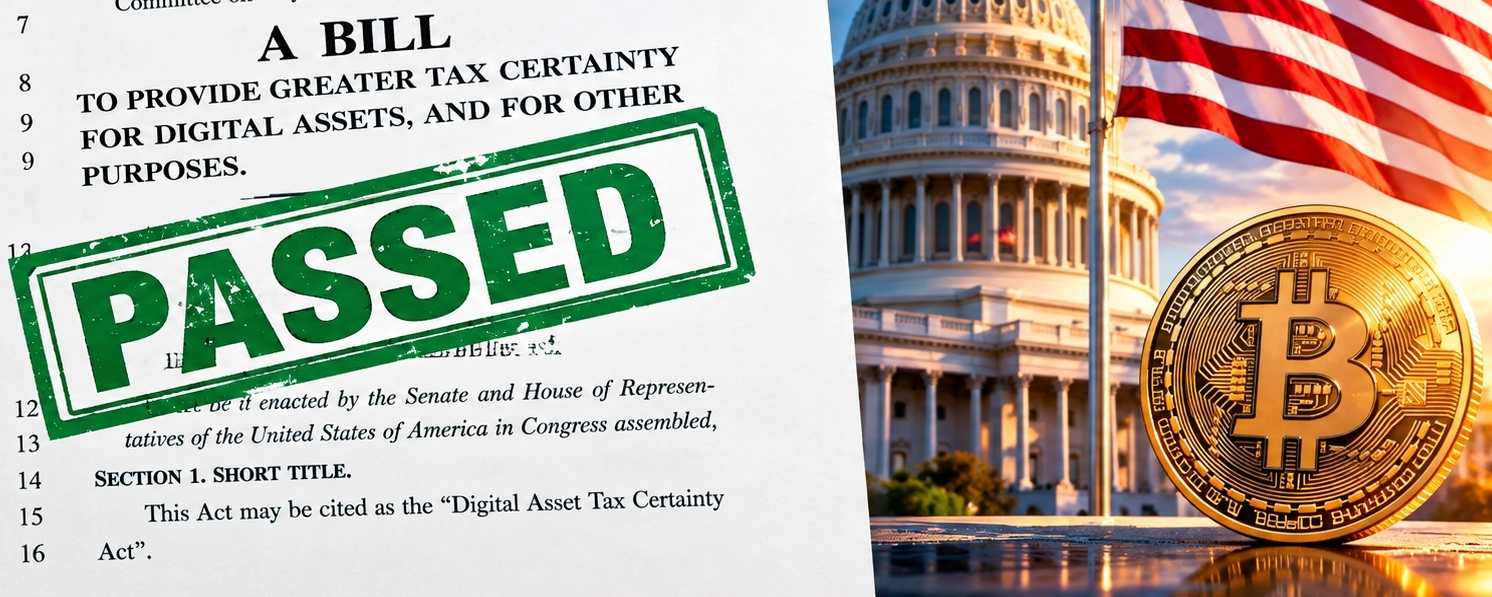

Something important is happening in Washington for crypto users. The U.S. House Ways and Means Committee has advanced the Digital Asset Tax Certainty Act (H.R. 10357), a bipartisan proposal designed to reduce tax-compliance burdens and create clearer rules for people who own, trade, and use digital assets. The committee approved the legislation 38–5 on September 16, 2026.
One of the biggest issues the bill targets is the treatment of small and routine crypto transactions. Under the current system, even relatively minor digital-asset transactions can create reporting and tax-calculation requirements. The committee says that many of the 1099-DA forms received by the IRS in 2025 involved transactions worth less than $10, highlighting how complicated the current reporting process can become.
The proposed framework would reduce some of that friction, including treatment of digital assets used to pay network fees. The broader goal is to prevent users from having to calculate tiny gains or losses every time they interact with a blockchain. For everyday users, that could make using crypto for ordinary transactions significantly easier from a tax-reporting perspective.
The legislation also looks at crypto as a medium of exchange. Instead of treating every small payment like a complicated investment event, lawmakers are proposing rules intended to make digital assets more practical for everyday commerce. This could become increasingly relevant as stablecoins and other digital assets move beyond trading and into payments and financial applications.
Another major part of the discussion is mining and staking. The proposed legislation seeks to clarify how rewards generated through these activities should be taxed. The committee's framework treats newly minted digital assets as ordinary income, while also providing an alternative approach that could allow taxpayers to treat them similarly to self-created property under certain circumstances.
The bill also attempts to bring parts of the digital-asset tax system closer to rules already used for traditional financial assets. It includes provisions involving tax safe harbors, accounting treatment, charitable donations, and existing anti-abuse rules such as wash-sale and constructive-sale provisions.
That matters because crypto taxation has often been criticized for forcing taxpayers to apply traditional financial concepts to technology that does not always fit neatly into those categories. A clearer framework could potentially reduce uncertainty for both individual users and businesses operating in the digital-asset economy.
But there is an important distinction: this is not law yet. Advancing through the Ways and Means Committee is a significant legislative step, but the proposal still has to go through the remaining congressional process before any of these changes become effective. Current tax rules therefore remain in place unless and until the legislation is enacted.
The timing is also notable because the broader U.S. crypto-policy debate remains active. While this tax legislation focuses specifically on digital-asset taxation and reporting, other major crypto legislation is moving through Congress on separate tracks. That means the regulatory and tax framework surrounding crypto in the U.S. is still developing rather than being settled.
The bigger picture: this proposal is less about giving crypto a special tax advantage and more about trying to create rules that recognize how digital assets actually function. If enacted, clearer treatment of small transactions, network fees, payments, mining, staking, and reporting could remove some of the friction that currently makes crypto taxation complicated. For now, the message is simple: U.S. crypto tax policy is moving, and the next legislative steps could have a lasting impact on how Americans use digital assets.

