India’s Relationship With Gold Is Changing: Investment Is Overtaking Jewellery
For generations, India has been synonymous with gold jewellery. But the latest data point to an important shift: Indians are increasingly buying gold as an investment, not simply as jewellery.
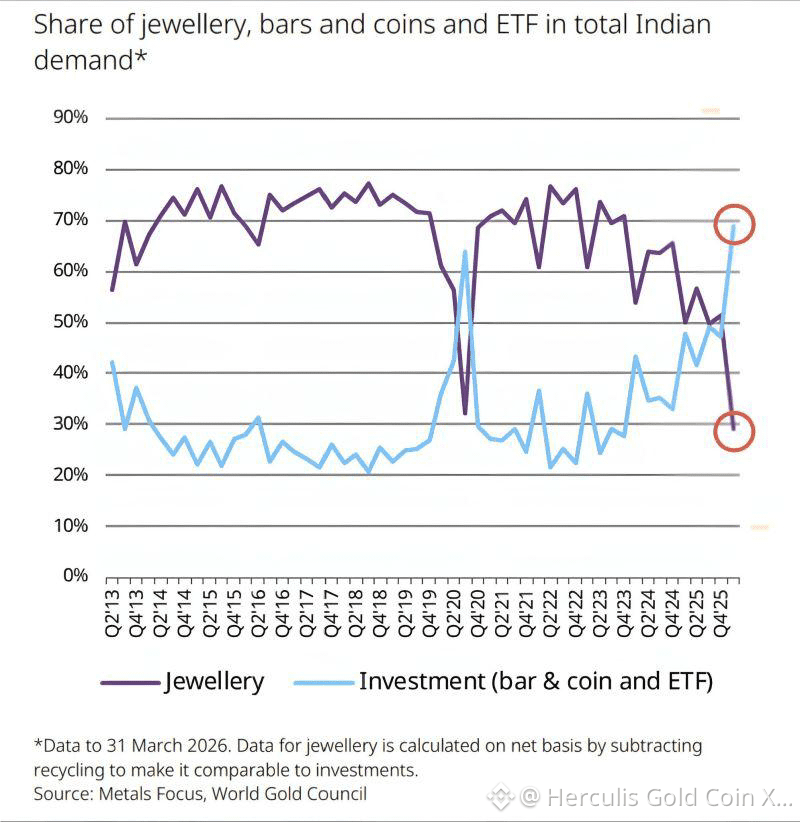
In Q1 2026, investment demand across gold bars, coins and ETFs reached 82 tonnes, up 54% year-on-year, compared with 66 tonnes of jewellery demand. On the comparable net basis used in the chart, investment represented nearly 70% of Indian gold demand, while jewellery fell to around 30% — its lowest share in the World Gold Council’s data going back to 2000.
The physical market is particularly striking. Indians purchased 62 tonnes of bars and coins, up 34% YoY and the strongest first quarter since 2013. Gold ETFs added another record 20 tonnes, with ETF holdings reaching 115 tonnes by the end of March.
This is more than a change in how Indians buy gold. It is a change in why they own it.
This strengthens our long-term bullish view on gold. India is one of the world’s largest gold markets, and a structural migration from jewellery toward bars, coins, ETFs and digital forms of gold could make demand increasingly investment-driven and price-sensitive to the upside.
We would maintain a strategic 5–10% gold allocation in diversified portfolios and use meaningful price corrections to build positions rather than chase sharp rallies.
The bigger message from the chart is clear: gold in India is evolving from something you wear into something you invest in.
For generations, India has been synonymous with gold jewellery. But the latest data point to an important shift: Indians are increasingly buying gold as an investment, not simply as jewellery.
In Q1 2026, investment demand across gold bars, coins and ETFs reached 82 tonnes, up 54% year-on-year, compared with 66 tonnes of jewellery demand. On the comparable net basis used in the chart, investment represented nearly 70% of Indian gold demand, while jewellery fell to around 30% — its lowest share in the World Gold Council’s data going back to 2000.
The physical market is particularly striking. Indians purchased 62 tonnes of bars and coins, up 34% YoY and the strongest first quarter since 2013. Gold ETFs added another record 20 tonnes, with ETF holdings reaching 115 tonnes by the end of March.
This is more than a change in how Indians buy gold. It is a change in why they own it.
This strengthens our long-term bullish view on gold. India is one of the world’s largest gold markets, and a structural migration from jewellery toward bars, coins, ETFs and digital forms of gold could make demand increasingly investment-driven and price-sensitive to the upside.
We would maintain a strategic 5–10% gold allocation in diversified portfolios and use meaningful price corrections to build positions rather than chase sharp rallies.
The bigger message from the chart is clear: gold in India is evolving from something you wear into something you invest in.