
ZIA BARKI
35 Bài đăng

ZIA BARKI
Báo cáo
Chặn người dùng
18 Đang theo dõi
1 Người theo dõi
0 Đã thích
Bài đăng
·
--
Xem bản dịch
WHAT IS MARSCOINKuCoin
Knowledge Base
Concepts
What is Marscoin (MARS) in crypto?
What is Marscoin (MARS) in crypto?
Last Updated September 10, 2026
marscoin-in-crypto
As humanity advances toward becoming a multi-planetary species, visionary technologists have explored how independent financial systems might operate beyond Earth. Marscoin (MARS) is a pioneering, open-source cryptocurrency established in 2014 to serve as the native decentralized currency and economic ledger for future settlements on Mars. Derived as a fork of Litecoin, Marscoin operates its own independent Proof-of-Work (PoW) blockchain. It is designed to tackle the physical communication delays of interplanetary financial settlement, while simultaneously funding space colonization research and grassroots non-profit space advocacy initiatives on Earth.
Key Takeaways
Pioneering 2014 Heritage: Launched on January 1, 2014, Marscoin is among the earliest cryptocurrencies dedicated specifically to space exploration and Mars settlement.
Independent Proof-of-Work: Deriving from Litecoin, Marscoin uses the Scrypt consensus algorithm with fast 2-minute block target times.
Interplanetary Purpose: Designed to operate autonomously without Earth-based financial rails to overcome the 4-to-24 minute space telecommunications latency.
The Martian Republic: Integrates on-chain governance frameworks designed for direct democratic voting and peer-attested digital citizenship.
Elevated Market Risk: Marscoin maintains micro-cap liquidity and is frequently conflated with lookalike meme tokens across other blockchains.
The Origin and Philosophy of Marscoin (MARS)
Solving Interplanetary Commerce and Latency
The conceptual foundation of Marscoin addresses a fundamental limitation in astrophysics: the speed of light. Real-time telecommunication between Earth and Mars experiences an unavoidable propagation delay ranging from 4 to 24 minutes each way depending on orbital alignments. Consequently, traditional Earth-based payment rails, centralized banking portals, and high-frequency settlement channels cannot function smoothly on Mars.
Marscoin was engineered to function as a self-sovereign economic ledger that colonists could operate natively on the red planet, completely detached from Earth's terrestrial banking infrastructure.
The Mars Society Alignment and Founding
Marscoin was launched in early 2014 by developers including Lennart Lopin and James Burk. During its genesis, a substantial allocation of initial tokens was donated directly to The Mars Society—one of the world's most prominent space exploration advocacy organizations. The overarching premise was collaborative: as early adopters mine and hold MARS on Earth, the value appreciation helps fund space science research, analog Mars habitats, and educational programs, laying the operational groundwork for humanity's multi-planetary transition.
Technical Infrastructure and Consensus Architecture
Marscoin relies on a battle-tested Proof-of-Work consensus mechanism optimized for decentralization and accessibility.
Scrypt Consensus and AuxPoW Merged Mining
Rather than relying on SHA-256 (like Bitcoin), Marscoin adopted the Scrypt cryptographic hashing algorithm. This design allows block validation to remain energy-efficient while maintaining network integrity. To further safeguard the blockchain against 51% attacks, the network introduced Auxiliary Proof-of-Work (AuxPoW) merged mining. This protocol feature allows miners to simultaneously validate Marscoin blocks alongside Litecoin and Dogecoin hash pools without expending additional electrical power.
The Martian Republic On-Chain Governance
Beyond simple transactional utility, the Marscoin blockchain supports the "Martian Republic" architecture. This system implements decentralized tools to model democratic self-governance for an off-world civilization, including:
Cryptographic Citizen Registration: Verified identity attestations recorded directly on-chain without centralized identity brokers.
Private Mathematical Voting: Utilizing CoinShuffle-based anonymous ballots to conduct tamper-resistant elections and policy referendums.
Transparent Proposal Archives: Direct integration with decentralized data storage networks like IPFS to archive civil records, patents, and colony public works funding transparently.
Tokenomics and Blockchain Specifications
Marscoin enforces fixed supply parameters to mirror the digital scarcity pioneered by Bitcoin while accommodating smaller transactional values with higher supply limits.
Specification Metric Parameter Details
Token Ticker Symbol MARS (Native Coin)
Blockchain Network Platform Marscoin Native Blockchain (Litecoin Fork)
Consensus Algorithm Scrypt Proof-of-Work (AuxPoW Supported)
Target Block Generation Time 2.0 Minutes
Maximum Programmatic Supply ~39.57 Million to 42 Million MARS
Difficulty Retargeting ASERT (Absolutely Scheduled Exponential Retarget)
Distinguishing Marscoin from Lookalike Tokens
A persistent challenge for market participants is differentiating between the authentic 2014 Marscoin blockchain and independent tokens using similar space-themed branding.
Marscoin (MARS): The original 2014 sovereign Layer-1 Scrypt blockchain.
MARSCOIN (BNB Chain Token): A separate micro-cap meme token deployed on BNB Chain that experienced viral trading surges.
MARS4 (MARS4): A virtual metaverse and gaming project operating as an ERC-20 token.
Traders navigating the space must review project documentation and network explorers to confirm whether an asset is an independent Layer-1 coin or an EVM/Solana smart contract token.
Conclusion
Marscoin (MARS) stands out as an imaginative economic and technological experiment in the cryptocurrency ecosystem. Conceived long before the modern explosion of space tourism and commercial aerospace ventures, it combines an independent Scrypt blockchain with forward-looking planetary governance mechanisms. Nevertheless, due to its specialized purpose, micro-cap liquidity profile, and the ongoing confusion surrounding lookalike tokens, prospective participants must exercise thorough due diligence and prioritize asset verification before committing capital.
FAQs
Is Marscoin (MARS) an ERC-20 token or an independent blockchain?
Marscoin operates its own independent Layer-1 Proof-of-Work blockchain derived from a Litecoin fork, rather than functioning as a smart contract token on Ethereum or Solana.
How does Marscoin solve communication delays between Earth and Mars?
Because radio signals take 4 to 24 minutes to travel between planets, Marscoin operates autonomously, allowing local Martian colonists to validate peer-to-peer transactions without Earth-based connectivity.
How can I mine Marscoin?
Marscoin uses the Scrypt hashing algorithm and supports AuxPoW merged mining, enabling miners to simultaneously mine MARS alongside Litecoin and Dogecoin without additional electricity consumption.
How do I avoid buying fake or lookalike Mars tokens?
Verify that you are interacting with the authentic 2014 Marscoin blockchain explorer rather than unverified smart contract meme tokens sharing the "MARS" ticker on BNB Chain or Solana.
Further Reading:
What is Non-Playable (NPC) in Crypto? - KuCoin Knowledge Base
What is Goatseus Maximus (GOAT) in Crypto? - KuCoin Knowledge Base
What is Sushi (SUSHI) in crypto? - KuCoin Knowledge Base
GemSlot
Complete Tasks to Earn Free Tokens Every Day
Go to GemSlot
GemSlot
Limited-time rewards for new users!
Up to
$10650
Already have an account?
Log In
Most Searched
Cryptocurrencies trending right now
BTC
$77,333.79
BTC
+0.30%
ETH
$2,534.24
ETH
+3.03%
XRP
$1.37
XRP
+2.97%
Top Gainers
Top gainers in the last 24 hours
LONGXIA
$0.1371
龙虾
+249.33%
POP
$0.001337
POP
+104.90%
LSK
$0.217
LSK
+67.64%
New Listings
Explore newly listed cryptos
MCAT
$0.5099
MCAT
-5.39%
LAPTOP
$0.3544
LAPTOP
-10.09%
4STOCK
$0.0299
4STOCK
+5.20%
Disclaimer: The information on this page may have been obtained from third parties and does not necessarily reflect the views or opinions of KuCoin. This content is provided for general informational purposes only, without any representation or warranty of any kind, nor shall it be construed as financial or investment advice. KuCoin shall not be liable for any errors or omissions, or for any outcomes resulting from the use of this information. Investments in digital assets can be risky. Please carefully evaluate the risks of a product and your risk tolerance based on your own financial circumstances. For more information, please refer to our Terms of Use and Risk Disclosure.
Share
KuCoin App
Trade safer and faster on the app
KuCoin
Corporate
Products
Service
Business
Crypto Prices
Learn
Developer
App Download
Community
X(Twitter)
Telegram
youtube
discord
Reddit
l
inkin
Instagram
coinmark
coin
Copyright © 2017 - 2026 KuCoin.com. All Rights Reserved.
Cookie Preferences
2026-09-12 20:03:56 (UTC+8)
24h Volume3,040,547,281USDT
WHAT IS MARSCOIN
KuCoin
Knowledge Base
Concepts
What is Marscoin (MARS) in crypto?
What is Marscoin (MARS) in crypto?
Last Updated September 10, 2026
marscoin-in-crypto
As humanity advances toward becoming a multi-planetary species, visionary technologists have explored how independent financial systems might operate beyond Earth. Marscoin (MARS) is a pioneering, open-source cryptocurrency established in 2014 to serve as the native decentralized currency and economic ledger for future settlements on Mars. Derived as a fork of Litecoin, Marscoin operates its own independent Proof-of-Work (PoW) blockchain. It is designed to tackle the physical communication delays of interplanetary financial settlement, while simultaneously funding space colonization research and grassroots non-profit space advocacy initiatives on Earth.
Key Takeaways
Pioneering 2014 Heritage: Launched on January 1, 2014, Marscoin is among the earliest cryptocurrencies dedicated specifically to space exploration and Mars settlement.
Independent Proof-of-Work: Deriving from Litecoin, Marscoin uses the Scrypt consensus algorithm with fast 2-minute block target times.
Interplanetary Purpose: Designed to operate autonomously without Earth-based financial rails to overcome the 4-to-24 minute space telecommunications latency.
The Martian Republic: Integrates on-chain governance frameworks designed for direct democratic voting and peer-attested digital citizenship.
Elevated Market Risk: Marscoin maintains micro-cap liquidity and is frequently conflated with lookalike meme tokens across other blockchains.
The Origin and Philosophy of Marscoin (MARS)
Solving Interplanetary Commerce and Latency
The conceptual foundation of Marscoin addresses a fundamental limitation in astrophysics: the speed of light. Real-time telecommunication between Earth and Mars experiences an unavoidable propagation delay ranging from 4 to 24 minutes each way depending on orbital alignments. Consequently, traditional Earth-based payment rails, centralized banking portals, and high-frequency settlement channels cannot function smoothly on Mars.
Marscoin was engineered to function as a self-sovereign economic ledger that colonists could operate natively on the red planet, completely detached from Earth's terrestrial banking infrastructure.
The Mars Society Alignment and Founding
Marscoin was launched in early 2014 by developers including Lennart Lopin and James Burk. During its genesis, a substantial allocation of initial tokens was donated directly to The Mars Society—one of the world's most prominent space exploration advocacy organizations. The overarching premise was collaborative: as early adopters mine and hold MARS on Earth, the value appreciation helps fund space science research, analog Mars habitats, and educational programs, laying the operational groundwork for humanity's multi-planetary transition.
Technical Infrastructure and Consensus Architecture
Marscoin relies on a battle-tested Proof-of-Work consensus mechanism optimized for decentralization and accessibility.
Scrypt Consensus and AuxPoW Merged Mining
Rather than relying on SHA-256 (like Bitcoin), Marscoin adopted the Scrypt cryptographic hashing algorithm. This design allows block validation to remain energy-efficient while maintaining network integrity. To further safeguard the blockchain against 51% attacks, the network introduced Auxiliary Proof-of-Work (AuxPoW) merged mining. This protocol feature allows miners to simultaneously validate Marscoin blocks alongside Litecoin and Dogecoin hash pools without expending additional electrical power.
The Martian Republic On-Chain Governance
Beyond simple transactional utility, the Marscoin blockchain supports the "Martian Republic" architecture. This system implements decentralized tools to model democratic self-governance for an off-world civilization, including:
Cryptographic Citizen Registration: Verified identity attestations recorded directly on-chain without centralized identity brokers.
Private Mathematical Voting: Utilizing CoinShuffle-based anonymous ballots to conduct tamper-resistant elections and policy referendums.
Transparent Proposal Archives: Direct integration with decentralized data storage networks like IPFS to archive civil records, patents, and colony public works funding transparently.
Tokenomics and Blockchain Specifications
Marscoin enforces fixed supply parameters to mirror the digital scarcity pioneered by Bitcoin while accommodating smaller transactional values with higher supply limits.
Specification Metric Parameter Details
Token Ticker Symbol MARS (Native Coin)
Blockchain Network Platform Marscoin Native Blockchain (Litecoin Fork)
Consensus Algorithm Scrypt Proof-of-Work (AuxPoW Supported)
Target Block Generation Time 2.0 Minutes
Maximum Programmatic Supply ~39.57 Million to 42 Million MARS
Difficulty Retargeting ASERT (Absolutely Scheduled Exponential Retarget)
Distinguishing Marscoin from Lookalike Tokens
A persistent challenge for market participants is differentiating between the authentic 2014 Marscoin blockchain and independent tokens using similar space-themed branding.
Marscoin (MARS): The original 2014 sovereign Layer-1 Scrypt blockchain.
MARSCOIN (BNB Chain Token): A separate micro-cap meme token deployed on BNB Chain that experienced viral trading surges.
MARS4 (MARS4): A virtual metaverse and gaming project operating as an ERC-20 token.
Traders navigating the space must review project documentation and network explorers to confirm whether an asset is an independent Layer-1 coin or an EVM/Solana smart contract token.
Conclusion
Marscoin (MARS) stands out as an imaginative economic and technological experiment in the cryptocurrency ecosystem. Conceived long before the modern explosion of space tourism and commercial aerospace ventures, it combines an independent Scrypt blockchain with forward-looking planetary governance mechanisms. Nevertheless, due to its specialized purpose, micro-cap liquidity profile, and the ongoing confusion surrounding lookalike tokens, prospective participants must exercise thorough due diligence and prioritize asset verification before committing capital.
FAQs
Is Marscoin (MARS) an ERC-20 token or an independent blockchain?
Marscoin operates its own independent Layer-1 Proof-of-Work blockchain derived from a Litecoin fork, rather than functioning as a smart contract token on Ethereum or Solana.
How does Marscoin solve communication delays between Earth and Mars?
Because radio signals take 4 to 24 minutes to travel between planets, Marscoin operates autonomously, allowing local Martian colonists to validate peer-to-peer transactions without Earth-based connectivity.
How can I mine Marscoin?
Marscoin uses the Scrypt hashing algorithm and supports AuxPoW merged mining, enabling miners to simultaneously mine MARS alongside Litecoin and Dogecoin without additional electricity consumption.
How do I avoid buying fake or lookalike Mars tokens?
Verify that you are interacting with the authentic 2014 Marscoin blockchain explorer rather than unverified smart contract meme tokens sharing the "MARS" ticker on BNB Chain or Solana.
Further Reading:
What is Non-Playable (NPC) in Crypto? - KuCoin Knowledge Base
What is Goatseus Maximus (GOAT) in Crypto? - KuCoin Knowledge Base
What is Sushi (SUSHI) in crypto? - KuCoin Knowledge Base
GemSlot
Complete Tasks to Earn Free Tokens Every Day
Go to GemSlot
GemSlot
Limited-time rewards for new users!
Up to
$10650
Already have an account?
Log In
Most Searched
Cryptocurrencies trending right now
BTC
$77,333.79
BTC
+0.30%
ETH
$2,534.24
ETH
+3.03%
XRP
$1.37
XRP
+2.97%
Top Gainers
Top gainers in the last 24 hours
LONGXIA
$0.1371
龙虾
+249.33%
POP
$0.001337
POP
+104.90%
LSK
$0.217
LSK
+67.64%
New Listings
Explore newly listed cryptos
MCAT
$0.5099
MCAT
-5.39%
LAPTOP
$0.3544
LAPTOP
-10.09%
4STOCK
$0.0299
4STOCK
+5.20%
Disclaimer: The information on this page may have been obtained from third parties and does not necessarily reflect the views or opinions of KuCoin. This content is provided for general informational purposes only, without any representation or warranty of any kind, nor shall it be construed as financial or investment advice. KuCoin shall not be liable for any errors or omissions, or for any outcomes resulting from the use of this information. Investments in digital assets can be risky. Please carefully evaluate the risks of a product and your risk tolerance based on your own financial circumstances. For more information, please refer to our Terms of Use and Risk Disclosure.
Share
KuCoin App
Trade safer and faster on the app
KuCoin
Corporate
Products
Service
Business
Crypto Prices
Learn
Developer
App Download
Community
X(Twitter)
Telegram
youtube
discord
Reddit
l
inkin
Instagram
coinmark
coin
Copyright © 2017 - 2026 KuCoin.com. All Rights Reserved.
Cookie Preferences
2026-09-12 20:03:56 (UTC+8)
24h Volume3,040,547,281USDT
Knowledge Base
Concepts
What is Marscoin (MARS) in crypto?
What is Marscoin (MARS) in crypto?
Last Updated September 10, 2026
marscoin-in-crypto
As humanity advances toward becoming a multi-planetary species, visionary technologists have explored how independent financial systems might operate beyond Earth. Marscoin (MARS) is a pioneering, open-source cryptocurrency established in 2014 to serve as the native decentralized currency and economic ledger for future settlements on Mars. Derived as a fork of Litecoin, Marscoin operates its own independent Proof-of-Work (PoW) blockchain. It is designed to tackle the physical communication delays of interplanetary financial settlement, while simultaneously funding space colonization research and grassroots non-profit space advocacy initiatives on Earth.
Key Takeaways
Pioneering 2014 Heritage: Launched on January 1, 2014, Marscoin is among the earliest cryptocurrencies dedicated specifically to space exploration and Mars settlement.
Independent Proof-of-Work: Deriving from Litecoin, Marscoin uses the Scrypt consensus algorithm with fast 2-minute block target times.
Interplanetary Purpose: Designed to operate autonomously without Earth-based financial rails to overcome the 4-to-24 minute space telecommunications latency.
The Martian Republic: Integrates on-chain governance frameworks designed for direct democratic voting and peer-attested digital citizenship.
Elevated Market Risk: Marscoin maintains micro-cap liquidity and is frequently conflated with lookalike meme tokens across other blockchains.
The Origin and Philosophy of Marscoin (MARS)
Solving Interplanetary Commerce and Latency
The conceptual foundation of Marscoin addresses a fundamental limitation in astrophysics: the speed of light. Real-time telecommunication between Earth and Mars experiences an unavoidable propagation delay ranging from 4 to 24 minutes each way depending on orbital alignments. Consequently, traditional Earth-based payment rails, centralized banking portals, and high-frequency settlement channels cannot function smoothly on Mars.
Marscoin was engineered to function as a self-sovereign economic ledger that colonists could operate natively on the red planet, completely detached from Earth's terrestrial banking infrastructure.
The Mars Society Alignment and Founding
Marscoin was launched in early 2014 by developers including Lennart Lopin and James Burk. During its genesis, a substantial allocation of initial tokens was donated directly to The Mars Society—one of the world's most prominent space exploration advocacy organizations. The overarching premise was collaborative: as early adopters mine and hold MARS on Earth, the value appreciation helps fund space science research, analog Mars habitats, and educational programs, laying the operational groundwork for humanity's multi-planetary transition.
Technical Infrastructure and Consensus Architecture
Marscoin relies on a battle-tested Proof-of-Work consensus mechanism optimized for decentralization and accessibility.
Scrypt Consensus and AuxPoW Merged Mining
Rather than relying on SHA-256 (like Bitcoin), Marscoin adopted the Scrypt cryptographic hashing algorithm. This design allows block validation to remain energy-efficient while maintaining network integrity. To further safeguard the blockchain against 51% attacks, the network introduced Auxiliary Proof-of-Work (AuxPoW) merged mining. This protocol feature allows miners to simultaneously validate Marscoin blocks alongside Litecoin and Dogecoin hash pools without expending additional electrical power.
The Martian Republic On-Chain Governance
Beyond simple transactional utility, the Marscoin blockchain supports the "Martian Republic" architecture. This system implements decentralized tools to model democratic self-governance for an off-world civilization, including:
Cryptographic Citizen Registration: Verified identity attestations recorded directly on-chain without centralized identity brokers.
Private Mathematical Voting: Utilizing CoinShuffle-based anonymous ballots to conduct tamper-resistant elections and policy referendums.
Transparent Proposal Archives: Direct integration with decentralized data storage networks like IPFS to archive civil records, patents, and colony public works funding transparently.
Tokenomics and Blockchain Specifications
Marscoin enforces fixed supply parameters to mirror the digital scarcity pioneered by Bitcoin while accommodating smaller transactional values with higher supply limits.
Specification Metric Parameter Details
Token Ticker Symbol MARS (Native Coin)
Blockchain Network Platform Marscoin Native Blockchain (Litecoin Fork)
Consensus Algorithm Scrypt Proof-of-Work (AuxPoW Supported)
Target Block Generation Time 2.0 Minutes
Maximum Programmatic Supply ~39.57 Million to 42 Million MARS
Difficulty Retargeting ASERT (Absolutely Scheduled Exponential Retarget)
Distinguishing Marscoin from Lookalike Tokens
A persistent challenge for market participants is differentiating between the authentic 2014 Marscoin blockchain and independent tokens using similar space-themed branding.
Marscoin (MARS): The original 2014 sovereign Layer-1 Scrypt blockchain.
MARSCOIN (BNB Chain Token): A separate micro-cap meme token deployed on BNB Chain that experienced viral trading surges.
MARS4 (MARS4): A virtual metaverse and gaming project operating as an ERC-20 token.
Traders navigating the space must review project documentation and network explorers to confirm whether an asset is an independent Layer-1 coin or an EVM/Solana smart contract token.
Conclusion
Marscoin (MARS) stands out as an imaginative economic and technological experiment in the cryptocurrency ecosystem. Conceived long before the modern explosion of space tourism and commercial aerospace ventures, it combines an independent Scrypt blockchain with forward-looking planetary governance mechanisms. Nevertheless, due to its specialized purpose, micro-cap liquidity profile, and the ongoing confusion surrounding lookalike tokens, prospective participants must exercise thorough due diligence and prioritize asset verification before committing capital.
FAQs
Is Marscoin (MARS) an ERC-20 token or an independent blockchain?
Marscoin operates its own independent Layer-1 Proof-of-Work blockchain derived from a Litecoin fork, rather than functioning as a smart contract token on Ethereum or Solana.
How does Marscoin solve communication delays between Earth and Mars?
Because radio signals take 4 to 24 minutes to travel between planets, Marscoin operates autonomously, allowing local Martian colonists to validate peer-to-peer transactions without Earth-based connectivity.
How can I mine Marscoin?
Marscoin uses the Scrypt hashing algorithm and supports AuxPoW merged mining, enabling miners to simultaneously mine MARS alongside Litecoin and Dogecoin without additional electricity consumption.
How do I avoid buying fake or lookalike Mars tokens?
Verify that you are interacting with the authentic 2014 Marscoin blockchain explorer rather than unverified smart contract meme tokens sharing the "MARS" ticker on BNB Chain or Solana.
Further Reading:
What is Non-Playable (NPC) in Crypto? - KuCoin Knowledge Base
What is Goatseus Maximus (GOAT) in Crypto? - KuCoin Knowledge Base
What is Sushi (SUSHI) in crypto? - KuCoin Knowledge Base
GemSlot
Complete Tasks to Earn Free Tokens Every Day
Go to GemSlot
GemSlot
Limited-time rewards for new users!
Up to
$10650
Already have an account?
Log In
Most Searched
Cryptocurrencies trending right now
BTC
$77,333.79
BTC
+0.30%
ETH
$2,534.24
ETH
+3.03%
XRP
$1.37
XRP
+2.97%
Top Gainers
Top gainers in the last 24 hours
LONGXIA
$0.1371
龙虾
+249.33%
POP
$0.001337
POP
+104.90%
LSK
$0.217
LSK
+67.64%
New Listings
Explore newly listed cryptos
MCAT
$0.5099
MCAT
-5.39%
LAPTOP
$0.3544
LAPTOP
-10.09%
4STOCK
$0.0299
4STOCK
+5.20%
Disclaimer: The information on this page may have been obtained from third parties and does not necessarily reflect the views or opinions of KuCoin. This content is provided for general informational purposes only, without any representation or warranty of any kind, nor shall it be construed as financial or investment advice. KuCoin shall not be liable for any errors or omissions, or for any outcomes resulting from the use of this information. Investments in digital assets can be risky. Please carefully evaluate the risks of a product and your risk tolerance based on your own financial circumstances. For more information, please refer to our Terms of Use and Risk Disclosure.
Share
KuCoin App
Trade safer and faster on the app
KuCoin
Corporate
Products
Service
Business
Crypto Prices
Learn
Developer
App Download
Community
X(Twitter)
Telegram
youtube
discord
l
inkin
coinmark
coin
Copyright © 2017 - 2026 KuCoin.com. All Rights Reserved.
Cookie Preferences
2026-09-12 20:03:56 (UTC+8)
24h Volume3,040,547,281USDT
10
·
--
Xem bản dịch
FUTURE COPY TRADING CHALLENGE.Binance
Blog
Futures
Introdu...Experts
Introducing Copy Trading: Leverage the Power of Experts
2023-10-09
Main Takeaways
On October 9, 2023, Binance Futures introduces its Copy Trading feature in selected markets, allowing users to replicate the trades of expert lead traders.
Being a lead trader presents an avenue to monetizing your trading expertise thanks to revenue streams from profit shares and commission rebates.
Copy trading is a great way for beginners to delve into futures trading, but it's important that users also fully understand the risks so they can make well-informed decisions.
Dive into Copy Trading, the latest feature from Binance Futures, designed to revolutionize your trading experience by leveraging the expertise of seasoned traders.
Note: This is a general announcement.
Certain products and services may not be available in your region.
Venturing into the dynamic world of crypto futures trading has never been easier. The launch of the Copy Trading feature on Binance Futures in selected markets opens up the expertise of seasoned traders for novices to benefit and learn from. In this blog, we take a look at the concept of copy trading, the advantages of becoming a copy or lead trader, and the associated risks, ensuring you're well-equipped to embark on an exciting new trading journey.
The World of Copy Trading
At its core, copy trading is a form of social trading that lets users, especially those new to the markets, copy the strategies of their seasoned and more experienced peers. Ever dreamt of peeking into a pro trader’s playbook? With copy trading, you're not just peeking; you're mirroring their moves. Imagine a situation where every trading move made by a pro is automatically replicated in your own trading account – that is exactly what copy trading is about.
You start with selecting a lead trader based on various metrics such as their return on investment (ROI), trading history, and preferred strategy. Once you commit to copying, every trade they make is replicated in your account. The amount of each trade is adjusted according to your chosen total investment size. As the lead trader profits, so do you. However, note that the opposite is true as well: if they face a loss, then so will you.
A Guide for New Copy Traders: Lowering the Barrier to Entry
Copy trading offers an excellent gateway for beginner and intermediate traders to leverage the power of experts. As a copy trader, you have the unique advantage of accessing top trading strategies without needing years of experience. Beyond the potential for profit, copy trading offers an educational experience, allowing you to understand market dynamics through real-world trades. Let’s dive into the world of copy trading from a beginner's perspective to understand how to become a copy trader, what the potential rewards are, and how to extract the educational opportunities that copy trading offers.
Steps to Embarking on Your Copy Trading Journey
1. Discover Lead Traders: Browse the list of established lead traders and review their trading patterns, past performance, and areas of expertise.
2. Analyze and Follow: Don’t rush. Take your time to analyze different traders’ portfolios, risk profiles, and strategies. Choose to follow the lead traders whose strategies align with your investment goals.
3. Set Your Investment Parameters: Binance Futures offers modes such as Fixed Ratio and Fixed Amount. Understand these settings and determine the right investment amount for you.
4. Monitor and Learn: As you begin copy trading, monitor the trades being replicated in your portfolio. It's not just about potential profits, but also about understanding the 'why' behind each trade.
The Benefits of Being a Copy Trader on Binance Futures
Copy trading is more than just a passive investment tool; it's a bridge to the often challenging world of futures trading. For those at the beginning of their journey, it offers a unique blend of potential rewards and rich learning experiences. Here are some of the benefits you can get:
1. The Power of Expertise: Regardless of your training or experience, you can leverage the wisdom and strategies of seasoned traders.
2. Learning Opportunities: Copy trading is a live classroom where you learn the dynamics of markets by watching real trades in action and strategies being applied.
3. Diversified Strategies: By following multiple lead traders, you can enact a diversified trading strategy, potentially hedging risks.
4. Flexibility: Copy trading doesn't tie you down. Feel that a particular strategy isn't working for you? You can easily switch or stop following a lead trader.
5. Binance’s Liquidity: Using Binance, the world's largest digital asset exchange, for copy trading ensures that you can trade with significant liquidity and low slippage.
Becoming a Lead Trader: Benefit While Showcasing Your Skills
In the dynamic world of crypto futures trading, lead traders – the experienced individuals whose strategies are followed and replicated by others – often find themselves in the spotlight. But what does it take to be a lead trader, and what are the benefits that come with this status?
Being a lead trader presents an avenue to monetizing your trading expertise. Lead traders receive a 10% profit share and 10% trading commission rebate (capped) from users who replicate their trades. Lead traders can further create content on Binance Square to share their trading strategies and techniques. But embracing the lead trader role is not just about strategy; it's about building trust and transparency with your followers. To become a lead trader on Binance, you have to complete the identity verification process and have an equivalent of at least $1,000 in your Lead Trading wallet.
The Benefits of Being a Lead Trader
1. Monetize Your Expertise: Gain more from your trading skills! With Binance Futures offering a 10% profit share on copied trades and a 10% commission rebate (capped), the earning potential is significant. For as long as you maintain your trading activity, the profit-sharing from your copy traders can act as a passive income, augmenting your earnings without any extra work.
2. Grow Your Personal Brand: As you build a following, your reputation within the trading community may flourish, which could create additional opportunities.
3. Feedback Loop: Interacting with your followers can also provide insights into how others perceive the market, further refining your strategies.
That said, being a lead trader has its challenges. Your decisions impact not just your portfolio but also the copy traders who follow you. This responsibility necessitates careful planning, thorough research, and a commitment to maintaining the trust your copy traders place in you.
Futures Trading: Understanding the Risks
Copy trading features are associated with inherent risks whereas you are encouraged to consider your financial position and risk appetite before you decide to use these features. You should take into consideration that copy trading can also lead to significant losses. You are solely and exclusively responsible for determining whether the signal providers whom you follow or copy the trades from, have the trading experience, skills and strategy among other key attributes that fit your risk appetite and objectives.
Knowledge is your best defense. Stay updated with market news, don't put all your eggs in one basket, and consider diversifying to potentially spread risk. Review your strategies regularly: what worked yesterday might not work today. Above all else, only invest what you can afford to lose. It's an age-old adage, but it holds. Ensure that what you're investing won't affect your financial stability if lost. Always remember: informed trading is smart trading.
Further Reading
The Ultimate Guide to Trading on Binance Futures
Crypto Futures and Options: What Are the Similarities and Differences?
Six Strategies to Minimize Liquidation Risks in Crypto Futures
Disclaimer: Binance is not responsible for any trading decisions of copiers and/or traders whereas any content/material/information and/or past performance should not be construed as an indication of future results as it is used for informative purposes only. You should perform your own research and should not rely on the opinion/advice of the signal provider (s) and/or trader (s) as such do not constitute financial advice and should be treated with caution. It is further not guaranteed that what any profits and/or losses of the signal provider will be achieved by the copier whereas Binance cannot secure that a trade/position will be executed at the same time as the signal provider and/or order price and a higher amount may be lost as can be affected by numerous variants such as account balance, number of deposits/withdrawals, market, account settings and features of the signal provider’s account.
Attention must also be placed on the variations between past performance and the actual results of the copy trading as there are inherent differences such as financial risk and ability to incur losses at the time of trading. Therefore, should you decide to engage in copy trading, you agree to proceed at your own responsibility and any opinions/view expressed between traders and/or signal providers do not amount to investment advice and/or financial advice either directly and/or indirectly. All traders should seek independent financial and/or tax advice should they decide to proceed with copy trading and they remain responsible for any actions and/or trading decisions on their trading account prior and/or once they engage with the copy trading feature.
330,116,814 users chose us. Find out why today.
Community
English
USD
Theme
About Us
Products
Business
Learn
Service
Support
Binance ADGM entities are regulated by the Financial Services Regulatory Authority (FSRA) of the Abu Dhabi Global Markets (ADGM) as follows: (1) Nest Exchange Limited is recognised as a Recognised Investment Exchange (Derivatives), with a stipulation to Operate a Multilateral Trading Facility; (2) Nest Clearing and Custody Limited is recognised as a Recognised Clearing House, with a stipulation to Provide Custody and operating a Central Securities Depository; (3) Nest Trading Limited is authorised to carry out the following Regulated Activities: (i) Dealing in Investments as Principal; (ii) Dealing in Investments as Agent; (iii) Arranging Deals in Investments; (iv) Managing Assets; (v) Providing Money Services; and (vi) Arranging Custody.
Risk Warning: virtual asset prices can be volatile. The value of your investment may go down or up and you may not get back the amount invested. You are solely responsible for your investment decisions and Binance is not liable for any trading losses you may incur.
Binance© 2026
Cookie Preferences
FUTURE COPY TRADING CHALLENGE.
Binance
Blog
Futures
Introdu...Experts
Introducing Copy Trading: Leverage the Power of Experts
2023-10-09
Main Takeaways
On October 9, 2023, Binance Futures introduces its Copy Trading feature in selected markets, allowing users to replicate the trades of expert lead traders.
Being a lead trader presents an avenue to monetizing your trading expertise thanks to revenue streams from profit shares and commission rebates.
Copy trading is a great way for beginners to delve into futures trading, but it's important that users also fully understand the risks so they can make well-informed decisions.
Dive into Copy Trading, the latest feature from Binance Futures, designed to revolutionize your trading experience by leveraging the expertise of seasoned traders.
Note: This is a general announcement.
Certain products and services may not be available in your region.
Venturing into the dynamic world of crypto futures trading has never been easier. The launch of the Copy Trading feature on Binance Futures in selected markets opens up the expertise of seasoned traders for novices to benefit and learn from. In this blog, we take a look at the concept of copy trading, the advantages of becoming a copy or lead trader, and the associated risks, ensuring you're well-equipped to embark on an exciting new trading journey.
The World of Copy Trading
At its core, copy trading is a form of social trading that lets users, especially those new to the markets, copy the strategies of their seasoned and more experienced peers. Ever dreamt of peeking into a pro trader’s playbook? With copy trading, you're not just peeking; you're mirroring their moves. Imagine a situation where every trading move made by a pro is automatically replicated in your own trading account – that is exactly what copy trading is about.
You start with selecting a lead trader based on various metrics such as their return on investment (ROI), trading history, and preferred strategy. Once you commit to copying, every trade they make is replicated in your account. The amount of each trade is adjusted according to your chosen total investment size. As the lead trader profits, so do you. However, note that the opposite is true as well: if they face a loss, then so will you.
A Guide for New Copy Traders: Lowering the Barrier to Entry
Copy trading offers an excellent gateway for beginner and intermediate traders to leverage the power of experts. As a copy trader, you have the unique advantage of accessing top trading strategies without needing years of experience. Beyond the potential for profit, copy trading offers an educational experience, allowing you to understand market dynamics through real-world trades. Let’s dive into the world of copy trading from a beginner's perspective to understand how to become a copy trader, what the potential rewards are, and how to extract the educational opportunities that copy trading offers.
Steps to Embarking on Your Copy Trading Journey
1. Discover Lead Traders: Browse the list of established lead traders and review their trading patterns, past performance, and areas of expertise.
2. Analyze and Follow: Don’t rush. Take your time to analyze different traders’ portfolios, risk profiles, and strategies. Choose to follow the lead traders whose strategies align with your investment goals.
3. Set Your Investment Parameters: Binance Futures offers modes such as Fixed Ratio and Fixed Amount. Understand these settings and determine the right investment amount for you.
4. Monitor and Learn: As you begin copy trading, monitor the trades being replicated in your portfolio. It's not just about potential profits, but also about understanding the 'why' behind each trade.
The Benefits of Being a Copy Trader on Binance Futures
Copy trading is more than just a passive investment tool; it's a bridge to the often challenging world of futures trading. For those at the beginning of their journey, it offers a unique blend of potential rewards and rich learning experiences. Here are some of the benefits you can get:
1. The Power of Expertise: Regardless of your training or experience, you can leverage the wisdom and strategies of seasoned traders.
2. Learning Opportunities: Copy trading is a live classroom where you learn the dynamics of markets by watching real trades in action and strategies being applied.
3. Diversified Strategies: By following multiple lead traders, you can enact a diversified trading strategy, potentially hedging risks.
4. Flexibility: Copy trading doesn't tie you down. Feel that a particular strategy isn't working for you? You can easily switch or stop following a lead trader.
5. Binance’s Liquidity: Using Binance, the world's largest digital asset exchange, for copy trading ensures that you can trade with significant liquidity and low slippage.
Becoming a Lead Trader: Benefit While Showcasing Your Skills
In the dynamic world of crypto futures trading, lead traders – the experienced individuals whose strategies are followed and replicated by others – often find themselves in the spotlight. But what does it take to be a lead trader, and what are the benefits that come with this status?
Being a lead trader presents an avenue to monetizing your trading expertise. Lead traders receive a 10% profit share and 10% trading commission rebate (capped) from users who replicate their trades. Lead traders can further create content on Binance Square to share their trading strategies and techniques. But embracing the lead trader role is not just about strategy; it's about building trust and transparency with your followers. To become a lead trader on Binance, you have to complete the identity verification process and have an equivalent of at least $1,000 in your Lead Trading wallet.
The Benefits of Being a Lead Trader
1. Monetize Your Expertise: Gain more from your trading skills! With Binance Futures offering a 10% profit share on copied trades and a 10% commission rebate (capped), the earning potential is significant. For as long as you maintain your trading activity, the profit-sharing from your copy traders can act as a passive income, augmenting your earnings without any extra work.
2. Grow Your Personal Brand: As you build a following, your reputation within the trading community may flourish, which could create additional opportunities.
3. Feedback Loop: Interacting with your followers can also provide insights into how others perceive the market, further refining your strategies.
That said, being a lead trader has its challenges. Your decisions impact not just your portfolio but also the copy traders who follow you. This responsibility necessitates careful planning, thorough research, and a commitment to maintaining the trust your copy traders place in you.
Futures Trading: Understanding the Risks
Copy trading features are associated with inherent risks whereas you are encouraged to consider your financial position and risk appetite before you decide to use these features. You should take into consideration that copy trading can also lead to significant losses. You are solely and exclusively responsible for determining whether the signal providers whom you follow or copy the trades from, have the trading experience, skills and strategy among other key attributes that fit your risk appetite and objectives.
Knowledge is your best defense. Stay updated with market news, don't put all your eggs in one basket, and consider diversifying to potentially spread risk. Review your strategies regularly: what worked yesterday might not work today. Above all else, only invest what you can afford to lose. It's an age-old adage, but it holds. Ensure that what you're investing won't affect your financial stability if lost. Always remember: informed trading is smart trading.
Further Reading
The Ultimate Guide to Trading on Binance Futures
Crypto Futures and Options: What Are the Similarities and Differences?
Six Strategies to Minimize Liquidation Risks in Crypto Futures
Disclaimer: Binance is not responsible for any trading decisions of copiers and/or traders whereas any content/material/information and/or past performance should not be construed as an indication of future results as it is used for informative purposes only. You should perform your own research and should not rely on the opinion/advice of the signal provider (s) and/or trader (s) as such do not constitute financial advice and should be treated with caution. It is further not guaranteed that what any profits and/or losses of the signal provider will be achieved by the copier whereas Binance cannot secure that a trade/position will be executed at the same time as the signal provider and/or order price and a higher amount may be lost as can be affected by numerous variants such as account balance, number of deposits/withdrawals, market, account settings and features of the signal provider’s account.
Attention must also be placed on the variations between past performance and the actual results of the copy trading as there are inherent differences such as financial risk and ability to incur losses at the time of trading. Therefore, should you decide to engage in copy trading, you agree to proceed at your own responsibility and any opinions/view expressed between traders and/or signal providers do not amount to investment advice and/or financial advice either directly and/or indirectly. All traders should seek independent financial and/or tax advice should they decide to proceed with copy trading and they remain responsible for any actions and/or trading decisions on their trading account prior and/or once they engage with the copy trading feature.
330,116,814 users chose us. Find out why today.
Community
English
USD
Theme
About Us
Products
Business
Learn
Service
Support
Binance ADGM entities are regulated by the Financial Services Regulatory Authority (FSRA) of the Abu Dhabi Global Markets (ADGM) as follows: (1) Nest Exchange Limited is recognised as a Recognised Investment Exchange (Derivatives), with a stipulation to Operate a Multilateral Trading Facility; (2) Nest Clearing and Custody Limited is recognised as a Recognised Clearing House, with a stipulation to Provide Custody and operating a Central Securities Depository; (3) Nest Trading Limited is authorised to carry out the following Regulated Activities: (i) Dealing in Investments as Principal; (ii) Dealing in Investments as Agent; (iii) Arranging Deals in Investments; (iv) Managing Assets; (v) Providing Money Services; and (vi) Arranging Custody.
Risk Warning: virtual asset prices can be volatile. The value of your investment may go down or up and you may not get back the amount invested. You are solely responsible for your investment decisions and Binance is not liable for any trading losses you may incur.
Binance© 2026
Cookie Preferences
Blog
Futures
Introdu...Experts
Introducing Copy Trading: Leverage the Power of Experts
2023-10-09
Main Takeaways
On October 9, 2023, Binance Futures introduces its Copy Trading feature in selected markets, allowing users to replicate the trades of expert lead traders.
Being a lead trader presents an avenue to monetizing your trading expertise thanks to revenue streams from profit shares and commission rebates.
Copy trading is a great way for beginners to delve into futures trading, but it's important that users also fully understand the risks so they can make well-informed decisions.
Dive into Copy Trading, the latest feature from Binance Futures, designed to revolutionize your trading experience by leveraging the expertise of seasoned traders.
Note: This is a general announcement.
Certain products and services may not be available in your region.
Venturing into the dynamic world of crypto futures trading has never been easier. The launch of the Copy Trading feature on Binance Futures in selected markets opens up the expertise of seasoned traders for novices to benefit and learn from. In this blog, we take a look at the concept of copy trading, the advantages of becoming a copy or lead trader, and the associated risks, ensuring you're well-equipped to embark on an exciting new trading journey.
The World of Copy Trading
At its core, copy trading is a form of social trading that lets users, especially those new to the markets, copy the strategies of their seasoned and more experienced peers. Ever dreamt of peeking into a pro trader’s playbook? With copy trading, you're not just peeking; you're mirroring their moves. Imagine a situation where every trading move made by a pro is automatically replicated in your own trading account – that is exactly what copy trading is about.
You start with selecting a lead trader based on various metrics such as their return on investment (ROI), trading history, and preferred strategy. Once you commit to copying, every trade they make is replicated in your account. The amount of each trade is adjusted according to your chosen total investment size. As the lead trader profits, so do you. However, note that the opposite is true as well: if they face a loss, then so will you.
A Guide for New Copy Traders: Lowering the Barrier to Entry
Copy trading offers an excellent gateway for beginner and intermediate traders to leverage the power of experts. As a copy trader, you have the unique advantage of accessing top trading strategies without needing years of experience. Beyond the potential for profit, copy trading offers an educational experience, allowing you to understand market dynamics through real-world trades. Let’s dive into the world of copy trading from a beginner's perspective to understand how to become a copy trader, what the potential rewards are, and how to extract the educational opportunities that copy trading offers.
Steps to Embarking on Your Copy Trading Journey
1. Discover Lead Traders: Browse the list of established lead traders and review their trading patterns, past performance, and areas of expertise.
2. Analyze and Follow: Don’t rush. Take your time to analyze different traders’ portfolios, risk profiles, and strategies. Choose to follow the lead traders whose strategies align with your investment goals.
3. Set Your Investment Parameters: Binance Futures offers modes such as Fixed Ratio and Fixed Amount. Understand these settings and determine the right investment amount for you.
4. Monitor and Learn: As you begin copy trading, monitor the trades being replicated in your portfolio. It's not just about potential profits, but also about understanding the 'why' behind each trade.
The Benefits of Being a Copy Trader on Binance Futures
Copy trading is more than just a passive investment tool; it's a bridge to the often challenging world of futures trading. For those at the beginning of their journey, it offers a unique blend of potential rewards and rich learning experiences. Here are some of the benefits you can get:
1. The Power of Expertise: Regardless of your training or experience, you can leverage the wisdom and strategies of seasoned traders.
2. Learning Opportunities: Copy trading is a live classroom where you learn the dynamics of markets by watching real trades in action and strategies being applied.
3. Diversified Strategies: By following multiple lead traders, you can enact a diversified trading strategy, potentially hedging risks.
4. Flexibility: Copy trading doesn't tie you down. Feel that a particular strategy isn't working for you? You can easily switch or stop following a lead trader.
5. Binance’s Liquidity: Using Binance, the world's largest digital asset exchange, for copy trading ensures that you can trade with significant liquidity and low slippage.
Becoming a Lead Trader: Benefit While Showcasing Your Skills
In the dynamic world of crypto futures trading, lead traders – the experienced individuals whose strategies are followed and replicated by others – often find themselves in the spotlight. But what does it take to be a lead trader, and what are the benefits that come with this status?
Being a lead trader presents an avenue to monetizing your trading expertise. Lead traders receive a 10% profit share and 10% trading commission rebate (capped) from users who replicate their trades. Lead traders can further create content on Binance Square to share their trading strategies and techniques. But embracing the lead trader role is not just about strategy; it's about building trust and transparency with your followers. To become a lead trader on Binance, you have to complete the identity verification process and have an equivalent of at least $1,000 in your Lead Trading wallet.
The Benefits of Being a Lead Trader
1. Monetize Your Expertise: Gain more from your trading skills! With Binance Futures offering a 10% profit share on copied trades and a 10% commission rebate (capped), the earning potential is significant. For as long as you maintain your trading activity, the profit-sharing from your copy traders can act as a passive income, augmenting your earnings without any extra work.
2. Grow Your Personal Brand: As you build a following, your reputation within the trading community may flourish, which could create additional opportunities.
3. Feedback Loop: Interacting with your followers can also provide insights into how others perceive the market, further refining your strategies.
That said, being a lead trader has its challenges. Your decisions impact not just your portfolio but also the copy traders who follow you. This responsibility necessitates careful planning, thorough research, and a commitment to maintaining the trust your copy traders place in you.
Futures Trading: Understanding the Risks
Copy trading features are associated with inherent risks whereas you are encouraged to consider your financial position and risk appetite before you decide to use these features. You should take into consideration that copy trading can also lead to significant losses. You are solely and exclusively responsible for determining whether the signal providers whom you follow or copy the trades from, have the trading experience, skills and strategy among other key attributes that fit your risk appetite and objectives.
Knowledge is your best defense. Stay updated with market news, don't put all your eggs in one basket, and consider diversifying to potentially spread risk. Review your strategies regularly: what worked yesterday might not work today. Above all else, only invest what you can afford to lose. It's an age-old adage, but it holds. Ensure that what you're investing won't affect your financial stability if lost. Always remember: informed trading is smart trading.
Further Reading
The Ultimate Guide to Trading on Binance Futures
Crypto Futures and Options: What Are the Similarities and Differences?
Six Strategies to Minimize Liquidation Risks in Crypto Futures
Disclaimer: Binance is not responsible for any trading decisions of copiers and/or traders whereas any content/material/information and/or past performance should not be construed as an indication of future results as it is used for informative purposes only. You should perform your own research and should not rely on the opinion/advice of the signal provider (s) and/or trader (s) as such do not constitute financial advice and should be treated with caution. It is further not guaranteed that what any profits and/or losses of the signal provider will be achieved by the copier whereas Binance cannot secure that a trade/position will be executed at the same time as the signal provider and/or order price and a higher amount may be lost as can be affected by numerous variants such as account balance, number of deposits/withdrawals, market, account settings and features of the signal provider’s account.
Attention must also be placed on the variations between past performance and the actual results of the copy trading as there are inherent differences such as financial risk and ability to incur losses at the time of trading. Therefore, should you decide to engage in copy trading, you agree to proceed at your own responsibility and any opinions/view expressed between traders and/or signal providers do not amount to investment advice and/or financial advice either directly and/or indirectly. All traders should seek independent financial and/or tax advice should they decide to proceed with copy trading and they remain responsible for any actions and/or trading decisions on their trading account prior and/or once they engage with the copy trading feature.
330,116,814 users chose us. Find out why today.
Community
English
USD
Theme
About Us
Products
Business
Learn
Service
Support
Binance ADGM entities are regulated by the Financial Services Regulatory Authority (FSRA) of the Abu Dhabi Global Markets (ADGM) as follows: (1) Nest Exchange Limited is recognised as a Recognised Investment Exchange (Derivatives), with a stipulation to Operate a Multilateral Trading Facility; (2) Nest Clearing and Custody Limited is recognised as a Recognised Clearing House, with a stipulation to Provide Custody and operating a Central Securities Depository; (3) Nest Trading Limited is authorised to carry out the following Regulated Activities: (i) Dealing in Investments as Principal; (ii) Dealing in Investments as Agent; (iii) Arranging Deals in Investments; (iv) Managing Assets; (v) Providing Money Services; and (vi) Arranging Custody.
Risk Warning: virtual asset prices can be volatile. The value of your investment may go down or up and you may not get back the amount invested. You are solely responsible for your investment decisions and Binance is not liable for any trading losses you may incur.
Binance© 2026
Cookie Preferences
1
·
--
Xem bản dịch
BEST BLOCK CHAIN FOR BUILDING AI IN 2026Articles
Courses
Learn & Earn
Partnership
Developer Academy
Theme
English
Earn FREE Crypto While You Learn
AIBlockchain
Best Blockchains for Building AI Applications in 2026
Home
Articles
Best Blockchains for Building AI Applications in 2026
Best Blockchains for Building AI Applications in 2026
Intermediate
Updated Sep 10, 2026
9m
Key Takeaways
There is no single best blockchain for artificial intelligence (AI). The right choice depends on what your application needs to do, such as running computation, coordinating AI agents, or settling payments.
Decentralized AI projects tend to specialize in one layer of the stack: compute, model or intelligence markets, agent frameworks, or general-purpose app hosting.
Key factors when choosing include throughput and speed, transaction costs, developer tools, the maturity of the ecosystem, and whether the chain is built for AI-specific tasks.
Networks often discussed for AI in 2026 include Bittensor, NEAR Protocol, Solana, Ethereum, Render, Fetch.ai, and BNB Chain, each aimed at a different part of the problem.
The strongest approach is to match the blockchain to your workload rather than looking for one chain that does everything.
Binance Academy courses banner
Introduction
If you want to build an application that combines blockchain and AI, one of the first questions is which blockchain to build on. The honest answer is that there is no single winner. Different networks are designed for different jobs, so the best choice depends on what your application actually needs to do.
This article explains the main factors to weigh, then compares several of the blockchains most often associated with AI in 2026. The goal is to help you understand the trade-offs, not to recommend any specific network or token.
How Blockchains Support AI Applications
Blockchains can support AI in several ways. They can host smart contracts that let autonomous agents hold funds and act on rules. They can coordinate networks of independent computers that provide computing power or machine-learning models. And they can record transactions and outputs in a transparent, verifiable way.
Because these are different tasks, most projects focus on one part of the stack. Some provide raw computing power. Some run marketplaces for machine intelligence. Others are general-purpose networks where developers build agent-based apps. Understanding which layer you need is the first step in choosing a chain.
What to Consider When Choosing a Blockchain for AI
Before comparing specific networks, it helps to know the criteria that matter most for AI workloads.
Throughput and speed
AI applications, especially those with many agents acting at once, can generate a lot of activity. A network needs to handle high volume and confirm actions quickly. This is where scaling design, including the difference between Layer 1 and Layer 2 networks, becomes important.
Transaction costs
If an agent performs many small actions, high transaction fees can quickly make an application impractical. Lower and more predictable costs are usually better for high-frequency AI activity.
Purpose-built features
Some networks add features specifically for AI, such as tools for building agents, secure off-chain computation, or built-in incentive systems for machine-learning work. These can save developers significant time compared to building everything from scratch.
Ecosystem and tools
A mature ecosystem with good documentation, active developers, and ready-made components makes building faster and easier. A network that is technically capable but hard to develop on can slow a project down.
Comparing Leading Blockchains for AI in 2026
The networks below are frequently discussed in the context of AI. Each is strongest at a different task, which is why they are often seen as complementary rather than direct competitors.
Bittensor
Bittensor (TAO) is a network built around decentralized machine learning. It uses specialized subnetworks, called subnets, where participants contribute models, data, or computation and earn rewards for useful work. You can think of Bittensor (TAO) as a marketplace for machine intelligence rather than a general-purpose app platform. It tends to fit projects focused on model training and intelligence markets.
NEAR Protocol
NEAR Protocol is often described as an AI-friendly, agent-focused platform. It emphasizes features like chain abstraction, which aims to let agents and users interact across multiple blockchains without dealing with the usual technical friction. NEAR advertises very high throughput on its own website, though some third-party sources note this is a claimed peak capacity rather than typical real-world usage. It tends to suit developers building user-facing agent applications.
Solana
Solana is known for high throughput and fast, low-cost transactions. That makes it attractive for applications where many agents need to transact frequently, such as payments and other high-volume, on-chain activity. Its strength is speed and scale rather than AI-specific compute or model marketplaces.
Ethereum
Ethereum is the largest smart contract platform and is often framed as a settlement layer, including for AI agents that manage funds or financial actions. Its main trade-off is that activity on the base layer can be more expensive than on faster networks, so many high-frequency uses happen on Layer 2 networks built on top of it.
Render and Fetch.ai
Two other projects appear often in AI discussions. Render is commonly grouped as a decentralized computing network that connects unused graphics processing power to workloads that need it. Fetch.ai, part of the broader Artificial Superintelligence Alliance (ASI), focuses on frameworks for building autonomous agents. Both address specific layers, compute and agent tooling, rather than serving as a complete stack on their own.
BNB Chain
BNB Chain is a smart contract platform known for low fees and high throughput, qualities that suit applications where AI agents transact often. It has also added developer tooling aimed at agents, such as BNB Agent Studio, which lets developers build and deploy on-chain agents. Agent Studio provides a simple language interface via any existing IDE (like Claude, Cursor, or Gemini) to enable developers to build fully autonomous agents from a single prompt.
In 2026, BNB Chain reported a large number of on-chain AI agent deployments, and it has published plans for a new network focused specifically on high-frequency and agent activity.
It is also worth knowing that AI features are appearing inside crypto products themselves, not just at the network layer. One example is Binance AI Agent Skills, which connect AI tools to on-chain data and other tasks.
Another is Binance Agent OS, a platform that lets AI agents connect to Binance services and act within user-defined limits. It is not a blockchain itself, but it shows how AI and blockchain are converging at both the infrastructure level and the application level.
Matching the Blockchain to Your Application
A practical way to choose is to start from your workload. For decentralized model training or an intelligence marketplace, a network like Bittensor is often cited. For user-facing agent decentralized applications (DApps), an agent-focused platform may fit better. For high-volume transactions, a fast, low-cost network is usually preferred, and for financial settlement, an established smart contract chain is common.
Many real applications end up using more than one network, each for the part of the job it does best. Rather than searching for a single best chain, it is often more useful to map your requirements first, then pick the network, or combination of networks, that meets them.
FAQ
Which blockchain is best for building an AI application?
There is no single best blockchain for AI. The right choice depends on your needs. Networks focused on decentralized computing suit heavy computation, agent-focused platforms suit user-facing applications, and fast, low-cost networks suit high-volume transactions. Matching the chain to your workload is more useful than looking for one universal answer.
Do I need a special blockchain to build AI apps?
Not necessarily. General-purpose smart contract platforms can host many AI-related applications, especially those involving autonomous agents that hold and move funds. Purpose-built AI networks can help with specific tasks such as decentralized model training or computing, but they are not required for every project.
Why do AI applications use blockchains at all?
Blockchains can give AI applications transparency, verifiable records, and a way for autonomous agents to hold value and act under clear rules without a central operator. This can be useful when trust, openness, or automated coordination between independent parties matters.
What matters most when choosing a blockchain for AI?
The main factors are throughput and speed, transaction costs, whether the network offers AI-specific tools, and the maturity of its developer ecosystem. The relative importance of each depends on the type of application you are building.
Closing Thoughts
Choosing a blockchain for an AI application comes down to understanding your own requirements. Different networks specialize in different layers, from computing power and machine-intelligence markets to agent frameworks and general-purpose app hosting.
Before making a decision, consider factors like throughput, cost, purpose-built features, and ecosystem maturity. From there, you can start matching each factor to your specific needs and workload.
Further Reading
Top 6 Artificial Intelligence (AI) Cryptocurrencies
How to Use AI for Crypto Trading
What Is a Blockchain Consensus Algorithm?
What Is a Decentralized Exchange (DEX)?
Disclaimer: Your use of Binance AI, including any Binance AI Service, is at your own risk. It is provided to you on an “as is” and “as available” basis, without representation or warranty of any kind. You are solely responsible for all of your Prompts. Prompts may be used for training purposes. AI Inputs may include various unvetted third party sourced content. Any sourced content is provided “as is” without any guarantee. Binance may restrict or alter sourced content based on various compliance safety filters, however this is not absolute. Binance does not endorse or guarantee any AI Outputs. AI Outputs may include or reflect content, positions, views and opinions of third parties unknown to Binance, which may also include errors, biases, synthetic data and or outdated information. Any AI Output should not be solely relied on for decision making. AI Outputs do not constitute any kind of advice by Binance nor any other intermediary services. Binance AI may use or make available third party AI Tools without any guarantee and subject to third party terms. Where AI Tools are configured by yourself or a third-party, you indemnify Binance against all liability. Binance does not guarantee any AI Tools. Binance AI may respond to your requests, but without any guarantee that your request will be fulfilled satisfactorily or at all. Digital asset prices can be volatile. You are solely responsible for your investment decisions and Binance is not liable for any losses. Digital asset prices can be volatile. DYOR. Use of Binance AI may be subject to additional Binance Product Terms, where applicable. For more information, see our Terms of Use, Risk Warning and AI Policy and Terms.
Share Posts
Related Articles
How Are Cryptocurrency Transactions Verified?
Binance AI Agent Skills: How to Install and Use Them
How to Use AI for Crypto Trading?
Register an account
Put your knowledge into practice by opening a Binance account today.
Register Now
Explore all of our content
Community
English
USD
About Us
Products
Business
Learn
Service
Support
Disclaimer: This content is presented to you on an “as is” basis for general information and educational purposes only, without representation or warranty of any kind. It should not be construed as financial, legal, or other professional advice, nor is it intended to recommend the purchase of any specific product or service. You should seek your own advice from appropriate professional advisors. Where the content is contributed by a third-party contributor, please note that those views expressed belong to the third-party contributor, and do not necessarily reflect those of Binance Academy. Digital asset prices can be volatile. The value of your investment may go down or up and you may not get back the amount invested. You are solely responsible for your investment decisions and Binance Academy is not liable for any losses you may incur. For more information, see our Terms of Use, Risk Warning and Binance Academy Terms.
Binance© 2026
Cookie Preferences
BEST BLOCK CHAIN FOR BUILDING AI IN 2026
Articles
Courses
Learn & Earn
Partnership
Developer Academy
Theme
English
Earn FREE Crypto While You Learn
AIBlockchain
Best Blockchains for Building AI Applications in 2026
Home
Articles
Best Blockchains for Building AI Applications in 2026
Best Blockchains for Building AI Applications in 2026
Intermediate
Updated Sep 10, 2026
9m
Key Takeaways
There is no single best blockchain for artificial intelligence (AI). The right choice depends on what your application needs to do, such as running computation, coordinating AI agents, or settling payments.
Decentralized AI projects tend to specialize in one layer of the stack: compute, model or intelligence markets, agent frameworks, or general-purpose app hosting.
Key factors when choosing include throughput and speed, transaction costs, developer tools, the maturity of the ecosystem, and whether the chain is built for AI-specific tasks.
Networks often discussed for AI in 2026 include Bittensor, NEAR Protocol, Solana, Ethereum, Render, Fetch.ai, and BNB Chain, each aimed at a different part of the problem.
The strongest approach is to match the blockchain to your workload rather than looking for one chain that does everything.
Binance Academy courses banner
Introduction
If you want to build an application that combines blockchain and AI, one of the first questions is which blockchain to build on. The honest answer is that there is no single winner. Different networks are designed for different jobs, so the best choice depends on what your application actually needs to do.
This article explains the main factors to weigh, then compares several of the blockchains most often associated with AI in 2026. The goal is to help you understand the trade-offs, not to recommend any specific network or token.
How Blockchains Support AI Applications
Blockchains can support AI in several ways. They can host smart contracts that let autonomous agents hold funds and act on rules. They can coordinate networks of independent computers that provide computing power or machine-learning models. And they can record transactions and outputs in a transparent, verifiable way.
Because these are different tasks, most projects focus on one part of the stack. Some provide raw computing power. Some run marketplaces for machine intelligence. Others are general-purpose networks where developers build agent-based apps. Understanding which layer you need is the first step in choosing a chain.
What to Consider When Choosing a Blockchain for AI
Before comparing specific networks, it helps to know the criteria that matter most for AI workloads.
Throughput and speed
AI applications, especially those with many agents acting at once, can generate a lot of activity. A network needs to handle high volume and confirm actions quickly. This is where scaling design, including the difference between Layer 1 and Layer 2 networks, becomes important.
Transaction costs
If an agent performs many small actions, high transaction fees can quickly make an application impractical. Lower and more predictable costs are usually better for high-frequency AI activity.
Purpose-built features
Some networks add features specifically for AI, such as tools for building agents, secure off-chain computation, or built-in incentive systems for machine-learning work. These can save developers significant time compared to building everything from scratch.
Ecosystem and tools
A mature ecosystem with good documentation, active developers, and ready-made components makes building faster and easier. A network that is technically capable but hard to develop on can slow a project down.
Comparing Leading Blockchains for AI in 2026
The networks below are frequently discussed in the context of AI. Each is strongest at a different task, which is why they are often seen as complementary rather than direct competitors.
Bittensor
Bittensor (TAO) is a network built around decentralized machine learning. It uses specialized subnetworks, called subnets, where participants contribute models, data, or computation and earn rewards for useful work. You can think of Bittensor (TAO) as a marketplace for machine intelligence rather than a general-purpose app platform. It tends to fit projects focused on model training and intelligence markets.
NEAR Protocol
NEAR Protocol is often described as an AI-friendly, agent-focused platform. It emphasizes features like chain abstraction, which aims to let agents and users interact across multiple blockchains without dealing with the usual technical friction. NEAR advertises very high throughput on its own website, though some third-party sources note this is a claimed peak capacity rather than typical real-world usage. It tends to suit developers building user-facing agent applications.
Solana
Solana is known for high throughput and fast, low-cost transactions. That makes it attractive for applications where many agents need to transact frequently, such as payments and other high-volume, on-chain activity. Its strength is speed and scale rather than AI-specific compute or model marketplaces.
Ethereum
Ethereum is the largest smart contract platform and is often framed as a settlement layer, including for AI agents that manage funds or financial actions. Its main trade-off is that activity on the base layer can be more expensive than on faster networks, so many high-frequency uses happen on Layer 2 networks built on top of it.
Render and Fetch.ai
Two other projects appear often in AI discussions. Render is commonly grouped as a decentralized computing network that connects unused graphics processing power to workloads that need it. Fetch.ai, part of the broader Artificial Superintelligence Alliance (ASI), focuses on frameworks for building autonomous agents. Both address specific layers, compute and agent tooling, rather than serving as a complete stack on their own.
BNB Chain
BNB Chain is a smart contract platform known for low fees and high throughput, qualities that suit applications where AI agents transact often. It has also added developer tooling aimed at agents, such as BNB Agent Studio, which lets developers build and deploy on-chain agents. Agent Studio provides a simple language interface via any existing IDE (like Claude, Cursor, or Gemini) to enable developers to build fully autonomous agents from a single prompt.
In 2026, BNB Chain reported a large number of on-chain AI agent deployments, and it has published plans for a new network focused specifically on high-frequency and agent activity.
It is also worth knowing that AI features are appearing inside crypto products themselves, not just at the network layer. One example is Binance AI Agent Skills, which connect AI tools to on-chain data and other tasks.
Another is Binance Agent OS, a platform that lets AI agents connect to Binance services and act within user-defined limits. It is not a blockchain itself, but it shows how AI and blockchain are converging at both the infrastructure level and the application level.
Matching the Blockchain to Your Application
A practical way to choose is to start from your workload. For decentralized model training or an intelligence marketplace, a network like Bittensor is often cited. For user-facing agent decentralized applications (DApps), an agent-focused platform may fit better. For high-volume transactions, a fast, low-cost network is usually preferred, and for financial settlement, an established smart contract chain is common.
Many real applications end up using more than one network, each for the part of the job it does best. Rather than searching for a single best chain, it is often more useful to map your requirements first, then pick the network, or combination of networks, that meets them.
FAQ
Which blockchain is best for building an AI application?
There is no single best blockchain for AI. The right choice depends on your needs. Networks focused on decentralized computing suit heavy computation, agent-focused platforms suit user-facing applications, and fast, low-cost networks suit high-volume transactions. Matching the chain to your workload is more useful than looking for one universal answer.
Do I need a special blockchain to build AI apps?
Not necessarily. General-purpose smart contract platforms can host many AI-related applications, especially those involving autonomous agents that hold and move funds. Purpose-built AI networks can help with specific tasks such as decentralized model training or computing, but they are not required for every project.
Why do AI applications use blockchains at all?
Blockchains can give AI applications transparency, verifiable records, and a way for autonomous agents to hold value and act under clear rules without a central operator. This can be useful when trust, openness, or automated coordination between independent parties matters.
What matters most when choosing a blockchain for AI?
The main factors are throughput and speed, transaction costs, whether the network offers AI-specific tools, and the maturity of its developer ecosystem. The relative importance of each depends on the type of application you are building.
Closing Thoughts
Choosing a blockchain for an AI application comes down to understanding your own requirements. Different networks specialize in different layers, from computing power and machine-intelligence markets to agent frameworks and general-purpose app hosting.
Before making a decision, consider factors like throughput, cost, purpose-built features, and ecosystem maturity. From there, you can start matching each factor to your specific needs and workload.
Further Reading
Top 6 Artificial Intelligence (AI) Cryptocurrencies
How to Use AI for Crypto Trading
What Is a Blockchain Consensus Algorithm?
What Is a Decentralized Exchange (DEX)?
Disclaimer: Your use of Binance AI, including any Binance AI Service, is at your own risk. It is provided to you on an “as is” and “as available” basis, without representation or warranty of any kind. You are solely responsible for all of your Prompts. Prompts may be used for training purposes. AI Inputs may include various unvetted third party sourced content. Any sourced content is provided “as is” without any guarantee. Binance may restrict or alter sourced content based on various compliance safety filters, however this is not absolute. Binance does not endorse or guarantee any AI Outputs. AI Outputs may include or reflect content, positions, views and opinions of third parties unknown to Binance, which may also include errors, biases, synthetic data and or outdated information. Any AI Output should not be solely relied on for decision making. AI Outputs do not constitute any kind of advice by Binance nor any other intermediary services. Binance AI may use or make available third party AI Tools without any guarantee and subject to third party terms. Where AI Tools are configured by yourself or a third-party, you indemnify Binance against all liability. Binance does not guarantee any AI Tools. Binance AI may respond to your requests, but without any guarantee that your request will be fulfilled satisfactorily or at all. Digital asset prices can be volatile. You are solely responsible for your investment decisions and Binance is not liable for any losses. Digital asset prices can be volatile. DYOR. Use of Binance AI may be subject to additional Binance Product Terms, where applicable. For more information, see our Terms of Use, Risk Warning and AI Policy and Terms.
Share Posts
Related Articles
How Are Cryptocurrency Transactions Verified?
Binance AI Agent Skills: How to Install and Use Them
How to Use AI for Crypto Trading?
Register an account
Put your knowledge into practice by opening a Binance account today.
Register Now
Explore all of our content
Community
English
USD
About Us
Products
Business
Learn
Service
Support
Disclaimer: This content is presented to you on an “as is” basis for general information and educational purposes only, without representation or warranty of any kind. It should not be construed as financial, legal, or other professional advice, nor is it intended to recommend the purchase of any specific product or service. You should seek your own advice from appropriate professional advisors. Where the content is contributed by a third-party contributor, please note that those views expressed belong to the third-party contributor, and do not necessarily reflect those of Binance Academy. Digital asset prices can be volatile. The value of your investment may go down or up and you may not get back the amount invested. You are solely responsible for your investment decisions and Binance Academy is not liable for any losses you may incur. For more information, see our Terms of Use, Risk Warning and Binance Academy Terms.
Binance© 2026
Cookie Preferences
Courses
Learn & Earn
Partnership
Developer Academy
Theme
English
Earn FREE Crypto While You Learn
AIBlockchain
Best Blockchains for Building AI Applications in 2026
Home
Articles
Best Blockchains for Building AI Applications in 2026
Best Blockchains for Building AI Applications in 2026
Intermediate
Updated Sep 10, 2026
9m
Key Takeaways
There is no single best blockchain for artificial intelligence (AI). The right choice depends on what your application needs to do, such as running computation, coordinating AI agents, or settling payments.
Decentralized AI projects tend to specialize in one layer of the stack: compute, model or intelligence markets, agent frameworks, or general-purpose app hosting.
Key factors when choosing include throughput and speed, transaction costs, developer tools, the maturity of the ecosystem, and whether the chain is built for AI-specific tasks.
Networks often discussed for AI in 2026 include Bittensor, NEAR Protocol, Solana, Ethereum, Render, Fetch.ai, and BNB Chain, each aimed at a different part of the problem.
The strongest approach is to match the blockchain to your workload rather than looking for one chain that does everything.
Binance Academy courses banner
Introduction
If you want to build an application that combines blockchain and AI, one of the first questions is which blockchain to build on. The honest answer is that there is no single winner. Different networks are designed for different jobs, so the best choice depends on what your application actually needs to do.
This article explains the main factors to weigh, then compares several of the blockchains most often associated with AI in 2026. The goal is to help you understand the trade-offs, not to recommend any specific network or token.
How Blockchains Support AI Applications
Blockchains can support AI in several ways. They can host smart contracts that let autonomous agents hold funds and act on rules. They can coordinate networks of independent computers that provide computing power or machine-learning models. And they can record transactions and outputs in a transparent, verifiable way.
Because these are different tasks, most projects focus on one part of the stack. Some provide raw computing power. Some run marketplaces for machine intelligence. Others are general-purpose networks where developers build agent-based apps. Understanding which layer you need is the first step in choosing a chain.
What to Consider When Choosing a Blockchain for AI
Before comparing specific networks, it helps to know the criteria that matter most for AI workloads.
Throughput and speed
AI applications, especially those with many agents acting at once, can generate a lot of activity. A network needs to handle high volume and confirm actions quickly. This is where scaling design, including the difference between Layer 1 and Layer 2 networks, becomes important.
Transaction costs
If an agent performs many small actions, high transaction fees can quickly make an application impractical. Lower and more predictable costs are usually better for high-frequency AI activity.
Purpose-built features
Some networks add features specifically for AI, such as tools for building agents, secure off-chain computation, or built-in incentive systems for machine-learning work. These can save developers significant time compared to building everything from scratch.
Ecosystem and tools
A mature ecosystem with good documentation, active developers, and ready-made components makes building faster and easier. A network that is technically capable but hard to develop on can slow a project down.
Comparing Leading Blockchains for AI in 2026
The networks below are frequently discussed in the context of AI. Each is strongest at a different task, which is why they are often seen as complementary rather than direct competitors.
Bittensor
Bittensor (TAO) is a network built around decentralized machine learning. It uses specialized subnetworks, called subnets, where participants contribute models, data, or computation and earn rewards for useful work. You can think of Bittensor (TAO) as a marketplace for machine intelligence rather than a general-purpose app platform. It tends to fit projects focused on model training and intelligence markets.
NEAR Protocol
NEAR Protocol is often described as an AI-friendly, agent-focused platform. It emphasizes features like chain abstraction, which aims to let agents and users interact across multiple blockchains without dealing with the usual technical friction. NEAR advertises very high throughput on its own website, though some third-party sources note this is a claimed peak capacity rather than typical real-world usage. It tends to suit developers building user-facing agent applications.
Solana
Solana is known for high throughput and fast, low-cost transactions. That makes it attractive for applications where many agents need to transact frequently, such as payments and other high-volume, on-chain activity. Its strength is speed and scale rather than AI-specific compute or model marketplaces.
Ethereum
Ethereum is the largest smart contract platform and is often framed as a settlement layer, including for AI agents that manage funds or financial actions. Its main trade-off is that activity on the base layer can be more expensive than on faster networks, so many high-frequency uses happen on Layer 2 networks built on top of it.
Render and Fetch.ai
Two other projects appear often in AI discussions. Render is commonly grouped as a decentralized computing network that connects unused graphics processing power to workloads that need it. Fetch.ai, part of the broader Artificial Superintelligence Alliance (ASI), focuses on frameworks for building autonomous agents. Both address specific layers, compute and agent tooling, rather than serving as a complete stack on their own.
BNB Chain
BNB Chain is a smart contract platform known for low fees and high throughput, qualities that suit applications where AI agents transact often. It has also added developer tooling aimed at agents, such as BNB Agent Studio, which lets developers build and deploy on-chain agents. Agent Studio provides a simple language interface via any existing IDE (like Claude, Cursor, or Gemini) to enable developers to build fully autonomous agents from a single prompt.
In 2026, BNB Chain reported a large number of on-chain AI agent deployments, and it has published plans for a new network focused specifically on high-frequency and agent activity.
It is also worth knowing that AI features are appearing inside crypto products themselves, not just at the network layer. One example is Binance AI Agent Skills, which connect AI tools to on-chain data and other tasks.
Another is Binance Agent OS, a platform that lets AI agents connect to Binance services and act within user-defined limits. It is not a blockchain itself, but it shows how AI and blockchain are converging at both the infrastructure level and the application level.
Matching the Blockchain to Your Application
A practical way to choose is to start from your workload. For decentralized model training or an intelligence marketplace, a network like Bittensor is often cited. For user-facing agent decentralized applications (DApps), an agent-focused platform may fit better. For high-volume transactions, a fast, low-cost network is usually preferred, and for financial settlement, an established smart contract chain is common.
Many real applications end up using more than one network, each for the part of the job it does best. Rather than searching for a single best chain, it is often more useful to map your requirements first, then pick the network, or combination of networks, that meets them.
FAQ
Which blockchain is best for building an AI application?
There is no single best blockchain for AI. The right choice depends on your needs. Networks focused on decentralized computing suit heavy computation, agent-focused platforms suit user-facing applications, and fast, low-cost networks suit high-volume transactions. Matching the chain to your workload is more useful than looking for one universal answer.
Do I need a special blockchain to build AI apps?
Not necessarily. General-purpose smart contract platforms can host many AI-related applications, especially those involving autonomous agents that hold and move funds. Purpose-built AI networks can help with specific tasks such as decentralized model training or computing, but they are not required for every project.
Why do AI applications use blockchains at all?
Blockchains can give AI applications transparency, verifiable records, and a way for autonomous agents to hold value and act under clear rules without a central operator. This can be useful when trust, openness, or automated coordination between independent parties matters.
What matters most when choosing a blockchain for AI?
The main factors are throughput and speed, transaction costs, whether the network offers AI-specific tools, and the maturity of its developer ecosystem. The relative importance of each depends on the type of application you are building.
Closing Thoughts
Choosing a blockchain for an AI application comes down to understanding your own requirements. Different networks specialize in different layers, from computing power and machine-intelligence markets to agent frameworks and general-purpose app hosting.
Before making a decision, consider factors like throughput, cost, purpose-built features, and ecosystem maturity. From there, you can start matching each factor to your specific needs and workload.
Further Reading
Top 6 Artificial Intelligence (AI) Cryptocurrencies
How to Use AI for Crypto Trading
What Is a Blockchain Consensus Algorithm?
What Is a Decentralized Exchange (DEX)?
Disclaimer: Your use of Binance AI, including any Binance AI Service, is at your own risk. It is provided to you on an “as is” and “as available” basis, without representation or warranty of any kind. You are solely responsible for all of your Prompts. Prompts may be used for training purposes. AI Inputs may include various unvetted third party sourced content. Any sourced content is provided “as is” without any guarantee. Binance may restrict or alter sourced content based on various compliance safety filters, however this is not absolute. Binance does not endorse or guarantee any AI Outputs. AI Outputs may include or reflect content, positions, views and opinions of third parties unknown to Binance, which may also include errors, biases, synthetic data and or outdated information. Any AI Output should not be solely relied on for decision making. AI Outputs do not constitute any kind of advice by Binance nor any other intermediary services. Binance AI may use or make available third party AI Tools without any guarantee and subject to third party terms. Where AI Tools are configured by yourself or a third-party, you indemnify Binance against all liability. Binance does not guarantee any AI Tools. Binance AI may respond to your requests, but without any guarantee that your request will be fulfilled satisfactorily or at all. Digital asset prices can be volatile. You are solely responsible for your investment decisions and Binance is not liable for any losses. Digital asset prices can be volatile. DYOR. Use of Binance AI may be subject to additional Binance Product Terms, where applicable. For more information, see our Terms of Use, Risk Warning and AI Policy and Terms.
Share Posts
Related Articles
How Are Cryptocurrency Transactions Verified?
Binance AI Agent Skills: How to Install and Use Them
How to Use AI for Crypto Trading?
Register an account
Put your knowledge into practice by opening a Binance account today.
Register Now
Explore all of our content
Community
English
USD
About Us
Products
Business
Learn
Service
Support
Disclaimer: This content is presented to you on an “as is” basis for general information and educational purposes only, without representation or warranty of any kind. It should not be construed as financial, legal, or other professional advice, nor is it intended to recommend the purchase of any specific product or service. You should seek your own advice from appropriate professional advisors. Where the content is contributed by a third-party contributor, please note that those views expressed belong to the third-party contributor, and do not necessarily reflect those of Binance Academy. Digital asset prices can be volatile. The value of your investment may go down or up and you may not get back the amount invested. You are solely responsible for your investment decisions and Binance Academy is not liable for any losses you may incur. For more information, see our Terms of Use, Risk Warning and Binance Academy Terms.
Binance© 2026
Cookie Preferences
159
·
--
$RAY $RAY — Phân tích kỹ thuật Raydium | 12 Tháng 9 2026
Giá hiện tại: khoảng 1,70 USD, với RAY tăng mạnh trong 24 giờ qua. �
TradingView
Mức độ
Vùng
🟢 Hỗ trợ thấp
1,49–1,55 USD
🟢 Hỗ trợ mạnh
1,38–1,45 USD
🟡 Kháng cự trung gian
1,73–1,75 USD
🔴 Kháng cự mạnh
1,85–2,00 USD
🚀 Vùng bứt phá quan trọng
2,12 USD
🐂 Kịch bản tăng giá
Nếu giá duy trì vượt 1,75 USD có thể giữ đà tích cực. Bứt phá rõ ràng qua 2,00–2,12 USD sẽ củng cố cấu trúc tăng giá và có thể mở ra cơ hội hướng tới các mức cao hơn. �
Coinpedia Fintech News +1
🐻 Kịch bản giảm giá
Nếu RAY bị từ chối quanh 1,73–1,75 USD, có thể xảy ra đợt điều chỉnh về 1,50 USD. Việc mất vùng 1,38–1,45 USD sẽ làm suy yếu thiết lập tăng giá ngắn hạn.
Tóm tắt: RAY đang cho thấy đà mạnh, nhưng sau một đợt tăng mạnh, biến động ca
{spot}(RAYUSDT)
#USCoreCPIRises0.3%InAugustBeatingForecasts #SpotGoldRises0.87%SilverGains1.13% n có thể đáng kể. Theo dõi 1,75 USD như vùng bứt phá/từ chối ngay lập tức và 1,45–1,50 USD
$RAY $RAY — Phân tích kỹ thuật Raydium | 12 Tháng 9 2026
Giá hiện tại: khoảng 1,70 USD, với RAY tăng mạnh trong 24 giờ qua. �
TradingView
Mức độ
Vùng
🟢 Hỗ trợ thấp
1,49–1,55 USD
🟢 Hỗ trợ mạnh
1,38–1,45 USD
🟡 Kháng cự trung gian
1,73–1,75 USD
🔴 Kháng cự mạnh
1,85–2,00 USD
🚀 Vùng bứt phá quan trọng
2,12 USD
🐂 Kịch bản tăng giá
Nếu giá duy trì vượt 1,75 USD có thể giữ đà tích cực. Bứt phá rõ ràng qua 2,00–2,12 USD sẽ củng cố cấu trúc tăng giá và có thể mở ra cơ hội hướng tới các mức cao hơn. �
Coinpedia Fintech News +1
🐻 Kịch bản giảm giá
Nếu RAY bị từ chối quanh 1,73–1,75 USD, có thể xảy ra đợt điều chỉnh về 1,50 USD. Việc mất vùng 1,38–1,45 USD sẽ làm suy yếu thiết lập tăng giá ngắn hạn.
Tóm tắt: RAY đang cho thấy đà mạnh, nhưng sau một đợt tăng mạnh, biến động ca
#USCoreCPIRises0.3%InAugustBeatingForecasts #SpotGoldRises0.87%SilverGains1.13% n có thể đáng kể. Theo dõi 1,75 USD như vùng bứt phá/từ chối ngay lập tức và 1,45–1,50 USD
Giá hiện tại: khoảng 1,70 USD, với RAY tăng mạnh trong 24 giờ qua. �
TradingView
Mức độ
Vùng
🟢 Hỗ trợ thấp
1,49–1,55 USD
🟢 Hỗ trợ mạnh
1,38–1,45 USD
🟡 Kháng cự trung gian
1,73–1,75 USD
🔴 Kháng cự mạnh
1,85–2,00 USD
🚀 Vùng bứt phá quan trọng
2,12 USD
🐂 Kịch bản tăng giá
Nếu giá duy trì vượt 1,75 USD có thể giữ đà tích cực. Bứt phá rõ ràng qua 2,00–2,12 USD sẽ củng cố cấu trúc tăng giá và có thể mở ra cơ hội hướng tới các mức cao hơn. �
Coinpedia Fintech News +1
🐻 Kịch bản giảm giá
Nếu RAY bị từ chối quanh 1,73–1,75 USD, có thể xảy ra đợt điều chỉnh về 1,50 USD. Việc mất vùng 1,38–1,45 USD sẽ làm suy yếu thiết lập tăng giá ngắn hạn.
Tóm tắt: RAY đang cho thấy đà mạnh, nhưng sau một đợt tăng mạnh, biến động ca
#USCoreCPIRises0.3%InAugustBeatingForecasts #SpotGoldRises0.87%SilverGains1.13% n có thể đáng kể. Theo dõi 1,75 USD như vùng bứt phá/từ chối ngay lập tức và 1,45–1,50 USD
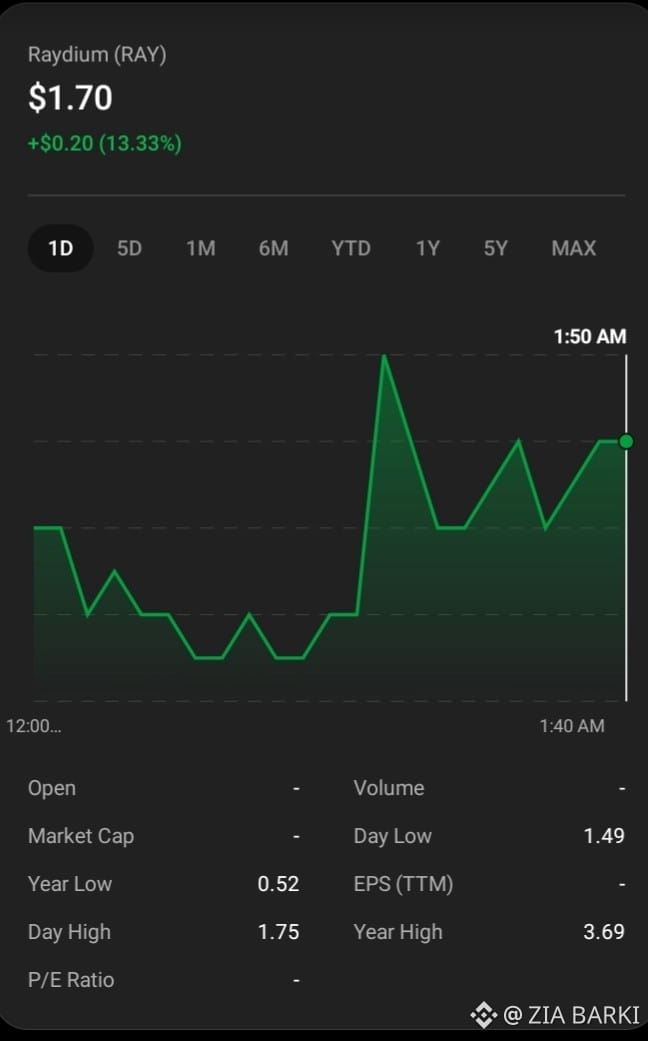
103
·
--
$BNB BToken BNB
Giá $712.4333
giảm -0.68%
Vốn hóa thị trường $ 94,868,422,228.21
Khối lượng 24h $ 1,512,963,461.5218
Nguồn cung lưu hành 133,161,128BNB đã trải qua một giai đoạn giảm kéo dài sau đỉnh điểm tháng 10/2025, chạm đáy gần vùng hỗ trợ $535 vào cuối H1 2026.
Một đợt hồi mạnh bắt đầu vào tháng 7 và kéo dài đến $725 vào cuối tháng 8, giúp giá khôi phục lại các đường trung bình động ngắn hạn và vượt lên trên dải EMA 200 ngày dài hạn, báo hiệu sự thay đổi trong động lượng thị trường.
Đầu tháng 9, giá đã đẩy lên $780 và duy trì quanh mức $725. Nếu đà tăng tiếp tục trong suốt tháng 9, giá BNB có thể vượt qua $780; nếu bứt phá thành công, nó có thể mở đường cho một nhịp tăng hướng tới $850. Các mức ngang và động lực quan trọng này đại diện cho những vùng cung đáng kể trong thời gian tới. Ngoài ra, đường giao cắt vàng đã hình thành giữa EMA 50 ngày và EMA 200 ngày bay#SpotGoldRises0.87%SilverGains1.13% #USCoreCPIRises0.3%InAugustBeatingForecasts ynd, xác nhận rằng xu hướng tăng đã bắt đầu.
Ngược lại, nếu áp lực bán lớn hơn áp lực mua thì việc không duy trì được đà đi lên có thể dẫn đến một đợt từ chối, nếu $700 mất đi như một mức hỗ trợ. Khi đó, sự suy yếu có thể làm vô hiệu cấu trúc phục hồi gần đây, qua đó có thể khiến BNB đối mặt với rủi ro giảm và khả năng kiểm tra lại mức nhu cầu nền tảng $535.
Dự đoán giá Binance Coin (BNB) tháng 9/2026.85
Tổng cung 133,161,128.85
Mức cao nhất mọi thời đại $ 1,370.5460 vào ngày 13 tháng 10 năm 2025
Mức thấp nhất mọi thời đại $ 0.0961 vào ngày 01 tháng 08 năm 2017
{future}(BNBUSDT)
$BNB BToken BNB
Giá $712.4333
giảm -0.68%
Vốn hóa thị trường $ 94,868,422,228.21
Khối lượng 24h $ 1,512,963,461.5218
Nguồn cung lưu hành 133,161,128BNB đã trải qua một giai đoạn giảm kéo dài sau đỉnh điểm tháng 10/2025, chạm đáy gần vùng hỗ trợ $535 vào cuối H1 2026.
Một đợt hồi mạnh bắt đầu vào tháng 7 và kéo dài đến $725 vào cuối tháng 8, giúp giá khôi phục lại các đường trung bình động ngắn hạn và vượt lên trên dải EMA 200 ngày dài hạn, báo hiệu sự thay đổi trong động lượng thị trường.
Đầu tháng 9, giá đã đẩy lên $780 và duy trì quanh mức $725. Nếu đà tăng tiếp tục trong suốt tháng 9, giá BNB có thể vượt qua $780; nếu bứt phá thành công, nó có thể mở đường cho một nhịp tăng hướng tới $850. Các mức ngang và động lực quan trọng này đại diện cho những vùng cung đáng kể trong thời gian tới. Ngoài ra, đường giao cắt vàng đã hình thành giữa EMA 50 ngày và EMA 200 ngày bay#SpotGoldRises0.87%SilverGains1.13% #USCoreCPIRises0.3%InAugustBeatingForecasts ynd, xác nhận rằng xu hướng tăng đã bắt đầu.
Ngược lại, nếu áp lực bán lớn hơn áp lực mua thì việc không duy trì được đà đi lên có thể dẫn đến một đợt từ chối, nếu $700 mất đi như một mức hỗ trợ. Khi đó, sự suy yếu có thể làm vô hiệu cấu trúc phục hồi gần đây, qua đó có thể khiến BNB đối mặt với rủi ro giảm và khả năng kiểm tra lại mức nhu cầu nền tảng $535.
Dự đoán giá Binance Coin (BNB) tháng 9/2026.85
Tổng cung 133,161,128.85
Mức cao nhất mọi thời đại $ 1,370.5460 vào ngày 13 tháng 10 năm 2025
Mức thấp nhất mọi thời đại $ 0.0961 vào ngày 01 tháng 08 năm 2017
Giá $712.4333
giảm -0.68%
Vốn hóa thị trường $ 94,868,422,228.21
Khối lượng 24h $ 1,512,963,461.5218
Nguồn cung lưu hành 133,161,128BNB đã trải qua một giai đoạn giảm kéo dài sau đỉnh điểm tháng 10/2025, chạm đáy gần vùng hỗ trợ $535 vào cuối H1 2026.
Một đợt hồi mạnh bắt đầu vào tháng 7 và kéo dài đến $725 vào cuối tháng 8, giúp giá khôi phục lại các đường trung bình động ngắn hạn và vượt lên trên dải EMA 200 ngày dài hạn, báo hiệu sự thay đổi trong động lượng thị trường.
Đầu tháng 9, giá đã đẩy lên $780 và duy trì quanh mức $725. Nếu đà tăng tiếp tục trong suốt tháng 9, giá BNB có thể vượt qua $780; nếu bứt phá thành công, nó có thể mở đường cho một nhịp tăng hướng tới $850. Các mức ngang và động lực quan trọng này đại diện cho những vùng cung đáng kể trong thời gian tới. Ngoài ra, đường giao cắt vàng đã hình thành giữa EMA 50 ngày và EMA 200 ngày bay#SpotGoldRises0.87%SilverGains1.13% #USCoreCPIRises0.3%InAugustBeatingForecasts ynd, xác nhận rằng xu hướng tăng đã bắt đầu.
Ngược lại, nếu áp lực bán lớn hơn áp lực mua thì việc không duy trì được đà đi lên có thể dẫn đến một đợt từ chối, nếu $700 mất đi như một mức hỗ trợ. Khi đó, sự suy yếu có thể làm vô hiệu cấu trúc phục hồi gần đây, qua đó có thể khiến BNB đối mặt với rủi ro giảm và khả năng kiểm tra lại mức nhu cầu nền tảng $535.
Dự đoán giá Binance Coin (BNB) tháng 9/2026.85
Tổng cung 133,161,128.85
Mức cao nhất mọi thời đại $ 1,370.5460 vào ngày 13 tháng 10 năm 2025
Mức thấp nhất mọi thời đại $ 0.0961 vào ngày 01 tháng 08 năm 2017
60
·
--
$ETH 💥✅ Dự đoán giá trực tiếp Ethereum ($ETH ) – Ngày 12 tháng 9 năm 2025🙏🙏🙏
💥Giá hiện tại: ~$4,610
💥👉 Các mốc hỗ trợ 🔥
Hỗ trợ 1: $4,500
Hỗ trợ 2: $4,400
Hỗ trợ mạnh: $4,200
💥👉 Các mốc kháng cự 🔥
Kháng cự 1: $4,650
Kháng cự 2: $4,700
Kháng cự chính: $4,800
💥👉 Triển vọng giá ngắn hạn (24–48 giờ tới):
Khả năng sẽ kiểm tra lại mức hỗ trợ $4,500 trước khi cố gắng vượt qua $4,650.
Nếu hỗ trợ giữ vững, có thể sẽ có nhịp bật lên hướng tới $4,700 trong 1–2 ngày tới.
💥👉 Mục tiêu trung hạn (Trong 1 tuần tới)🔥
Đà tăng có thể đẩy ETH lên vùng $4,750 – $4,800, với điều kiện kháng cự $4,650 được phá vỡ một cách rõ ràng.
💥👉 Kịch bản giảm giá🔥
Nếu ETH phá xuống dưới $4,500 (hỗ trợ), giá có thể trượt về $4,400, hoặc thấp hơn về $4,200.
Trong trường hợp đó, đà giảm có thể tăng tốc.
💥👉 Kịch bản tăng giá🔥
Áp lực mua mạnh giúp ETH duy trì trên $4,600.
Mục tiêu: $4,700 → $4,750 → $4,800.
🔥💥⚡ Tóm tắt🙏🙏🙏
ETH đang giao dịch quanh $4,610.
Cần theo dõi hỗ trợ: $4,500, $4,400.
Cần theo dõi kháng cự: $4,650, $4,700, $4,800.
Bước đi lớn tiếp theo phụ thuộc vào việc ETH có giữ được trên $4,500 hay phá vỡ thành công $4,650 hay không.
#bearishmomentum
#bulishmoment
$ETH 💥✅ Dự đoán giá trực tiếp Ethereum ($ETH ) – Ngày 12 tháng 9 năm 2025🙏🙏🙏
💥Giá hiện tại: ~$4,610
💥👉 Các mốc hỗ trợ 🔥
Hỗ trợ 1: $4,500
Hỗ trợ 2: $4,400
Hỗ trợ mạnh: $4,200
💥👉 Các mốc kháng cự 🔥
Kháng cự 1: $4,650
Kháng cự 2: $4,700
Kháng cự chính: $4,800
💥👉 Triển vọng giá ngắn hạn (24–48 giờ tới):
Khả năng sẽ kiểm tra lại mức hỗ trợ $4,500 trước khi cố gắng vượt qua $4,650.
Nếu hỗ trợ giữ vững, có thể sẽ có nhịp bật lên hướng tới $4,700 trong 1–2 ngày tới.
💥👉 Mục tiêu trung hạn (Trong 1 tuần tới)🔥
Đà tăng có thể đẩy ETH lên vùng $4,750 – $4,800, với điều kiện kháng cự $4,650 được phá vỡ một cách rõ ràng.
💥👉 Kịch bản giảm giá🔥
Nếu ETH phá xuống dưới $4,500 (hỗ trợ), giá có thể trượt về $4,400, hoặc thấp hơn về $4,200.
Trong trường hợp đó, đà giảm có thể tăng tốc.
💥👉 Kịch bản tăng giá🔥
Áp lực mua mạnh giúp ETH duy trì trên $4,600.
Mục tiêu: $4,700 → $4,750 → $4,800.
🔥💥⚡ Tóm tắt🙏🙏🙏
ETH đang giao dịch quanh $4,610.
Cần theo dõi hỗ trợ: $4,500, $4,400.
Cần theo dõi kháng cự: $4,650, $4,700, $4,800.
Bước đi lớn tiếp theo phụ thuộc vào việc ETH có giữ được trên $4,500 hay phá vỡ thành công $4,650 hay không.
#bearishmomentum
#bulishmoment
💥Giá hiện tại: ~$4,610
💥👉 Các mốc hỗ trợ 🔥
Hỗ trợ 1: $4,500
Hỗ trợ 2: $4,400
Hỗ trợ mạnh: $4,200
💥👉 Các mốc kháng cự 🔥
Kháng cự 1: $4,650
Kháng cự 2: $4,700
Kháng cự chính: $4,800
💥👉 Triển vọng giá ngắn hạn (24–48 giờ tới):
Khả năng sẽ kiểm tra lại mức hỗ trợ $4,500 trước khi cố gắng vượt qua $4,650.
Nếu hỗ trợ giữ vững, có thể sẽ có nhịp bật lên hướng tới $4,700 trong 1–2 ngày tới.
💥👉 Mục tiêu trung hạn (Trong 1 tuần tới)🔥
Đà tăng có thể đẩy ETH lên vùng $4,750 – $4,800, với điều kiện kháng cự $4,650 được phá vỡ một cách rõ ràng.
💥👉 Kịch bản giảm giá🔥
Nếu ETH phá xuống dưới $4,500 (hỗ trợ), giá có thể trượt về $4,400, hoặc thấp hơn về $4,200.
Trong trường hợp đó, đà giảm có thể tăng tốc.
💥👉 Kịch bản tăng giá🔥
Áp lực mua mạnh giúp ETH duy trì trên $4,600.
Mục tiêu: $4,700 → $4,750 → $4,800.
🔥💥⚡ Tóm tắt🙏🙏🙏
ETH đang giao dịch quanh $4,610.
Cần theo dõi hỗ trợ: $4,500, $4,400.
Cần theo dõi kháng cự: $4,650, $4,700, $4,800.
Bước đi lớn tiếp theo phụ thuộc vào việc ETH có giữ được trên $4,500 hay phá vỡ thành công $4,650 hay không.
#bearishmomentum
#bulishmoment
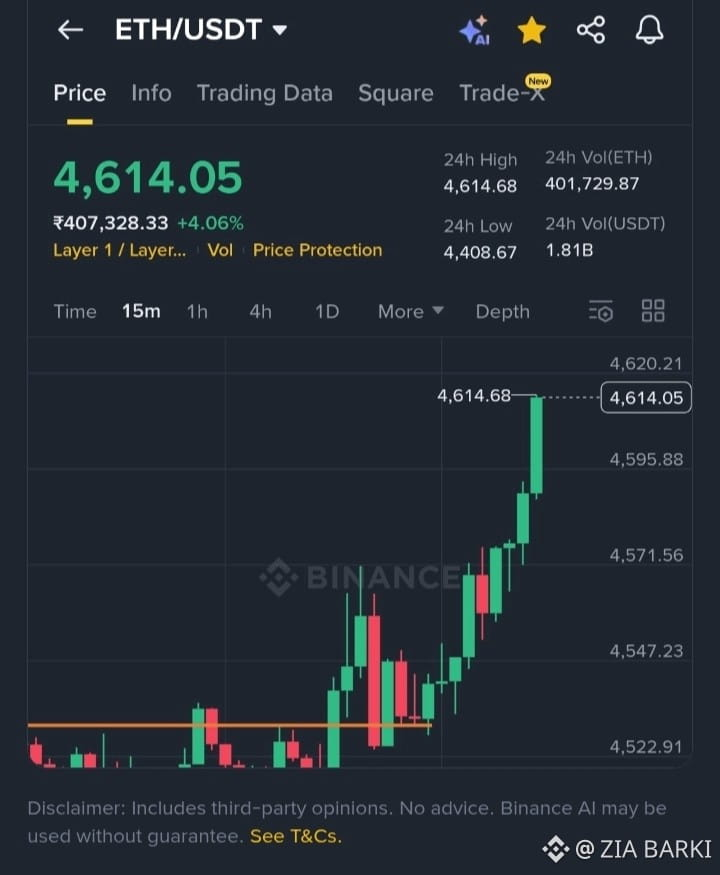
742
·
--
$ZEC Zcash (ZEC) tăng 16,5% vào ngày 3 tháng 9, trở thành mã hoạt động tốt nhất trong số 50 loại tiền mã hóa hàng đầu theo vốn hóa thị trường. Cardano (ADA) tăng 13%, trong khi Dogecoin (DOGE) và CRAP mỗi loại tăng khoảng 10%. Bitcoin (BTC) giao dịch gần 81.460 USD, tăng 5,4% trong ngày.
Những biến động đó đã đẩy tổng vốn hóa thị trường tiền mã hóa toàn cầu lên 2,82 nghìn tỷ USD, mức cao nhất trong hơn bảy tháng. Con số này phản ánh đà phục hồi sau đợt bán tháo bắt đầu từ giữa tháng 1, khi tổng vốn hóa thị trường giảm từ khoảng 3,4 nghìn tỷ USD xuống xấp xỉ 2,3 nghìn tỷ USD trong tuần đầu tiên của tháng 2.
{future}(ZECUSDT)
$ZEC Zcash (ZEC) tăng 16,5% vào ngày 3 tháng 9, trở thành mã hoạt động tốt nhất trong số 50 loại tiền mã hóa hàng đầu theo vốn hóa thị trường. Cardano (ADA) tăng 13%, trong khi Dogecoin (DOGE) và CRAP mỗi loại tăng khoảng 10%. Bitcoin (BTC) giao dịch gần 81.460 USD, tăng 5,4% trong ngày.
Những biến động đó đã đẩy tổng vốn hóa thị trường tiền mã hóa toàn cầu lên 2,82 nghìn tỷ USD, mức cao nhất trong hơn bảy tháng. Con số này phản ánh đà phục hồi sau đợt bán tháo bắt đầu từ giữa tháng 1, khi tổng vốn hóa thị trường giảm từ khoảng 3,4 nghìn tỷ USD xuống xấp xỉ 2,3 nghìn tỷ USD trong tuần đầu tiên của tháng 2.
Những biến động đó đã đẩy tổng vốn hóa thị trường tiền mã hóa toàn cầu lên 2,82 nghìn tỷ USD, mức cao nhất trong hơn bảy tháng. Con số này phản ánh đà phục hồi sau đợt bán tháo bắt đầu từ giữa tháng 1, khi tổng vốn hóa thị trường giảm từ khoảng 3,4 nghìn tỷ USD xuống xấp xỉ 2,3 nghìn tỷ USD trong tuần đầu tiên của tháng 2.
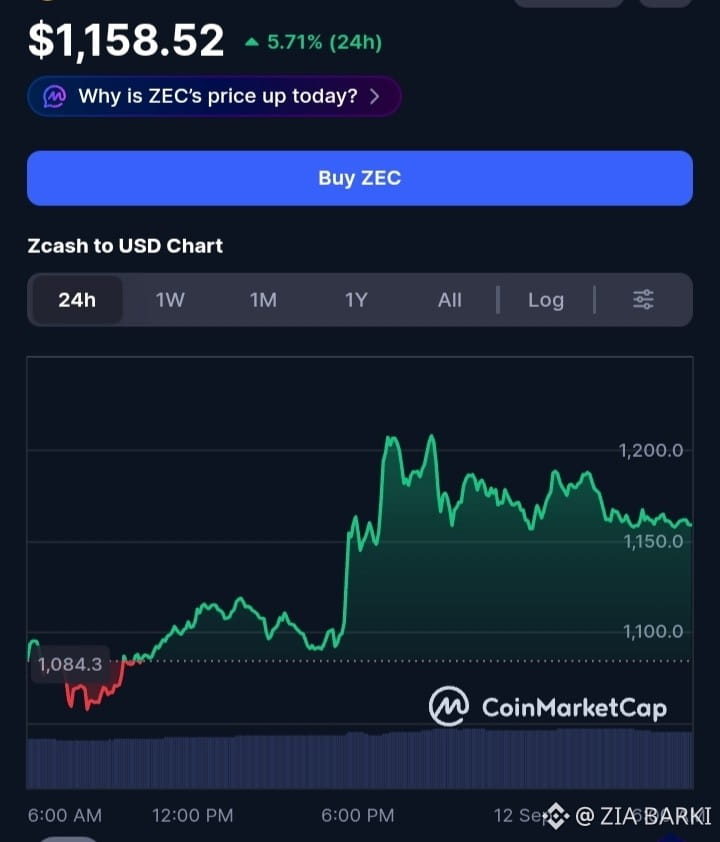
180
·
--
Xem bản dịch
$ZEC Why Is Zcash (ZEC) Down Today?
Zcash (ZEC)'s price declined by 12.42% over the past 24h, possibly reflecting reduced trading activity and broader market caution affecting crypto assets.
Recent market activity suggests moderating buying momentum, which may reflect short-term adjustments in trading activity following recent price movements.
At the same time, broader trends across the crypto market may be contributing to normal price fluctuations, influencing Zcash (ZEC)'s performance alongside other digital assets.
{future}(ZECUSDT)
#OracleJumpsOver6%OnEarningsBeat
$ZEC Why Is Zcash (ZEC) Down Today?
Zcash (ZEC)'s price declined by 12.42% over the past 24h, possibly reflecting reduced trading activity and broader market caution affecting crypto assets.
Recent market activity suggests moderating buying momentum, which may reflect short-term adjustments in trading activity following recent price movements.
At the same time, broader trends across the crypto market may be contributing to normal price fluctuations, influencing Zcash (ZEC)'s performance alongside other digital assets.
#OracleJumpsOver6%OnEarningsBeat
Zcash (ZEC)'s price declined by 12.42% over the past 24h, possibly reflecting reduced trading activity and broader market caution affecting crypto assets.
Recent market activity suggests moderating buying momentum, which may reflect short-term adjustments in trading activity following recent price movements.
At the same time, broader trends across the crypto market may be contributing to normal price fluctuations, influencing Zcash (ZEC)'s performance alongside other digital assets.
#OracleJumpsOver6%OnEarningsBeat
88
·
--
$BNB Tại sao BNB (BNB) giảm hôm nay?
Giá BNB (BNB) đã giảm 0,5% trong 24 giờ qua, có thể phản ánh hoạt động giao dịch giảm sút và tâm lý thận trọng hơn từ thị trường rộng hơn đối với các tài sản crypto.
Hoạt động thị trường gần đây cho thấy đà mua có thể đang chậm lại, điều này có thể phản ánh các điều chỉnh ngắn hạn trong hoạt động giao dịch sau những biến động giá gần đây.
Đồng thời, các xu hướng rộng hơn trên toàn thị trường crypto có thể góp phần tạo ra những dao động giá bình thường, ảnh hưởng đến hiệu suất của BNB (BNB) cùng với các tài sản kỹ thuật số khác.
{future}(BNBUSDT)
#AppleRises3.56%AfterIPhoneDuoLaunch ##CPIWatch
$BNB Tại sao BNB (BNB) giảm hôm nay?
Giá BNB (BNB) đã giảm 0,5% trong 24 giờ qua, có thể phản ánh hoạt động giao dịch giảm sút và tâm lý thận trọng hơn từ thị trường rộng hơn đối với các tài sản crypto.
Hoạt động thị trường gần đây cho thấy đà mua có thể đang chậm lại, điều này có thể phản ánh các điều chỉnh ngắn hạn trong hoạt động giao dịch sau những biến động giá gần đây.
Đồng thời, các xu hướng rộng hơn trên toàn thị trường crypto có thể góp phần tạo ra những dao động giá bình thường, ảnh hưởng đến hiệu suất của BNB (BNB) cùng với các tài sản kỹ thuật số khác.
#AppleRises3.56%AfterIPhoneDuoLaunch ##CPIWatch
Giá BNB (BNB) đã giảm 0,5% trong 24 giờ qua, có thể phản ánh hoạt động giao dịch giảm sút và tâm lý thận trọng hơn từ thị trường rộng hơn đối với các tài sản crypto.
Hoạt động thị trường gần đây cho thấy đà mua có thể đang chậm lại, điều này có thể phản ánh các điều chỉnh ngắn hạn trong hoạt động giao dịch sau những biến động giá gần đây.
Đồng thời, các xu hướng rộng hơn trên toàn thị trường crypto có thể góp phần tạo ra những dao động giá bình thường, ảnh hưởng đến hiệu suất của BNB (BNB) cùng với các tài sản kỹ thuật số khác.
#AppleRises3.56%AfterIPhoneDuoLaunch ##CPIWatch

28
·
--
Xem bản dịch
$MARSCOIN MarsCoin is up 15.27% to $0.116 in 24h, strongly outperforming a down market where Bitcoin fell 1.78%. The move is primarily driven by momentum from its recent Binance listing and associated social media hype.
Primary reason: Binance spot listing catalyst, driving accessibility and speculative interest.
Secondary reasons: Social media narrative comparing it to past meme rallies like SHIB.
Near-term market outlook: If MarsCoin holds above $0.10 support, it could retest the $0.15 a
{future}(MARSCOINUSDT)
#SaudiCrudeOutputHitsLowestSince1990 rea; a break below risks a deeper pullback toward $0.08.
$MARSCOIN MarsCoin is up 15.27% to $0.116 in 24h, strongly outperforming a down market where Bitcoin fell 1.78%. The move is primarily driven by momentum from its recent Binance listing and associated social media hype.
Primary reason: Binance spot listing catalyst, driving accessibility and speculative interest.
Secondary reasons: Social media narrative comparing it to past meme rallies like SHIB.
Near-term market outlook: If MarsCoin holds above $0.10 support, it could retest the $0.15 a
#SaudiCrudeOutputHitsLowestSince1990 rea; a break below risks a deeper pullback toward $0.08.
Primary reason: Binance spot listing catalyst, driving accessibility and speculative interest.
Secondary reasons: Social media narrative comparing it to past meme rallies like SHIB.
Near-term market outlook: If MarsCoin holds above $0.10 support, it could retest the $0.15 a
#SaudiCrudeOutputHitsLowestSince1990 rea; a break below risks a deeper pullback toward $0.08.
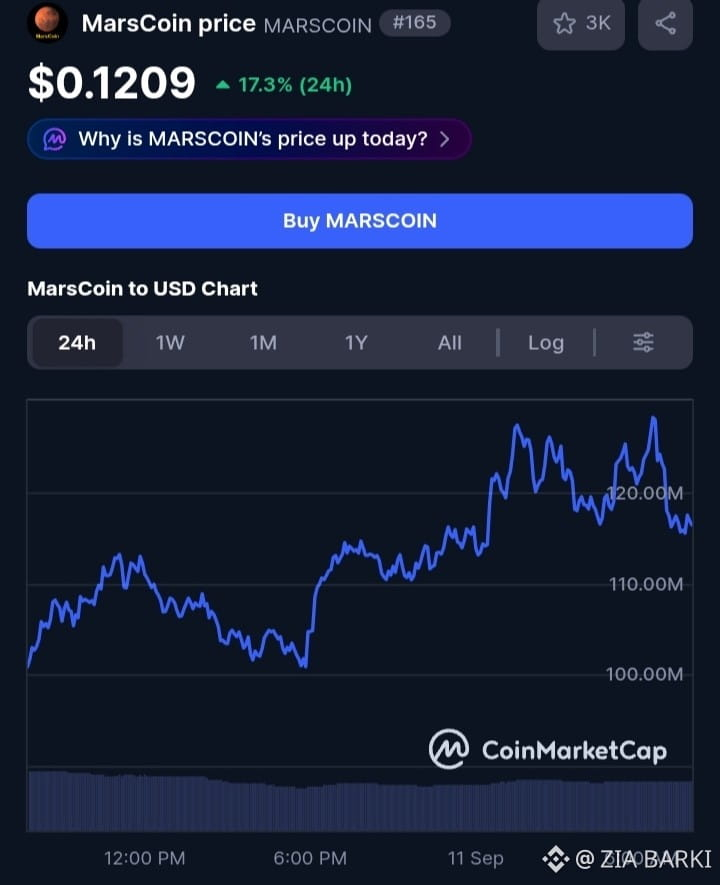
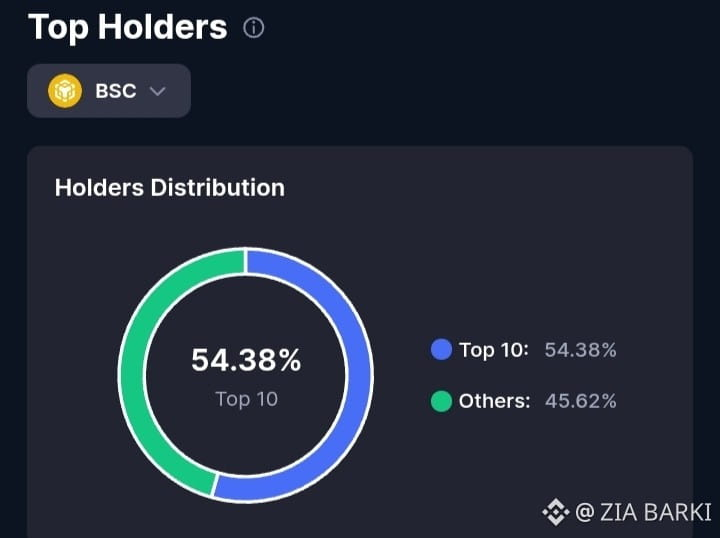
97
·
--
Xem bản dịch
#Top7AssetsHold92.1%OfCryptoTop100 $SUI.US Why Is Sui (SUI) Up Today?
Sui (SUI)'s price rose by 1.29% in the past 24h, potentially influenced by improving market sentiment and increased trading activity.
Recent market data suggests growing buying interest, which may indicate traders entering new positions or responding to recent market momentum.
In addition, broader market trends and positive sentiment across digital assets may be contributing to short-term price strength, supporting gains in Sui (SUI) along with the wider crypto market.
{future}(SUIUSDT)
#Top7AssetsHold92.1%OfCryptoTop100 $SUI.US Why Is Sui (SUI) Up Today?
Sui (SUI)'s price rose by 1.29% in the past 24h, potentially influenced by improving market sentiment and increased trading activity.
Recent market data suggests growing buying interest, which may indicate traders entering new positions or responding to recent market momentum.
In addition, broader market trends and positive sentiment across digital assets may be contributing to short-term price strength, supporting gains in Sui (SUI) along with the wider crypto market.
Sui (SUI)'s price rose by 1.29% in the past 24h, potentially influenced by improving market sentiment and increased trading activity.
Recent market data suggests growing buying interest, which may indicate traders entering new positions or responding to recent market momentum.
In addition, broader market trends and positive sentiment across digital assets may be contributing to short-term price strength, supporting gains in Sui (SUI) along with the wider crypto market.
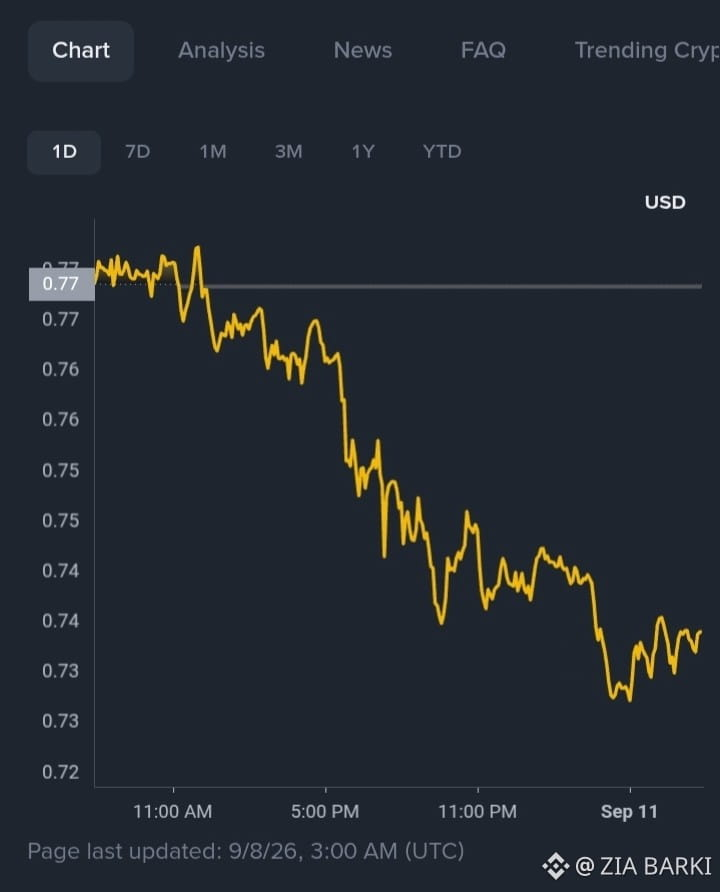
SUIUS-0,37%
46
·
--
Giá của $ZEC (ZEC) đã giảm 0,96% trong 24 giờ qua, có thể phản ánh hoạt động giao dịch giảm sút và tâm lý thận trọng hơn từ thị trường rộng hơn đang tác động đến các tài sản crypto.
Hoạt động thị trường gần đây cho thấy đà mua có dấu hiệu chậm lại, có thể phản ánh sự điều chỉnh ngắn hạn trong hoạt động giao dịch sau các biến động giá gần đây.
Đồng thời, các xu hướng rộng hơn trên toàn thị trường crypto cũng có thể góp phần gây ra các dao động giá mang tính bình thường, ảnh hưởng đến hiệu suất của Zcash (ZEC) cùng với các tài sản kỹ thuật số khác.
{future}(ZECUSDT)
#CryptoSectorsFallSecondDay #IranBlocksStraitOfHormuz #Top7AssetsHold92.1%OfCryptoTop100
Giá của $ZEC (ZEC) đã giảm 0,96% trong 24 giờ qua, có thể phản ánh hoạt động giao dịch giảm sút và tâm lý thận trọng hơn từ thị trường rộng hơn đang tác động đến các tài sản crypto.
Hoạt động thị trường gần đây cho thấy đà mua có dấu hiệu chậm lại, có thể phản ánh sự điều chỉnh ngắn hạn trong hoạt động giao dịch sau các biến động giá gần đây.
Đồng thời, các xu hướng rộng hơn trên toàn thị trường crypto cũng có thể góp phần gây ra các dao động giá mang tính bình thường, ảnh hưởng đến hiệu suất của Zcash (ZEC) cùng với các tài sản kỹ thuật số khác.
#CryptoSectorsFallSecondDay #IranBlocksStraitOfHormuz #Top7AssetsHold92.1%OfCryptoTop100
Hoạt động thị trường gần đây cho thấy đà mua có dấu hiệu chậm lại, có thể phản ánh sự điều chỉnh ngắn hạn trong hoạt động giao dịch sau các biến động giá gần đây.
Đồng thời, các xu hướng rộng hơn trên toàn thị trường crypto cũng có thể góp phần gây ra các dao động giá mang tính bình thường, ảnh hưởng đến hiệu suất của Zcash (ZEC) cùng với các tài sản kỹ thuật số khác.
#CryptoSectorsFallSecondDay #IranBlocksStraitOfHormuz #Top7AssetsHold92.1%OfCryptoTop100


172
·
--
{future}(BTCUSDT)
#USADPWeeklyEmploymentRises12000 $BTC Bitcoin đang giao dịch quanh mức 79K USD, với dữ liệu gần đây cho thấy biên độ trong 24 giờ ở khoảng giữa 77,6K USD và 79,7K USD. �
The Agent Times +1
Bản tin kỹ thuật
Xu hướng: Đi ngang / biến động gần 79K USD
Hỗ trợ: khoảng 77,6K–78K USD
Kháng cự: khoảng 79,7K–80K USD
Mốc quan trọng: Nếu duy trì được mức tăng trên 80K USD sẽ củng cố bức tranh tăng giá; việc mất khoảng 77,6K USD sẽ làm suy yếu bức tranh này.
Rủi ro thị trường: Giá dầu tăng, lợi suất Trái phiếu Kho bạc và sự không chắc chắn xung quanh quyết định sắp tới của Fed đang tạo áp lực lên các tài sản rủi ro. �
Reuters +1
Lưu ý: Đây là các mốc thị trường, không phải tín hiệu đảm bảo mua/bán.
#USADPWeeklyEmploymentRises12000 $BTC Bitcoin đang giao dịch quanh mức 79K USD, với dữ liệu gần đây cho thấy biên độ trong 24 giờ ở khoảng giữa 77,6K USD và 79,7K USD. �
The Agent Times +1
Bản tin kỹ thuật
Xu hướng: Đi ngang / biến động gần 79K USD
Hỗ trợ: khoảng 77,6K–78K USD
Kháng cự: khoảng 79,7K–80K USD
Mốc quan trọng: Nếu duy trì được mức tăng trên 80K USD sẽ củng cố bức tranh tăng giá; việc mất khoảng 77,6K USD sẽ làm suy yếu bức tranh này.
Rủi ro thị trường: Giá dầu tăng, lợi suất Trái phiếu Kho bạc và sự không chắc chắn xung quanh quyết định sắp tới của Fed đang tạo áp lực lên các tài sản rủi ro. �
Reuters +1
Lưu ý: Đây là các mốc thị trường, không phải tín hiệu đảm bảo mua/bán.
The Agent Times +1
Bản tin kỹ thuật
Xu hướng: Đi ngang / biến động gần 79K USD
Hỗ trợ: khoảng 77,6K–78K USD
Kháng cự: khoảng 79,7K–80K USD
Mốc quan trọng: Nếu duy trì được mức tăng trên 80K USD sẽ củng cố bức tranh tăng giá; việc mất khoảng 77,6K USD sẽ làm suy yếu bức tranh này.
Rủi ro thị trường: Giá dầu tăng, lợi suất Trái phiếu Kho bạc và sự không chắc chắn xung quanh quyết định sắp tới của Fed đang tạo áp lực lên các tài sản rủi ro. �
Reuters +1
Lưu ý: Đây là các mốc thị trường, không phải tín hiệu đảm bảo mua/bán.
9
·
--

Bài viết
Xem bản dịch
NEAR PROTOCOL COMPLETE OVERVIEWWriting
NEAR Protocol: Complete Overview and Fundamental Analysis
Introduction
NEAR Protocol is a blockchain platform designed to make decentralized applications faster, cheaper, and easier to use. Unlike many early blockchain networks that focused primarily on payments or basic smart contracts, NEAR has increasingly positioned itself around scalability, cross-chain applications, and the emerging AI-agent economy.
Its architecture is based on sharding, allowing network activity to be processed across multiple shards rather than forcing every validator to process all activity. NEAR's current architecture highlights 600 ms block times, approximately 1.2-second finality, and scalability through sharding.
What Is NEAR Protocol?
NEAR Protocol is a Layer-1 blockchain that provides infrastructure for developers to build decentralized applications and smart contracts.
The project was co-founded by Illia Polosukhin, one of the researchers associated with the Transformer architecture that became foundational to modern AI. NEAR's current strategy therefore places significant emphasis on connecting blockchain infrastructure with AI applications and autonomous agents.
The native cryptocurrency of the network is NEAR. It is used within the ecosystem for network operations, staking and other protocol functions.
NEAR's Core Technology
1. Nightshade Sharding
One of NEAR's most important technological features is Nightshade, its sharding architecture.
Sharding divides blockchain workload across multiple parts of the network. Instead of requiring every participant to process everything, different shards can handle different portions of activity. NEAR's updated Nightshade design incorporates stateless validation and is intended to allow the network to scale horizontally as demand increases.
This gives NEAR an important potential advantage: increasing network capacity without simply requiring every individual validator to become increasingly powerful.
2. Fast Finality
NEAR currently advertises approximately 600 ms block times and 1.2-second finality. These characteristics are important for applications that require quick confirmation, particularly financial applications and applications involving frequent user interactions.
3. Developer-Friendly Design
NEAR focuses heavily on reducing the complexity of blockchain applications. Its developer platform supports familiar programming environments, human-readable accounts and mechanisms that can make applications easier for mainstream users to interact with.
NEAR Intents
One of the most important developments in the NEAR ecosystem is NEAR Intents.
NEAR Intents is designed to simplify transactions across different blockchain networks. Instead of requiring users or applications to manually manage bridges, different gas assets and fragmented liquidity, users can specify the desired outcome while specialized solvers compete to execute the transaction.
The project currently describes Intents as a universal liquidity and transaction layer, supporting cross-chain swaps and other forms of execution. Its official site reports more than $27 billion in cumulative volume across 34 chains.
This is significant because blockchain users often face a fragmented ecosystem containing many independent networks. If NEAR can become an effective abstraction layer between these networks, its utility could extend well beyond applications running directly on NEAR.
NEAR and Artificial Intelligence
AI has become a central part of NEAR's current strategy.
The project's 2026 roadmap describes two major pillars: cross-chain financial infrastructure through NEAR Intents and autonomous AI agents through NEAR AI.
The idea is that AI agents could eventually perform tasks such as interacting with applications, managing digital assets, executing transactions and coordinating economic activity.
NEAR is also developing infrastructure around private AI inference and secure environments. Its blockchain platform highlights confidential execution and private infrastructure intended for applications where sensitive information should not simply be exposed publicly.
This gives NEAR exposure to two major narratives at once:
Blockchain + AI + Cross-chain infrastructure
However, an important distinction should be made: having an AI-focused narrative does not automatically mean that the network will achieve large-scale AI adoption. Long-term fundamentals will depend on actual users, developers, applications, transaction activity and sustainable revenue.
Chain Abstraction
Another major component of NEAR's strategy is chain abstraction.
The objective is to make blockchain technology feel less fragmented to users. Instead of requiring someone to understand which blockchain an asset belongs to, which network should be selected, or which token is required for fees, applications can abstract much of this complexity.
NEAR's Chain Abstraction ecosystem combines technologies such as Chain Signatures, Omnibridge and NEAR Intents to facilitate cross-chain interactions.
If successful, this approach could help blockchain applications become more accessible to mainstream users.
NEAR Tokenomics
The NEAR token is the native asset of the NEAR ecosystem.
The token has roles connected to network economics, including transaction fees and staking. NEAR's current website also describes a tokenomics model in which protocol revenue contributes to NEAR buybacks and characterizes the token's supply trajectory as deflationary.
For fundamental analysis, however, token utility should be separated from speculation.
A strong blockchain does not necessarily guarantee strong token performance. Investors and analysts generally need to consider whether increasing network activity actually creates sustainable demand for the token.
Ecosystem and Adoption
NEAR has developed an ecosystem of decentralized applications, infrastructure providers, wallets and developer tools.
The project's developer center reports more than 3.34 billion transactions processed, while highlighting low fees and approximately 1.09-second average block times. These are figures reported by NEAR itself and should therefore be treated as project-reported metrics rather than independent verification.
NEAR Intents also provides an important adoption signal because it connects activity across multiple blockchain ecosystems rather than relying exclusively on NEAR-native applications.
Competitive Landscape
NEAR operates in a highly competitive Layer-1 and blockchain-infrastructure market.
It competes indirectly or directly with ecosystems such as:
Ethereum
Solana
BNB Chain
Avalanche
Sui
Aptos
Other high-throughput Layer-1 and interoperability networks
NEAR's differentiation is therefore not simply speed.
Its stronger strategic argument is the combination of:
Sharding + chain abstraction + cross-chain execution + AI infrastructure.
The challenge is proving that this combination can attract enough users and developers to create durable network effects.
Major Strengths
Scalability
NEAR's sharded architecture is designed to increase capacity as demand grows.
Fast transactions
The network advertises fast block production and finality, making it suitable for applications requiring rapid confirmation.
Cross-chain functionality
NEAR Intents and Chain Abstraction attempt to solve one of crypto's biggest usability problems: fragmentation between blockchains.
AI positioning
NEAR is building infrastructure specifically around autonomous agents and private AI applications, giving the ecosystem exposure to a potentially important technological trend.
Developer experience
NEAR emphasizes low fees, familiar development tools and simplified user experiences.
Major Risks
Strong competition
The blockchain sector is extremely competitive. Ethereum, Solana and other networks have large developer and user communities.
AI narrative risk
AI is currently a powerful technology narrative, but the long-term value of an AI-focused blockchain depends on real adoption rather than marketing.
Adoption risk
Technology alone does not guarantee success. NEAR needs continued growth in developers, users, applications, transaction activity and economic value.
Token-value risk
Growth in the NEAR ecosystem does not automatically translate into proportional appreciation of the NEAR token. Token economics and actual value capture remain important factors to monitor.
Market volatility
Cryptocurrency markets can experience significant price fluctuations. Fundamental improvements can coexist with substantial short-term price declines.
Future Outlook
NEAR's 2026 roadmap is focused on building what it calls an agentic economy, combining cross-chain financial infrastructure with autonomous AI agents.
The long-term thesis is ambitious:
AI agents could become economic participants that need secure identities, payments, assets, computation and cross-chain execution.
If that model becomes widespread, infrastructure capable of allowing agents to transact autonomously could become increasingly valuable.
NEAR is attempting to position itself as one such infrastructure layer.
Fundamental Conclusion
NEAR Protocol is more than a conventional Layer-1 blockchain. Its fundamental thesis has evolved toward scalable blockchain infrastructure, cross-chain abstraction and AI-agent applications.
Its strongest characteristics are its sharded architecture, fast finality, developer-oriented design and growing emphasis on cross-chain execution through NEAR Intents.
The biggest question is not whether NEAR has sophisticated technology—it clearly does. The key question is whether that technology can translate into sustained adoption, meaningful economic activity and durable value capture for the NEAR ecosystem and token.
Overall, NEAR presents an interesting but high-risk long-term blockchain thesis, particularly for people studying the intersection of AI and Web3. It should be evaluated alongside competing ecosystems and with attention to actual adoption metrics rather than narrative alone.
If you want, I can also �turn this into a Binance-s
{future}(NEARUSDT)
t##yle #yle a 5-line summary.
NEAR PROTOCOL COMPLETE OVERVIEW
Writing
NEAR Protocol: Complete Overview and Fundamental Analysis
Introduction
NEAR Protocol is a blockchain platform designed to make decentralized applications faster, cheaper, and easier to use. Unlike many early blockchain networks that focused primarily on payments or basic smart contracts, NEAR has increasingly positioned itself around scalability, cross-chain applications, and the emerging AI-agent economy.
Its architecture is based on sharding, allowing network activity to be processed across multiple shards rather than forcing every validator to process all activity. NEAR's current architecture highlights 600 ms block times, approximately 1.2-second finality, and scalability through sharding.
What Is NEAR Protocol?
NEAR Protocol is a Layer-1 blockchain that provides infrastructure for developers to build decentralized applications and smart contracts.
The project was co-founded by Illia Polosukhin, one of the researchers associated with the Transformer architecture that became foundational to modern AI. NEAR's current strategy therefore places significant emphasis on connecting blockchain infrastructure with AI applications and autonomous agents.
The native cryptocurrency of the network is NEAR. It is used within the ecosystem for network operations, staking and other protocol functions.
NEAR's Core Technology
1. Nightshade Sharding
One of NEAR's most important technological features is Nightshade, its sharding architecture.
Sharding divides blockchain workload across multiple parts of the network. Instead of requiring every participant to process everything, different shards can handle different portions of activity. NEAR's updated Nightshade design incorporates stateless validation and is intended to allow the network to scale horizontally as demand increases.
This gives NEAR an important potential advantage: increasing network capacity without simply requiring every individual validator to become increasingly powerful.
2. Fast Finality
NEAR currently advertises approximately 600 ms block times and 1.2-second finality. These characteristics are important for applications that require quick confirmation, particularly financial applications and applications involving frequent user interactions.
3. Developer-Friendly Design
NEAR focuses heavily on reducing the complexity of blockchain applications. Its developer platform supports familiar programming environments, human-readable accounts and mechanisms that can make applications easier for mainstream users to interact with.
NEAR Intents
One of the most important developments in the NEAR ecosystem is NEAR Intents.
NEAR Intents is designed to simplify transactions across different blockchain networks. Instead of requiring users or applications to manually manage bridges, different gas assets and fragmented liquidity, users can specify the desired outcome while specialized solvers compete to execute the transaction.
The project currently describes Intents as a universal liquidity and transaction layer, supporting cross-chain swaps and other forms of execution. Its official site reports more than $27 billion in cumulative volume across 34 chains.
This is significant because blockchain users often face a fragmented ecosystem containing many independent networks. If NEAR can become an effective abstraction layer between these networks, its utility could extend well beyond applications running directly on NEAR.
NEAR and Artificial Intelligence
AI has become a central part of NEAR's current strategy.
The project's 2026 roadmap describes two major pillars: cross-chain financial infrastructure through NEAR Intents and autonomous AI agents through NEAR AI.
The idea is that AI agents could eventually perform tasks such as interacting with applications, managing digital assets, executing transactions and coordinating economic activity.
NEAR is also developing infrastructure around private AI inference and secure environments. Its blockchain platform highlights confidential execution and private infrastructure intended for applications where sensitive information should not simply be exposed publicly.
This gives NEAR exposure to two major narratives at once:
Blockchain + AI + Cross-chain infrastructure
However, an important distinction should be made: having an AI-focused narrative does not automatically mean that the network will achieve large-scale AI adoption. Long-term fundamentals will depend on actual users, developers, applications, transaction activity and sustainable revenue.
Chain Abstraction
Another major component of NEAR's strategy is chain abstraction.
The objective is to make blockchain technology feel less fragmented to users. Instead of requiring someone to understand which blockchain an asset belongs to, which network should be selected, or which token is required for fees, applications can abstract much of this complexity.
NEAR's Chain Abstraction ecosystem combines technologies such as Chain Signatures, Omnibridge and NEAR Intents to facilitate cross-chain interactions.
If successful, this approach could help blockchain applications become more accessible to mainstream users.
NEAR Tokenomics
The NEAR token is the native asset of the NEAR ecosystem.
The token has roles connected to network economics, including transaction fees and staking. NEAR's current website also describes a tokenomics model in which protocol revenue contributes to NEAR buybacks and characterizes the token's supply trajectory as deflationary.
For fundamental analysis, however, token utility should be separated from speculation.
A strong blockchain does not necessarily guarantee strong token performance. Investors and analysts generally need to consider whether increasing network activity actually creates sustainable demand for the token.
Ecosystem and Adoption
NEAR has developed an ecosystem of decentralized applications, infrastructure providers, wallets and developer tools.
The project's developer center reports more than 3.34 billion transactions processed, while highlighting low fees and approximately 1.09-second average block times. These are figures reported by NEAR itself and should therefore be treated as project-reported metrics rather than independent verification.
NEAR Intents also provides an important adoption signal because it connects activity across multiple blockchain ecosystems rather than relying exclusively on NEAR-native applications.
Competitive Landscape
NEAR operates in a highly competitive Layer-1 and blockchain-infrastructure market.
It competes indirectly or directly with ecosystems such as:
Ethereum
Solana
BNB Chain
Avalanche
Sui
Aptos
Other high-throughput Layer-1 and interoperability networks
NEAR's differentiation is therefore not simply speed.
Its stronger strategic argument is the combination of:
Sharding + chain abstraction + cross-chain execution + AI infrastructure.
The challenge is proving that this combination can attract enough users and developers to create durable network effects.
Major Strengths
Scalability
NEAR's sharded architecture is designed to increase capacity as demand grows.
Fast transactions
The network advertises fast block production and finality, making it suitable for applications requiring rapid confirmation.
Cross-chain functionality
NEAR Intents and Chain Abstraction attempt to solve one of crypto's biggest usability problems: fragmentation between blockchains.
AI positioning
NEAR is building infrastructure specifically around autonomous agents and private AI applications, giving the ecosystem exposure to a potentially important technological trend.
Developer experience
NEAR emphasizes low fees, familiar development tools and simplified user experiences.
Major Risks
Strong competition
The blockchain sector is extremely competitive. Ethereum, Solana and other networks have large developer and user communities.
AI narrative risk
AI is currently a powerful technology narrative, but the long-term value of an AI-focused blockchain depends on real adoption rather than marketing.
Adoption risk
Technology alone does not guarantee success. NEAR needs continued growth in developers, users, applications, transaction activity and economic value.
Token-value risk
Growth in the NEAR ecosystem does not automatically translate into proportional appreciation of the NEAR token. Token economics and actual value capture remain important factors to monitor.
Market volatility
Cryptocurrency markets can experience significant price fluctuations. Fundamental improvements can coexist with substantial short-term price declines.
Future Outlook
NEAR's 2026 roadmap is focused on building what it calls an agentic economy, combining cross-chain financial infrastructure with autonomous AI agents.
The long-term thesis is ambitious:
AI agents could become economic participants that need secure identities, payments, assets, computation and cross-chain execution.
If that model becomes widespread, infrastructure capable of allowing agents to transact autonomously could become increasingly valuable.
NEAR is attempting to position itself as one such infrastructure layer.
Fundamental Conclusion
NEAR Protocol is more than a conventional Layer-1 blockchain. Its fundamental thesis has evolved toward scalable blockchain infrastructure, cross-chain abstraction and AI-agent applications.
Its strongest characteristics are its sharded architecture, fast finality, developer-oriented design and growing emphasis on cross-chain execution through NEAR Intents.
The biggest question is not whether NEAR has sophisticated technology—it clearly does. The key question is whether that technology can translate into sustained adoption, meaningful economic activity and durable value capture for the NEAR ecosystem and token.
Overall, NEAR presents an interesting but high-risk long-term blockchain thesis, particularly for people studying the intersection of AI and Web3. It should be evaluated alongside competing ecosystems and with attention to actual adoption metrics rather than narrative alone.
If you want, I can also �turn this into a Binance-s
t##yle #yle a 5-line summary.
NEAR Protocol: Complete Overview and Fundamental Analysis
Introduction
NEAR Protocol is a blockchain platform designed to make decentralized applications faster, cheaper, and easier to use. Unlike many early blockchain networks that focused primarily on payments or basic smart contracts, NEAR has increasingly positioned itself around scalability, cross-chain applications, and the emerging AI-agent economy.
Its architecture is based on sharding, allowing network activity to be processed across multiple shards rather than forcing every validator to process all activity. NEAR's current architecture highlights 600 ms block times, approximately 1.2-second finality, and scalability through sharding.
What Is NEAR Protocol?
NEAR Protocol is a Layer-1 blockchain that provides infrastructure for developers to build decentralized applications and smart contracts.
The project was co-founded by Illia Polosukhin, one of the researchers associated with the Transformer architecture that became foundational to modern AI. NEAR's current strategy therefore places significant emphasis on connecting blockchain infrastructure with AI applications and autonomous agents.
The native cryptocurrency of the network is NEAR. It is used within the ecosystem for network operations, staking and other protocol functions.
NEAR's Core Technology
1. Nightshade Sharding
One of NEAR's most important technological features is Nightshade, its sharding architecture.
Sharding divides blockchain workload across multiple parts of the network. Instead of requiring every participant to process everything, different shards can handle different portions of activity. NEAR's updated Nightshade design incorporates stateless validation and is intended to allow the network to scale horizontally as demand increases.
This gives NEAR an important potential advantage: increasing network capacity without simply requiring every individual validator to become increasingly powerful.
2. Fast Finality
NEAR currently advertises approximately 600 ms block times and 1.2-second finality. These characteristics are important for applications that require quick confirmation, particularly financial applications and applications involving frequent user interactions.
3. Developer-Friendly Design
NEAR focuses heavily on reducing the complexity of blockchain applications. Its developer platform supports familiar programming environments, human-readable accounts and mechanisms that can make applications easier for mainstream users to interact with.
NEAR Intents
One of the most important developments in the NEAR ecosystem is NEAR Intents.
NEAR Intents is designed to simplify transactions across different blockchain networks. Instead of requiring users or applications to manually manage bridges, different gas assets and fragmented liquidity, users can specify the desired outcome while specialized solvers compete to execute the transaction.
The project currently describes Intents as a universal liquidity and transaction layer, supporting cross-chain swaps and other forms of execution. Its official site reports more than $27 billion in cumulative volume across 34 chains.
This is significant because blockchain users often face a fragmented ecosystem containing many independent networks. If NEAR can become an effective abstraction layer between these networks, its utility could extend well beyond applications running directly on NEAR.
NEAR and Artificial Intelligence
AI has become a central part of NEAR's current strategy.
The project's 2026 roadmap describes two major pillars: cross-chain financial infrastructure through NEAR Intents and autonomous AI agents through NEAR AI.
The idea is that AI agents could eventually perform tasks such as interacting with applications, managing digital assets, executing transactions and coordinating economic activity.
NEAR is also developing infrastructure around private AI inference and secure environments. Its blockchain platform highlights confidential execution and private infrastructure intended for applications where sensitive information should not simply be exposed publicly.
This gives NEAR exposure to two major narratives at once:
Blockchain + AI + Cross-chain infrastructure
However, an important distinction should be made: having an AI-focused narrative does not automatically mean that the network will achieve large-scale AI adoption. Long-term fundamentals will depend on actual users, developers, applications, transaction activity and sustainable revenue.
Chain Abstraction
Another major component of NEAR's strategy is chain abstraction.
The objective is to make blockchain technology feel less fragmented to users. Instead of requiring someone to understand which blockchain an asset belongs to, which network should be selected, or which token is required for fees, applications can abstract much of this complexity.
NEAR's Chain Abstraction ecosystem combines technologies such as Chain Signatures, Omnibridge and NEAR Intents to facilitate cross-chain interactions.
If successful, this approach could help blockchain applications become more accessible to mainstream users.
NEAR Tokenomics
The NEAR token is the native asset of the NEAR ecosystem.
The token has roles connected to network economics, including transaction fees and staking. NEAR's current website also describes a tokenomics model in which protocol revenue contributes to NEAR buybacks and characterizes the token's supply trajectory as deflationary.
For fundamental analysis, however, token utility should be separated from speculation.
A strong blockchain does not necessarily guarantee strong token performance. Investors and analysts generally need to consider whether increasing network activity actually creates sustainable demand for the token.
Ecosystem and Adoption
NEAR has developed an ecosystem of decentralized applications, infrastructure providers, wallets and developer tools.
The project's developer center reports more than 3.34 billion transactions processed, while highlighting low fees and approximately 1.09-second average block times. These are figures reported by NEAR itself and should therefore be treated as project-reported metrics rather than independent verification.
NEAR Intents also provides an important adoption signal because it connects activity across multiple blockchain ecosystems rather than relying exclusively on NEAR-native applications.
Competitive Landscape
NEAR operates in a highly competitive Layer-1 and blockchain-infrastructure market.
It competes indirectly or directly with ecosystems such as:
Ethereum
Solana
BNB Chain
Avalanche
Sui
Aptos
Other high-throughput Layer-1 and interoperability networks
NEAR's differentiation is therefore not simply speed.
Its stronger strategic argument is the combination of:
Sharding + chain abstraction + cross-chain execution + AI infrastructure.
The challenge is proving that this combination can attract enough users and developers to create durable network effects.
Major Strengths
Scalability
NEAR's sharded architecture is designed to increase capacity as demand grows.
Fast transactions
The network advertises fast block production and finality, making it suitable for applications requiring rapid confirmation.
Cross-chain functionality
NEAR Intents and Chain Abstraction attempt to solve one of crypto's biggest usability problems: fragmentation between blockchains.
AI positioning
NEAR is building infrastructure specifically around autonomous agents and private AI applications, giving the ecosystem exposure to a potentially important technological trend.
Developer experience
NEAR emphasizes low fees, familiar development tools and simplified user experiences.
Major Risks
Strong competition
The blockchain sector is extremely competitive. Ethereum, Solana and other networks have large developer and user communities.
AI narrative risk
AI is currently a powerful technology narrative, but the long-term value of an AI-focused blockchain depends on real adoption rather than marketing.
Adoption risk
Technology alone does not guarantee success. NEAR needs continued growth in developers, users, applications, transaction activity and economic value.
Token-value risk
Growth in the NEAR ecosystem does not automatically translate into proportional appreciation of the NEAR token. Token economics and actual value capture remain important factors to monitor.
Market volatility
Cryptocurrency markets can experience significant price fluctuations. Fundamental improvements can coexist with substantial short-term price declines.
Future Outlook
NEAR's 2026 roadmap is focused on building what it calls an agentic economy, combining cross-chain financial infrastructure with autonomous AI agents.
The long-term thesis is ambitious:
AI agents could become economic participants that need secure identities, payments, assets, computation and cross-chain execution.
If that model becomes widespread, infrastructure capable of allowing agents to transact autonomously could become increasingly valuable.
NEAR is attempting to position itself as one such infrastructure layer.
Fundamental Conclusion
NEAR Protocol is more than a conventional Layer-1 blockchain. Its fundamental thesis has evolved toward scalable blockchain infrastructure, cross-chain abstraction and AI-agent applications.
Its strongest characteristics are its sharded architecture, fast finality, developer-oriented design and growing emphasis on cross-chain execution through NEAR Intents.
The biggest question is not whether NEAR has sophisticated technology—it clearly does. The key question is whether that technology can translate into sustained adoption, meaningful economic activity and durable value capture for the NEAR ecosystem and token.
Overall, NEAR presents an interesting but high-risk long-term blockchain thesis, particularly for people studying the intersection of AI and Web3. It should be evaluated alongside competing ecosystems and with attention to actual adoption metrics rather than narrative alone.
If you want, I can also �turn this into a Binance-s
t##yle #yle a 5-line summary.
22
·
--
Xem bản dịch
$ZEC As of September 9, 2026, ZEC is trading around $1,177, after a very strong recent rally. �
CentralCharts +1
Trend: 🟢 Strongly bullish — price remains well above major moving averages. �
Moneycontrol +1
Momentum: RSI is around 71–76, indicating strong momentum but also overbought conditions. �
Moneycontrol +1
Resistance: $1,214–$1,252; a sustained break could open the way toward higher levels. �
CentralCharts
Support: $1,112, followed by roughly $1,050. �
CentralCharts
Risk: After such a rapid rally, profit-taking and sharp volatility are possible. Z
{future}(ZECUSDT)
EC recently reached around $1,249 before consolidating. �
crypto.news
📊 Quick outlook
Bullish above $1,112 → potential test of $1,214–$1,252.
Below $1,112 → momentum could weaken and a deeper pullback becomes more likely#RippleLobbiesToAdvanceCLARITYActVote #USStrikesTargetsNearHormuzAndJask #AEROSurges17%In24Hours .
$ZEC As of September 9, 2026, ZEC is trading around $1,177, after a very strong recent rally. �
CentralCharts +1
Trend: 🟢 Strongly bullish — price remains well above major moving averages. �
Moneycontrol +1
Momentum: RSI is around 71–76, indicating strong momentum but also overbought conditions. �
Moneycontrol +1
Resistance: $1,214–$1,252; a sustained break could open the way toward higher levels. �
CentralCharts
Support: $1,112, followed by roughly $1,050. �
CentralCharts
Risk: After such a rapid rally, profit-taking and sharp volatility are possible. Z
EC recently reached around $1,249 before consolidating. �
crypto.news
📊 Quick outlook
Bullish above $1,112 → potential test of $1,214–$1,252.
Below $1,112 → momentum could weaken and a deeper pullback becomes more likely#RippleLobbiesToAdvanceCLARITYActVote #USStrikesTargetsNearHormuzAndJask #AEROSurges17%In24Hours .
CentralCharts +1
Trend: 🟢 Strongly bullish — price remains well above major moving averages. �
Moneycontrol +1
Momentum: RSI is around 71–76, indicating strong momentum but also overbought conditions. �
Moneycontrol +1
Resistance: $1,214–$1,252; a sustained break could open the way toward higher levels. �
CentralCharts
Support: $1,112, followed by roughly $1,050. �
CentralCharts
Risk: After such a rapid rally, profit-taking and sharp volatility are possible. Z
EC recently reached around $1,249 before consolidating. �
crypto.news
📊 Quick outlook
Bullish above $1,112 → potential test of $1,214–$1,252.
Below $1,112 → momentum could weaken and a deeper pullback becomes more likely#RippleLobbiesToAdvanceCLARITYActVote #USStrikesTargetsNearHormuzAndJask #AEROSurges17%In24Hours .
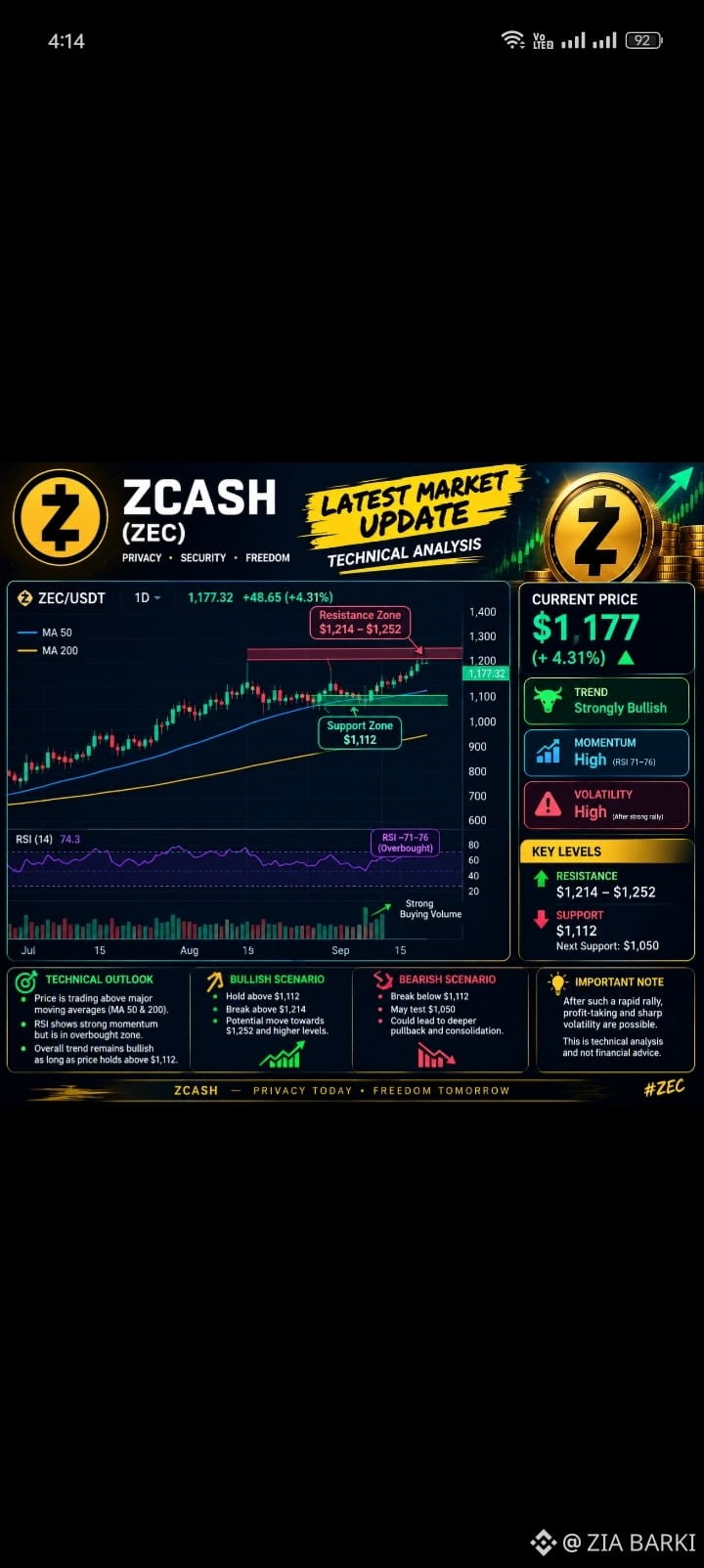
25
·
--
Xem bản dịch
$BTC ₿ BTC — Latest Market Update
Bitcoin is trading around $78.9K, up modestly today. �
CoinDesk +1
Short-term trend: Consolidation with a slight recovery bias.
Support: ~$77K–$78K
Resistance: ~$80K, then ~$81K–$81.5K
Market risk: Rising oil prices and uncertainty around the upcoming U.S. Fed decisions
{future}(BTCUSDT)
#USStrikesTargetsNearHormuzAndJask #RippleLobbiesToAdvanceCLARITYActVote #ChinaAugustCPIRises0.8%YoY are keeping volatility elevated. �
Reuters +1
Overall: BTC remains range-bound; holding the $77K area keeps the near-term structure relatively constructive, while a sustained break above $80K would strengthen momentum. This is market analysis, not financial advice.
$BTC ₿ BTC — Latest Market Update
Bitcoin is trading around $78.9K, up modestly today. �
CoinDesk +1
Short-term trend: Consolidation with a slight recovery bias.
Support: ~$77K–$78K
Resistance: ~$80K, then ~$81K–$81.5K
Market risk: Rising oil prices and uncertainty around the upcoming U.S. Fed decisions
#USStrikesTargetsNearHormuzAndJask #RippleLobbiesToAdvanceCLARITYActVote #ChinaAugustCPIRises0.8%YoY are keeping volatility elevated. �
Reuters +1
Overall: BTC remains range-bound; holding the $77K area keeps the near-term structure relatively constructive, while a sustained break above $80K would strengthen momentum. This is market analysis, not financial advice.
Bitcoin is trading around $78.9K, up modestly today. �
CoinDesk +1
Short-term trend: Consolidation with a slight recovery bias.
Support: ~$77K–$78K
Resistance: ~$80K, then ~$81K–$81.5K
Market risk: Rising oil prices and uncertainty around the upcoming U.S. Fed decisions
#USStrikesTargetsNearHormuzAndJask #RippleLobbiesToAdvanceCLARITYActVote #ChinaAugustCPIRises0.8%YoY are keeping volatility elevated. �
Reuters +1
Overall: BTC remains range-bound; holding the $77K area keeps the near-term structure relatively constructive, while a sustained break above $80K would strengthen momentum. This is market analysis, not financial advice.
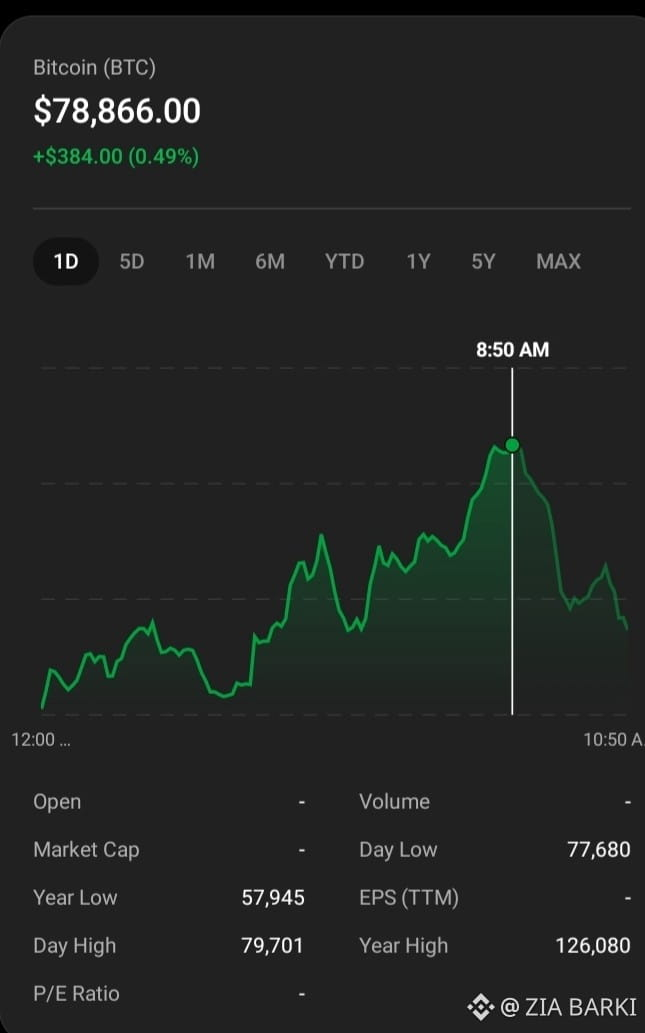
24
·
--
$ZEC $ZEC Cập nhật thị trường mới nhất — 9 tháng 9 năm 2026 📊
ZEC hiện quanh $1,183, tăng khoảng 4,8% trong ngày hôm nay, với biên độ trong ngày vào khoảng $1,119–$1,210. �
CoinGecko
Động lượng cực kỳ mạnh: ZEC tăng khoảng 43% trong 7 ngày qua và gần đây đã đạt mức cao nhất kể từ năm 2016. �
CoinGecko +1
Đợt tăng này được hỗ trợ bởi sự quan tâm từ tổ chức, bao gồm Grayscale ZCASH ETF, cùng với nhu cầu mạnh đối với các bài luận về tiền mã hóa tập trung vào quyền riêng tư. �
Vốn hóa thị trường coin
Vùng kỹ thuật quan trọng: ~$1,020–$1,000 là khu vực từng bứt phá/hỗ trợ quan trọng trước đây; việc giữ vững trên vùng này sẽ giúp cấu trúc tăng giá tổng thể mạnh hơn. �
CoinDesk
{spot}(ZECUSDT)
#USStocksCloseLowerIntelRises9% +1
Rủi ro: Sau một đợt tăng nhanh như vậy, biến động và việc chốt lời có thể rất đáng kể. Một xu hướng duy trì trên các đỉnh gần đây sẽ củng cố đà tăng, trong khi việc mất một vùng hỗ trợ lớn có thể kích hoạt đợt điều chỉnh sâu hơn.
Kết luận: 🔥 ZEC vẫn rất tăng giá nhưng biến động cao. Câu hỏi lớn hiện nay là liệu lực mua mới có thể duy trì đà tăng sau cú tăng mạnh gần đây hay không. �
CoinGecko
$ZEC $ZEC Cập nhật thị trường mới nhất — 9 tháng 9 năm 2026 📊
ZEC hiện quanh $1,183, tăng khoảng 4,8% trong ngày hôm nay, với biên độ trong ngày vào khoảng $1,119–$1,210. �
CoinGecko
Động lượng cực kỳ mạnh: ZEC tăng khoảng 43% trong 7 ngày qua và gần đây đã đạt mức cao nhất kể từ năm 2016. �
CoinGecko +1
Đợt tăng này được hỗ trợ bởi sự quan tâm từ tổ chức, bao gồm Grayscale ZCASH ETF, cùng với nhu cầu mạnh đối với các bài luận về tiền mã hóa tập trung vào quyền riêng tư. �
Vốn hóa thị trường coin
Vùng kỹ thuật quan trọng: ~$1,020–$1,000 là khu vực từng bứt phá/hỗ trợ quan trọng trước đây; việc giữ vững trên vùng này sẽ giúp cấu trúc tăng giá tổng thể mạnh hơn. �
CoinDesk
#USStocksCloseLowerIntelRises9% +1
Rủi ro: Sau một đợt tăng nhanh như vậy, biến động và việc chốt lời có thể rất đáng kể. Một xu hướng duy trì trên các đỉnh gần đây sẽ củng cố đà tăng, trong khi việc mất một vùng hỗ trợ lớn có thể kích hoạt đợt điều chỉnh sâu hơn.
Kết luận: 🔥 ZEC vẫn rất tăng giá nhưng biến động cao. Câu hỏi lớn hiện nay là liệu lực mua mới có thể duy trì đà tăng sau cú tăng mạnh gần đây hay không. �
CoinGecko
ZEC hiện quanh $1,183, tăng khoảng 4,8% trong ngày hôm nay, với biên độ trong ngày vào khoảng $1,119–$1,210. �
CoinGecko
Động lượng cực kỳ mạnh: ZEC tăng khoảng 43% trong 7 ngày qua và gần đây đã đạt mức cao nhất kể từ năm 2016. �
CoinGecko +1
Đợt tăng này được hỗ trợ bởi sự quan tâm từ tổ chức, bao gồm Grayscale ZCASH ETF, cùng với nhu cầu mạnh đối với các bài luận về tiền mã hóa tập trung vào quyền riêng tư. �
Vốn hóa thị trường coin
Vùng kỹ thuật quan trọng: ~$1,020–$1,000 là khu vực từng bứt phá/hỗ trợ quan trọng trước đây; việc giữ vững trên vùng này sẽ giúp cấu trúc tăng giá tổng thể mạnh hơn. �
CoinDesk
#USStocksCloseLowerIntelRises9% +1
Rủi ro: Sau một đợt tăng nhanh như vậy, biến động và việc chốt lời có thể rất đáng kể. Một xu hướng duy trì trên các đỉnh gần đây sẽ củng cố đà tăng, trong khi việc mất một vùng hỗ trợ lớn có thể kích hoạt đợt điều chỉnh sâu hơn.
Kết luận: 🔥 ZEC vẫn rất tăng giá nhưng biến động cao. Câu hỏi lớn hiện nay là liệu lực mua mới có thể duy trì đà tăng sau cú tăng mạnh gần đây hay không. �
CoinGecko
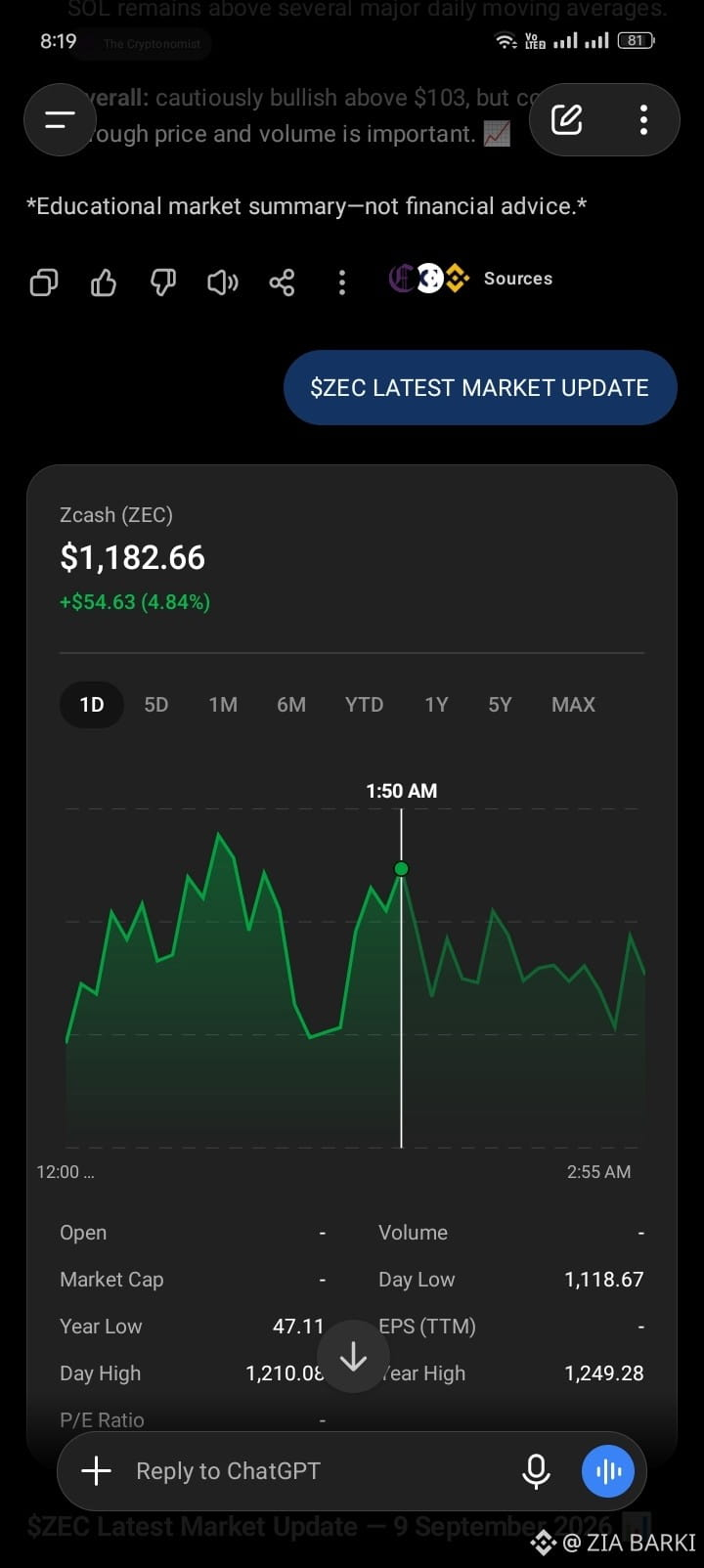
39
·
--
BẢN CẬP NHẬT TOÀN DIỆN THỊ TRƯỜNG ETHERIUM ETH/USDT — 9 tháng 9 năm 2026
ETH/USDT thể hiện giá EthereumETH/USDT thể hiện giá của Ethereum được niêm yết bằng Tether (USDT). Ethereum vẫn là một trong những tài sản quan trọng nhất trên thị trường crypto vì hệ sinh thái của nó hỗ trợ hợp đồng thông minh, ứng dụng phi tập trung, stablecoin, tài sản token hóa và mạng lưới Layer-2.
Bức tranh thị trường hiện tại
Dữ liệu thị trường gần đây cho thấy Ethereum dao động quanh $2.480–$2.500, với CoinDesk ghi nhận khoảng $2.485 và khối lượng giao dịch trong 24 giờ vào khoảng $5,83 tỷ. � Vì vậy, Ethereum đang giao dịch thấp hơn đáng kể so với mức đỉnh kỷ lục trước đó gần $4.946, khiến thị trường đang ở giai đoạn phục hồi/tích lũy thay vì ở mức cao nhất mọi thời đại. �
BẢN CẬP NHẬT TOÀN DIỆN THỊ TRƯỜNG ETHERIUM ETH/USDT — 9 tháng 9 năm 2026 ETH/USDT thể hiện giá Ethereum
ETH/USDT thể hiện giá của Ethereum được niêm yết bằng Tether (USDT). Ethereum vẫn là một trong những tài sản quan trọng nhất trên thị trường crypto vì hệ sinh thái của nó hỗ trợ hợp đồng thông minh, ứng dụng phi tập trung, stablecoin, tài sản token hóa và mạng lưới Layer-2.
Bức tranh thị trường hiện tại
Dữ liệu thị trường gần đây cho thấy Ethereum dao động quanh $2.480–$2.500, với CoinDesk ghi nhận khoảng $2.485 và khối lượng giao dịch trong 24 giờ vào khoảng $5,83 tỷ. � Vì vậy, Ethereum đang giao dịch thấp hơn đáng kể so với mức đỉnh kỷ lục trước đó gần $4.946, khiến thị trường đang ở giai đoạn phục hồi/tích lũy thay vì ở mức cao nhất mọi thời đại. �
Bức tranh thị trường hiện tại
Dữ liệu thị trường gần đây cho thấy Ethereum dao động quanh $2.480–$2.500, với CoinDesk ghi nhận khoảng $2.485 và khối lượng giao dịch trong 24 giờ vào khoảng $5,83 tỷ. � Vì vậy, Ethereum đang giao dịch thấp hơn đáng kể so với mức đỉnh kỷ lục trước đó gần $4.946, khiến thị trường đang ở giai đoạn phục hồi/tích lũy thay vì ở mức cao nhất mọi thời đại. �
78
·
--
Xem bản dịch
$ZCASH🤖 Zcash: Privacy-Focused Digital Cash
Zcash is a decentralized cryptocurrency designed to pro🤖 Zcash: Privacy-Focused Digital Cash
Zcash is a decentralized cryptocurrency designed to provide fast, secure, and private digital payments. Launched in 2016, it is built on a public blockchain but gives users the option to shield transaction details, including the sender, recipient, and amount.
Using zero-knowledge proof technology called zk-SNARKs, Zcash allows transactions to be verified without revealing sensitive financial information. Users can choose between transparent addresses, whose activity is publicly visible, and shielded addresses, which support enhanced privacy.
Zcash is powered by the ZEC cryptocurrency, which is used for payments, network fees, and transfers of value. Its privacy features make it relevant for individuals, businesses, and organizations seeking greater financial confidentiality in an increasingly transparent digital economy.
The project has also evolved its privacy technology over time. Upgrades such as Sapling and Orchard have improved transaction efficiency, reduced the resources required for shielded payments, and strengthened the overall user experience. Zcash’s development has focused on balancing privacy, usability, scalability, and regulatory considerations.
Like other cryptocurrencies, Zcash carries risks. Its price can be highly volatile, and users must carefully protect their wallets, recovery phrases, and private keys. Privacy-focused assets may also face changing regulations, exchange restrictions, and differing levels of adoption across jurisdictions.
Zcash is not simply another payment token. Its core purpose is to give users greater control over the confidentiality of their financial activity while preserving the benefits of a decentralized network.
👉 Zcash is designed for users who value optional, cryptographically protected financial privacy—not just speculation.
#Zcash #ZEC #PrivacyCoins #Crypto #Blockchain #Web3 #ZeroKnowledge #DigitalCash
$ZCASH🤖 Zcash: Privacy-Focused Digital Cash Zcash is a decentralized cryptocurrency designed to pro
🤖 Zcash: Privacy-Focused Digital Cash
Zcash is a decentralized cryptocurrency designed to provide fast, secure, and private digital payments. Launched in 2016, it is built on a public blockchain but gives users the option to shield transaction details, including the sender, recipient, and amount.
Using zero-knowledge proof technology called zk-SNARKs, Zcash allows transactions to be verified without revealing sensitive financial information. Users can choose between transparent addresses, whose activity is publicly visible, and shielded addresses, which support enhanced privacy.
Zcash is powered by the ZEC cryptocurrency, which is used for payments, network fees, and transfers of value. Its privacy features make it relevant for individuals, businesses, and organizations seeking greater financial confidentiality in an increasingly transparent digital economy.
The project has also evolved its privacy technology over time. Upgrades such as Sapling and Orchard have improved transaction efficiency, reduced the resources required for shielded payments, and strengthened the overall user experience. Zcash’s development has focused on balancing privacy, usability, scalability, and regulatory considerations.
Like other cryptocurrencies, Zcash carries risks. Its price can be highly volatile, and users must carefully protect their wallets, recovery phrases, and private keys. Privacy-focused assets may also face changing regulations, exchange restrictions, and differing levels of adoption across jurisdictions.
Zcash is not simply another payment token. Its core purpose is to give users greater control over the confidentiality of their financial activity while preserving the benefits of a decentralized network.
👉 Zcash is designed for users who value optional, cryptographically protected financial privacy—not just speculation.
#Zcash #ZEC #PrivacyCoins #Crypto #Blockchain #Web3 #ZeroKnowledge #DigitalCash
Zcash is a decentralized cryptocurrency designed to provide fast, secure, and private digital payments. Launched in 2016, it is built on a public blockchain but gives users the option to shield transaction details, including the sender, recipient, and amount.
Using zero-knowledge proof technology called zk-SNARKs, Zcash allows transactions to be verified without revealing sensitive financial information. Users can choose between transparent addresses, whose activity is publicly visible, and shielded addresses, which support enhanced privacy.
Zcash is powered by the ZEC cryptocurrency, which is used for payments, network fees, and transfers of value. Its privacy features make it relevant for individuals, businesses, and organizations seeking greater financial confidentiality in an increasingly transparent digital economy.
The project has also evolved its privacy technology over time. Upgrades such as Sapling and Orchard have improved transaction efficiency, reduced the resources required for shielded payments, and strengthened the overall user experience. Zcash’s development has focused on balancing privacy, usability, scalability, and regulatory considerations.
Like other cryptocurrencies, Zcash carries risks. Its price can be highly volatile, and users must carefully protect their wallets, recovery phrases, and private keys. Privacy-focused assets may also face changing regulations, exchange restrictions, and differing levels of adoption across jurisdictions.
Zcash is not simply another payment token. Its core purpose is to give users greater control over the confidentiality of their financial activity while preserving the benefits of a decentralized network.
👉 Zcash is designed for users who value optional, cryptographically protected financial privacy—not just speculation.
#Zcash #ZEC #PrivacyCoins #Crypto #Blockchain #Web3 #ZeroKnowledge #DigitalCash
162
·
--
Không có một “blockchain” đơn lẻ nào là “tốt nhất” cho các ứng dụng AI. Mạng lý tưởng phụ thuộc vào đúng nhu cầu của bạn — cho dù đó là cung cấp sức mạnh cho các tính toán nặng, điều phối các tác nhân AI tự chủ, hay xử lý thanh toán.
👉 Hãy chọn blockchain phù hợp nhất với khối lượng công việc AI của bạn, không chỉ
{spot}(AIUSDT)
# chạy theo trào lưu.
#AI #Blockchain #Crypto #Web3 #ArtificialIntelligence #Binance
Không có một “blockchain” đơn lẻ nào là “tốt nhất” cho các ứng dụng AI. Mạng lý tưởng phụ thuộc vào đúng nhu cầu của bạn — cho dù đó là cung cấp sức mạnh cho các tính toán nặng, điều phối các tác nhân AI tự chủ, hay xử lý thanh toán.
👉 Hãy chọn blockchain phù hợp nhất với khối lượng công việc AI của bạn, không chỉ
# chạy theo trào lưu.
#AI #Blockchain #Crypto #Web3 #ArtificialIntelligence #Binance
👉 Hãy chọn blockchain phù hợp nhất với khối lượng công việc AI của bạn, không chỉ
# chạy theo trào lưu.
#AI #Blockchain #Crypto #Web3 #ArtificialIntelligence #Binance
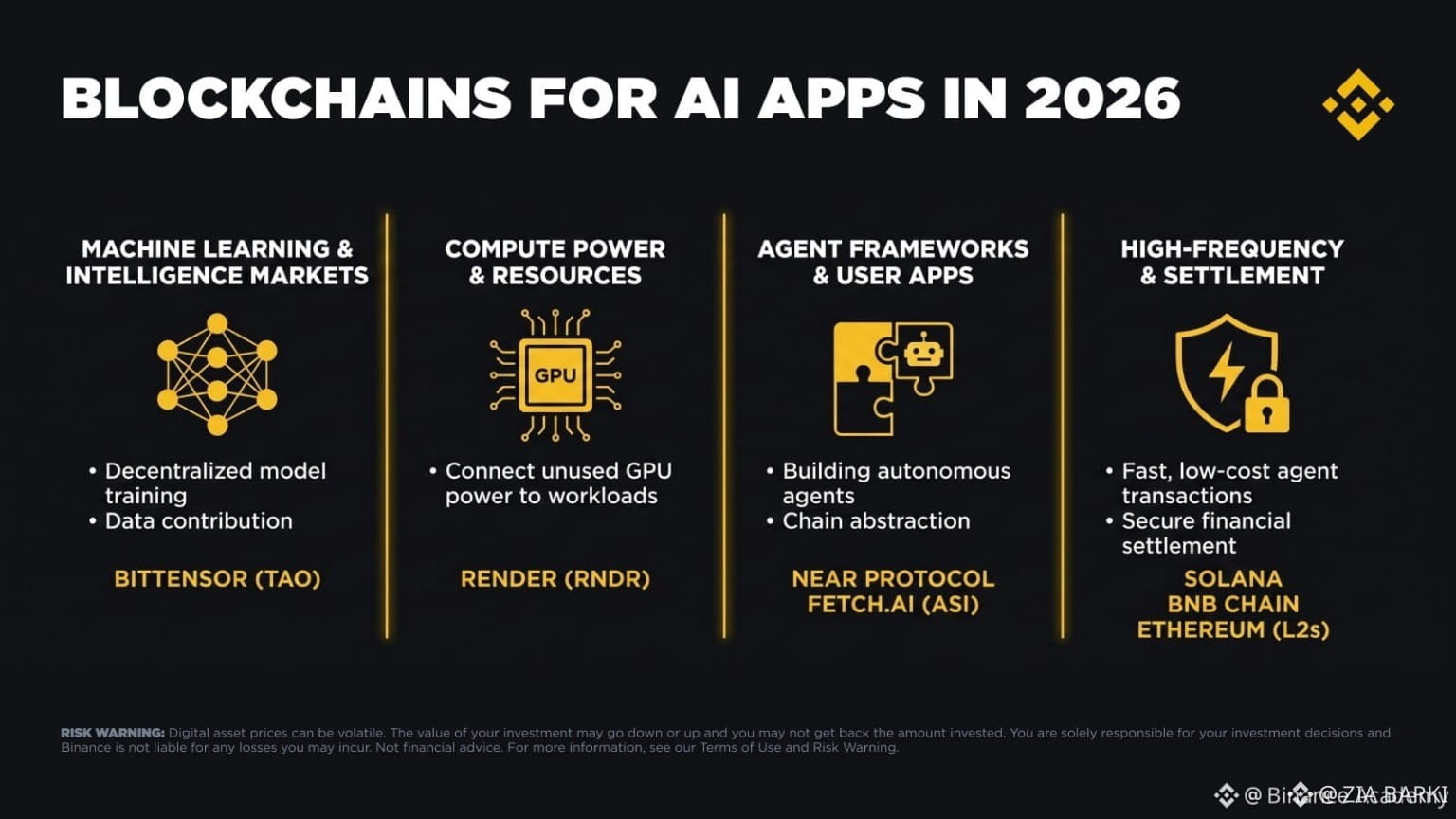
22
Đăng nhập để khám phá thêm nội dung
Tham gia cùng người dùng tiền mã hóa toàn cầu trên Binance Square
⚡️ Nhận thông tin mới nhất và hữu ích về tiền mã hóa.
💬 Được tin cậy bởi sàn giao dịch tiền mã hóa lớn nhất thế giới.
👍 Khám phá những thông tin chuyên sâu thực tế từ những nhà sáng tạo đã xác minh.
Email / Số điện thoại