

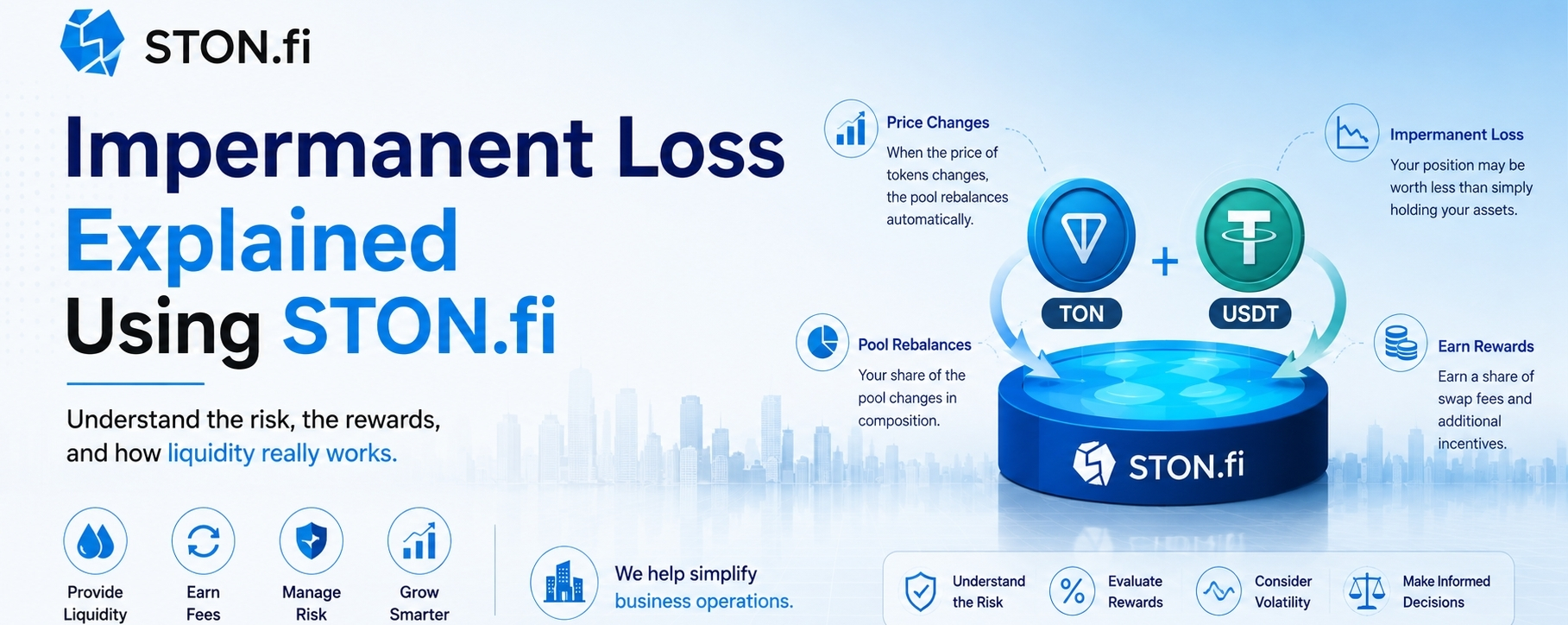

Cung cấp thanh khoản là một trong những cách phổ biến nhất để tham gia DeFi. Trên các nền tảng như STON.fi, người dùng có thể đóng góp tài sản vào các pool thanh khoản và nhận một phần phí giao dịch. Tuy nhiên, trước khi trở thành nhà cung cấp thanh khoản, điều quan trọng là phải hiểu một trong các rủi ro cốt lõi: tổn thất tạm thời.
Tổn thất tạm thời là gì?
Tổn thất tạm thời xảy ra khi giá của các tài sản bạn gửi vào pool thanh khoản thay đổi so với nhau.
Mấu chốt so sánh là đơn giản:
Giá trị tài sản của bạn trong pool thanh khoản so với giá trị nếu chỉ đơn giản giữ những tài sản đó trong ví.
Nếu chênh lệch giá giữa hai tài sản trở nên đáng kể, vị thế thanh khoản của bạn có thể có giá trị thấp hơn so với việc chỉ giữ các tài sản đó bên ngoài pool. Phần chênh lệch này được gọi là tổn thất tạm thời.
Hiểu điều này qua ví dụ STON.fi đơn giản
Hãy hình dung bạn cung cấp thanh khoản cho một pool giả định TON/USDT trên STON.fi.
Bạn gửi vào:
Giá trị $500 của TON
Giá trị $500 của USDT
Tổng vị thế của bạn có giá trị $1,000.
Vì STON.fi hoạt động với các pool thanh khoản dạng automated market maker, người giao dịch có thể hoán đổi giữa các tài sản trong pool. Khi hoạt động giao dịch thay đổi, cơ cấu vị thế thanh khoản của bạn cũng thay đổi.
Điều gì sẽ xảy ra nếu TON tăng?
Giả sử giá của TON tăng đáng kể.
Người giao dịch có thể hoán đổi USDT lấy TON, khiến pool chứa tương đối ít TON hơn và nhiều USDT hơn.
Là nhà cung cấp thanh khoản, bạn vẫn sở hữu phần trăm quyền sở hữu của mình trong pool—nhưng vị thế của bạn hiện chứa một tỷ lệ TON và USDT khác so với lúc bạn ban đầu gửi vào.
Việc cân bằng lại tự động này chính là thứ tạo ra khả năng phơi nhiễm với tổn thất tạm thời.
Nếu bạn chỉ giữ nguyên TON và USDT ban đầu, kết quả có thể có giá trị cao hơn so với vị thế thanh khoản của bạn tại thời điểm đó.
Vì sao nó được gọi là “tạm thời”?
Khoản lỗ được gọi là “tạm thời” vì biến động giá có thể đảo chiều.
Nếu giá tương đối của hai tài sản quay lại gần mức mà chúng đã ở khi bạn gửi thanh khoản, tổn thất tạm thời có thể giảm hoặc thậm chí biến mất.
Tuy nhiên, nếu bạn rút thanh khoản trong khi chênh lệch giá vẫn còn đáng kể, khoản lỗ so với việc chỉ giữ các tài sản đó sẽ trở thành hiện thực.
Vì vậy, từ “tạm thời” không có nghĩa là không rủi ro. Nó chỉ mô tả rằng ảnh hưởng phụ thuộc vào việc giá biến động như thế nào trong khi tài sản của bạn vẫn nằm trong pool.
Nhà cung cấp thanh khoản của STON.fi nhận phần thưởng ở đâu?
Tổn thất tạm thời chỉ là một nửa của vấn đề.
Nhà cung cấp thanh khoản trên STON.fi cũng có thể nhận một phần phí hoán đổi được tạo ra từ hoạt động giao dịch trong pool của họ. Trong một số trường hợp, phần thưởng farming bổ sung cũng có thể được cung cấp. Kết quả thực tế của một vị thế thanh khoản phụ thuộc vào cả phần thưởng nhận được và tác động của biến động giá.
Hãy nghĩ theo cách này:
Kết quả của nhà cung cấp thanh khoản = phí giao dịch + ưu đãi có thể có − tổn thất tạm thời
Đó là lý do vì sao một pool có hoạt động giao dịch mạnh có thể tạo ra thu nhập phí đáng kể, trong khi một cặp có mức biến động cao có thể khiến nhà cung cấp thanh khoản chịu tổn thất tạm thời lớn hơn.
Cặp ổn định vs. Cặp biến động
Không phải mọi pool thanh khoản đều có cùng mức độ rủi ro tổn thất tạm thời.
Cặp ổn định
Các cặp liên quan đến tài sản có xu hướng duy trì gần mức giá trị của nhau thường ít bị phơi nhiễm với tổn thất tạm thời hơn.
Ví dụ có thể bao gồm:
Cặp stablecoin
Tài sản được neo giá rất sát
Phiên bản được bọc (wrapped) của cùng một tài sản gốc
Cặp biến động
Các cặp liên quan đến tài sản có biến động giá lớn có thể tạo ra khả năng bị tổn thất tạm thời cao hơn.
Ví dụ, nếu một token tăng hoặc giảm giá nhanh chóng so với tài sản còn lại, pool có thể tự điều chỉnh lại (rebalance) đáng kể.
Tài liệu của STON.fi ghi chú rằng mức biến động giá giữa các tài sản được gửi vào càng lớn thì khả năng bị ảnh hưởng bởi tổn thất tạm thời càng cao.
STON.fi và Cơ chế Bảo vệ Tổn thất Tạm thời
Một cách tiếp cận thú vị mà STON.fi đã giới thiệu là cơ chế bảo vệ tổn thất tạm thời đối với việc cung cấp thanh khoản đủ điều kiện trong một số điều kiện nhất định.
Theo STON.fi, chương trình được thiết kế để bù đắp một phần tổn thất tạm thời đủ điều kiện, với các giới hạn cụ thể, yêu cầu về pool và điều kiện chi trả. Điều quan trọng cần lưu ý rằng tính năng này không phải bảo hiểm, không đảm bảo lợi nhuận và tuân theo các điều khoản cũng như điều kiện được nêu rõ.
Bài học tổng quát là quan trọng:
Quản lý rủi ro quan trọng không kém gì việc kiếm lợi suất.
APR cao có vẻ hấp dẫn, nhưng nhà cung cấp thanh khoản cũng nên cân nhắc:
Biến động giá
Thành phần pool
Khối lượng giao dịch
Phí hoán đổi (swap fees)
Ưu đãi sẵn có
Rủi ro tổn thất tạm thời
Điều kiện riêng của từng pool
Kết luận
Tổn thất tạm thời là một trong những khái niệm quan trọng nhất cần hiểu trước khi cung cấp thanh khoản trong DeFi.
Lấy STON.fi làm ví dụ, các pool thanh khoản cho phép người dùng đóng góp tài sản hỗ trợ giao dịch phi tập trung trong khi có thể nhận một phần phí hoán đổi. Tuy nhiên, khi giá token thay đổi, pool sẽ tự động cân bằng lại (rebalance), điều này có thể khiến vị thế thanh khoản của bạn hoạt động khác so với việc chỉ giữ nguyên các tài sản ban đầu.
Thông điệp quan trọng nhất thì thật đơn giản:
Cung cấp thanh khoản không chỉ là kiếm lợi suất. Đó là việc hiểu mối quan hệ giữa phần thưởng và rủi ro.
Trước khi tham gia bất kỳ pool nào, hãy dành thời gian để nghiên cứu các tài sản, mức độ biến động của chúng, hoạt động của pool và tác động tiềm ẩn của tổn thất tạm thời.
Trong DeFi, các nhà cung cấp thanh khoản tốt nhất không chỉ nhìn vào việc họ có thể kiếm được bao nhiêu.
Họ cũng hiểu họ đang từ bỏ điều gì—và những rủi ro họ đang chấp nhận—để có được điều đó.
Tuyên bố miễn trừ trách nhiệm: Bài viết này chỉ nhằm mục đích giáo dục và không nên được xem là lời khuyên tài chính. Hãy luôn tự nghiên cứu trước khi cung cấp thanh khoản hoặc đầu tư vào tài sản kỹ thuật số.