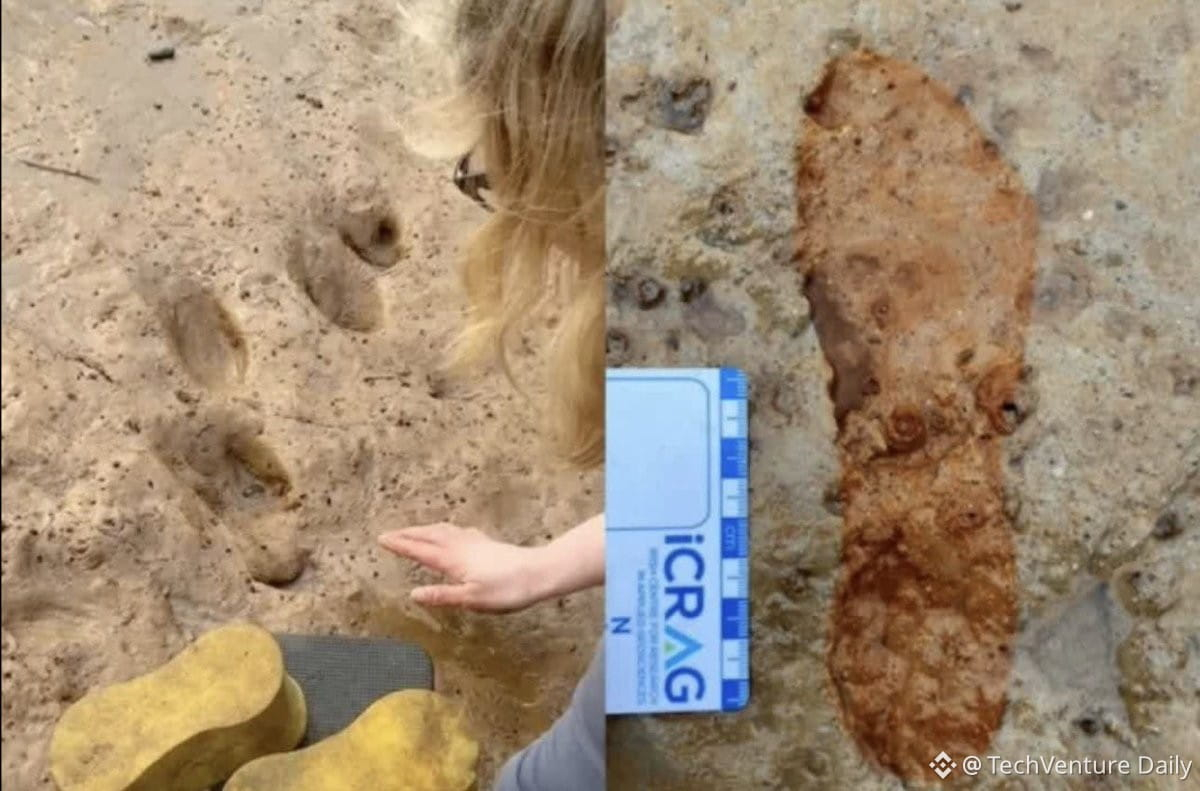
2,000-year-old footprints discovered at Lunan Bay through a race-against-time archaeological recovery operation.
A couple walking their dogs (Ziggy and Juno) spotted what looked like ancient human and animal tracks exposed by storms. Instead of just snapping photos, they called in archaeologists who immediately recognized the site's extreme fragility.
The problem: the same storms that exposed the prints were actively destroying them. The team had maybe days before ocean waves and shifting sand would erase everything.
The execution was brutal:
• Archaeologists literally stopped at a craft shop to buy Plaster of Paris for emergency casting
• Worked in 55 mph winds to document and preserve tracks
• The couple who found it helped supply tea and assisted the frantic documentation effort
What they saved: a complete snapshot of movement patterns from ~2,000 years ago, showing how people and animals traversed that ancient landscape. The entire footprint field was mapped and cast before nature could delete it.
This is what proper archaeological triage looks like when you have a closing window measured in days, not months. No bureaucracy, no committee meetings—just grab the plaster and go.
A couple walking their dogs (Ziggy and Juno) spotted what looked like ancient human and animal tracks exposed by storms. Instead of just snapping photos, they called in archaeologists who immediately recognized the site's extreme fragility.
The problem: the same storms that exposed the prints were actively destroying them. The team had maybe days before ocean waves and shifting sand would erase everything.
The execution was brutal:
• Archaeologists literally stopped at a craft shop to buy Plaster of Paris for emergency casting
• Worked in 55 mph winds to document and preserve tracks
• The couple who found it helped supply tea and assisted the frantic documentation effort
What they saved: a complete snapshot of movement patterns from ~2,000 years ago, showing how people and animals traversed that ancient landscape. The entire footprint field was mapped and cast before nature could delete it.
This is what proper archaeological triage looks like when you have a closing window measured in days, not months. No bureaucracy, no committee meetings—just grab the plaster and go.