#dusk $DUSK @Dusk I was going through Dusk’s transaction model and stopped at one detail that’s easy to miss: privacy isn’t simply an on/off switch across the network.
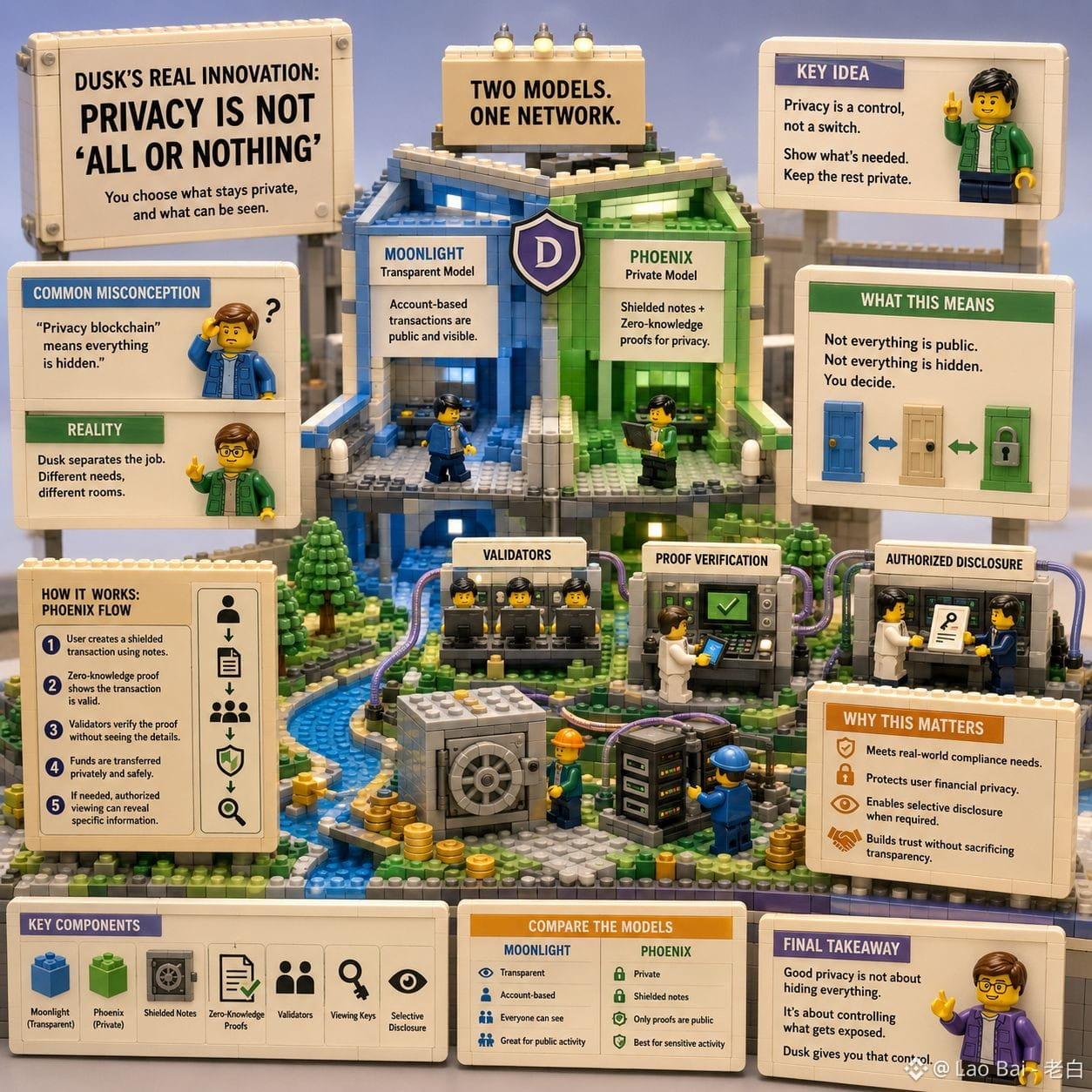
A lot of people hear “privacy blockchain” and assume everything is hidden. That’s not really how Dusk is designed. Moonlight keeps transactions transparent, while Phoenix uses shielded notes and zero-knowledge proofs when the details need to stay private. It’s more like choosing which room in a house needs a lock, instead of locking the whole house.
What I find interesting is what happens inside Phoenix. The network can check that a private transaction is valid and that the same funds aren’t being spent twice, without exposing the sensitive details themselves. And when information actually needs to be shown, authorized viewing can provide it.
For me, that’s the bigger idea: privacy shouldn’t mean disappearing. It should mean deciding what others are allowed to see. I’ll be watching Phoenix usage, proof activity, and whether real financial applications actually use selective disclosure.
$DUSK
A lot of people hear “privacy blockchain” and assume everything is hidden. That’s not really how Dusk is designed. Moonlight keeps transactions transparent, while Phoenix uses shielded notes and zero-knowledge proofs when the details need to stay private. It’s more like choosing which room in a house needs a lock, instead of locking the whole house.
What I find interesting is what happens inside Phoenix. The network can check that a private transaction is valid and that the same funds aren’t being spent twice, without exposing the sensitive details themselves. And when information actually needs to be shown, authorized viewing can provide it.
For me, that’s the bigger idea: privacy shouldn’t mean disappearing. It should mean deciding what others are allowed to see. I’ll be watching Phoenix usage, proof activity, and whether real financial applications actually use selective disclosure.
$DUSK