Càng tìm hiểu về Chuẩn XSC của Dusk, tôi càng nhận ra rằng đổi mới thực sự không nằm ở quyền riêng tư—mà nằm ở nơi niềm tin thực sự được đặt.
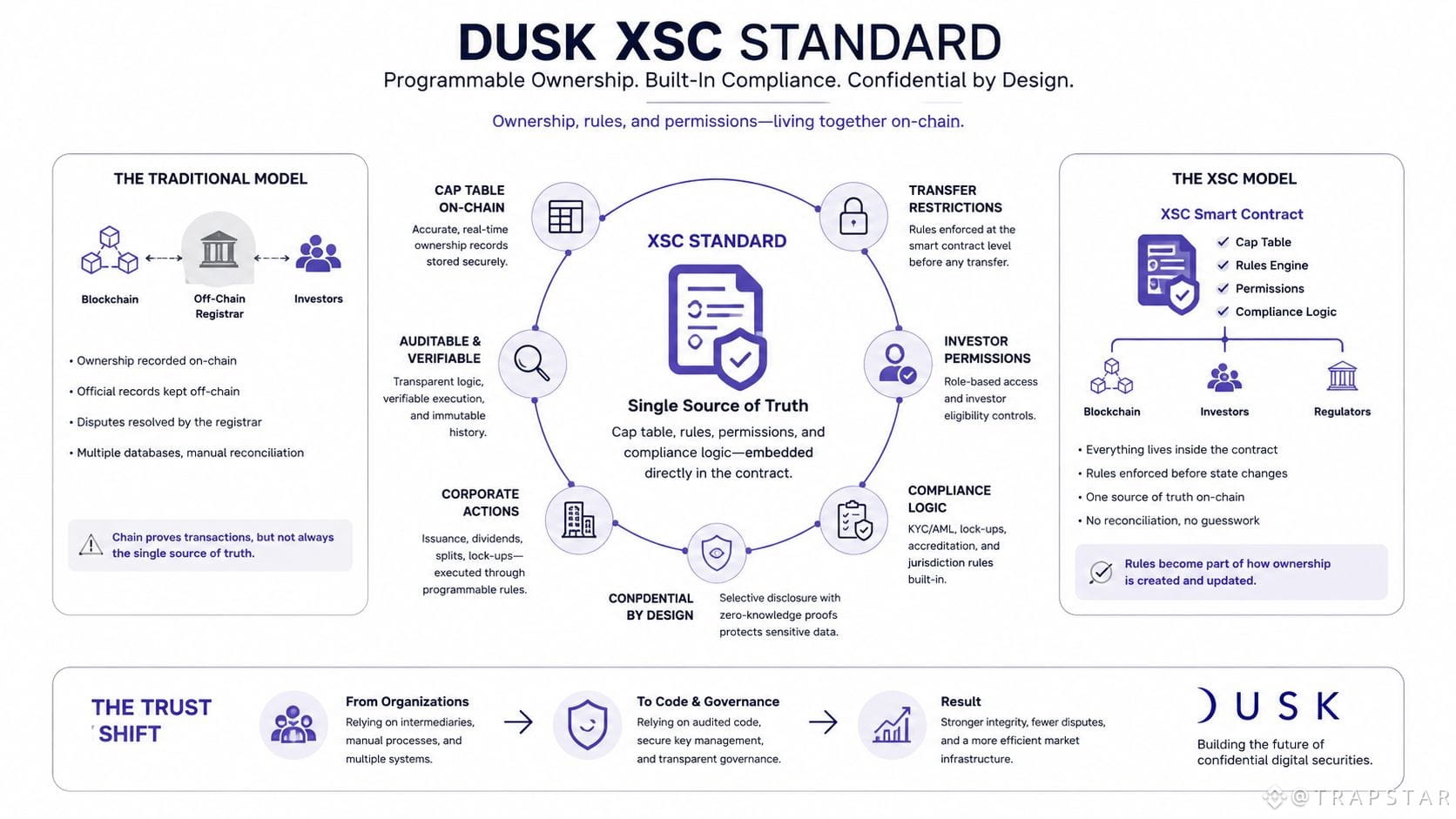
Trong hầu hết các hệ thống truyền thống, blockchain ghi nhận quyền sở hữu trong khi một bên khác vẫn duy trì phiên bản “chính thức” đằng sau cánh cửa đóng kín. Nếu có tranh chấp, mọi người cuối cùng cũng quay lại với cơ quan đăng ký. Điều đó có nghĩa là chuỗi đang chứng minh các giao dịch, nhưng chưa chắc đã đóng vai trò là nguồn dữ liệu sự thật duy nhất.
XSC lật ngược mối quan hệ đó. Bảng cơ cấu cổ đông (cap table), các hạn chế chuyển nhượng, logic tuân thủ và quyền của nhà đầu tư có thể cùng tồn tại bên trong chính hợp đồng. Thay vì hỏi liệu việc chuyển nhượng có được phép sau khi nó đã xảy ra hay không, các quy tắc trở thành một phần của cách thức quyền sở hữu được tạo và cập nhật ngay từ đầu.
Điều tôi thấy thú vị hơn là sự thay đổi về vận hành mà điều này tạo ra. Các hoạt động doanh nghiệp như phát hành cổ phiếu mới, áp dụng thời gian khóa, hoặc hạn chế việc chuyển nhượng giữa các nhóm nhà đầu tư không còn phải dựa vào việc đối soát riêng biệt giữa nhiều cơ sở dữ liệu. Mọi thay đổi trạng thái được cho phép đều tuân theo cùng một bộ quy tắc lập trình.
Điều đó không loại bỏ niềm tin—mà thay đổi nơi đặt niềm tin. Bạn ngừng phụ thuộc vào các tổ chức để đồng bộ hóa hồ sơ và bắt đầu phụ thuộc vào mã nguồn đã được kiểm toán, quản lý khóa an toàn, và cơ chế quản trị có thể tiến hóa một cách an toàn khi quy định thay đổi.
Với tôi, đó là câu hỏi lớn hơn mà Dusk đặt ra. Nếu quyền sở hữu, tuân thủ và quyền riêng tư đều có thể cùng sống trong cùng một khung lập trình, thì chúng ta đang chứng kiến sự tiến hóa của chứng khoán số—hay chỉ đang định nghĩa lại việc chúng ta chọn tin ai?
@Dusk $DUSK #dusk
Trong hầu hết các hệ thống truyền thống, blockchain ghi nhận quyền sở hữu trong khi một bên khác vẫn duy trì phiên bản “chính thức” đằng sau cánh cửa đóng kín. Nếu có tranh chấp, mọi người cuối cùng cũng quay lại với cơ quan đăng ký. Điều đó có nghĩa là chuỗi đang chứng minh các giao dịch, nhưng chưa chắc đã đóng vai trò là nguồn dữ liệu sự thật duy nhất.
XSC lật ngược mối quan hệ đó. Bảng cơ cấu cổ đông (cap table), các hạn chế chuyển nhượng, logic tuân thủ và quyền của nhà đầu tư có thể cùng tồn tại bên trong chính hợp đồng. Thay vì hỏi liệu việc chuyển nhượng có được phép sau khi nó đã xảy ra hay không, các quy tắc trở thành một phần của cách thức quyền sở hữu được tạo và cập nhật ngay từ đầu.
Điều tôi thấy thú vị hơn là sự thay đổi về vận hành mà điều này tạo ra. Các hoạt động doanh nghiệp như phát hành cổ phiếu mới, áp dụng thời gian khóa, hoặc hạn chế việc chuyển nhượng giữa các nhóm nhà đầu tư không còn phải dựa vào việc đối soát riêng biệt giữa nhiều cơ sở dữ liệu. Mọi thay đổi trạng thái được cho phép đều tuân theo cùng một bộ quy tắc lập trình.
Điều đó không loại bỏ niềm tin—mà thay đổi nơi đặt niềm tin. Bạn ngừng phụ thuộc vào các tổ chức để đồng bộ hóa hồ sơ và bắt đầu phụ thuộc vào mã nguồn đã được kiểm toán, quản lý khóa an toàn, và cơ chế quản trị có thể tiến hóa một cách an toàn khi quy định thay đổi.
Với tôi, đó là câu hỏi lớn hơn mà Dusk đặt ra. Nếu quyền sở hữu, tuân thủ và quyền riêng tư đều có thể cùng sống trong cùng một khung lập trình, thì chúng ta đang chứng kiến sự tiến hóa của chứng khoán số—hay chỉ đang định nghĩa lại việc chúng ta chọn tin ai?
@Dusk $DUSK #dusk