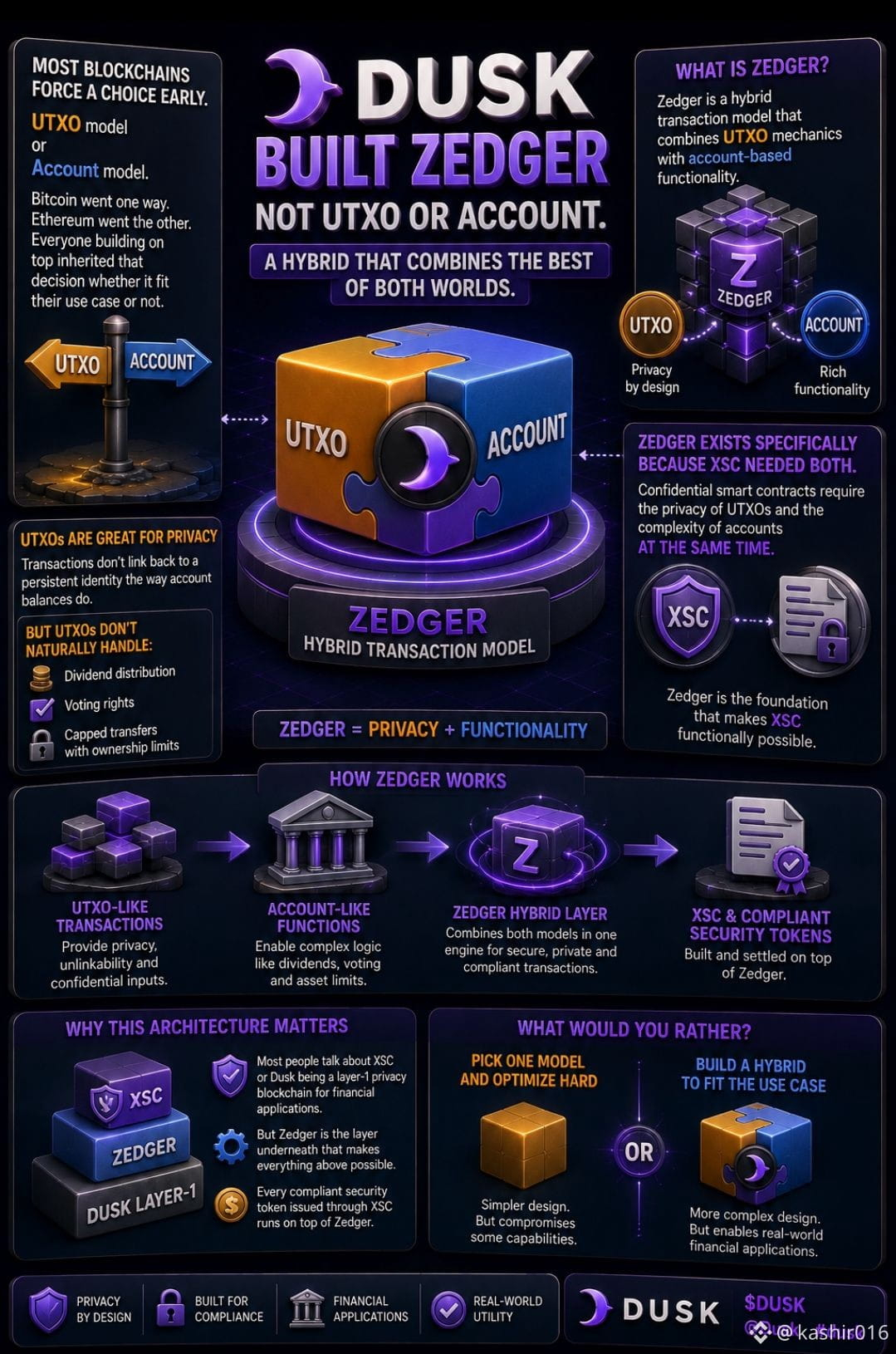
#dusk $DUSK @Dusk Hầu hết các blockchain buộc phải đưa ra lựa chọn từ sớm. Mô hình UTXO hay mô hình tài khoản. Bitcoin đi theo một hướng, Ethereum đi theo hướng khác, và những người xây dựng phía trên đều phải kế thừa quyết định đó—dù nó có phù hợp với trường hợp sử dụng của họ hay không.
Dusk không chọn một phe. Họ xây dựng Zedger.
Zedger là một mô hình giao dịch lai, kết hợp cơ chế UTXO với chức năng dựa trên tài khoản. Không mô hình nào đứng một mình có thể hỗ trợ được điều Dusk thực sự cần. UTXO rất tốt cho quyền riêng tư, vì các giao dịch không liên kết trở lại với một danh tính cố định theo cách mà số dư tài khoản làm được. Nhưng việc thanh toán chứng khoán lại cần những thứ mà UTXO không xử lý tự nhiên. Phân phối cổ tức. Quyền biểu quyết. Chuyển nhượng có giới hạn kèm ràng buộc sở hữu cụ thể.
Đây là phần mà đa số lời giải thích bỏ qua. Zedger tồn tại một cách cụ thể là vì XSC, chuẩn Confidential Security Contract (Hợp đồng Chứng khoán Bảo mật), cần một mô hình giao dịch có thể làm được cả hai cùng lúc. Hợp đồng thông minh bảo mật đòi hỏi đồng thời các thuộc tính quyền riêng tư của UTXO và độ phức tạp chức năng của tài khoản. Không mô hình nào đơn lẻ đưa bạn đến đó.
Tôi không ngờ một mô hình giao dịch lại chính là nền tảng cho câu chuyện tuân thủ (compliance) của Dusk. Hầu hết mọi người đi thẳng tới XSC hoặc cho rằng Dusk là một blockchain quyền riêng tư lớp 1 cho các ứng dụng tài chính, rồi bỏ qua lớp phía dưới khiến XSC có thể hoạt động về mặt chức năng ngay từ đầu.
Những quyết định kiến trúc như thế này hiếm khi được chú ý vì chúng vô hình đối với người dùng cuối. Không ai tương tác trực tiếp với Zedger. Nhưng mọi token chứng khoán tuân thủ được phát hành thông qua XSC đều đang chạy phía trên nó.
Bạn muốn một blockchain chọn một mô hình giao dịch và tối ưu thật mạnh, hay xây dựng mô hình lai để phù hợp đúng với một trường hợp sử dụng cụ thể?
@Dusk $DUSK #dusk
$RED
Dusk không chọn một phe. Họ xây dựng Zedger.
Zedger là một mô hình giao dịch lai, kết hợp cơ chế UTXO với chức năng dựa trên tài khoản. Không mô hình nào đứng một mình có thể hỗ trợ được điều Dusk thực sự cần. UTXO rất tốt cho quyền riêng tư, vì các giao dịch không liên kết trở lại với một danh tính cố định theo cách mà số dư tài khoản làm được. Nhưng việc thanh toán chứng khoán lại cần những thứ mà UTXO không xử lý tự nhiên. Phân phối cổ tức. Quyền biểu quyết. Chuyển nhượng có giới hạn kèm ràng buộc sở hữu cụ thể.
Đây là phần mà đa số lời giải thích bỏ qua. Zedger tồn tại một cách cụ thể là vì XSC, chuẩn Confidential Security Contract (Hợp đồng Chứng khoán Bảo mật), cần một mô hình giao dịch có thể làm được cả hai cùng lúc. Hợp đồng thông minh bảo mật đòi hỏi đồng thời các thuộc tính quyền riêng tư của UTXO và độ phức tạp chức năng của tài khoản. Không mô hình nào đơn lẻ đưa bạn đến đó.
Tôi không ngờ một mô hình giao dịch lại chính là nền tảng cho câu chuyện tuân thủ (compliance) của Dusk. Hầu hết mọi người đi thẳng tới XSC hoặc cho rằng Dusk là một blockchain quyền riêng tư lớp 1 cho các ứng dụng tài chính, rồi bỏ qua lớp phía dưới khiến XSC có thể hoạt động về mặt chức năng ngay từ đầu.
Những quyết định kiến trúc như thế này hiếm khi được chú ý vì chúng vô hình đối với người dùng cuối. Không ai tương tác trực tiếp với Zedger. Nhưng mọi token chứng khoán tuân thủ được phát hành thông qua XSC đều đang chạy phía trên nó.
Bạn muốn một blockchain chọn một mô hình giao dịch và tối ưu thật mạnh, hay xây dựng mô hình lai để phù hợp đúng với một trường hợp sử dụng cụ thể?
@Dusk $DUSK #dusk
$RED