Tôi đã xem đủ nhiều chu kỳ crypto để biết rằng “vay lãi suất cố định” có thể nghe thật cách mạng hơn thực tế của nó. Cứ vài năm lại có một lần chúng ta phát hiện ra những vấn đề cơ bản y hệt, gắn cho chúng những giao diện mới, và thuyết phục bản thân rằng rào cản cũ rốt cuộc đã biến mất.
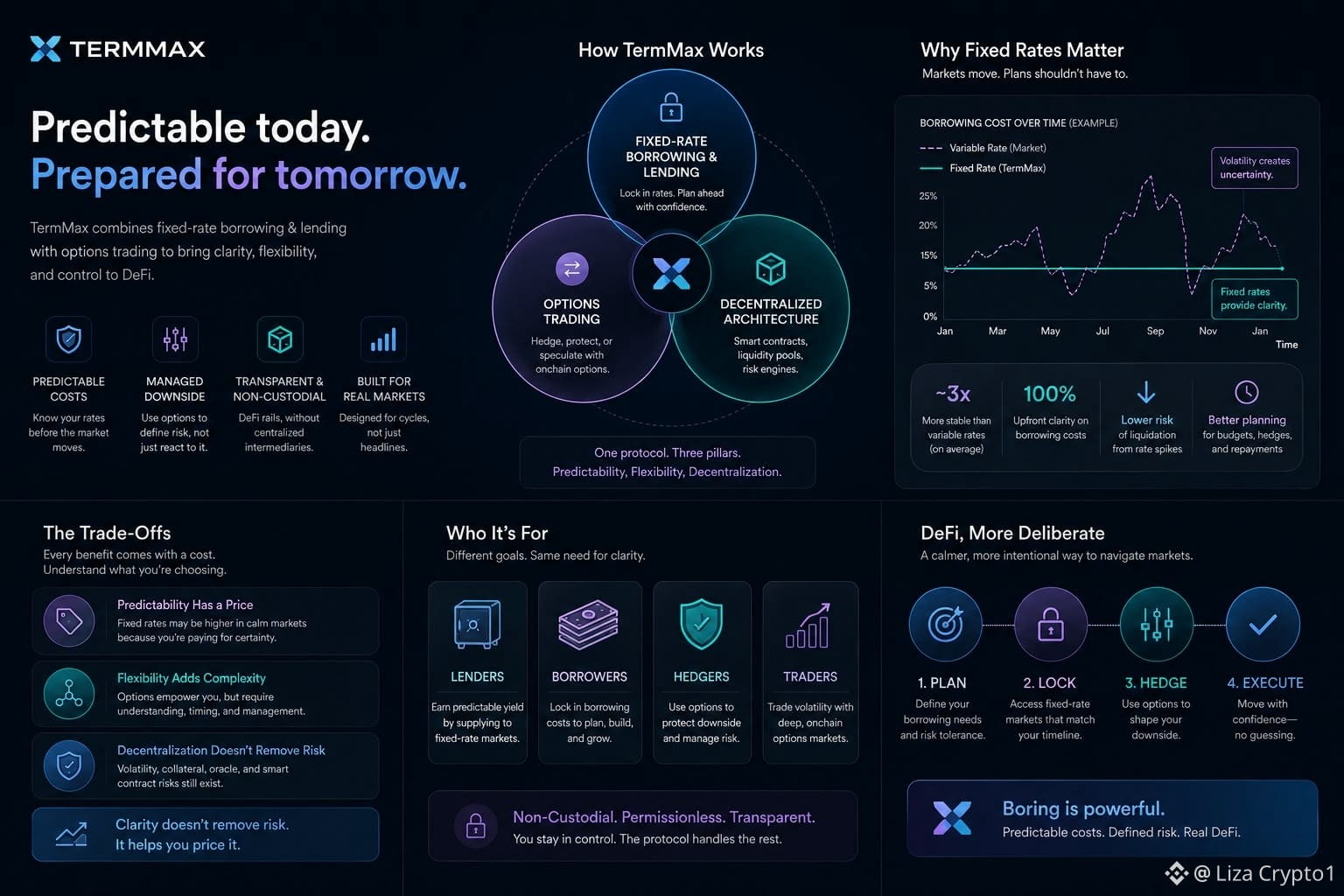
Chính vì vậy mà TermMax thu hút sự chú ý của tôi. Một giao thức phi tập trung kết hợp vay và cho vay lãi suất cố định với giao dịch quyền chọn giống như một nỗ lực để làm cho DeFi có phần “cân nhắc” hơn, thay vì chỉ nhanh hơn và thanh khoản hơn. Nhưng câu hỏi thú vị với tôi không phải là liệu kiến trúc có vẻ thông minh hay không. Mà là liệu người ta có thực sự muốn những đánh đổi đi kèm hay không.
Lãi suất cố định mang lại tính dự đoán, nhưng tính dự đoán thường đi kèm cái giá. Quyền chọn mang lại sự linh hoạt, nhưng sự linh hoạt lại có xu hướng che giấu độ phức tạp cho đến khi thị trường bị căng thẳng. Và phi tập trung loại bỏ một số bên trung gian, nhưng không phải một cách kỳ diệu là loại bỏ rủi ro. Vẫn có người (hoặc cơ chế) phải hấp thụ biến động, quản lý tài sản thế chấp, định giá đúng, và xử lý những khoảnh khắc khi các giả định không còn cư xử như ta mong.
Tôi cứ thấy lạ là crypto thường nói về các “cấu phần tài chính” như thể việc đóng gói chúng lên onchain tự động sẽ làm chúng đơn giản hơn. Thường thì không phải vậy. Đôi khi nó chỉ chuyển độ phức tạp sang một nơi ít được nhìn thấy hơn.
Tôi chưa thật sự thuyết phục rằng TermMax giải quyết được sự giằng co đó, và tôi cũng sẽ nghi ngờ bất kỳ ai tuyên bố rằng nó giải quyết được. Dù vậy, vẫn có điều gì đó trong hướng đi này khác với chu kỳ quen thuộc “lãi suất nhiều hơn, đòn bẩy nhiều hơn, người dùng nhiều hơn”. Ít nhất ý tưởng đang nhắm thẳng vào một vấn đề mà người ta thực sự gặp: biết chi phí vay và phần rủi ro suy giảm của mình có thể trông như thế nào trước khi thị trường bắt đầu chuyển động.
Sau đủ nhiều lần sụp đổ, kiểu “dự đoán nhàm chán” như vậy lại thu hút sự chú ý của tôi hơn một lời hứa khác về việc làm mới tài chính.
#termmax @TermMax
Chính vì vậy mà TermMax thu hút sự chú ý của tôi. Một giao thức phi tập trung kết hợp vay và cho vay lãi suất cố định với giao dịch quyền chọn giống như một nỗ lực để làm cho DeFi có phần “cân nhắc” hơn, thay vì chỉ nhanh hơn và thanh khoản hơn. Nhưng câu hỏi thú vị với tôi không phải là liệu kiến trúc có vẻ thông minh hay không. Mà là liệu người ta có thực sự muốn những đánh đổi đi kèm hay không.
Lãi suất cố định mang lại tính dự đoán, nhưng tính dự đoán thường đi kèm cái giá. Quyền chọn mang lại sự linh hoạt, nhưng sự linh hoạt lại có xu hướng che giấu độ phức tạp cho đến khi thị trường bị căng thẳng. Và phi tập trung loại bỏ một số bên trung gian, nhưng không phải một cách kỳ diệu là loại bỏ rủi ro. Vẫn có người (hoặc cơ chế) phải hấp thụ biến động, quản lý tài sản thế chấp, định giá đúng, và xử lý những khoảnh khắc khi các giả định không còn cư xử như ta mong.
Tôi cứ thấy lạ là crypto thường nói về các “cấu phần tài chính” như thể việc đóng gói chúng lên onchain tự động sẽ làm chúng đơn giản hơn. Thường thì không phải vậy. Đôi khi nó chỉ chuyển độ phức tạp sang một nơi ít được nhìn thấy hơn.
Tôi chưa thật sự thuyết phục rằng TermMax giải quyết được sự giằng co đó, và tôi cũng sẽ nghi ngờ bất kỳ ai tuyên bố rằng nó giải quyết được. Dù vậy, vẫn có điều gì đó trong hướng đi này khác với chu kỳ quen thuộc “lãi suất nhiều hơn, đòn bẩy nhiều hơn, người dùng nhiều hơn”. Ít nhất ý tưởng đang nhắm thẳng vào một vấn đề mà người ta thực sự gặp: biết chi phí vay và phần rủi ro suy giảm của mình có thể trông như thế nào trước khi thị trường bắt đầu chuyển động.
Sau đủ nhiều lần sụp đổ, kiểu “dự đoán nhàm chán” như vậy lại thu hút sự chú ý của tôi hơn một lời hứa khác về việc làm mới tài chính.
#termmax @TermMax