#termmax @TermMax
Không ngờ “options market” lại xuất hiện trong một thông báo TermMax, nhưng có vẻ việc giao hàng vật lý đã mở ra một cánh cửa mà tôi chưa từng kết nối cho đến tận bây giờ: các chiến lược kiểu bán quyền chọn (covered-call) dành cho người nắm giữ token cổ phiếu. 📞
Chuỗi lập luận, đi từng bước: giao hàng vật lý có nghĩa là tài sản thế chấp có thể được giao trực tiếp dưới dạng một tài sản, thay vì bị bán cưỡng bức trên thị trường mở. Cơ chế nền tảng tương tự — thanh toán bằng chính tài sản thực thay vì tiền mặt từ một thương vụ bán trên thị trường — về mặt cấu trúc cũng là thứ mà hợp đồng quyền chọn cần vào thời điểm đáo hạn. 🔄 Sản phẩm call/put của TermMax Alpha ban đầu ra mắt trên BNB Chain cho các token Binance Alpha; hiện tại ứng dụng cũng liệt kê các thị trường call và put ngay trên chính token cổ phiếu (SPYon, TSLAon, NVDAon và các token khác), kèm theo giá thực hiện, kỳ hạn và thanh khoản hiển thị ngay tại đó.
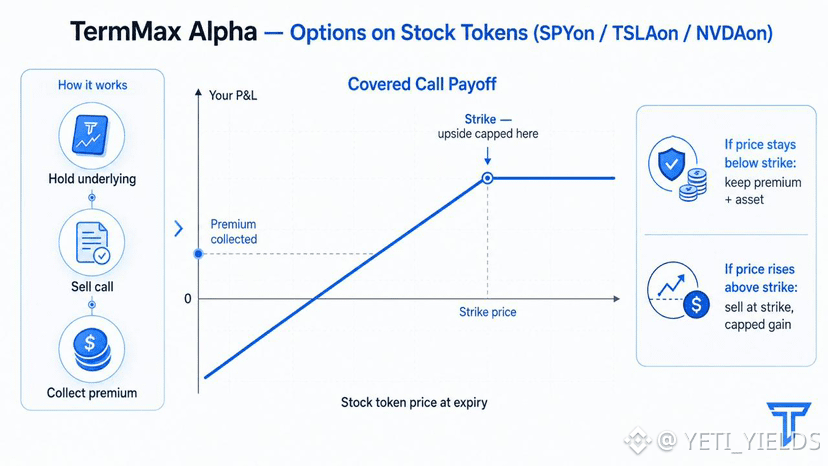
Một covered call, nói đơn giản: bạn nắm giữ tài sản cơ sở, bán cho ai đó quyền mua tài sản đó của bạn với một mức giá cố định vào một ngày cố định, và thu về phí bảo hiểm (premium) vì đã chấp nhận nghĩa vụ đó. 💵 Nếu tài sản vẫn nằm dưới giá thực hiện, bạn giữ phí bảo hiểm và giữ luôn tài sản. Nếu giá tăng vượt lên, bạn sẽ bán ở mức giá thực hiện — lợi tức tăng bị giới hạn, nhưng bạn vẫn thu được lợi suất theo mọi trường hợp. Áp dụng vào người nắm giữ cổ phiếu được token hóa đồng nghĩa với việc tạo lợi suất trên những tài sản lẽ ra chỉ “nằm yên” chờ tăng giá. 🎯
Đây là một điều đáng kể phức tạp hơn một khoản vay lãi suất cố định đơn thuần — quyền chọn mang theo hồ sơ rủi ro riêng của nó (việc “giới hạn lợi nhuận tăng” là đánh đổi dễ thấy nhất), cần được hiểu rõ trước khi xem “TermMax giờ đã có options” như chỉ là một tính năng sinh lợi thêm nữa. ☝️
Giới hạn lợi nhuận tăng để đổi lấy phí bảo hiểm được đảm bảo, hay lấy toàn bộ lợi nhuận tăng nhưng không có lợi suất trong thời gian chờ — bạn sẽ chọn chiến lược nào cho một token cổ phiếu mà bạn đang nắm giữ dài hạn? 🎲
@TermMax #TermMax
Không ngờ “options market” lại xuất hiện trong một thông báo TermMax, nhưng có vẻ việc giao hàng vật lý đã mở ra một cánh cửa mà tôi chưa từng kết nối cho đến tận bây giờ: các chiến lược kiểu bán quyền chọn (covered-call) dành cho người nắm giữ token cổ phiếu. 📞
Chuỗi lập luận, đi từng bước: giao hàng vật lý có nghĩa là tài sản thế chấp có thể được giao trực tiếp dưới dạng một tài sản, thay vì bị bán cưỡng bức trên thị trường mở. Cơ chế nền tảng tương tự — thanh toán bằng chính tài sản thực thay vì tiền mặt từ một thương vụ bán trên thị trường — về mặt cấu trúc cũng là thứ mà hợp đồng quyền chọn cần vào thời điểm đáo hạn. 🔄 Sản phẩm call/put của TermMax Alpha ban đầu ra mắt trên BNB Chain cho các token Binance Alpha; hiện tại ứng dụng cũng liệt kê các thị trường call và put ngay trên chính token cổ phiếu (SPYon, TSLAon, NVDAon và các token khác), kèm theo giá thực hiện, kỳ hạn và thanh khoản hiển thị ngay tại đó.
Một covered call, nói đơn giản: bạn nắm giữ tài sản cơ sở, bán cho ai đó quyền mua tài sản đó của bạn với một mức giá cố định vào một ngày cố định, và thu về phí bảo hiểm (premium) vì đã chấp nhận nghĩa vụ đó. 💵 Nếu tài sản vẫn nằm dưới giá thực hiện, bạn giữ phí bảo hiểm và giữ luôn tài sản. Nếu giá tăng vượt lên, bạn sẽ bán ở mức giá thực hiện — lợi tức tăng bị giới hạn, nhưng bạn vẫn thu được lợi suất theo mọi trường hợp. Áp dụng vào người nắm giữ cổ phiếu được token hóa đồng nghĩa với việc tạo lợi suất trên những tài sản lẽ ra chỉ “nằm yên” chờ tăng giá. 🎯
Đây là một điều đáng kể phức tạp hơn một khoản vay lãi suất cố định đơn thuần — quyền chọn mang theo hồ sơ rủi ro riêng của nó (việc “giới hạn lợi nhuận tăng” là đánh đổi dễ thấy nhất), cần được hiểu rõ trước khi xem “TermMax giờ đã có options” như chỉ là một tính năng sinh lợi thêm nữa. ☝️
Giới hạn lợi nhuận tăng để đổi lấy phí bảo hiểm được đảm bảo, hay lấy toàn bộ lợi nhuận tăng nhưng không có lợi suất trong thời gian chờ — bạn sẽ chọn chiến lược nào cho một token cổ phiếu mà bạn đang nắm giữ dài hạn? 🎲
@TermMax #TermMax