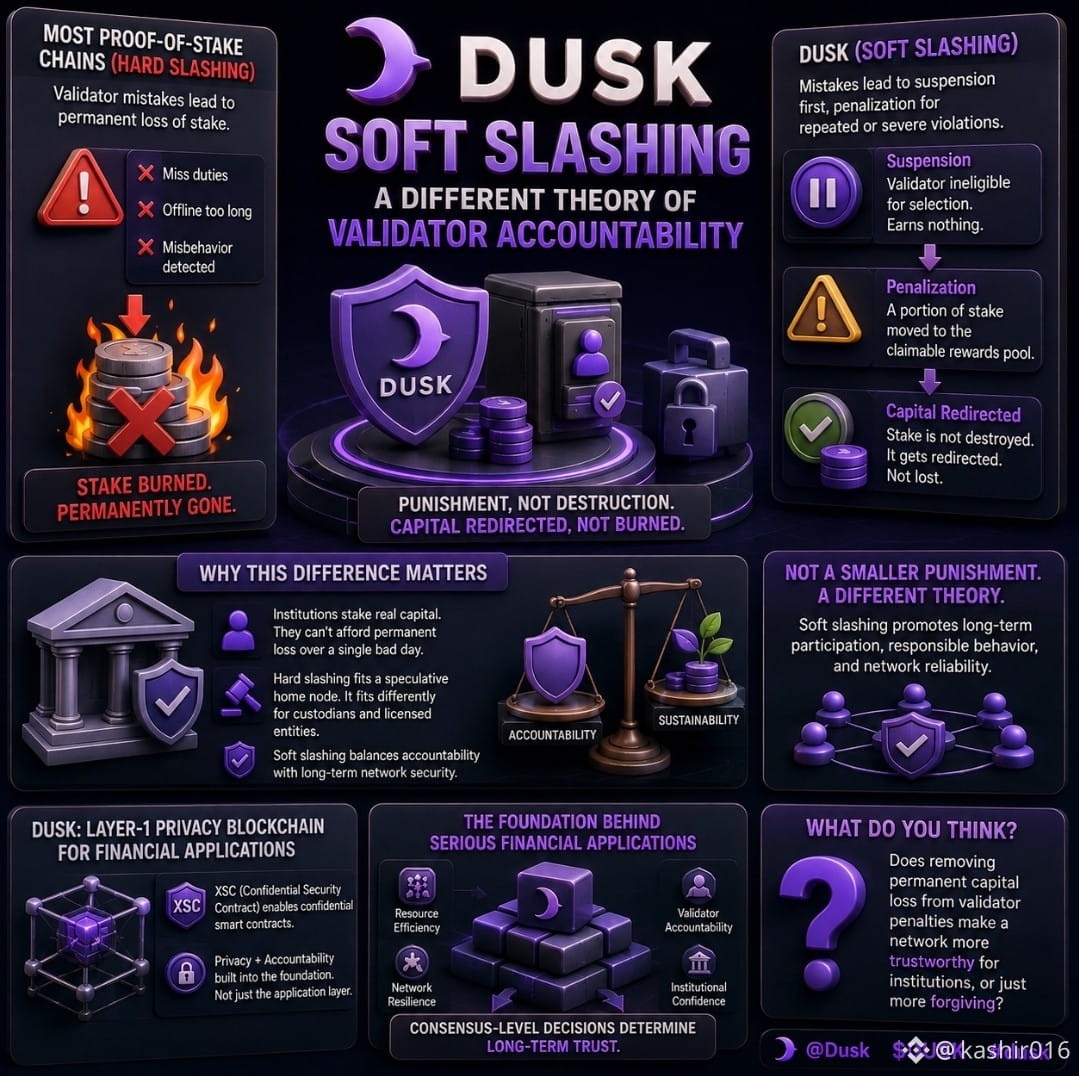
#dusk $DUSK @Dusk Các chuỗi bằng chứng cổ phần (proof-of-stake) trừng phạt sai sót của trình xác thực theo cách tương tự. Bỏ lỡ nhiệm vụ, ngoại tuyến quá lâu, bị phát hiện hành xử sai, và một phần cổ phần (stake) của bạn sẽ bị đốt cháy. Mãi mãi không còn.
Dusk không vận hành theo kiểu đó.
Nó sử dụng một cơ chế gọi là “soft slashing” (phạt giảm nhẹ). Một trình xác thực làm sai sẽ bị đình chỉ trong một khoảng thời gian, không đủ điều kiện được chọn, và không kiếm được gì trong thời gian đó. Vi phạm lặp lại hoặc nghiêm trọng hơn sẽ bị phạt theo mức cao hơn: một phần cổ phần sẽ được chuyển vào “kho phần thưởng có thể được khai nhận” thay vì bị tiêu hủy. Vốn không biến mất. Nó được chuyển hướng.
Thành thật mà nói, phản ứng đầu tiên của tôi là nghe có vẻ nhẹ hơn mức cần thiết. Trừng phạt càng ít thường đồng nghĩa với kỷ luật cũng ít hơn.
Nhưng hãy xem Dusk đang xây cho ai. Các tổ chức đặt stake vốn thực để bảo vệ một mạng lưới nhằm giải quyết các chứng khoán đã được quản lý không muốn chỉ vì một ngày tệ có thể khiến vị thế của họ bị đốt cháy vĩnh viễn. Hard slashing (phạt nặng) hoạt động ổn cho một trình xác thực mang tính suy đoán, chạy node tại nhà. Nó hoạt động khác đi khi trình xác thực là đơn vị lưu ký (custodian) hoặc một tổ chức được cấp phép, nơi vẫn có cơ chế trách nhiệm giải trình ở nơi khác.
Điều này quay thẳng trở lại với lý do Dusk tồn tại ngay từ đầu: một blockchain quyền riêng tư lớp 1 cho các ứng dụng tài chính. XSC và các smart contract bảo mật thu hút nhiều sự chú ý, nhưng những quyết định ở cấp độ đồng thuận như thế này mới thực sự quyết định liệu vốn lớn có sẵn sàng vận hành hạ tầng trên chuỗi trong dài hạn hay không.
Soft slashing không phải là một hình phạt “nhẹ hơn”. Nó là một lý thuyết khác về cách giữ cho trình xác thực duy trì sự trung thực.
Việc loại bỏ mất mát vốn vĩnh viễn khỏi các hình phạt dành cho trình xác thực khiến mạng lưới đáng tin cậy hơn cho các tổ chức, hay chỉ khiến hệ thống khoan dung hơn?
@Dusk $DUSK #dusk
$NVDAB
Dusk không vận hành theo kiểu đó.
Nó sử dụng một cơ chế gọi là “soft slashing” (phạt giảm nhẹ). Một trình xác thực làm sai sẽ bị đình chỉ trong một khoảng thời gian, không đủ điều kiện được chọn, và không kiếm được gì trong thời gian đó. Vi phạm lặp lại hoặc nghiêm trọng hơn sẽ bị phạt theo mức cao hơn: một phần cổ phần sẽ được chuyển vào “kho phần thưởng có thể được khai nhận” thay vì bị tiêu hủy. Vốn không biến mất. Nó được chuyển hướng.
Thành thật mà nói, phản ứng đầu tiên của tôi là nghe có vẻ nhẹ hơn mức cần thiết. Trừng phạt càng ít thường đồng nghĩa với kỷ luật cũng ít hơn.
Nhưng hãy xem Dusk đang xây cho ai. Các tổ chức đặt stake vốn thực để bảo vệ một mạng lưới nhằm giải quyết các chứng khoán đã được quản lý không muốn chỉ vì một ngày tệ có thể khiến vị thế của họ bị đốt cháy vĩnh viễn. Hard slashing (phạt nặng) hoạt động ổn cho một trình xác thực mang tính suy đoán, chạy node tại nhà. Nó hoạt động khác đi khi trình xác thực là đơn vị lưu ký (custodian) hoặc một tổ chức được cấp phép, nơi vẫn có cơ chế trách nhiệm giải trình ở nơi khác.
Điều này quay thẳng trở lại với lý do Dusk tồn tại ngay từ đầu: một blockchain quyền riêng tư lớp 1 cho các ứng dụng tài chính. XSC và các smart contract bảo mật thu hút nhiều sự chú ý, nhưng những quyết định ở cấp độ đồng thuận như thế này mới thực sự quyết định liệu vốn lớn có sẵn sàng vận hành hạ tầng trên chuỗi trong dài hạn hay không.
Soft slashing không phải là một hình phạt “nhẹ hơn”. Nó là một lý thuyết khác về cách giữ cho trình xác thực duy trì sự trung thực.
Việc loại bỏ mất mát vốn vĩnh viễn khỏi các hình phạt dành cho trình xác thực khiến mạng lưới đáng tin cậy hơn cho các tổ chức, hay chỉ khiến hệ thống khoan dung hơn?
@Dusk $DUSK #dusk
$NVDAB