Tôi đã ở trong crypto đủ lâu để nghe đi nghe lại cùng một lập luận về quyền riêng tư dưới nhiều “lớp áo” khác nhau: nếu bạn muốn sự tiện lợi, cuối cùng bạn sẽ phải từ bỏ điều gì đó.
Tôi cứ nghĩ về thiết kế Phoenix của Dusk, vì nó thách thức giả định đó theo một cách khá thực tế.
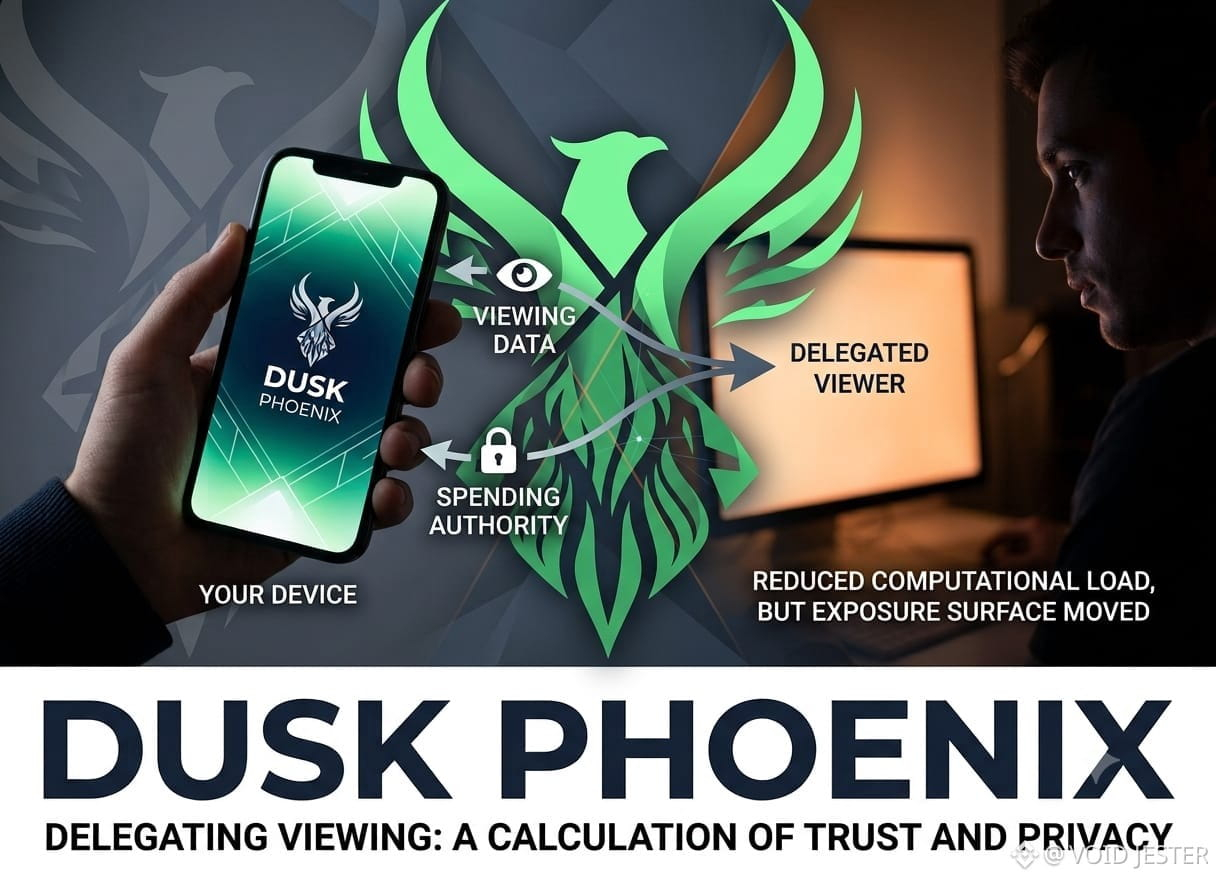
Phoenix không buộc điện thoại phải làm mọi thứ. Khả năng xem có thể được ủy quyền để bên thứ ba quét các ghi chú của bạn mà không có thẩm quyền chi tiêu chúng. Việc tạo bằng chứng ZK cũng có thể được đẩy sang một prover bên ngoài. Điều đó thay đổi cách tôi nhìn về lập luận “quyền riêng tư so với khả năng sử dụng”. Quyền riêng tư không nhất thiết có nghĩa là điện thoại của bạn phải gánh toàn bộ phần tính toán.
Nhưng tôi đã từng xem bộ phim này trước rồi. Việc ủy thác một tác vụ nhạy cảm không loại bỏ niềm tin. Nó chỉ dời nó đi.
Một trình xem được ủy quyền có thể không thể ăn cắp tiền của bạn, nhưng vẫn có thể biết rằng bạn đã nhận được tiền và thậm chí có thể dựng nên một bức tranh dựa trên hoạt động của bạn. Giao thức có thể tách việc “nhìn” khỏi việc “chi”, nhưng không thể làm cho bên thực hiện việc “nhìn” trở nên không liên quan.
Vì vậy tôi khá thận trọng.
Tôi thích điều này ở chỗ nó không giả vờ rằng quyền riêng tư là miễn phí. Bạn có thể giảm gánh nặng trên thiết bị của mình, nhưng có thể bạn lại tăng bề mặt phơi lộ ở một nơi khác.
Tôi có ủy quyền cho việc xem không? Có lẽ là cho các khoản tiền mang tính thường lệ. Còn với bất cứ thứ gì thật sự riêng tư, tôi vẫn chưa chắc.
Tôi đã học được rằng câu hỏi tốt hơn không chỉ là “Cái này có riêng tư không?”
Mà là “Tôi đang tin ai, và chính xác tôi đang trao cho họ điều gì?”
@Dusk #dusk $DUSK
Tôi cứ nghĩ về thiết kế Phoenix của Dusk, vì nó thách thức giả định đó theo một cách khá thực tế.
Phoenix không buộc điện thoại phải làm mọi thứ. Khả năng xem có thể được ủy quyền để bên thứ ba quét các ghi chú của bạn mà không có thẩm quyền chi tiêu chúng. Việc tạo bằng chứng ZK cũng có thể được đẩy sang một prover bên ngoài. Điều đó thay đổi cách tôi nhìn về lập luận “quyền riêng tư so với khả năng sử dụng”. Quyền riêng tư không nhất thiết có nghĩa là điện thoại của bạn phải gánh toàn bộ phần tính toán.
Nhưng tôi đã từng xem bộ phim này trước rồi. Việc ủy thác một tác vụ nhạy cảm không loại bỏ niềm tin. Nó chỉ dời nó đi.
Một trình xem được ủy quyền có thể không thể ăn cắp tiền của bạn, nhưng vẫn có thể biết rằng bạn đã nhận được tiền và thậm chí có thể dựng nên một bức tranh dựa trên hoạt động của bạn. Giao thức có thể tách việc “nhìn” khỏi việc “chi”, nhưng không thể làm cho bên thực hiện việc “nhìn” trở nên không liên quan.
Vì vậy tôi khá thận trọng.
Tôi thích điều này ở chỗ nó không giả vờ rằng quyền riêng tư là miễn phí. Bạn có thể giảm gánh nặng trên thiết bị của mình, nhưng có thể bạn lại tăng bề mặt phơi lộ ở một nơi khác.
Tôi có ủy quyền cho việc xem không? Có lẽ là cho các khoản tiền mang tính thường lệ. Còn với bất cứ thứ gì thật sự riêng tư, tôi vẫn chưa chắc.
Tôi đã học được rằng câu hỏi tốt hơn không chỉ là “Cái này có riêng tư không?”
Mà là “Tôi đang tin ai, và chính xác tôi đang trao cho họ điều gì?”
@Dusk #dusk $DUSK