
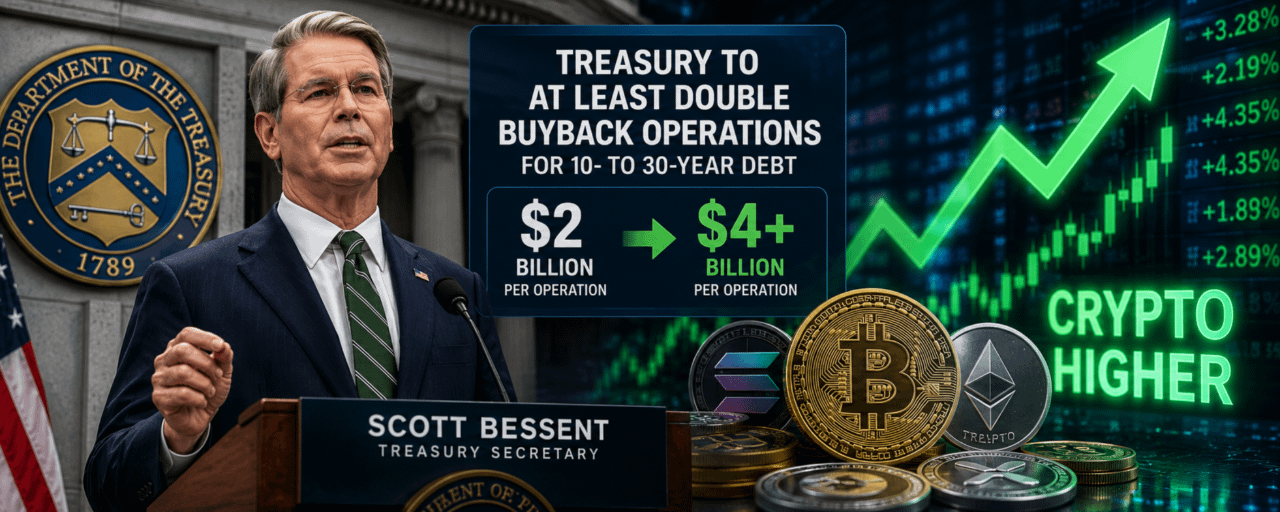
The Federal Reserve spent Wednesday afternoon telling markets it might need to raise interest rates. Markets shrugged. Then the Treasury Department put out a two-paragraph statement about bond purchases, and bitcoin jumped eight percent in an hour.
That's the lesson from Wednesday, and it's not a subtle one: when the referee and the scorekeeper disagree about who's actually running the game, bet on whoever controls the money.
What the Fed actually said, and why nobody cared
Minutes from the Fed's July 28-29 meeting, released Wednesday, showed a committee more divided than the headline vote let on. Policymakers held rates at 3.5 to 3.75 percent by a 9-3 margin, but three regional bank presidents pushed for a hike, and the minutes made clear the hawkish case reached well past those three dissenters. Many officials said tightening would likely be necessary if inflation didn't come down. The outlook itself was described as highly uncertain, muddied further by the reignited Iran war.
None of it moved markets much. The real action came from two blocks down Pennsylvania Avenue.
Bessent's two-paragraph earthquake
Treasury Secretary Scott Bessent announced Wednesday that the department would at least double the size of its buyback operations for 10- to 30-year debt, from a $2 billion cap to at least $4 billion per operation, starting in September and running through early November.
In the context of a $32 trillion Treasury market, the extra money is a rounding error. What it signals is not. Warsh has spent his time at the Fed trying to shrink the central bank's balance sheet and move away from the bond-buying playbook that defined monetary policy since the financial crisis. Bessent just picked up that exact tool through the fiscal side of government instead. The Fed may keep its independence. It may also find itself increasingly beside the point.
Analysts read it as pure tactics. Evercore ISI called it a well-timed strike against bond shorts on a quiet August day. Jefferies economist Thomas Simons said it broke with Treasury's usual promise of steady, predictable debt issuance and felt improvised. Whether or not that's fair, it worked: 30-year yields, which had touched a 19-year high above 5.3 percent just a day earlier, dropped roughly nine basis points to settle near 5.19 percent, one of the sharper single-day moves in months.
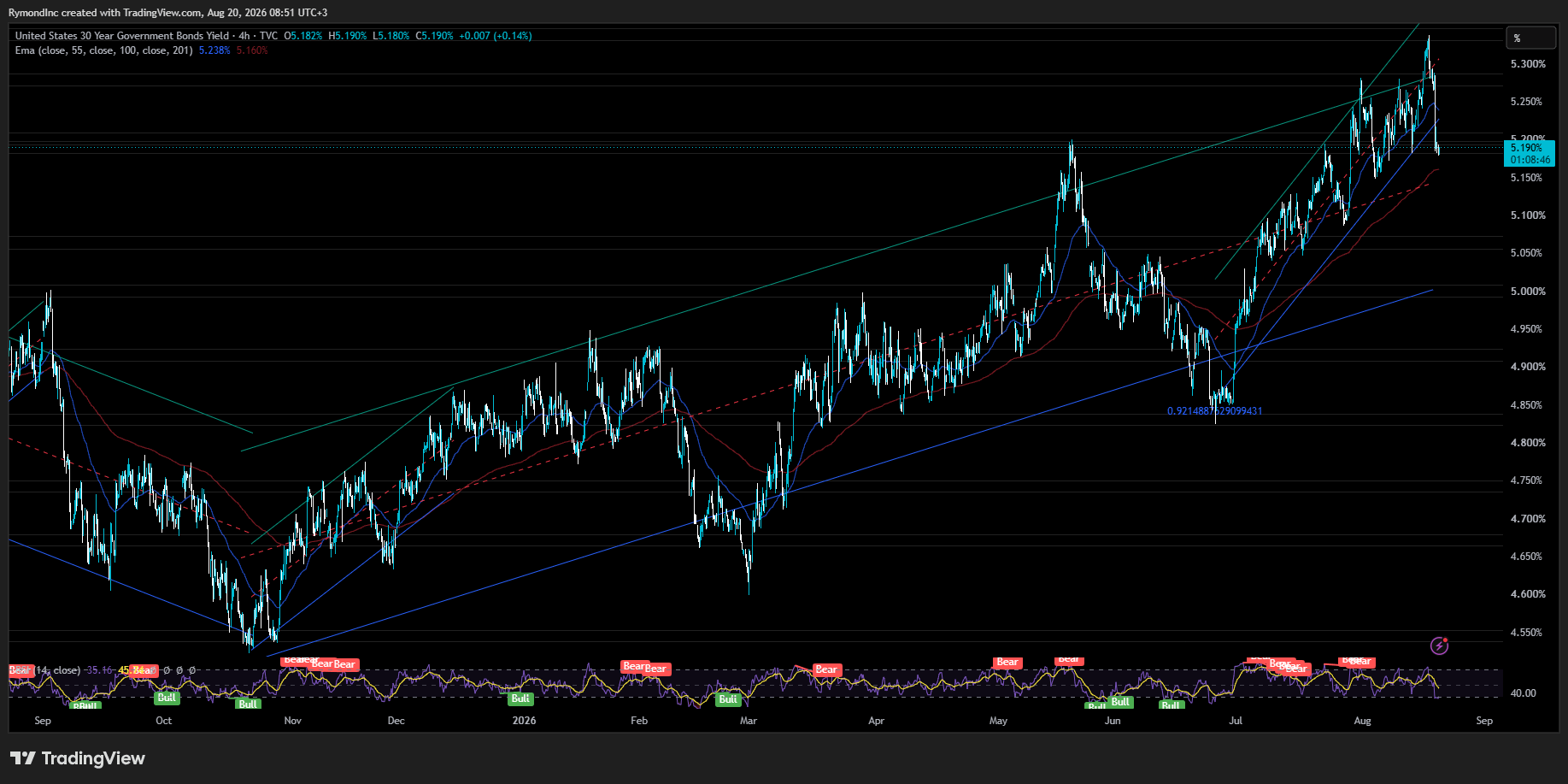
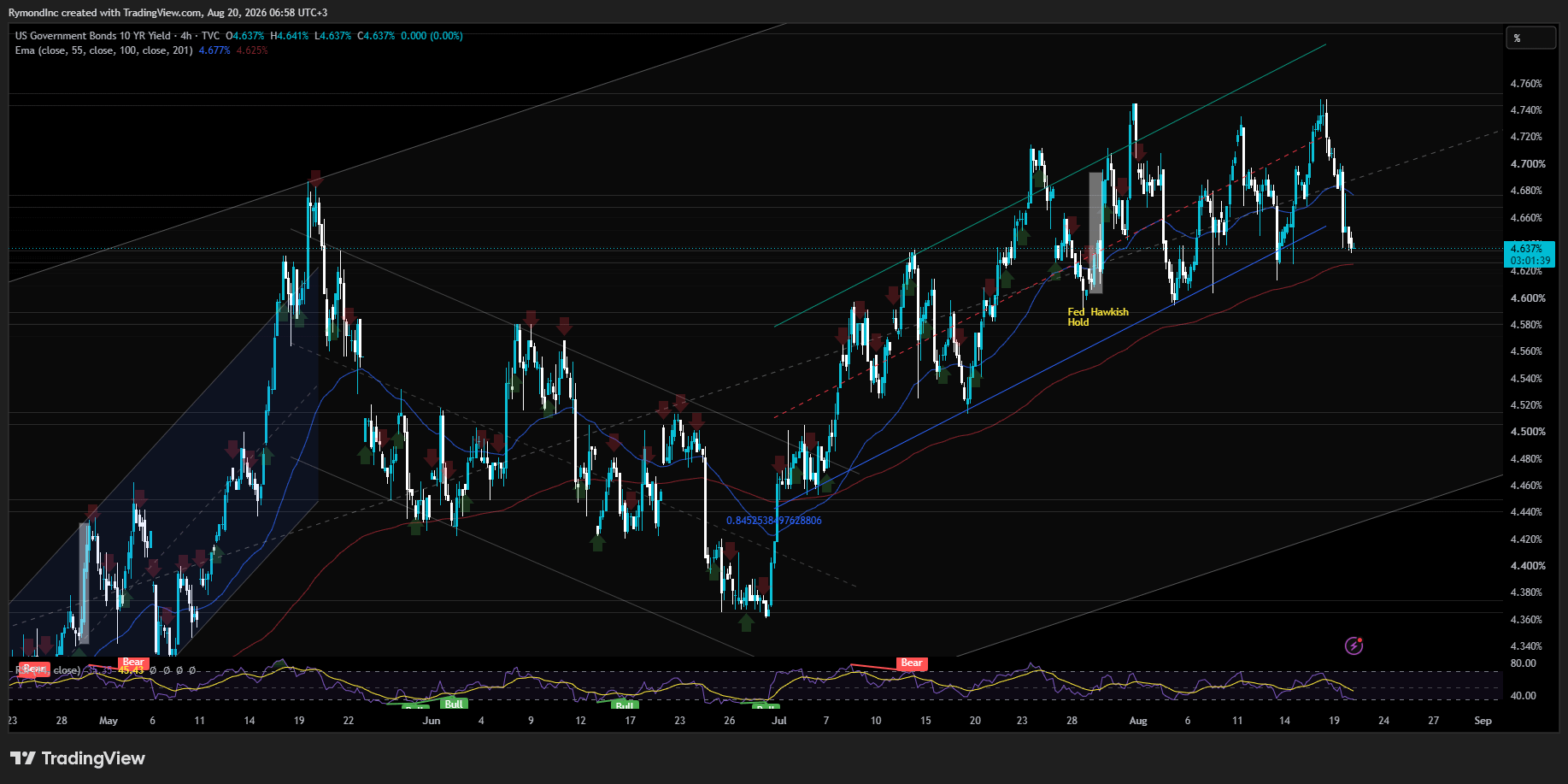
The 10-year fell to about 4.64 percent, down roughly six to seven basis points. It held its sharp decline on Thursday, trading around 4.64% after reaching a 20-month high of 4.75% earlier this week.
Everything that floats on cheap money took off
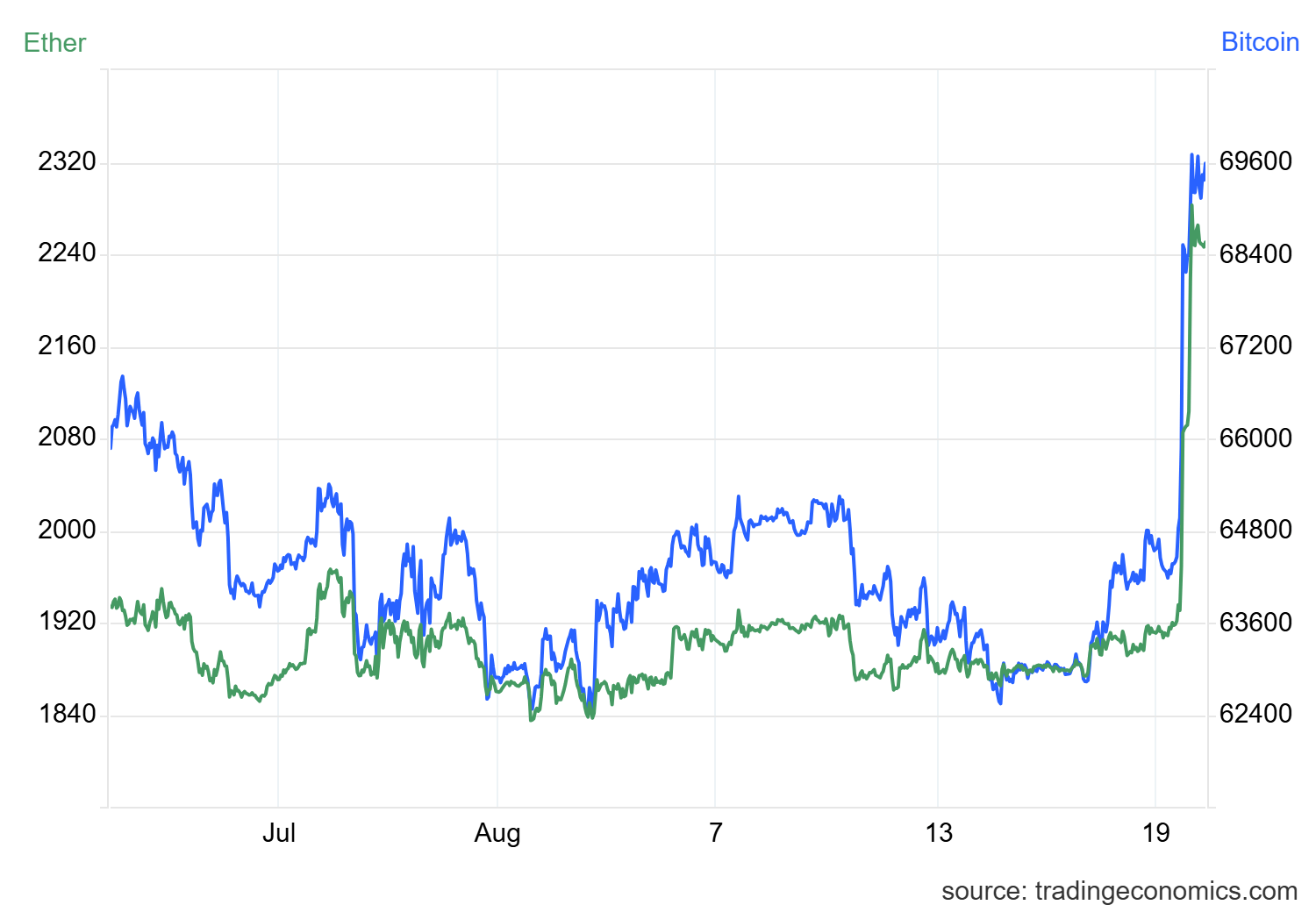
Crypto felt it first and hardest. Bitcoin, which had been stuck in a narrow band for weeks, surged nearly eight percent and triggered the largest wave of short liquidations since 2021 more than a billion dollars of bitcoin shorts wiped out in about an hour, according to Coinglass. The coin pushed above $69,000, its best level since early June. Its up 0.5% in early London trading. Looking back, over the last four weeks, Bitcoin gained 4.26 percent. Over the last 12 months, its price fell by 38.33 percent.
Ether moved even further: after gaining close to ten percent through Wednesday's session, it extended the advance into Thursday's Asian trading to a gain of roughly eighteen percent, more than doubling bitcoin's move. Its up 0.22%. Looking back, over the last four weeks, Ether lost 16.37 percent. Over the last 12 months, its price fell by 46.88 percent.
Gold told a similar story with less use attached. December futures climbed as high as $4,557.60 an ounce, within reach of the June 2 high of 4,571.30, for a gain of more than three percent bullion's best single day in roughly six months. Gold eased below $4,500 an ounce on Thursday in early Londons session today, but held most of the more than 4% surge in the previous session.
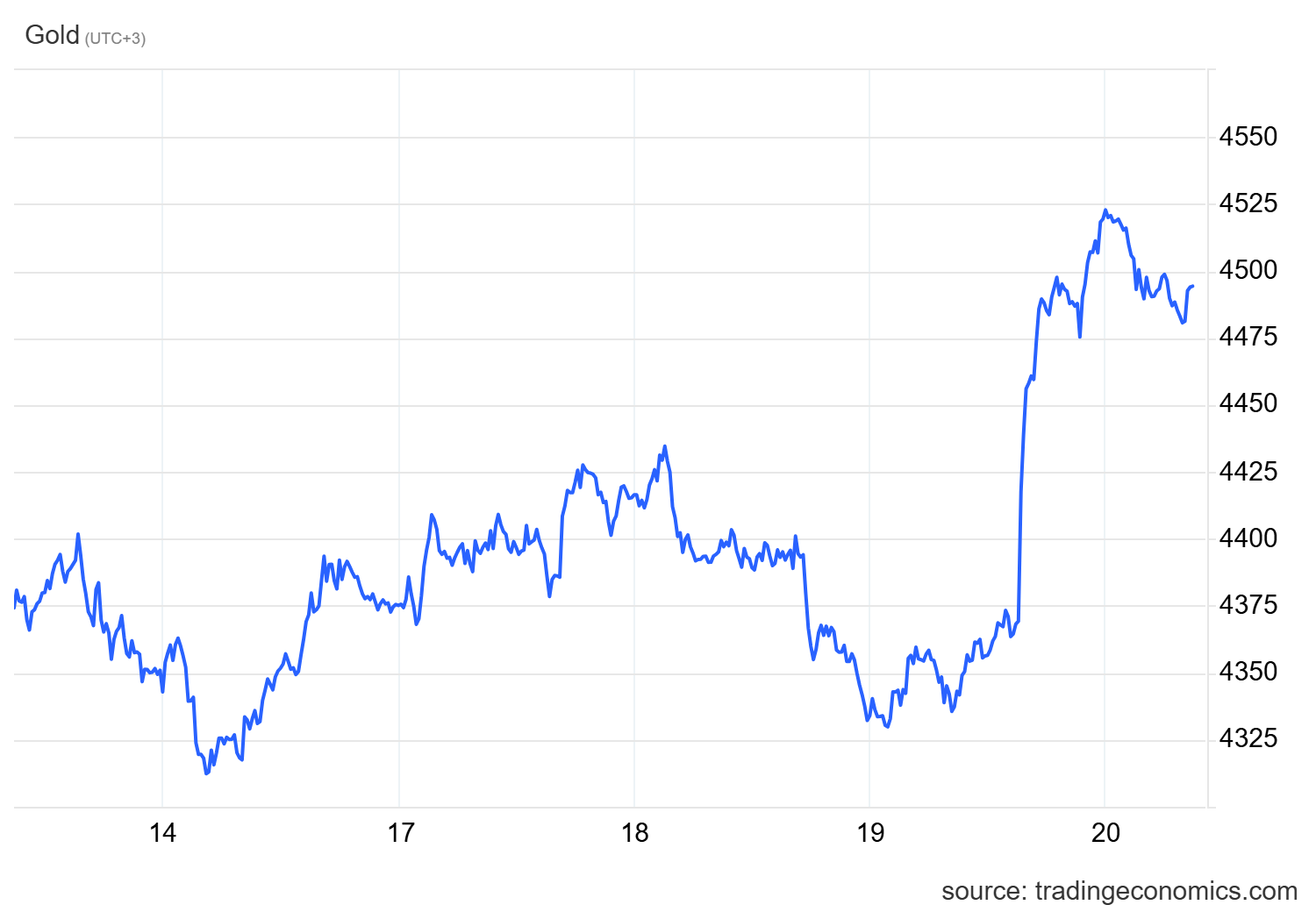
Behind both moves sits the same mechanic: lower long-term yields reduce the cost of holding assets that pay no interest, and a weaker dollar makes anything priced in dollars cheaper for the rest of the world to buy.
A dollar that keeps finding new reasons to sell off
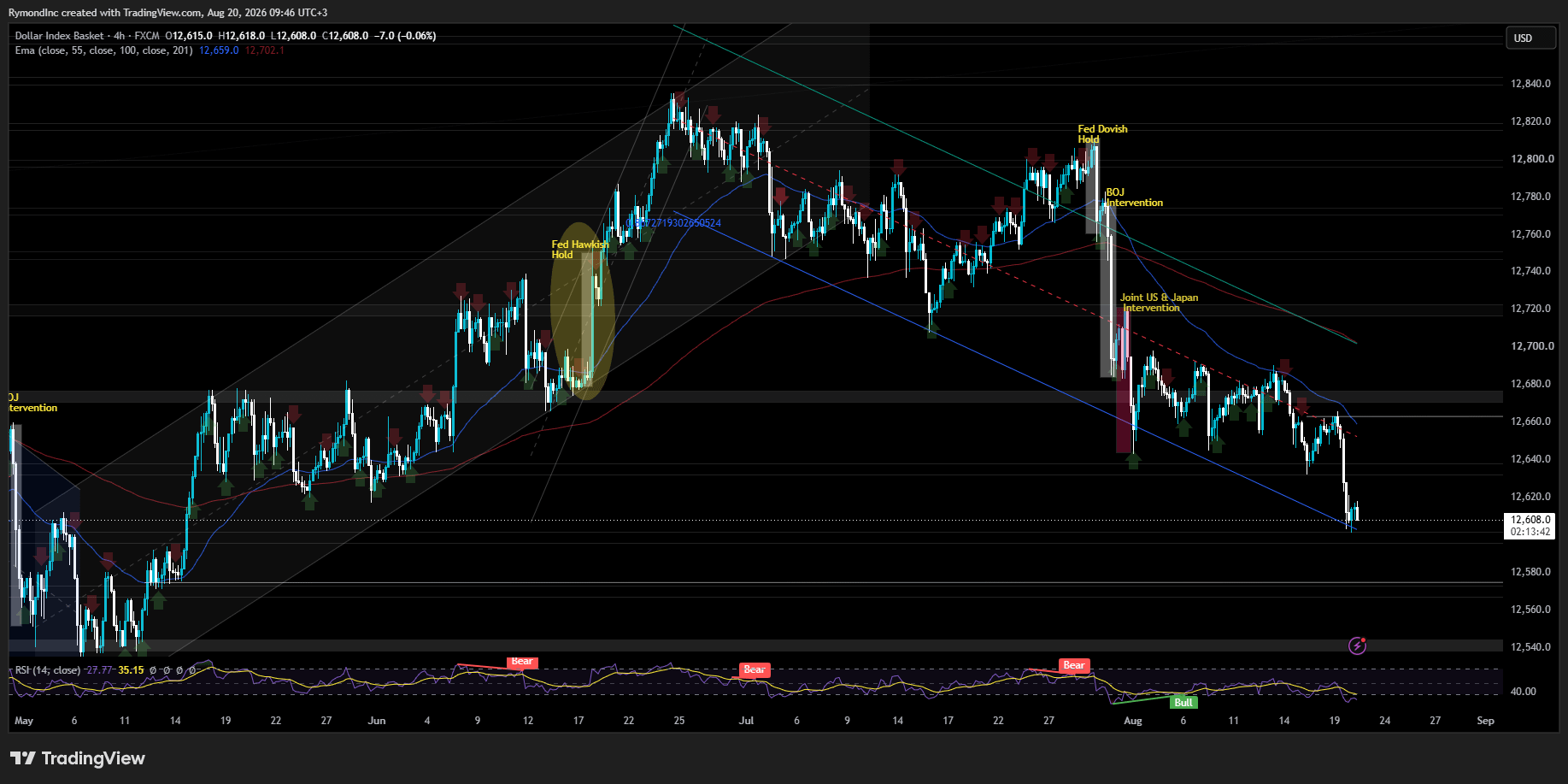
The dollar index slid to around 98.8 on Thursday, hugging its lowest level in three months. Some economists see an uncomfortable parallel in how it got there. When a government leans on its own buying power to hold down long-term borrowing costs rather than letting the market set them, the risk premium that yields are supposed to carry doesn't disappear it just resurfaces somewhere else. Japan has spent years demonstrating exactly that trade-off, capping government bond yields through central bank purchases while the yen absorbs the pressure instead. Whether Washington's much smaller buyback program pushes the dollar down the same path is the open question hanging over Thursday's trading.
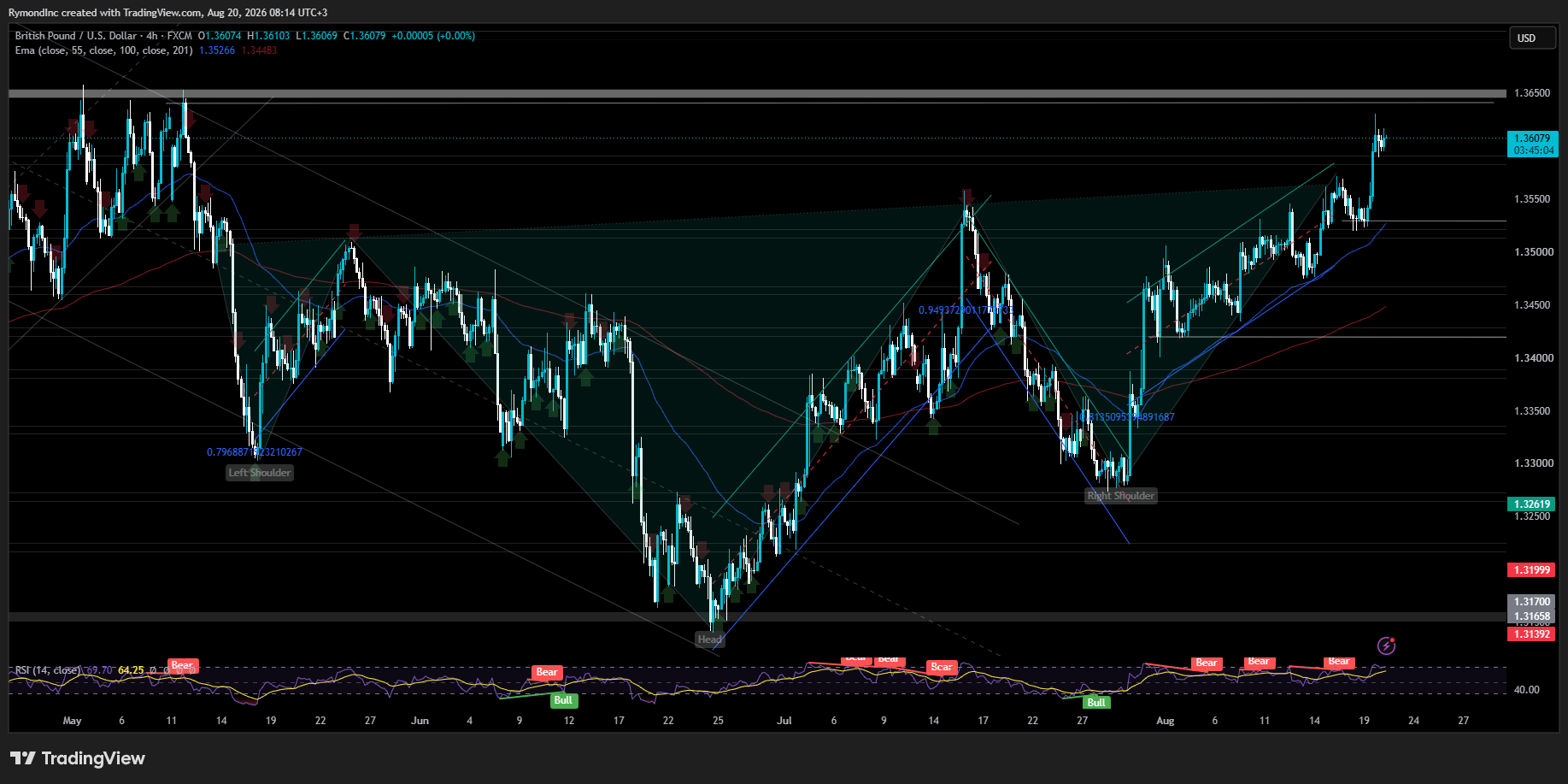
The pound touched around $1.356 Wednesday, close to its best level in three months, as traders worked through a mixed batch of UK data. Sterling's real support on the day came from the dollar's broader retreat, elevated oil prices and the still-unresolved Iran war remain the wildcard sitting over the UK's inflation outlook regardless of what the labor data shows.
Adding on the sentiment was a hot UK consumer prices index print, that showed inflation accelerated to 2.9 percent in July from 2.6 percent in June, exactly as expected, while core inflation held steady at 2.6 percent. That combination trimmed expectations for a Bank of England rate hike later this year rather than adding to them.
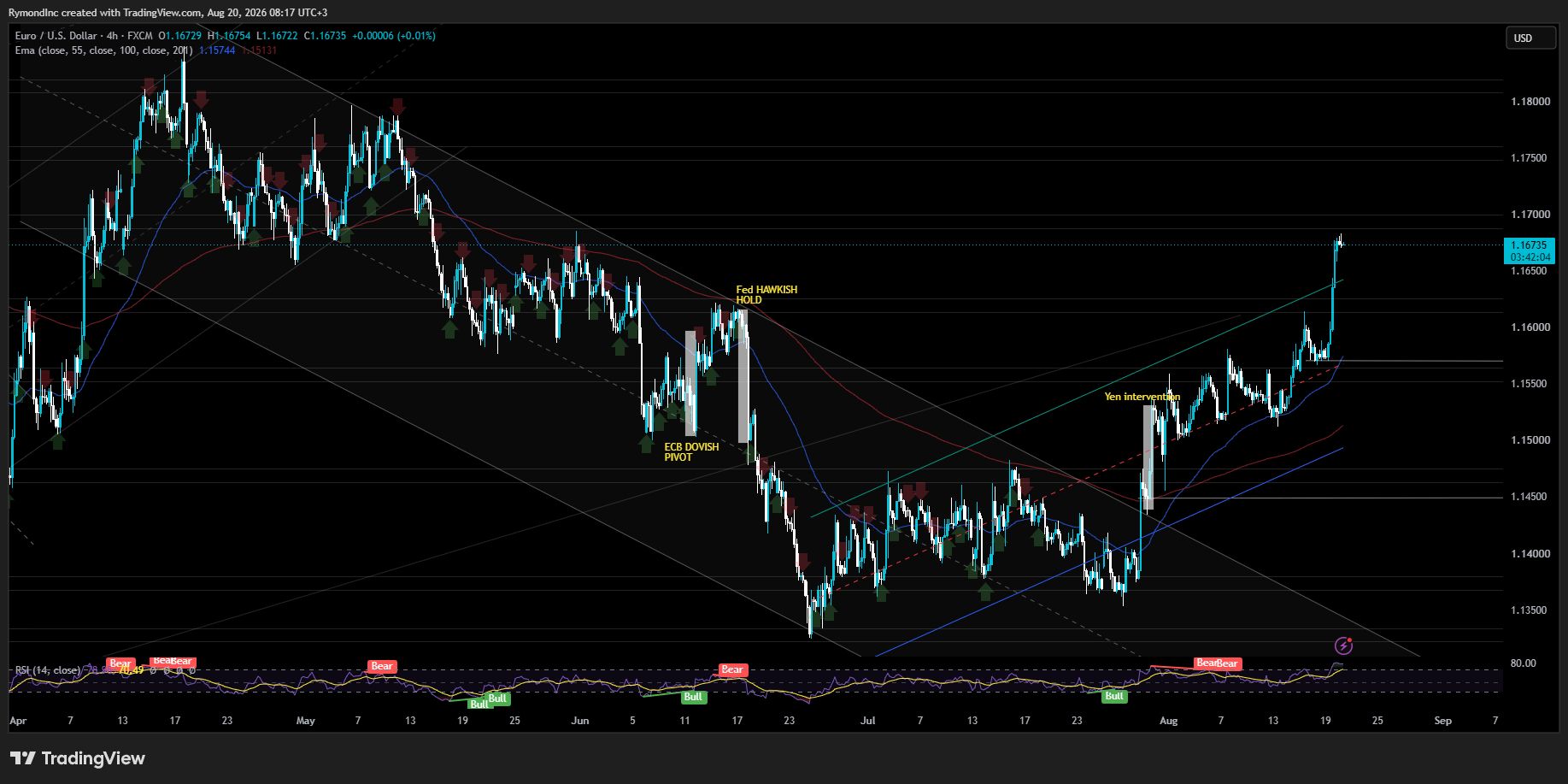
The euro pushed up to around $1.167, its strongest level in three months, riding the same dollar weakness lifting every other major currency. Natural gas prices across Europe added their own tailwind, climbing on supply concerns tied to the Middle East a reminder that the currency benefiting most from American bond-market maneuvering is also sitting closest to the war driving energy costs higher. The European Central Bank is still expected to keep raising rates this year to keep a lid on inflation, gas-driven or otherwise.
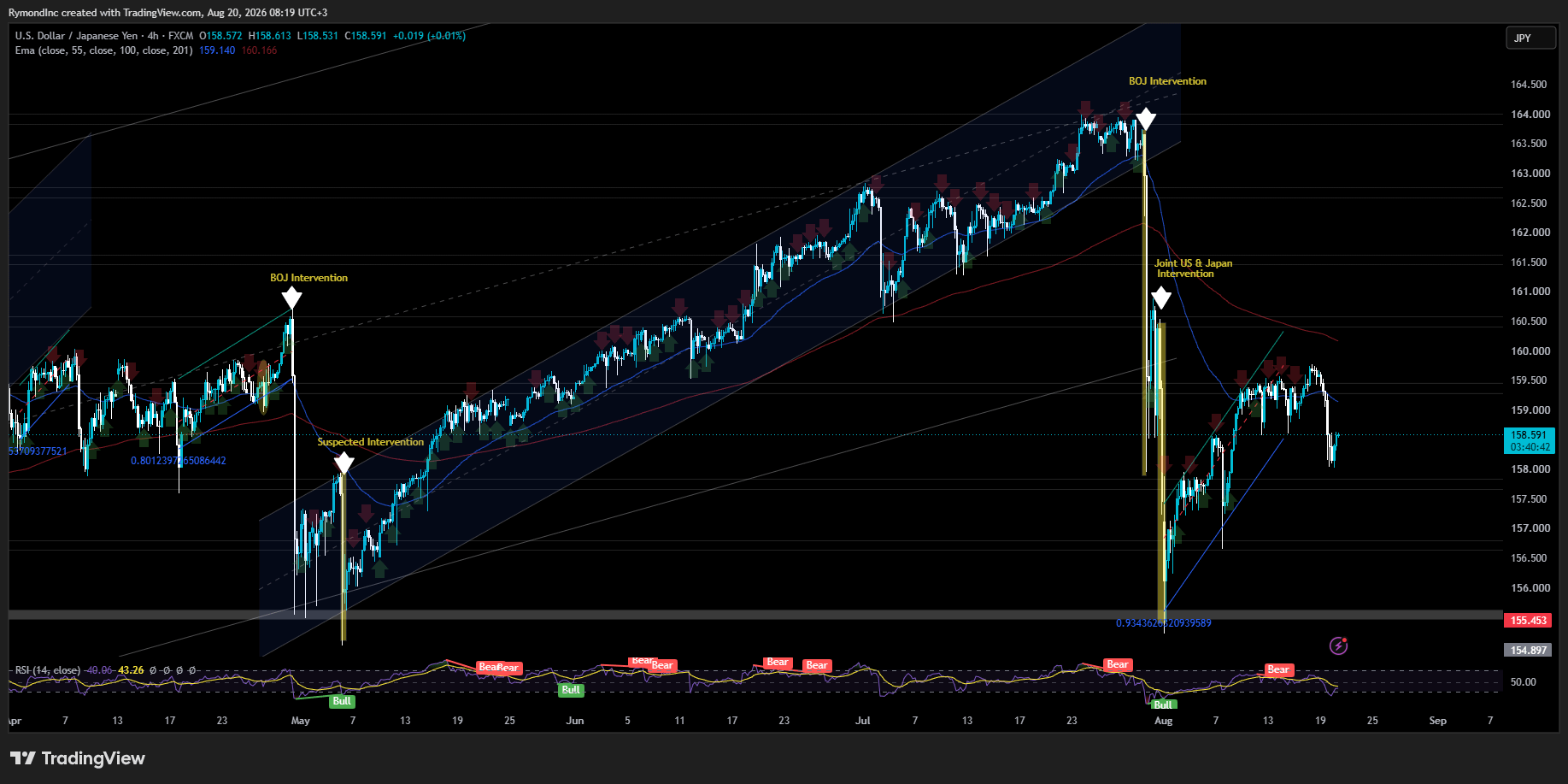
The yen gets a rare good day it didn't have to fight for. USD/JPY drifted to around 158 on Thursday after the yen gained nearly one percent in the prior session an unusual bit of relief for a currency that has spent much of the year under pressure from wide interest-rate gaps with the US, mounting fiscal worries in Tokyo, and climbing import costs. Japan's own trade data underlined that last point: the July deficit widened sharply as imports hit a record high on heavier crude oil purchases, even as exports stayed firm on strong demand for AI-related chips. Wednesday's move came courtesy of Washington, not Tokyo the dollar's slide did the work the Bank of Japan has struggled to do on its own for months.
Whether any of this holds is a separate question from why it happened. A $2 billion increase in a niche corner of debt-market plumbing doesn't fix inflation, doesn't resolve the Fed's internal split, and doesn't make Iran's war go away. It just proved, for one afternoon, that a two-paragraph Treasury statement can move markets that eight pages of Fed minutes couldn't touch.