TermMax: Câu chuyện thực sự không chỉ nằm ở lợi suất
Khi lần đầu tiên tôi gặp @TermMax , tôi chủ yếu tò mò về lợi suất, các kho tiền (vault) và cơ hội. Nhìn qua thì rất dễ nghĩ rằng một vault DeFi đơn giản là: gửi tiền, để giao thức sử dụng nguồn vốn đó, và kiếm lợi nhuận.
Nhưng càng tìm hiểu về TermMax, tôi càng nhận ra phần thú vị không chỉ là bạn có thể nhận được bao nhiêu lợi suất.
Mà là cách lợi suất đó được quản lý.
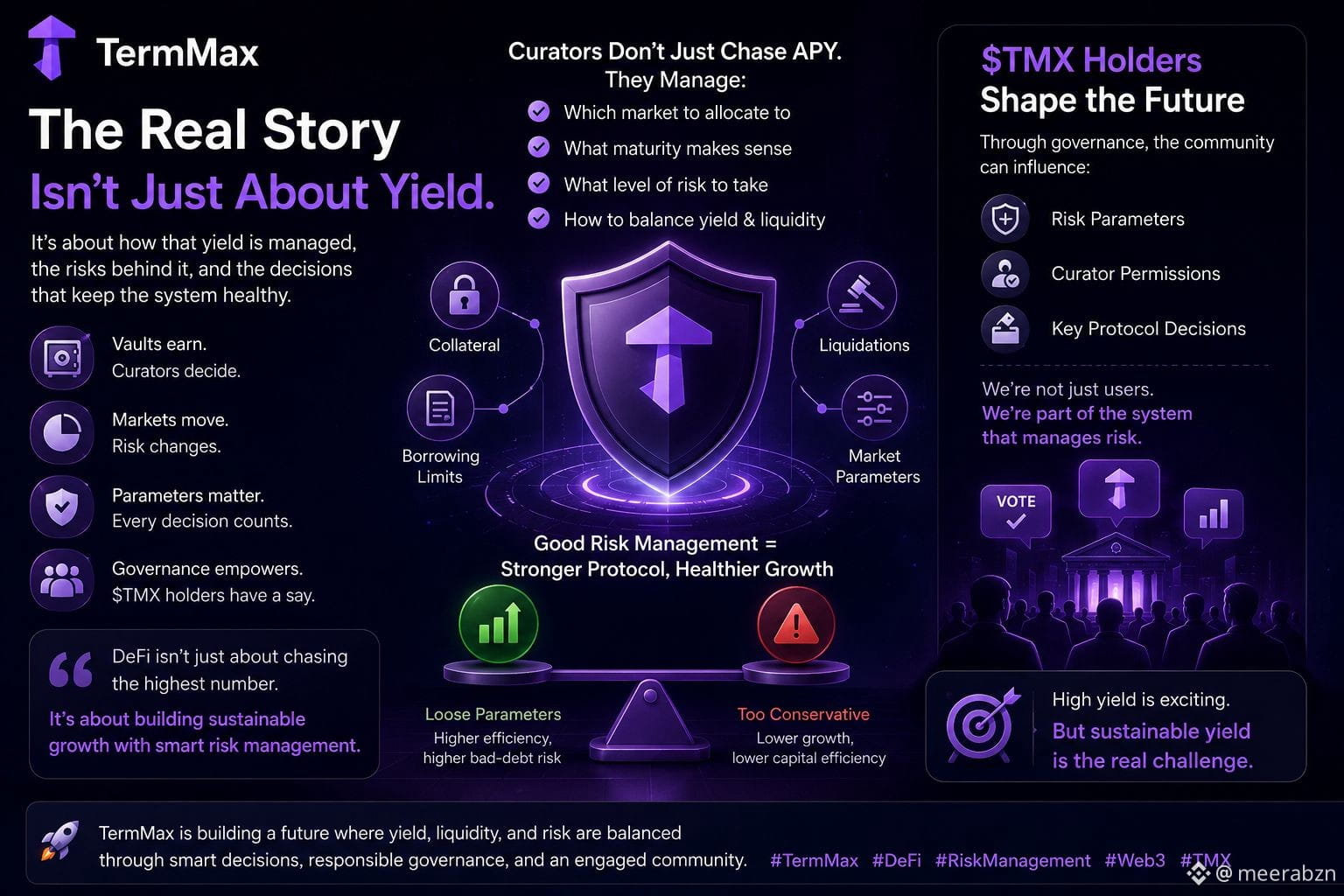
Mô hình Curator đặc biệt khiến tôi nhìn việc cho vay lãi suất cố định theo một cách khác. Một curator không chỉ là người đi tìm APY cao nhất. Luôn có những câu hỏi lớn hơn đứng sau từng lần phân bổ:
🔹 Nên đưa vốn vào thị trường nào?
🔹 Kỳ hạn nào là hợp lý?
🔹 Mức rủi ro nào có thể chấp nhận?
🔹 Tính thanh khoản có đủ không?
🔹 Điều gì xảy ra khi điều kiện thị trường thay đổi?
Lợi suất cao có thể trông hấp dẫn trên giấy tờ, nhưng nếu kỳ hạn không phù hợp hoặc thanh khoản trở thành vấn đề, thì lợi suất đó có thể không đáng so với rủi ro tăng thêm.
Và đó là lúc quản lý rủi ro và quản trị (governance) trở nên thực sự quan trọng.
Các thị trường cho vay của TermMax phụ thuộc vào những yếu tố như yêu cầu tài sản thế chấp, hạn mức vay, cơ chế thanh lý và các tham số thị trường. Nếu các tham số quá “thoáng”, hiệu quả sử dụng vốn có thể được cải thiện—nhưng rủi ro nợ xấu cũng có thể tăng. Nếu quá thận trọng, tăng trưởng và tính thanh khoản có thể bị ảnh hưởng.
Vì vậy, tôi nghĩ governance của $TMX đáng để theo dõi.
Nếu những người nắm giữ $TMX có thể tham gia vào các quyết định liên quan đến tham số rủi ro và quyền hạn của curator, họ không chỉ là người dùng thụ động. Họ có thể đóng vai trò trong việc định hình cách giao thức phản ứng khi điều kiện thị trường trở nên khó khăn.
Với tôi, đây là bức tranh lớn hơn:
DeFi không nên chỉ là chạy theo con số lợi suất cao nhất trên màn hình.
Mà còn phải là hiểu được lợi suất đến từ đâu, những rủi ro nào liên quan, cách tính thanh khoản được quản lý ra sao, và chiến lược đó có thể thực sự tồn tại trước biến động (volatility) hay không.
Đó là phần mà tôi thấy thú vị nhất trong @TermMax .
💭 Lợi suất cao thì hấp dẫn. Thách thức thật sự là lợi suất bền vững.
#TermMax @TermMax
Khi lần đầu tiên tôi gặp @TermMax , tôi chủ yếu tò mò về lợi suất, các kho tiền (vault) và cơ hội. Nhìn qua thì rất dễ nghĩ rằng một vault DeFi đơn giản là: gửi tiền, để giao thức sử dụng nguồn vốn đó, và kiếm lợi nhuận.
Nhưng càng tìm hiểu về TermMax, tôi càng nhận ra phần thú vị không chỉ là bạn có thể nhận được bao nhiêu lợi suất.
Mà là cách lợi suất đó được quản lý.
Mô hình Curator đặc biệt khiến tôi nhìn việc cho vay lãi suất cố định theo một cách khác. Một curator không chỉ là người đi tìm APY cao nhất. Luôn có những câu hỏi lớn hơn đứng sau từng lần phân bổ:
🔹 Nên đưa vốn vào thị trường nào?
🔹 Kỳ hạn nào là hợp lý?
🔹 Mức rủi ro nào có thể chấp nhận?
🔹 Tính thanh khoản có đủ không?
🔹 Điều gì xảy ra khi điều kiện thị trường thay đổi?
Lợi suất cao có thể trông hấp dẫn trên giấy tờ, nhưng nếu kỳ hạn không phù hợp hoặc thanh khoản trở thành vấn đề, thì lợi suất đó có thể không đáng so với rủi ro tăng thêm.
Và đó là lúc quản lý rủi ro và quản trị (governance) trở nên thực sự quan trọng.
Các thị trường cho vay của TermMax phụ thuộc vào những yếu tố như yêu cầu tài sản thế chấp, hạn mức vay, cơ chế thanh lý và các tham số thị trường. Nếu các tham số quá “thoáng”, hiệu quả sử dụng vốn có thể được cải thiện—nhưng rủi ro nợ xấu cũng có thể tăng. Nếu quá thận trọng, tăng trưởng và tính thanh khoản có thể bị ảnh hưởng.
Vì vậy, tôi nghĩ governance của $TMX đáng để theo dõi.
Nếu những người nắm giữ $TMX có thể tham gia vào các quyết định liên quan đến tham số rủi ro và quyền hạn của curator, họ không chỉ là người dùng thụ động. Họ có thể đóng vai trò trong việc định hình cách giao thức phản ứng khi điều kiện thị trường trở nên khó khăn.
Với tôi, đây là bức tranh lớn hơn:
DeFi không nên chỉ là chạy theo con số lợi suất cao nhất trên màn hình.
Mà còn phải là hiểu được lợi suất đến từ đâu, những rủi ro nào liên quan, cách tính thanh khoản được quản lý ra sao, và chiến lược đó có thể thực sự tồn tại trước biến động (volatility) hay không.
Đó là phần mà tôi thấy thú vị nhất trong @TermMax .
💭 Lợi suất cao thì hấp dẫn. Thách thức thật sự là lợi suất bền vững.
#TermMax @TermMax