#dusk $DUSK @Dusk Hoàng Hôn: Phần I Gần Như Bỏ Lỡ
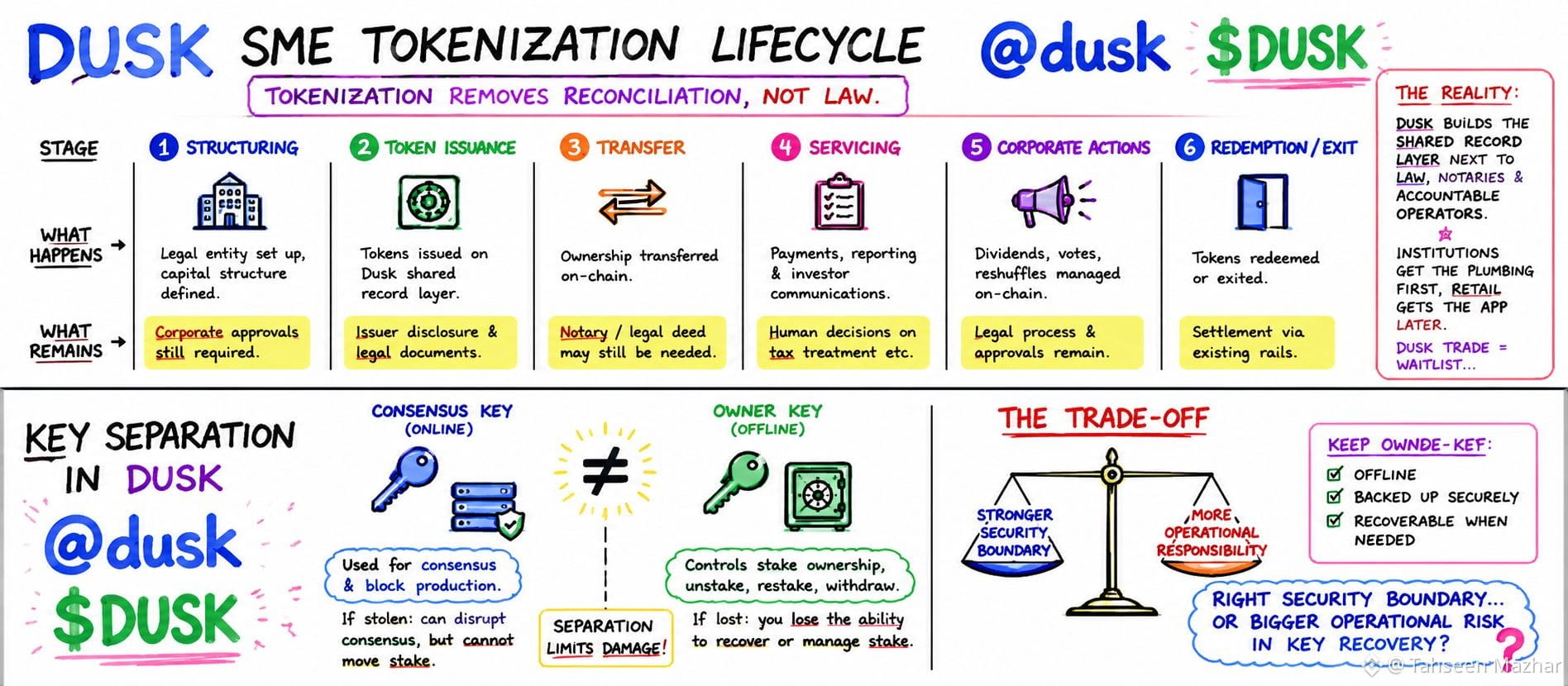
Hôm nay tôi đang lục lọi bài viết ngày 15/8 của Dusk về token hóa theo SME và suýt lướt qua bảng vòng đời gồm sáu giai đoạn. Tôi quay lại, và một cột cứ làm tôi bận tâm: “điều gì còn lại.”
Việc cấu trúc vẫn cần các phê duyệt từ công ty. Việc chuyển nhượng vẫn có thể cần công chứng. Việc cung cấp dịch vụ vẫn có thể cần một quyết định của con người về cách xử lý thuế.
Điều đó đã thay đổi cách tôi nhìn về $DUSK .
Tôi trước đây nghĩ token hóa chủ yếu là để giảm ma sát. Nhưng tài liệu lại đọc theo cách khác. Dusk dường như đang xây dựng một lớp hồ sơ dùng chung bên cạnh hạ tầng pháp lý hiện có, chứ không phải giả vờ rằng hạ tầng sẽ biến mất.
Bối cảnh NPEX làm điều này trở nên khá cụ thể: cổ phiếu Dutch BV vẫn có thể cần văn bản công chứng, ngay cả khi quyền sở hữu được đại diện bởi một token.
Tôi nghĩ đây là phần ít được nhận ra hơn của luận điểm. Token hóa có thể loại bỏ các vấn đề đối soát mà không loại bỏ trách nhiệm pháp lý. Với các tổ chức, sự phân biệt đó quan trọng hơn nhiều so với một giao diện giao dịch bắt mắt.
Tôi vẫn đang coi $DUSK là một vị thế thử nghiệm nhỏ thay vì chạy theo nó. Tôi thà quan sát cách hạ tầng xử lý các ràng buộc vận hành thực sự còn hơn là giả định rằng mọi vấn đề “RWA” đều được giải quyết chỉ bằng việc đưa một tài sản lên onchain.
Rồi tôi để ý thêm một chi tiết khác trong hướng dẫn bảo mật của Dusk, cũng khớp với kiểu đó.
Tách hoạt động đồng thuận khỏi quyền sở hữu stake sẽ giới hạn những gì một khóa node bị đánh cắp có thể làm. Nhưng nếu cụm từ bí mật (mnemonic) nằm trên máy chủ, ranh giới sẽ trở nên yếu hơn. Giữ quyền của người sở hữu ở chế độ offline giúp tăng tính tách biệt, nhưng lại tạo ra một trách nhiệm khác: khóa đó phải vừa được bảo vệ vừa có khả năng khôi phục khi cần unstake hoặc restake.
Vì vậy câu hỏi của tôi đã đổi hướng.
Việc tách khóa của Dusk có phải là ranh giới bảo mật đúng đắn, hay nó chỉ đơn giản là chuyển rủi ro vận hành lớn nhất sang việc khôi phục khóa của người sở hữu?
#dusk $DUSK
@Dusk
$BTW
$br
$CYS
Hôm nay tôi đang lục lọi bài viết ngày 15/8 của Dusk về token hóa theo SME và suýt lướt qua bảng vòng đời gồm sáu giai đoạn. Tôi quay lại, và một cột cứ làm tôi bận tâm: “điều gì còn lại.”
Việc cấu trúc vẫn cần các phê duyệt từ công ty. Việc chuyển nhượng vẫn có thể cần công chứng. Việc cung cấp dịch vụ vẫn có thể cần một quyết định của con người về cách xử lý thuế.
Điều đó đã thay đổi cách tôi nhìn về $DUSK .
Tôi trước đây nghĩ token hóa chủ yếu là để giảm ma sát. Nhưng tài liệu lại đọc theo cách khác. Dusk dường như đang xây dựng một lớp hồ sơ dùng chung bên cạnh hạ tầng pháp lý hiện có, chứ không phải giả vờ rằng hạ tầng sẽ biến mất.
Bối cảnh NPEX làm điều này trở nên khá cụ thể: cổ phiếu Dutch BV vẫn có thể cần văn bản công chứng, ngay cả khi quyền sở hữu được đại diện bởi một token.
Tôi nghĩ đây là phần ít được nhận ra hơn của luận điểm. Token hóa có thể loại bỏ các vấn đề đối soát mà không loại bỏ trách nhiệm pháp lý. Với các tổ chức, sự phân biệt đó quan trọng hơn nhiều so với một giao diện giao dịch bắt mắt.
Tôi vẫn đang coi $DUSK là một vị thế thử nghiệm nhỏ thay vì chạy theo nó. Tôi thà quan sát cách hạ tầng xử lý các ràng buộc vận hành thực sự còn hơn là giả định rằng mọi vấn đề “RWA” đều được giải quyết chỉ bằng việc đưa một tài sản lên onchain.
Rồi tôi để ý thêm một chi tiết khác trong hướng dẫn bảo mật của Dusk, cũng khớp với kiểu đó.
Tách hoạt động đồng thuận khỏi quyền sở hữu stake sẽ giới hạn những gì một khóa node bị đánh cắp có thể làm. Nhưng nếu cụm từ bí mật (mnemonic) nằm trên máy chủ, ranh giới sẽ trở nên yếu hơn. Giữ quyền của người sở hữu ở chế độ offline giúp tăng tính tách biệt, nhưng lại tạo ra một trách nhiệm khác: khóa đó phải vừa được bảo vệ vừa có khả năng khôi phục khi cần unstake hoặc restake.
Vì vậy câu hỏi của tôi đã đổi hướng.
Việc tách khóa của Dusk có phải là ranh giới bảo mật đúng đắn, hay nó chỉ đơn giản là chuyển rủi ro vận hành lớn nhất sang việc khôi phục khóa của người sở hữu?
#dusk $DUSK
@Dusk
$BTW
$br
$CYS