Đã từng có thời việc giao dịch crypto tương đối đơn giản.
Mở biểu đồ ra.
Kiểm tra #RSI .
Xem #MACD .
Vẽ một vài mốc hỗ trợ và kháng cự.
Tìm điểm vào lệnh.
Xong.
Kỷ nguyên đó đang kết thúc.
Hôm nay, hàng nghìn nhà giao dịch đang nhìn vào cùng những chỉ báo, cùng các biểu đồ và cùng các mốc.
Và khi ai cũng thấy cùng một thứ…
khoảng trống lợi thế nằm ở đâu?
Thị trường không quan tâm đến chỉ báo của bạn.
Đây là phần không thoải mái.
Một thiết lập nhìn có vẻ hoàn hảo có thể thất bại.
Một cú bứt phá có thể thành bẫy phá vỡ.
Một tín hiệu RSI mạnh có thể tiếp tục mạnh lên trong khi giá vẫn tiếp tục giảm.
Và một đồng trông có vẻ tăng giá trên biểu đồ riêng của nó có thể sụp đổ bất ngờ vì Bitcoin đổi hướng.
Thị trường crypto không phải chỉ là một biểu đồ.
Đó là một hệ thống gồm hàng nghìn tài sản, dòng chảy thanh khoản, các chế độ thị trường và hành vi luôn thay đổi.
Gần đây Bitcoin đã giảm từ khoảng 65K USD xuống xấp xỉ 62,5K USD chỉ trong vài ngày, trong khi sự không chắc chắn về quy định lại tạo thêm một lớp áp lực khác.
Trong khi đó, vốn ngày càng trở nên chọn lọc hơn chứ không còn đơn giản là mua mọi thứ.
Điều đó tạo ra một môi trường giao dịch hoàn toàn khác.
Bạn không cần thêm tín hiệu.
Bạn cần những quyết định tốt hơn về việc tín hiệu nào xứng đáng được bạn chú ý.
Điều gì sẽ xảy ra nếu hệ thống giao dịch của bạn có thể học?
Đây là ý tưởng đằng sau bản cập nhật mới nhất của chúng tôi.
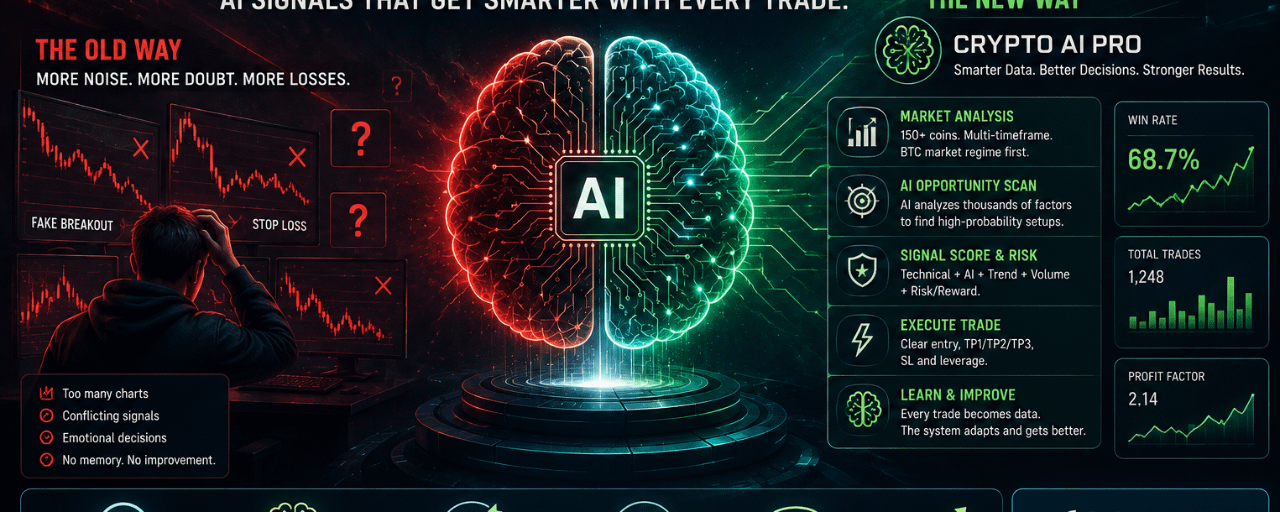
Chúng tôi xây Crypto AI Pro dựa trên một nguyên tắc đơn giản:
Một hệ thống giao dịch không nên quên những gì đã xảy ra hôm qua.
Phiên bản mới nhất của chúng tôi giới thiệu một lớp tự học mới.
Mỗi giao dịch hoàn tất đều trở thành dữ liệu.
Không chỉ là:
#WİN / LỖ
Nhưng những điều kiện phía sau giao dịch.
Hệ thống ghi lại bối cảnh thị trường, xu hướng BTC, các chỉ báo kỹ thuật, độ tin cậy của AI, các yếu tố đứng sau thiết lập, điểm vào lệnh, đòn bẩy, Điểm Tín Hiệu và kết quả cuối cùng.
Sau đó, nó có thể phân tích lịch sử đã tích lũy.
Những yếu tố AI nào gắn với các giao dịch thắng?
LONG hoạt động tốt hơn trong một số điều kiện thị trường nhất định không?
SHORT có hoạt động tốt hơn trong một chế độ BTC giảm giá không?
Những đặc điểm nào lặp lại trong các thiết lập thành công?
Đó là lúc mọi thứ trở nên thú vị.
AI tạo ra ý tưởng. Dữ liệu quyết định mức độ bạn tin vào nó.
Kiến trúc của chúng tôi không chỉ đơn thuần là:
AI → MUA
Nó gần giống với:
Thị trường → Lọc → AI → Điểm → Rủi ro → Tín hiệu → Kết quả → Học tập
Hệ thống quét một nhóm có kiểm soát các cặp Binance Futures có tính thanh khoản trên nhiều khung thời gian.
Nó đánh giá các điều kiện kỹ thuật, $BTC hướng thị trường, khối lượng và rủi ro/lợi nhuận trước khi một thiết lập trở thành tín hiệu thực sự.
Và bản cập nhật mới nhất bổ sung thêm một lớp nữa:
hiệu suất lịch sử trở thành một phần của phân tích tương lai.
Giờ đây hệ thống tổng hợp thống kê trên toàn bộ lịch sử các giao dịch đã đóng thay vì chỉ dựa vào một vài ví dụ gần đây.
Đó là một khác biệt rất lớn.
Một bot tĩnh nói:
“Thiết lập này khớp với quy tắc của tôi.”
Một hệ thống học tập có thể ngày càng tự hỏi:
“Thiết lập này khớp với quy tắc của tôi — nhưng những thiết lập tương tự đã thực sự hoạt động như thế nào?”
Vâng, hệ thống có thể điều chỉnh điểm chấm của mình.
Điểm Tín Hiệu kết hợp một số thành phần:
Kỹ thuật + AI + Xu hướng BTC + Khối lượng + Rủi ro/Lợi nhuận
Bản cập nhật mới sẽ định kỳ phân tích mức độ các thành phần này tương quan với kết quả giao dịch thực tế.
Sau đó, các trọng số có thể được tái hiệu chỉnh dần dựa trên dữ liệu đã tích lũy.
Không phải sau một lần giao dịch.
Không phải sau một ngày may mắn.
Và không phải bằng một trò nhảm “dự đoán AI 100%” nào đó.
Việc điều chỉnh được kiểm soát một cách có chủ đích.
Bởi vì thị trường nhiễu.
Và phản ứng thái quá với nhiễu là một trong những cách dễ nhất để tạo ra một thuật toán tệ.
Bitcoin đứng hàng đầu.
Đây là một phần quan trọng khác của hệ thống.
Trước khi nhìn vào từng đồng riêng lẻ, động cơ sẽ đánh giá chế độ thị trường BTC rộng hơn.
TĂNG
ĐI NGANG
Việc phân loại sử dụng cấu trúc đa khung thời gian của Bitcoin, bao gồm sự khớp EMA, MACD và ADX. Sau đó, chế độ thị trường đó sẽ ảnh hưởng đến cách chấm điểm cho từng thiết lập riêng lẻ.
Bởi vì có một khác biệt rất lớn giữa:
“Đồng này trông có vẻ tăng giá.”
và
“Đồng này trông có vẻ tăng giá trong khi cả thị trường đều tăng giá.”
Bối cảnh là quan trọng.
Rất nhiều.
Sản phẩm thực sự không phải là tín hiệu.
Có lẽ đây là thứ quan trọng nhất mà chúng tôi đang xây dựng.
Tín hiệu chỉ là phần nhìn thấy.
Phía sau nó là một đường ống:
150+ cặp crypto có tính thanh khoản
↓
Dữ liệu thị trường đa khung thời gian
↓
Lọc kỹ thuật
↓
Chế độ thị trường BTC
↓
Phân tích AI
↓
Điểm Tín Hiệu
↓
Đánh giá rủi ro/lợi nhuận
↓
↓
Kết quả giao dịch
↓
Học từ lịch sử
↓
Tái hiệu chỉnh trong tương lai
Mục tiêu không phải là tạo một kênh Telegram khác nơi ai đó đăng:
🚀 LONG NGAY!!!
Mục tiêu là xây dựng một động cơ giao dịch ngày càng dựa trên dữ liệu theo thời gian.
Ưu thế crypto tiếp theo có thể không phải là thông tin.
Ai cũng có thông tin rồi.
Biểu đồ thì miễn phí.
Chỉ báo là miễn phí.
Tin tức ở khắp nơi.
AI có ở khắp nơi.
Lợi thế thực sự đang trở nên:
Bạn sẽ làm gì với tất cả thông tin đó?
Bởi vì việc quá tải thông tin tạo ra một vấn đề mới.
Quá nhiều biểu đồ.
Quá nhiều đồng.
Quá nhiều quan điểm.
Quá nhiều tín hiệu.
Quá nhiều nhiễu.
Vì vậy, chiến lược chiến thắng có thể trở nên bất ngờ là rất đơn giản:
Lọc bỏ nhiễu.
Tìm các thiết lập mạnh nhất.
Đo lường kết quả.
Học từ chúng.
Lặp lại.
Đó là những gì chúng tôi đang xây với Crypto AI Pro.
Không phải là một quả cầu pha lê.
Không phải là một cỗ máy “lợi nhuận được đảm bảo”.
Không phải một chỉ báo khác gắn nhãn AI.
Một hệ thống được thiết kế để kết hợp:
AI + Học máy + Dữ liệu thị trường + Kết quả giao dịch thực tế
Và phần thú vị nhất?
Chúng tôi vẫn chưa xong.
Vì mỗi điều kiện thị trường mới tạo ra dữ liệu mới.
Mỗi giao dịch hoàn tất tạo thêm một điểm học tập.
Và mỗi điểm học tập lại cho hệ thống một cơ hội khác để được hiệu chỉnh tốt hơn.
Thị trường thay đổi.
Hệ thống học.
Lợi thế tiến hóa.
Có lẽ tương lai của giao dịch crypto không phải là tìm ra tín hiệu hoàn hảo.
Có lẽ đó là việc xây dựng một hệ thống ngày càng giỏi hơn trong việc tìm ra chúng.
Giao dịch crypto có rủi ro đáng kể. Bài viết này chỉ nhằm mục đích cung cấp thông tin và giáo dục và không phải là lời khuyên tài chính. Kết quả trong quá khứ không đảm bảo kết quả trong tương lai.