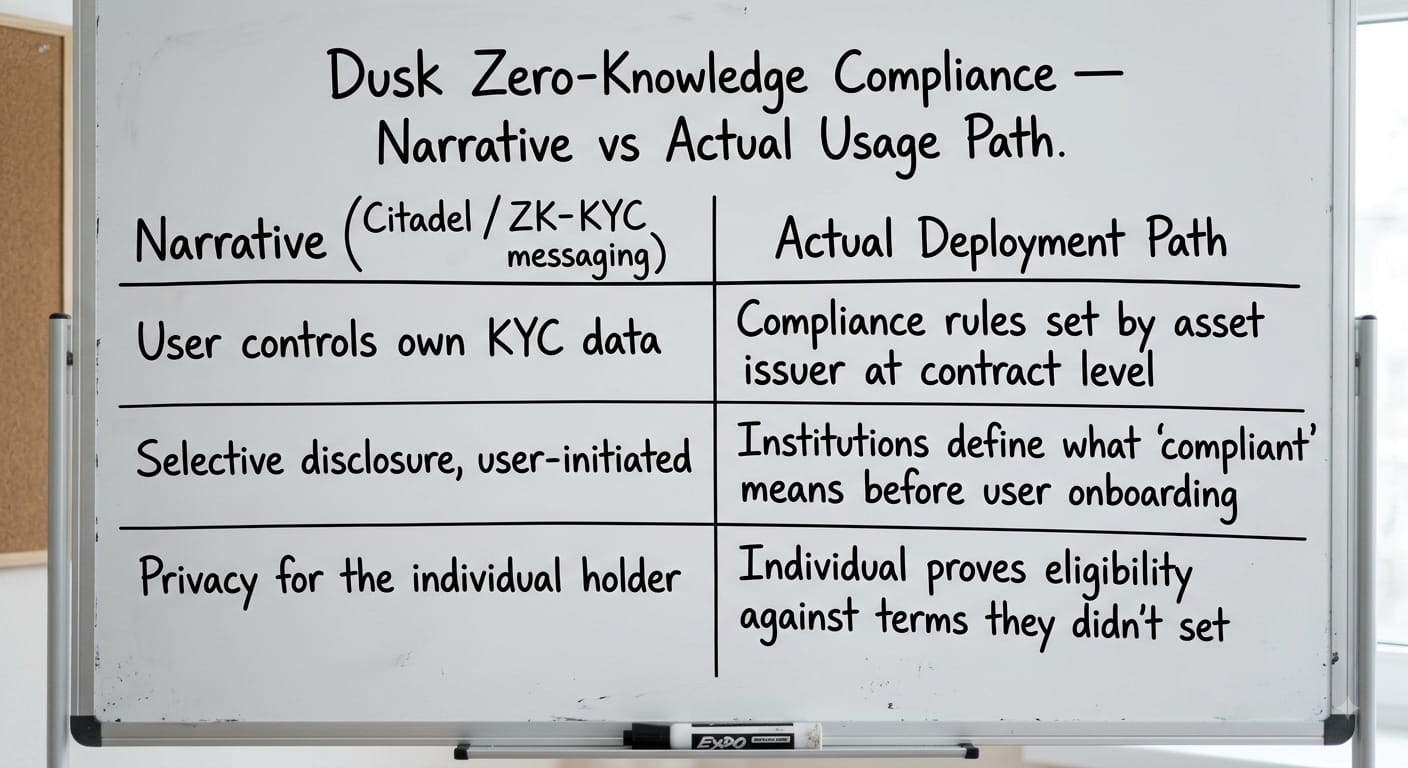
Phần thú vị không phải là việc Dusk cho phép bạn ở chế độ riêng tư khi chứng minh tuân thủ — mà là ai mới là người thực sự được dùng tính năng đó trước. Dusk Citadel và lớp tuân thủ dựa trên zero-knowledge là một cách để người dùng cá nhân kiểm soát dữ liệu KYC của chính họ, chỉ chia sẻ những gì cần thiết và không chia sẻ thêm gì. Nhưng lộ trình triển khai thực tế lại đi qua các tổ chức phát hành chứng khoán được quản lý trên chuỗi, chứ không phải các ví bán lẻ tự ý thực hiện việc tiết lộ chọn lọc theo điều kiện của riêng mình. Giao thức thực thi các quy tắc KYC/AML ở cấp độ smart contract, nghĩa là bên xác định "tuân thủ" là bất kỳ ai phát hành tài sản đó — không phải người đang nắm giữ nó. Đây là một thiết kế hợp lý cho một chuỗi được xây dựng xoay quanh tài chính được quản lý, nhưng đó là một câu chuyện ít được nói đến hơn so với "quyền riêng tư cho người dùng". Công nghệ thật sự cho phép bạn chứng minh đủ điều kiện mà không lộ danh tính — phần này là đúng. Điều chưa rõ ràng là liệu người nắm giữ trung bình có thực sự tương tác trực tiếp với hệ thống chứng minh đó hay không, hay chỉ đơn giản kế thừa một chuỗi nơi các tổ chức đã quyết định trước các điều khoản tuân thủ trước khi diễn ra giao dịch riêng tư đầu tiên. Đáng để theo dõi xem bên nào sẽ có công cụ trước.
#dusk @Dusk $DUSK
#dusk @Dusk $DUSK