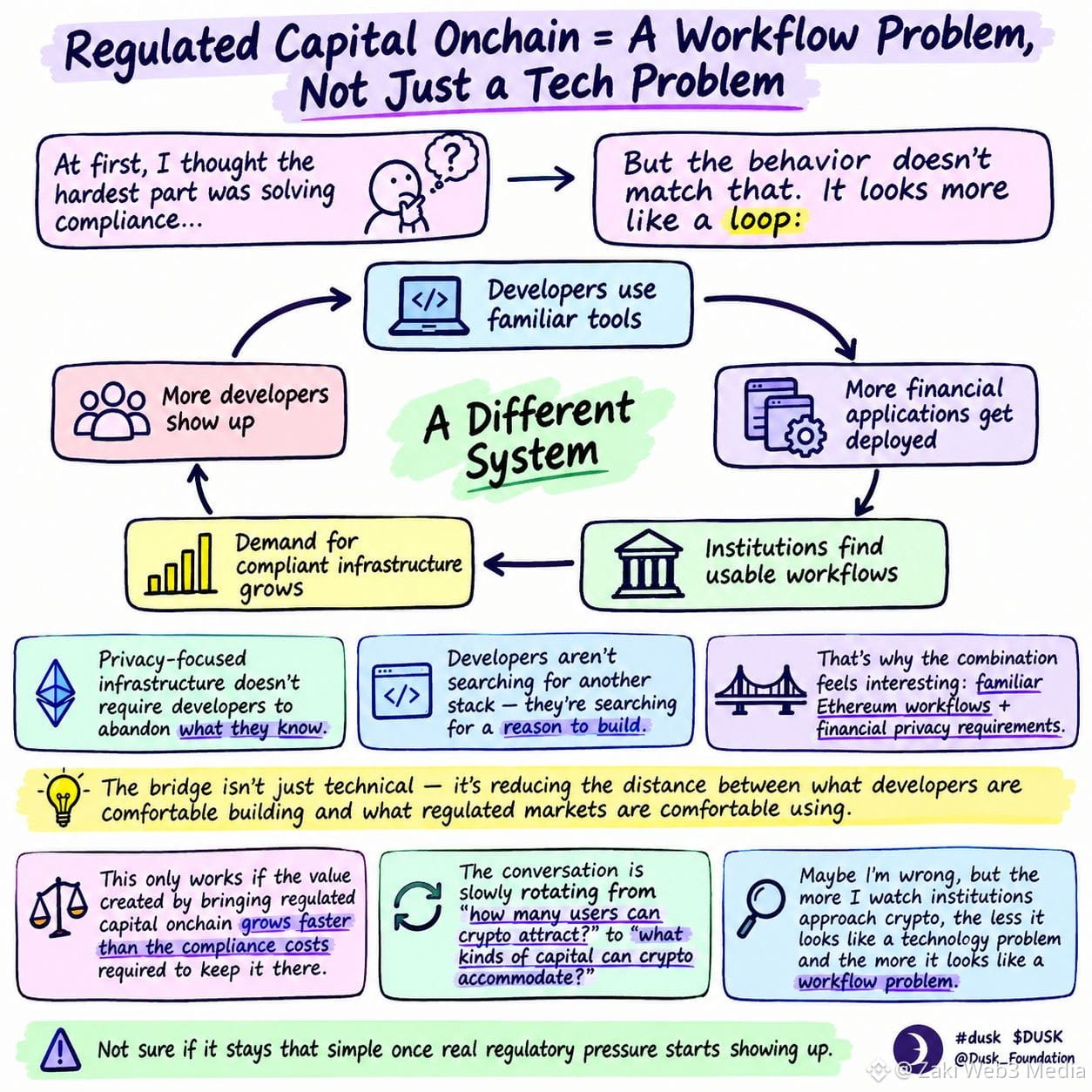
Ban đầu, tôi nghĩ phần khó nhất khi đưa tài chính được quản lý lên onchain là giải quyết vấn đề tuân thủ.
Nhưng hành vi thực tế lại không khớp với điều đó.
Vòng lặp mà tôi cứ nhận thấy giống như thế này:
các nhà phát triển dùng các công cụ quen thuộc → nhiều ứng dụng tài chính hơn được triển khai → các tổ chức tìm thấy quy trình làm việc có thể sử dụng được → nhu cầu về hạ tầng tuân thủ tăng lên → có thêm nhiều nhà phát triển xuất hiện
Đó là một hệ thống khác.
Trong một thời gian, tôi cho rằng hạ tầng tập trung vào quyền riêng tư sẽ buộc các nhà phát triển phải rời bỏ môi trường mà họ đã quen. Ngôn ngữ mới, công cụ mới, đường cong học tập mới. Nhưng dường như phần lớn những người xây dựng không hề tìm kiếm một stack khác.
Họ đang tìm kiếm một lý do để xây dựng.
Vì vậy, sự kết hợp này cảm thấy thú vị. Các nhà phát triển vẫn có quyền truy cập vào các quy trình Ethereum quen thuộc, trong khi môi trường bên dưới bắt đầu hỗ trợ các yêu cầu nghiêm ngặt hơn về quyền riêng tư trong tài chính.
Cây cầu này không chỉ mang tính kỹ thuật.
Nó là việc rút ngắn khoảng cách giữa thứ mà các nhà phát triển thấy thoải mái khi xây dựng và thứ mà các thị trường được quản lý thấy sẵn sàng để sử dụng.
Điều này chỉ hiệu quả nếu giá trị tạo ra từ việc đưa vốn được quản lý lên onchain tăng nhanh hơn các chi phí tuân thủ cần thiết để giữ nó ở đó.
Có cảm giác câu chuyện đang dần chuyển từ “crypto có thể thu hút bao nhiêu người dùng?” sang “crypto có thể đáp ứng những loại vốn nào?”
Có thể tôi đã nhầm, nhưng càng nhìn các tổ chức tiếp cận crypto, tôi càng thấy nó giống một bài toán về quy trình hơn là một vấn đề công nghệ.
Tôi nghĩ đó là phần mà ban đầu tôi đã bỏ sót.
Thách thức có lẽ không còn là đưa các nhà phát triển lên onchain nữa. Mà là làm cho các hệ thống onchain tương thích với những quy tắc mà các nhóm vốn lớn đã vận hành từ trước.
Nghe có vẻ như một vòng lặp gọn gàng.
Không chắc liệu mọi thứ có vẫn đơn giản như vậy khi bắt đầu xuất hiện áp lực pháp lý thực sự hay không.
#dusk $DUSK @Dusk
Nhưng hành vi thực tế lại không khớp với điều đó.
Vòng lặp mà tôi cứ nhận thấy giống như thế này:
các nhà phát triển dùng các công cụ quen thuộc → nhiều ứng dụng tài chính hơn được triển khai → các tổ chức tìm thấy quy trình làm việc có thể sử dụng được → nhu cầu về hạ tầng tuân thủ tăng lên → có thêm nhiều nhà phát triển xuất hiện
Đó là một hệ thống khác.
Trong một thời gian, tôi cho rằng hạ tầng tập trung vào quyền riêng tư sẽ buộc các nhà phát triển phải rời bỏ môi trường mà họ đã quen. Ngôn ngữ mới, công cụ mới, đường cong học tập mới. Nhưng dường như phần lớn những người xây dựng không hề tìm kiếm một stack khác.
Họ đang tìm kiếm một lý do để xây dựng.
Vì vậy, sự kết hợp này cảm thấy thú vị. Các nhà phát triển vẫn có quyền truy cập vào các quy trình Ethereum quen thuộc, trong khi môi trường bên dưới bắt đầu hỗ trợ các yêu cầu nghiêm ngặt hơn về quyền riêng tư trong tài chính.
Cây cầu này không chỉ mang tính kỹ thuật.
Nó là việc rút ngắn khoảng cách giữa thứ mà các nhà phát triển thấy thoải mái khi xây dựng và thứ mà các thị trường được quản lý thấy sẵn sàng để sử dụng.
Điều này chỉ hiệu quả nếu giá trị tạo ra từ việc đưa vốn được quản lý lên onchain tăng nhanh hơn các chi phí tuân thủ cần thiết để giữ nó ở đó.
Có cảm giác câu chuyện đang dần chuyển từ “crypto có thể thu hút bao nhiêu người dùng?” sang “crypto có thể đáp ứng những loại vốn nào?”
Có thể tôi đã nhầm, nhưng càng nhìn các tổ chức tiếp cận crypto, tôi càng thấy nó giống một bài toán về quy trình hơn là một vấn đề công nghệ.
Tôi nghĩ đó là phần mà ban đầu tôi đã bỏ sót.
Thách thức có lẽ không còn là đưa các nhà phát triển lên onchain nữa. Mà là làm cho các hệ thống onchain tương thích với những quy tắc mà các nhóm vốn lớn đã vận hành từ trước.
Nghe có vẻ như một vòng lặp gọn gàng.
Không chắc liệu mọi thứ có vẫn đơn giản như vậy khi bắt đầu xuất hiện áp lực pháp lý thực sự hay không.
#dusk $DUSK @Dusk