#dusk $DUSK I gần như đã lờ DUSK sau khi thấy nó được niêm yết đầy đủ các cặp giao dịch trên một sàn giao dịch lớn.
Tôi đã chứng kiến quá nhiều token được lên sàn hạng một, thu hút sự chú ý mới, rồi từ từ “rò máu” trong vài tháng tiếp theo. Vì vậy phản ứng đầu tiên của tôi không phải là phấn khích. Nó gần như là: “Ừ thì sao, nhưng rốt cuộc ở đây có gì khác?”
Tôi thậm chí giữ mức tiếp xúc của mình ở mức nhỏ thay vì đu theo đà tăng. Sự do dự đó hóa ra lại hữu ích vì nó kéo tôi quay lại các tài liệu của Dusk Foundation thay vì nhìn vào biểu đồ.
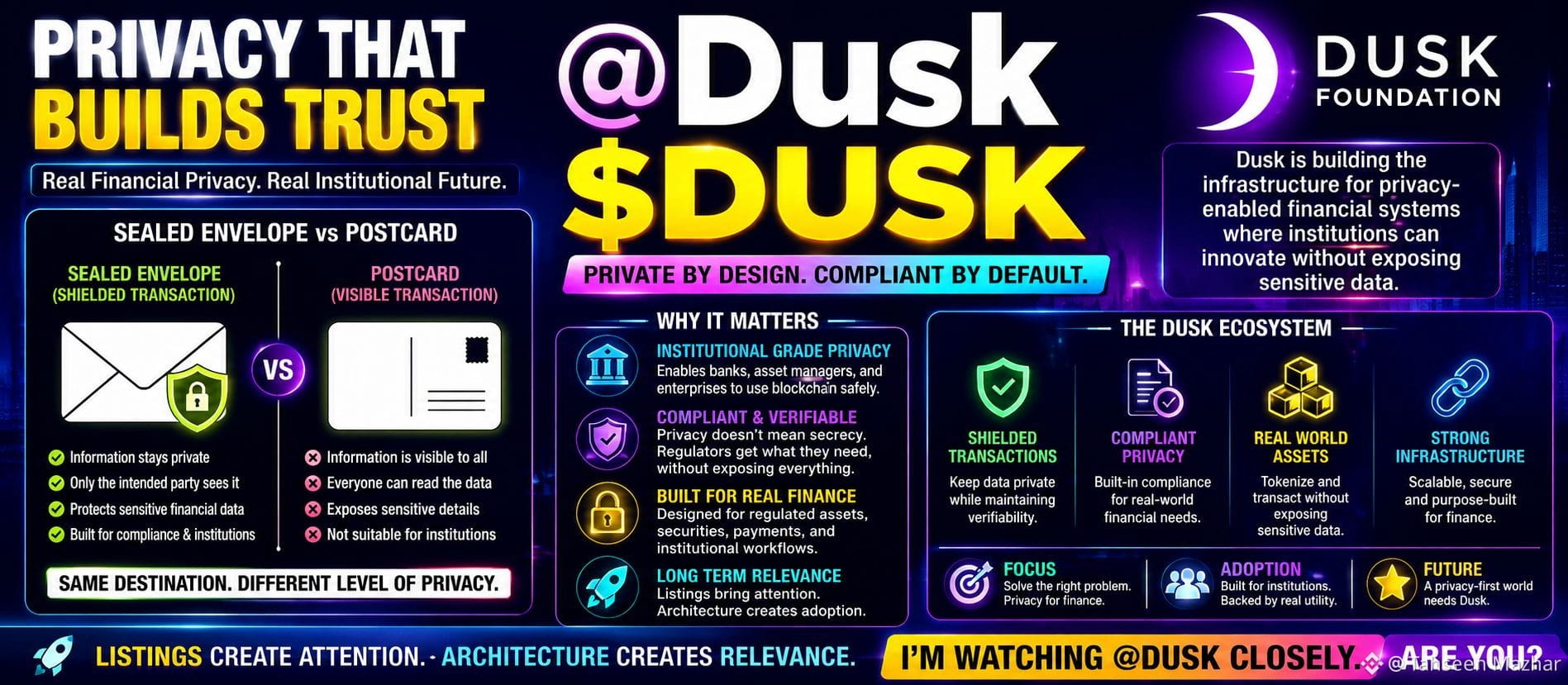
Điểm khiến tôi chú ý là các giao dịch được che chắn.
Cách dễ nhất để tôi giải thích là phong bì niêm phong so với bưu thiếp. Cả hai đều có thể đến cùng một địa chỉ, nhưng thông tin bên trong phong bì không bị lộ cho mọi người phải xử lý nó.
Điều này quan trọng hơn nhiều khi dữ liệu đang được chuyển đi là dữ liệu tài chính.
Điều tôi thấy thú vị ở Dusk không chỉ là từ “privacy” (quyền riêng tư). Đó là nỗ lực biến quyền riêng tư trở nên hữu ích trong một môi trường mà các tổ chức vẫn cần tuân thủ, xác minh và quyền truy cập được kiểm soát đối với thông tin tài chính.
Đó là một bài toán khó hơn nhiều so với việc chỉ che đi chi tiết giao dịch.
Và còn một lý do ít ai ngờ hơn khiến tôi đang theo dõi DUSK bây giờ: bài kiểm tra thực sự không phải là liệu việc một sàn niêm yết có mang lại khối lượng hay không. Mà là liệu kiến trúc quyền riêng tư nền tảng có cho các ứng dụng tài chính một lý do để tiếp tục sử dụng mạng sau khi sự chú ý ban đầu đã lắng xuống.
Một lần niêm yết có thể mua được khả năng được nhìn thấy.
Nó không thể tự tạo ra mức độ liên quan bền lâu.
Tôi vẫn còn hoài nghi. Tôi không biết việc áp dụng có khớp với kiến trúc hay không, và tôi không coi đây là một “kẻ thắng chắc.”
Nhưng so với phản ứng ban đầu của tôi, thì bây giờ tôi đang chú ý sát hơn nhiều.
Đôi khi giao dịch thú vị không phải là giao dịch mà bạn lao vào ngay. Mà là giao dịch khiến bạn chậm lại và tự hỏi vì sao mình suýt nữa đã bỏ qua nó.
$DUSK #dusk
@Dusk
$CYS $BTW $APR
Tôi đã chứng kiến quá nhiều token được lên sàn hạng một, thu hút sự chú ý mới, rồi từ từ “rò máu” trong vài tháng tiếp theo. Vì vậy phản ứng đầu tiên của tôi không phải là phấn khích. Nó gần như là: “Ừ thì sao, nhưng rốt cuộc ở đây có gì khác?”
Tôi thậm chí giữ mức tiếp xúc của mình ở mức nhỏ thay vì đu theo đà tăng. Sự do dự đó hóa ra lại hữu ích vì nó kéo tôi quay lại các tài liệu của Dusk Foundation thay vì nhìn vào biểu đồ.
Điểm khiến tôi chú ý là các giao dịch được che chắn.
Cách dễ nhất để tôi giải thích là phong bì niêm phong so với bưu thiếp. Cả hai đều có thể đến cùng một địa chỉ, nhưng thông tin bên trong phong bì không bị lộ cho mọi người phải xử lý nó.
Điều này quan trọng hơn nhiều khi dữ liệu đang được chuyển đi là dữ liệu tài chính.
Điều tôi thấy thú vị ở Dusk không chỉ là từ “privacy” (quyền riêng tư). Đó là nỗ lực biến quyền riêng tư trở nên hữu ích trong một môi trường mà các tổ chức vẫn cần tuân thủ, xác minh và quyền truy cập được kiểm soát đối với thông tin tài chính.
Đó là một bài toán khó hơn nhiều so với việc chỉ che đi chi tiết giao dịch.
Và còn một lý do ít ai ngờ hơn khiến tôi đang theo dõi DUSK bây giờ: bài kiểm tra thực sự không phải là liệu việc một sàn niêm yết có mang lại khối lượng hay không. Mà là liệu kiến trúc quyền riêng tư nền tảng có cho các ứng dụng tài chính một lý do để tiếp tục sử dụng mạng sau khi sự chú ý ban đầu đã lắng xuống.
Một lần niêm yết có thể mua được khả năng được nhìn thấy.
Nó không thể tự tạo ra mức độ liên quan bền lâu.
Tôi vẫn còn hoài nghi. Tôi không biết việc áp dụng có khớp với kiến trúc hay không, và tôi không coi đây là một “kẻ thắng chắc.”
Nhưng so với phản ứng ban đầu của tôi, thì bây giờ tôi đang chú ý sát hơn nhiều.
Đôi khi giao dịch thú vị không phải là giao dịch mà bạn lao vào ngay. Mà là giao dịch khiến bạn chậm lại và tự hỏi vì sao mình suýt nữa đã bỏ qua nó.
$DUSK #dusk
@Dusk
$CYS $BTW $APR