
#solanastakingnearshaltonroutingerror
Đôi khi, những khoảnh khắc đáng sợ nhất của một blockchain không phải là những khoảnh khắc tạo thành tiêu đề ngay lập tức — mà là những khoảnh khắc được tái dựng lại sau đó.
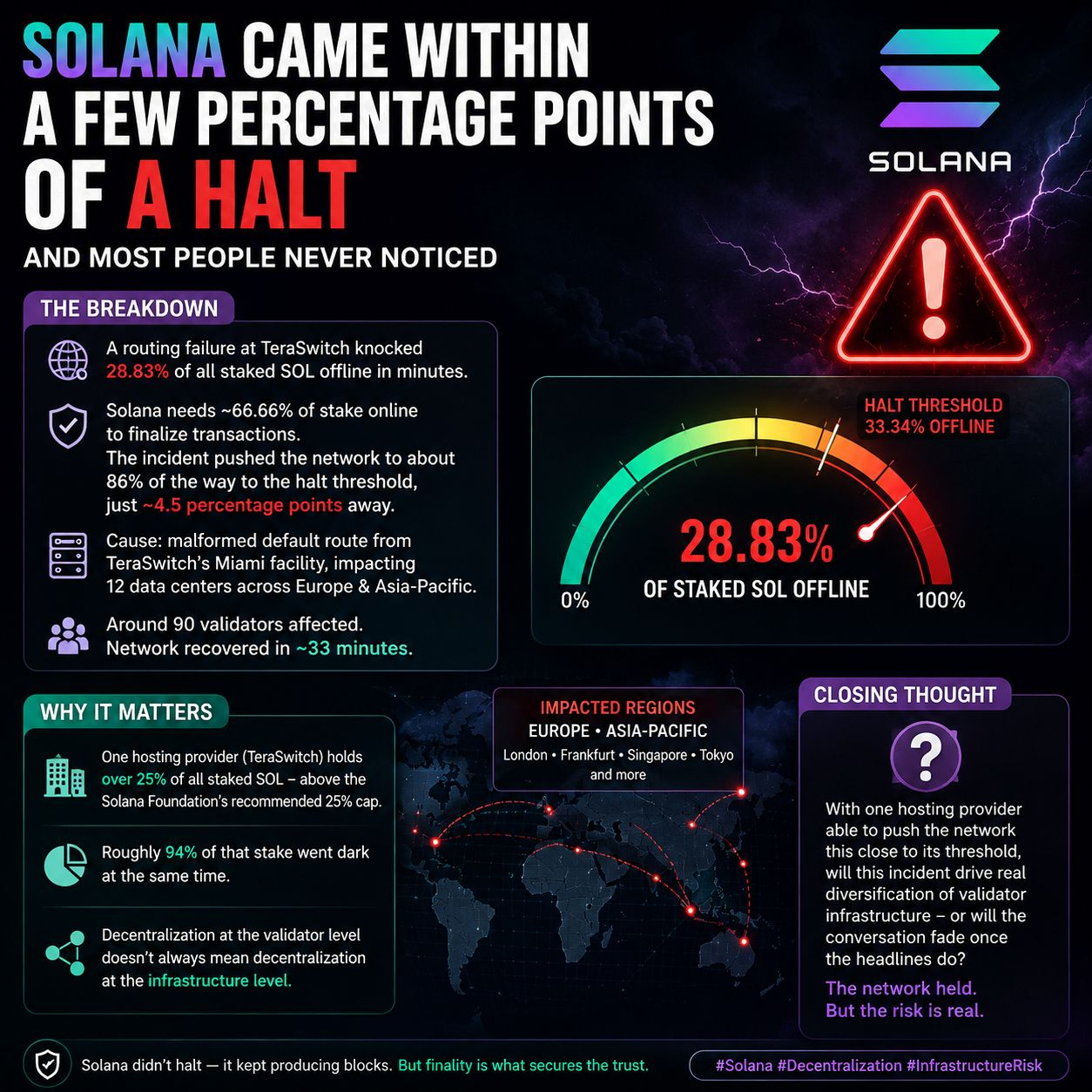
Phân tích: Vào Thứ Tư, sự cố gián đoạn định tuyến tại TeraSwitch — nhà cung cấp hosting được sử dụng rộng rãi bởi các validator của Solana — đã khiến 28,83% trong tổng số SOL được đặt cược (staked) bị đưa ngoại tuyến chỉ trong vài phút. Cơ chế đồng thuận của Solana yêu cầu khoảng hai phần ba lượng SOL được đặt cược phải tham gia tích cực để hoàn tất giao dịch — điều đó có nghĩa là nếu hơn 33,34% bị đưa ngoại tuyến, mạng có thể tiếp tục tạo block nhưng sẽ mất khả năng xác nhận chúng là giao dịch cuối cùng (final). Sự cố hôm Thứ Tư đã đẩy mạng đến khoảng 86% quãng đường tới ngưỡng đó, tức là còn khoảng 4,5 điểm phần trăm nữa là chạm “bờ vực”. Theo nền tảng staking Marinade Finance, đơn vị đã tái dựng lại sự kiện này, lỗi bắt nguồn từ một tuyến đường mặc định (default route) bị định dạng sai từ cơ sở Miami của TeraSwitch, sau đó lan qua một relay nội bộ, cắt đứt kết nối tại 12 địa điểm trung tâm dữ liệu trên khắp châu Âu và khu vực châu Á - Thái Bình Dương, bao gồm London, Frankfurt, Singapore và Tokyo. Khoảng 90 validator bị ảnh hưởng, và mạng đã khôi phục trong khoảng 33 phút.
Vì sao điều này quan trọng: Sự cố đã phơi bày một rủi ro tập trung nằm ngay dưới lớp giao thức của Solana: một hệ thống tự trị (autonomous system) được cho là đang lưu trữ hơn một phần tư tổng số SOL được stake, vượt mức trần 25% mà chính Solana Foundation khuyến nghị cho mỗi nhà cung cấp mạng, và khoảng 94% lượng stake đó đã “im lặng” cùng lúc. Đây là lời nhắc rằng việc phi tập trung ở cấp độ validator không tự động đồng nghĩa với phi tập trung ở cấp độ hạ tầng vật lý — việc định tuyến, lưu trữ và các tuyến đường mạng vẫn có thể tạo ra các điểm lỗi đơn lẻ (single points of failure). Đồng thời, nó cũng làm nổi bật một điểm khác biệt đáng hiểu: Solana thực tế đã không bị dừng, và lần ngừng hoạt động tạo block đầy đủ gần nhất diễn ra từ tháng 2 năm 2024, nhưng “vẫn tạo block” và “xác nhận (finalizing) giao dịch” không hoàn toàn mang lại cùng một sự đảm bảo.
Suy nghĩ cuối: Với việc một nhà cung cấp dịch vụ lưu trữ có thể đẩy mạng tiến sát đến ngưỡng giới hạn, liệu sự cố này có thực sự thúc đẩy việc đa dạng hóa hạ tầng trình xác thực (validator) trong tương lai — hay câu chuyện sẽ dần chìm khi các tiêu đề không còn được nhắc đến?