Bởi AltcoinWolF | Phân tích thị trường tiền mã hóa & giáo dục
Tóm tắt điều hành
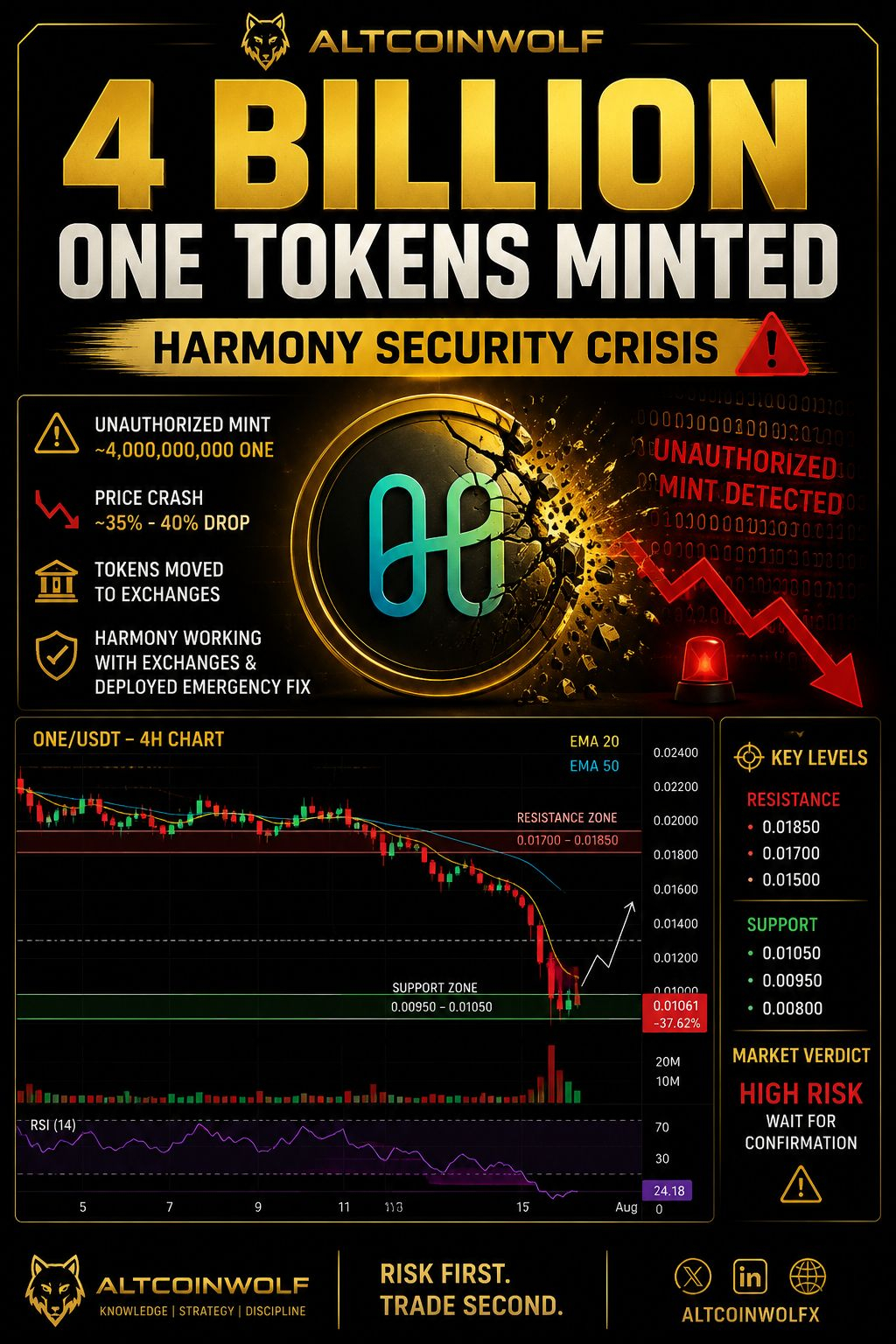
Token ONE của Harmony đang đối mặt với một cuộc khủng hoảng nghiêm trọng về bảo mật và cấu trúc thị trường sau một sự cố bị khai thác có vẻ như đã dẫn đến việc tạo trái phép khoảng 4 tỷ token ONE, theo báo cáo on-chain hiện tại.
Sự cố đã kích hoạt một đợt bán tháo mạnh mẽ, trong khi hàng tỷ token mới được đúc được cho là đã được chuyển tới các sàn giao dịch. Harmony đã phản hồi bằng bản vá khẩn cấp cho trình xác thực, phối hợp với các sàn để đóng băng các quỹ bị ảnh hưởng và cân nhắc khả năng hoàn tác (rollback). Tuy nhiên, việc giải quyết triệt để vẫn chưa chắc chắn.
Đối với nhà đầu tư, bài học quan trọng nhất không chỉ là việc giá của ONE đã giảm.
Vấn đề sâu xa hơn là thế này:
«Khi tính toàn vẹn của nguồn cung token trở nên không chắc chắn, chính quá trình hình thành giá có thể cũng trở nên không đáng tin.»
Điều đó khiến câu chuyện này vừa là câu chuyện về bảo mật, vừa là câu chuyện về tokenomics, và đồng thời là câu chuyện về quản lý rủi ro.
---
Điều gì đã xảy ra với Harmony?
Sự cố hiện tại dường như liên quan đến một cơ chế đúc trái phép cho phép kẻ tấn công tạo ra một lượng ONE rất lớn.
Con số được báo cáo xấp xỉ 4 tỷ ONE, mà các nhà phân tích ước tính vào khoảng một phần tư nguồn cung đã lưu hành trước đó. Tác động cung chính xác vẫn nên được xem xét cẩn thận cho đến khi Harmony công bố bản hạch toán cuối cùng.
Phản ứng của thị trường diễn ra ngay lập tức.
ONE đã trải qua một đợt giảm mạnh, với các báo cáo cho thấy thua lỗ tiệm cận 40% trong giai đoạn bán tháo. Đồng thời, hoạt động giao dịch tăng đáng kể khi các bên tham gia thị trường cố thoát vị thế hoặc suy đoán về diễn biến đang hình thành.
Điều này quan trọng vì thị trường không chỉ đơn thuần phản ứng trước tâm lý tiêu cực.
Nó đang phản ứng với sự không chắc chắn xoay quanh nguồn cung cốt lõi của token.
---
Tại sao việc đúc trái phép khác với một vụ hack thông thường
Không phải mọi lỗ hổng khai thác crypto đều ảnh hưởng đến một token theo cùng cách.
Nếu kẻ tấn công đánh cắp token hiện có từ một ví, tổng cung có thể vẫn không đổi.
Việc đúc trái phép về bản chất là khác biệt.
Kẻ tấn công có thể đang tạo ra các đơn vị mới của tài sản.
Điều đó thay đổi toàn bộ phương trình kinh tế.
Cấu trúc thị trường bình thường
Nguồn cung hiện có + nhu cầu thị trường → hình thành giá theo cơ chế thị trường
Đúc trái phép
Nguồn cung hiện có + nguồn cung mới bất ngờ + áp lực bán → lệch giá nghiêm trọng
Nếu các token bổ sung được bán vào thanh khoản tương đối hạn chế, thị trường có thể gặp khó khăn để hấp thụ chúng.
Vì vậy, một lỗ hổng đúc có thể ảnh hưởng đến mọi người đang nắm giữ hiện có, không chỉ các ví trực tiếp liên quan đến lỗ hổng.
---
Rủi ro ẩn: Không chắc chắn về nguồn cung
Câu hỏi quan trọng nhất đối với người nắm giữ ONE ngay bây giờ không chỉ đơn giản là:
“Giá có thể giảm tới mức nào?”
Câu hỏi đúng hơn là:
“Rốt cuộc có bao nhiêu nguồn cung hợp pháp thực sự tồn tại sau sự cố?”
Cho đến khi nguồn cung bị ảnh hưởng được đối chiếu hoàn toàn, nhà giao dịch phải đối mặt với một số điều chưa biết:
- Đã tạo ra bao nhiêu token trái phép?
- Đã chuyển bao nhiêu?
- Bao nhiêu đã đến các sàn giao dịch?
- Đã bán bao nhiêu?
- Đã đóng băng bao nhiêu?
- Có giao dịch nào sẽ được hoàn tác không?
- Tổng cung lưu hành cuối cùng sẽ là bao nhiêu?
Những câu hỏi này tác động trực tiếp đến định giá.
Biểu đồ kỹ thuật có thể cho thấy vùng hỗ trợ và kháng cự, nhưng phân tích kỹ thuật không thể tự mình giải quyết độc lập một vấn đề về sổ sách cung-cấp.
Sự khác biệt đó là quan trọng.
---
Cấu trúc thị trường: Vì sao đợt bán tháo trở nên nghiêm trọng đến vậy
Việc bán tháo ONE cho thấy thanh khoản có thể suy giảm nhanh đến mức nào trong một sự kiện bảo mật.
Chuỗi diễn biến khá rõ ràng:
Rò rỉ/bị xâm nhập bảo mật
↓
Không chắc chắn về nguồn cung
↓
Chuyển khoản token lớn
↓
Nỗi sợ bị bán thêm
↓
Rút thanh khoản
↓
Đà giảm giá tăng tốc
Khi các nhà giao dịch tin rằng có thể có thêm nguồn cung đi vào thị trường, người mua có thể trở nên ngần ngại trong việc cung cấp thanh khoản.
Điều đó có thể tạo ra một vòng lặp phản hồi:
Niềm tin thấp hơn → thanh khoản thấp hơn → tác động giá lớn hơn → niềm tin còn thấp hơn
Đó là lý do vì sao các sự kiện bảo mật có thể tạo ra những biến động giá trông không tương xứng so với các đợt suy sụp kỹ thuật thông thường.
---
Harmony đang làm gì
Harmony đã chuyển sang hướng khống chế tình huống.
Báo cáo hiện tại cho biết đội ngũ đã:
- Phát hành bản vá khẩn cấp cho trình xác thực.
- Phối hợp với các sàn để đóng băng tiền gắn với các địa chỉ được xác định.
- Tạm dừng hoạt động liên quan của cầu nối.
- Đã điều tra việc đúc trái phép.
- Cân nhắc khả năng rollback blockchain.
Tuy nhiên, có một điểm phân biệt quan trọng giữa việc khống chế lỗ hổng và sửa chữa thiệt hại về kinh tế.
Việc ngăn chặn đúc trái phép bổ sung có thể giải quyết lỗ hổng kỹ thuật.
Nó không tự động loại bỏ những token có thể đã đi vào lưu thông.
Đó là lúc cuộc thảo luận về khả năng rollback trở nên quan trọng.
---
Câu hỏi về Rollback
Một lần rollback về mặt lý thuyết có thể cố gắng hoàn tác hoạt động blockchain bị ảnh hưởng.
Nhưng đó không phải là một giải pháp đơn giản.
Một lần rollback đặt ra những câu hỏi khó:
Những giao dịch nào cần được hoàn tác?
Chuỗi sẽ quay về đâu?
Các sàn sẽ đối chiếu tiền gửi và tiền rút như thế nào?
Điều gì xảy ra với người dùng hợp pháp có giao dịch diễn ra trong khoảng thời gian bị ảnh hưởng?
Liệu các validator và bên tham gia hệ sinh thái có đồng thuận không?
Do đó, việc rollback không nên được xem như một cơ chế phục hồi đảm bảo.
Nó vẫn là một quyết định quan trọng về quản trị và kỹ thuật.
---
Kịch bản tăng giá: Điều gì có thể giúp ONE ổn định?
Một kịch bản phục hồi sẽ đáng tin hơn nếu thỏa mãn một số điều kiện.
1. Khống chế lỗ hổng
Cơ chế đúc trái phép phải được đóng lại một cách dứt khoát.
2. Đối chiếu nguồn cung
Harmony cần xây dựng một bức tranh rõ ràng về nguồn cung hợp pháp và nguồn cung trái phép.
3. Phối hợp với sàn giao dịch
Các token bị ảnh hưởng cần được xác định, đóng băng nếu có thể, và đối chiếu lại.
4. Chiến lược phục hồi rõ ràng
Thị trường cần sự rõ ràng về bất kỳ rollback nào hoặc cơ chế phục hồi thay thế.
5. Khôi phục niềm tin
Cuối cùng, thị trường cần bằng chứng rằng mô hình bảo mật của mạng đã được khôi phục.
Chỉ sau khi các điều kiện này cải thiện thì một kịch bản phục hồi bền vững mới dễ đánh giá hơn.
---
Kịch bản giảm giá: Điều gì có thể làm tình hình tệ hơn?
Rủi ro giảm giá vẫn đáng kể nếu:
- Thêm các token trái phép được đưa vào lưu thông.
- Tổng cung cuối cùng vẫn chưa rõ.
- Một lần rollback có thể làm nảy sinh bất đồng giữa các bên tham gia mạng.
- Các hạn chế trên sàn vẫn được duy trì.
- Tính thanh khoản tiếp tục suy giảm.
- Người nắm giữ mất niềm tin vào mạng.
- Các lỗ hổng mới được phát hiện.
Vì vậy, chất xúc tác giảm giá lớn nhất có thể không nhất thiết là một đợt giảm giá ngay lập tức khác.
Sự không chắc chắn vẫn tiếp diễn.
---
Phân tích kỹ thuật vs Rủi ro theo nền tảng
Sự kiện này mang đến một bài học quan trọng cho nhà giao dịch.
Giả sử ONE đạt đến vùng hỗ trợ lịch sử.
Một nhà giao dịch bình thường có thể nghĩ:
“Giá đang bị bán quá mức. Hỗ trợ ở khá gần. Có thể đây là cơ hội đảo chiều.”
Nhưng một lỗ hổng bảo mật làm thay đổi toàn bộ phương trình.
RSI có thể bị bán quá mức.
Khối lượng có thể tăng vọt.
Giá có thể chạm các vùng hỗ trợ lớn.
Và tài sản vẫn có thể tiếp tục đi xuống.
Tại sao?
Vì các chỉ báo kỹ thuật mô tả hành vi của thị trường.
Chúng không quyết định liệu nguồn cung token cốt lõi có đáng tin hay không.
Vì lý do này, phân tích kỹ thuật nên được xem như một công cụ thứ cấp cho đến khi vấn đề bảo mật cốt lõi trở nên rõ ràng hơn.
---
Những gì nhà giao dịch cần theo dõi tiếp theo
AltcoinWolF sẽ theo dõi năm biến số lớn:
1. Nguồn cung
Harmony đã xác nhận được tổng cung hợp pháp cuối cùng chưa?
2. Hoạt động trên sàn
Các ví bị ảnh hưởng còn đang tiếp tục chuyển tiền không?
3. Bảo mật mạng
Bản vá khẩn cấp có ngăn chặn thành công việc đúc trái phép tiếp diễn không?
4. Quyết định về phục hồi
Harmony có triển khai rollback hay một cơ chế phục hồi khác không?
5. Cấu trúc thị trường
Sau khi tình hình nền tảng ổn định, liệu ONE bắt đầu hình thành:
Đáy cao hơn → đỉnh cao hơn → khối lượng mạnh hơn → giành lại kháng cự
Điều đó sẽ tạo nền tảng lành mạnh hơn cho phân tích kỹ thuật.
---
Đánh giá rủi ro AltcoinWolF
Trạng thái hiện tại: 🔴 RỦI RO CAO
Đây không phải là một thiết lập kiểu “bắt đáy” thông thường.
Mức sụt giảm theo tỷ lệ lớn không tự động làm cho một tài sản bị định giá thấp.
Trong trường hợp này, câu hỏi nền tảng vẫn chưa được giải quyết:
«Nguồn cung thực sự sau sự cố là bao nhiêu, và vấn đề bảo mật đã được khống chế hoàn toàn chưa?»
Cho đến khi các câu hỏi đó nhận được câu trả lời đáng tin cậy, các đợt vào lệnh quyết liệt sẽ đi kèm mức độ không chắc chắn cao hơn đáng kể.
Cách tiếp cận AltcoinWolF
Rủi ro trước.
Xác nhận phần hai.
Giao dịch lần thứ ba.
---
Bài học Crypto Lớn Hơn
Sự cố của Harmony cho thấy một nguyên tắc rộng hơn mà mọi nhà đầu tư altcoin nên hiểu:
Tokenomics là quản lý rủi ro.
Trước khi mua một altcoin, nhà đầu tư nên hiểu:
- Ai có thể đúc token?
- Những cơ chế nào bảo vệ lỗ hổng đúc?
- Nguồn cung có bị ràng buộc theo thuật toán không?
- Cơ chế quản trị hoạt động như thế nào?
- Điều gì xảy ra nếu một lỗ hổng nghiêm trọng được phát hiện?
- Ai có thể đóng băng tiền?
- Có thể rollback blockchain không?
- Quyết định khẩn cấp phi tập trung đến mức nào?
Những câu hỏi này có thể trông có vẻ mang tính kỹ thuật.
Nhưng xét cho cùng, chúng ảnh hưởng đến một điều rất đơn giản:
Giá trị của tài sản bạn đang sở hữu.
---
Kết luận cuối cùng
Sự cố Harmony ONE không nên được xem chỉ đơn thuần như một vụ sụp đổ crypto khác.
Đây là một minh chứng ngoài đời thực cho thấy bảo mật, tokenomics, thanh khoản và tâm lý thị trường tương tác với nhau như thế nào.
Việc đúc ONE trái phép được báo cáo lên tới 4 tỷ đã tạo ra một cú sốc về cung. Lực bán tiếp theo đã phơi bày sự mong manh của thanh khoản và niềm tin của nhà đầu tư, trong khi phản ứng khẩn cấp của Harmony đã chuyển trọng tâm sang khống chế, đối chiếu nguồn cung và các cơ chế phục hồi tiềm năng.
Đối với nhà giao dịch, bài học là khá rõ ràng:
Đừng mua một tài sản đang giảm chỉ vì nó trông có vẻ rẻ.
Trước tiên, hãy xác định liệu nguyên nhân khiến giá giảm đã được giải quyết hay chưa.
Cho đến khi Harmony cung cấp sự rõ ràng hơn về nguồn cung bị ảnh hưởng và lộ trình phục hồi, việc bảo toàn vốn vẫn quan trọng hơn việc cố bắt nhịp cú bật đầu tiên.
---
Bài học rút ra mang tính giáo dục từ AltcoinWolF
Một biểu đồ có thể cho bạn biết giá đang di chuyển theo hướng nào.
Phân tích cơ bản cho bạn biết vì sao.
Quản lý rủi ro quyết định liệu bạn có nên tham gia hay không.
Đó là sự khác biệt giữa việc đuổi theo biến động và phân tích thị trường một cách chuyên nghiệp.
🐺 AltcoinWolF — Kiến thức | Chiến lược | Kỷ luật
Bài viết này chỉ nhằm mục đích giáo dục và cung cấp thông tin, không cấu thành lời khuyên tài chính.
#altcoinwolf #crypto #eth #ETH #BTC走势分析 $ETH $BTC