#dusk $DUSK Tôi đã đi vào phân tích bảo mật AEGIS của Dusk với kỳ vọng sẽ tìm thấy một danh sách các lỗi.
Thay vào đó, tôi cứ nghĩ mãi về điều gì xảy ra sau khi một lỗi chạm vào một mạng đang hoạt động.
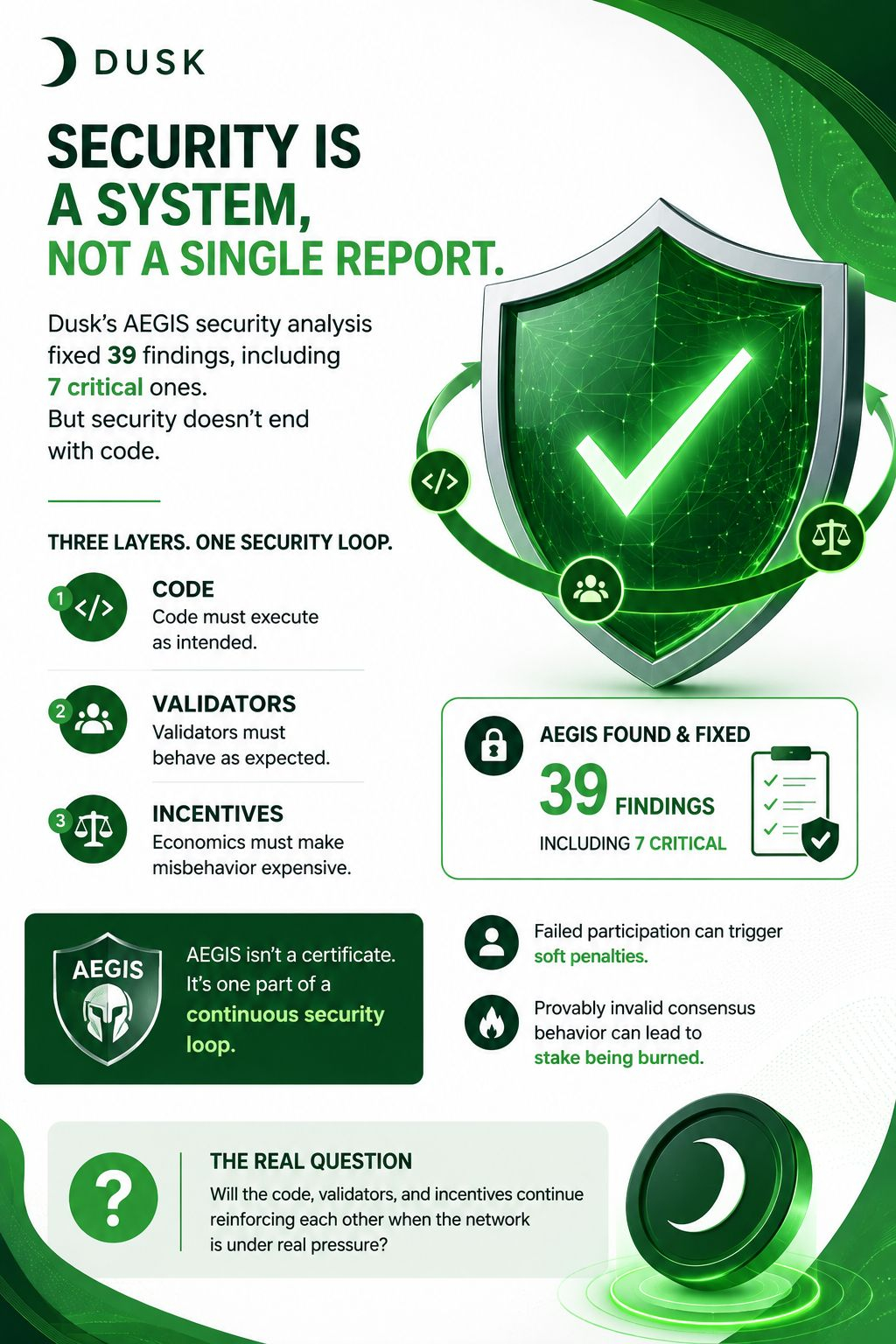
AEGIS đã khắc phục 39 phát hiện, trong đó có 7 lỗi nghiêm trọng. Một số không chỉ là vấn đề mang tính thẩm mỹ: chúng chạm đến thực thi tất định, xác thực đồng thuận, tính toàn vẹn phí và thậm chí cả khả năng sẵn sàng của chuỗi.
Điều đó khiến tôi nhìn bảo mật theo một cách khác.
Một cuộc rà soát mã có thể giảm rủi ro kỹ thuật, nhưng bản thân nó không thể khiến một mạng hoạt động đúng đắn dưới áp lực. Mô hình validator của Dusk bổ sung thêm một lớp nữa: việc tham gia thất bại có thể kích hoạt các hình phạt nhẹ (soft penalties), trong khi hành vi đồng thuận bị chứng minh là không hợp lệ có thể dẫn đến việc bị đốt (burn) phần stake.
Vì vậy, thực sự có ba phần chuyển động ở đây: mã phải thực thi đúng, các validator phải hành xử đúng, và cơ chế kinh tế phải khiến cho việc gian lận trở nên đắt đỏ.
Không có lớp nào thay thế cho lớp còn lại.
Đó là phần mà tôi chưa cân nhắc khi lần đầu nhìn vào AEGIS. Hiện tại tôi xem nó không hẳn như một “chứng chỉ bảo mật”, mà như một thành phần của vòng lặp bảo mật lớn hơn.
Câu hỏi thú vị dành cho @Dusk không phải là liệu mã có thể được làm an toàn hơn.
Mà là liệu mã, các validator và các động lực (incentives) có tiếp tục củng cố lẫn nhau khi mạng chịu áp lực thực tế hay không.
Đó là nơi tồn tại giả định bảo mật sâu hơn.
#dusk $DUSK @Dusk
Thay vào đó, tôi cứ nghĩ mãi về điều gì xảy ra sau khi một lỗi chạm vào một mạng đang hoạt động.
AEGIS đã khắc phục 39 phát hiện, trong đó có 7 lỗi nghiêm trọng. Một số không chỉ là vấn đề mang tính thẩm mỹ: chúng chạm đến thực thi tất định, xác thực đồng thuận, tính toàn vẹn phí và thậm chí cả khả năng sẵn sàng của chuỗi.
Điều đó khiến tôi nhìn bảo mật theo một cách khác.
Một cuộc rà soát mã có thể giảm rủi ro kỹ thuật, nhưng bản thân nó không thể khiến một mạng hoạt động đúng đắn dưới áp lực. Mô hình validator của Dusk bổ sung thêm một lớp nữa: việc tham gia thất bại có thể kích hoạt các hình phạt nhẹ (soft penalties), trong khi hành vi đồng thuận bị chứng minh là không hợp lệ có thể dẫn đến việc bị đốt (burn) phần stake.
Vì vậy, thực sự có ba phần chuyển động ở đây: mã phải thực thi đúng, các validator phải hành xử đúng, và cơ chế kinh tế phải khiến cho việc gian lận trở nên đắt đỏ.
Không có lớp nào thay thế cho lớp còn lại.
Đó là phần mà tôi chưa cân nhắc khi lần đầu nhìn vào AEGIS. Hiện tại tôi xem nó không hẳn như một “chứng chỉ bảo mật”, mà như một thành phần của vòng lặp bảo mật lớn hơn.
Câu hỏi thú vị dành cho @Dusk không phải là liệu mã có thể được làm an toàn hơn.
Mà là liệu mã, các validator và các động lực (incentives) có tiếp tục củng cố lẫn nhau khi mạng chịu áp lực thực tế hay không.
Đó là nơi tồn tại giả định bảo mật sâu hơn.
#dusk $DUSK @Dusk