

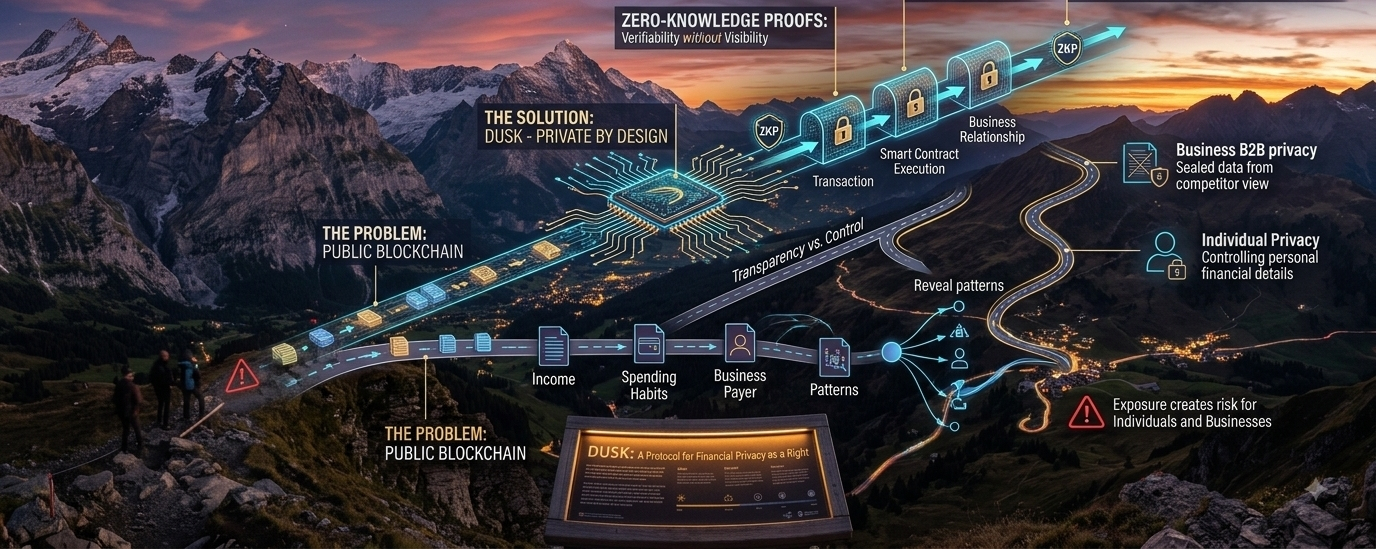

Có điều gì đó lạ lùng về việc chúng ta đã nhanh chóng chấp nhận ý tưởng rằng hoạt động tài chính nên được hiển thị trên một blockchain.
Trong cuộc sống hằng ngày, đa số người không muốn người lạ theo dõi thu nhập, các khoản thanh toán, số tiền tiết kiệm hay thói quen chi tiêu của mình. Tiền là thứ mang tính cá nhân. Nhưng ngay khi nó đi qua một blockchain công khai, quyền riêng tư đó có thể trở nên khó bảo vệ hơn rất nhiều.
Đó là vấn đề khiến tôi thấy thú vị về Dusk.
Dusk là một blockchain Layer 1 được thiết kế xoay quanh quyền riêng tư cho các ứng dụng tài chính. Nó hỗ trợ các smart contract bảo mật thông qua chuẩn Confidential Security Contract của mình. Về mặt kỹ thuật thì điều đó quan trọng, nhưng tôi nghĩ câu hỏi quan trọng hơn lại đơn giản hơn nhiều.
Tại sao việc sử dụng công nghệ tài chính lại tự động đồng nghĩa với việc phải từ bỏ quyền riêng tư tài chính?
Một giao dịch đơn lẻ có thể không tiết lộ được nhiều. Có lẽ vì vậy mà dữ liệu giao dịch công khai ban đầu có thể trông có vẻ vô hại. Nhưng thông tin tài chính trở nên tiết lộ hơn khi các giao dịch riêng rẽ bắt đầu tạo thành một mô hình.
Các khoản thanh toán lặp lại có thể cho thấy thói quen. Các biến động lớn có thể tiết lộ các quyết định. Các giao dịch chuyển giữa các địa chỉ có thể phơi bày mối quan hệ. Theo thời gian, những thông tin trông có vẻ vô nghĩa khi đứng một mình có thể trở nên đáng ngạc nhiên là nhiều thông tin.
Điều đó làm thay đổi ý nghĩa của tính minh bạch.
Tính minh bạch có thể giúp mọi người kiểm chứng chuyện gì đã xảy ra. Nhưng tính minh bạch cũng có thể phơi bày những thông tin chưa từng được dự định trở thành tri thức công khai.
Với cá nhân, điều đó có thể gây cảm giác không thoải mái.
Với doanh nghiệp, điều đó có thể trở thành một vấn đề nghiêm trọng.
Một công ty có thể muốn sử dụng hạ tầng blockchain mà không cho phép đối thủ nghiên cứu các biến động tài chính của mình. Công ty đó có thể không muốn mọi khoản thanh toán, quyết toán hay mối quan hệ kinh doanh đều nằm trọn vẹn trong tầm nhìn công khai.
Đây là nơi quyền riêng tư trở thành nhiều hơn một tính năng “tốt có thêm”.
Nó trở thành một phần của thiết kế.
Điều tôi thấy thú vị về Dusk là mục tiêu không chỉ đơn thuần làm cho hoạt động tài chính biến mất. Ý tưởng khó hơn là bảo vệ thông tin nhạy cảm trong khi vẫn cho phép các ứng dụng tài chính vận hành và các giao dịch vẫn có thể được kiểm chứng.
Sự cân bằng đó rất quan trọng.
Một hệ thống hoàn toàn riêng tư có thể tạo ra một vấn đề khác. Nếu không ai có thể kiểm chứng bất cứ điều gì, người dùng sẽ biết hệ thống hoạt động đúng cách như thế nào?
Các ứng dụng tài chính vẫn cần các quy tắc. Các hợp đồng thông minh vẫn cần được thực thi đúng. Các giao dịch vẫn cần hợp lệ. Trong một số tình huống, một số thông tin có thể cần được kiểm chứng vì lý do chính đáng.
Vì vậy, quyền riêng tư hữu ích không thể có nghĩa là che giấu mọi thứ khỏi tất cả mọi người.
Nó phải có nghĩa là kiểm soát mức độ bị lộ ra.
Đó là một vấn đề còn khó hơn nhiều.
Hợp đồng thông minh bảo mật trở nên thú vị trong bối cảnh này vì chúng gợi ý rằng quyền riêng tư không nhất thiết phải đứng ngoài các ứng dụng tài chính. Nó có thể được xem là một phần trong cách các ứng dụng đó vận hành.
Điều đó có thể quan trọng nếu công nghệ blockchain đi sâu hơn vào các hoạt động tài chính thực tế.
Mọi người thường tập trung vào việc liệu một blockchain có nhanh hay rẻ không. Những điều đó hiển nhiên là quan trọng. Nhưng quyền riêng tư cũng có thể thiết thực không kém.
Hãy tưởng tượng bạn điều hành một doanh nghiệp mà đối thủ có thể liên tục quan sát các biến động tài chính. Dù họ không thể hiểu mọi giao dịch, thì các hoạt động lặp lại vẫn có thể tiết lộ đủ để khiến thông tin trở nên có giá trị.
Đôi khi việc biết được mô hình còn hữu ích gần như việc biết được các chi tiết.
Đây là một trong những rủi ro thầm lặng hơn của hạ tầng tài chính công khai.
Thông tin không cần phải hoàn toàn dễ hiểu để trở nên hữu ích.
Chỉ cần ai đó nhận ra đủ điều là có thể.
Ngoài ra còn có một khía cạnh tâm lý của quyền riêng tư mà rất dễ bị bỏ qua.
Người ta thường nói họ quan tâm đến quyền riêng tư, nhưng họ không phải lúc nào cũng thay đổi hành vi vì điều đó. Sự tiện lợi thường thắng thế cho đến khi hậu quả trở nên thực sự.
Điều đó tạo ra một thách thức khó khăn cho Dusk.
Nó không đủ để xây dựng một hệ thống tập trung vào quyền riêng tư.
Người ta phải muốn sử dụng nó.
Doanh nghiệp cần thấy một lý do thực tế để xây dựng trên đó. Lập trình viên cần tìm thấy môi trường hữu ích. Người dùng cần tin rằng quyền riêng tư bổ sung là đáng để thay đổi thói quen của họ.
Điều đó còn khó hơn nhiều so với việc thuyết phục ai đó rằng quyền riêng tư là có giá trị.
Hầu như ai cũng hiểu ý tưởng đó.
Không phải ai cũng sẽ chịu chi phí để thay đổi hệ thống.
Có một sự giằng co khác cũng xứng đáng được chú ý.
Quyền riêng tư tài chính không thể đơn giản có nghĩa là không ai có thể bao giờ kiểm chứng bất cứ điều gì. Việc giám sát hợp pháp vẫn rất quan trọng. Luật tồn tại vì những lý do. Hệ thống tài chính cần những cách để thiết lập rằng một số điều kiện nhất định đã được đáp ứng.
Đồng thời, việc ép mọi chi tiết tài chính phải được đưa ra tầm nhìn công khai cũng không nhất thiết là câu trả lời đúng.
Khả năng thú vị hơn nằm ở việc công bố có chọn lọc.
Bộc lộ những gì cần được kiểm chứng.
Giữ mọi thứ còn lại ở chế độ riêng tư.
Điều đó có vẻ gần hơn với cách mọi người tự nhiên kỳ vọng thông tin tài chính sẽ vận hành.
Thông thường bạn không đem toàn bộ lịch sử tài chính của mình cho ai đó chỉ vì bạn đã thanh toán cho họ. Bạn chỉ tiết lộ những thông tin cần thiết cho tương tác đó và giữ phần còn lại của đời sống tài chính cho riêng mình.
Hạ tầng blockchain có cơ hội suy nghĩ về quyền riêng tư theo cùng một cách.
Vì vậy, tôi không nghĩ câu hỏi lớn nhất xoay quanh Dusk chỉ đơn giản là liệu nó có công nghệ quyền riêng tư hay không.
Câu hỏi lớn hơn là liệu nó có thể biến quyền riêng tư thành điều gì đó thực tiễn hay không.
Công nghệ có thể ấn tượng nhưng vẫn có thể thất bại trong việc trở thành hạ tầng hữu ích.
Việc chấp nhận phụ thuộc vào nhiều thứ hơn kiến trúc. Nó phụ thuộc vào việc người ta có tin tưởng hệ thống hay không, liệu ứng dụng có hữu ích không, liệu trải nghiệm có dễ hiểu không, và liệu doanh nghiệp có lý do thực sự để tham gia không.
Dusk phải đối mặt với tất cả những điều đó.
Cách tiếp cận về quyền riêng tư của nó có thể giải quyết một vấn đề, nhưng giải quyết vấn đề về mặt kỹ thuật không giống với việc giải quyết cho người dùng.
Sự phân biệt đó rất dễ bị bỏ sót.
Dẫu vậy, vấn đề cốt lõi vẫn chưa biến mất.
Khi hoạt động tài chính trên blockchain tăng trưởng, lượng thông tin có thể bị phơi bày cũng tăng theo. Hoạt động tài chính càng có giá trị, thì thông tin đó càng có giá trị đối với bất kỳ ai có thể phân tích nó.
Điều đó tạo ra một tương lai khó chịu nếu việc minh bạch vẫn là câu trả lời mặc định cho mọi thứ.
Có lẽ giai đoạn tiếp theo của tài chính blockchain không phải là làm cho nhiều thông tin hơn trở nên công khai.
Có lẽ là về việc chọn lọc hơn với thông tin.
Điều đó sẽ phản ánh một bước chuyển đổi có ý nghĩa trong cách chúng ta nghĩ về hạ tầng tài chính.
Dusk trở nên thú vị vì nó được xây dựng xoay quanh chính câu hỏi đó.
Không phải là liệu các hệ thống tài chính có nên minh bạch hay không.
Nhưng ở nơi tính minh bạch thực sự hữu ích, nơi quyền riêng tư là cần thiết, và liệu cả hai có thể tồn tại mà không cái này phá hủy cái kia không.
Tôi không nghĩ quyền riêng tư nên được xem như một thứ gì đó bí ẩn hay mang tính cách mạng.
Nó còn bình thường hơn nhiều so với thế.
Mọi người chỉ đơn giản muốn một số phần trong đời sống tài chính của mình vẫn thuộc về họ.
Nếu công nghệ blockchain có thể cung cấp quyền riêng tư đó trong khi vẫn mang lại khả năng kiểm chứng, tính lập trình và độ tin cậy mà mọi người kỳ vọng từ hạ tầng tài chính, thì quyền riêng tư cuối cùng có thể không còn cảm giác như một tính năng “phụ”.
Nó có thể trở thành một kỳ vọng cơ bản.
Và có lẽ đó là điều thú vị nhất về Dusk.
Cơ hội thực sự của nó không phải là làm cho hoạt động tài chính trở nên vô hình.
Là để làm cho quyền riêng tư tài chính trở nên bình thường.
