


Một trong các mã thông báo này có thể khiến 90% bị sập vì một tỷ phú bẻ một câu đùa trên truyền hình trực tiếp. Cái còn lại sập 99,999% vì chính mã của nó bị buộc phải in ra bản thân một cách toán học vào sự hủy diệt. Cùng một nhóm tài sản, hai cách hoàn toàn khác nhau để theo dõi chiếc túi của bạn tan biến.
Hãy bắt đầu với $DOGE , bởi vì rủi ro của nó là kiểu dễ liên tưởng hơn — bài toán con cá voi. Một số lượng nhỏ các ví ẩn danh kiểm soát một phần cực kỳ phi lý của nguồn cung DOGE đang lưu hành là 171,09B. Hôm nay, nguồn cung đó đang ở mức vốn hóa thị trường 11,87B USD, giảm 90,57% so với đỉnh 0,7376 USD của năm 2021. Đây là lý do vì sao sự tập trung lại quan trọng: khi một vài ví nắm giữ lượng lớn như vậy, họ không cần một cú sập mới xảy ra — họ chỉ cần quyết định bán cùng lúc, và thanh khoản của thị trường không thể hấp thụ nổi. Thêm vào đó, DOGE không có hệ sinh thái hợp đồng thông minh — không có staking, không có DeFi khóa nguồn cung — và mỗi túi của cá voi đều hoàn toàn thanh khoản, sẵn sàng di chuyển tùy hứng. Về mặt cấu trúc, đó là lý do vì sao một câu nói có thể làm biến mất hàng tỷ: vào tháng 5 năm 2021, Elon Musk gọi DOGE là "một trò làm ăn" trên Saturday Night Live và 35B USD vốn hóa thị trường đã biến mất chỉ trong vài phút. Không phải vì công nghệ thay đổi. Mà vì câu chuyện thay đổi, và các cá voi đã phản ứng.
$LUNC có rủi ro nằm ở một lớp hoàn toàn khác—cơ chế tạo nguồn cung. LUNC từng là LUNA, một tài sản top-10 đứng sau một stablecoin thuật toán. Khi stablecoin đó bị mất neo vào năm 2022, chính mã code của giao thức buộc phải đúc ra hàng nghìn tỷ token mới để cố giữ cho tỷ lệ neo không bị đứt—biến một blockchain đang hoạt động thành một cỗ máy siêu lạm phát chỉ trong một đêm. Kết quả: bị xóa sổ 60 tỷ USD và nguồn cung phình to (5,5 nghìn tỷ token) đến mức cộng đồng hiện tại, với “thuế đốt”, một cách hiệu quả cần hàng thập kỷ hủy token chỉ để mô phỏng lại được sự khan hiếm. Đây không phải là việc một con cá voi quyết định bán. Đây là phép toán không thể đảo ngược bằng tâm lý, thời điểm, hay một chu kỳ tin tức tốt.
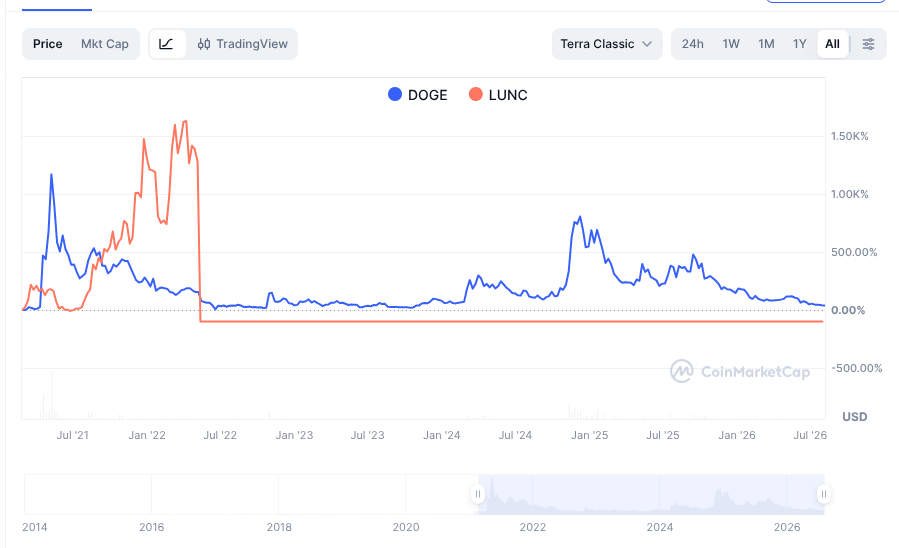
Đó là bài học thực sự nằm ẩn trong hai biểu đồ này. Sự sụp đổ của DOGE là dữ dội nhưng tạm thời—nó có đủ thanh khoản và hậu thuẫn từ tổ chức (các hồ sơ ETF giao ngay đã bắt đầu được triển khai) để hấp thụ các cú sốc từ cá voi và phục hồi. Sự sụp đổ của LUNC là vĩnh viễn và mang tính cấu trúc—không có chút hy vọng nào có thể đảo ngược được một nguồn cung đã bị pha loãng thành hàng nghìn tỷ. Một là vấn đề thanh khoản. Cái còn lại là vấn đề số học, và số học không thương lượng.
Vậy lần tới khi bạn kiểm tra một token trước khi mua—bạn có thực sự đang xem ai nắm giữ nguồn cung, hay chỉ nhìn cách bản thân nguồn cung được tạo ra để hoạt động?