

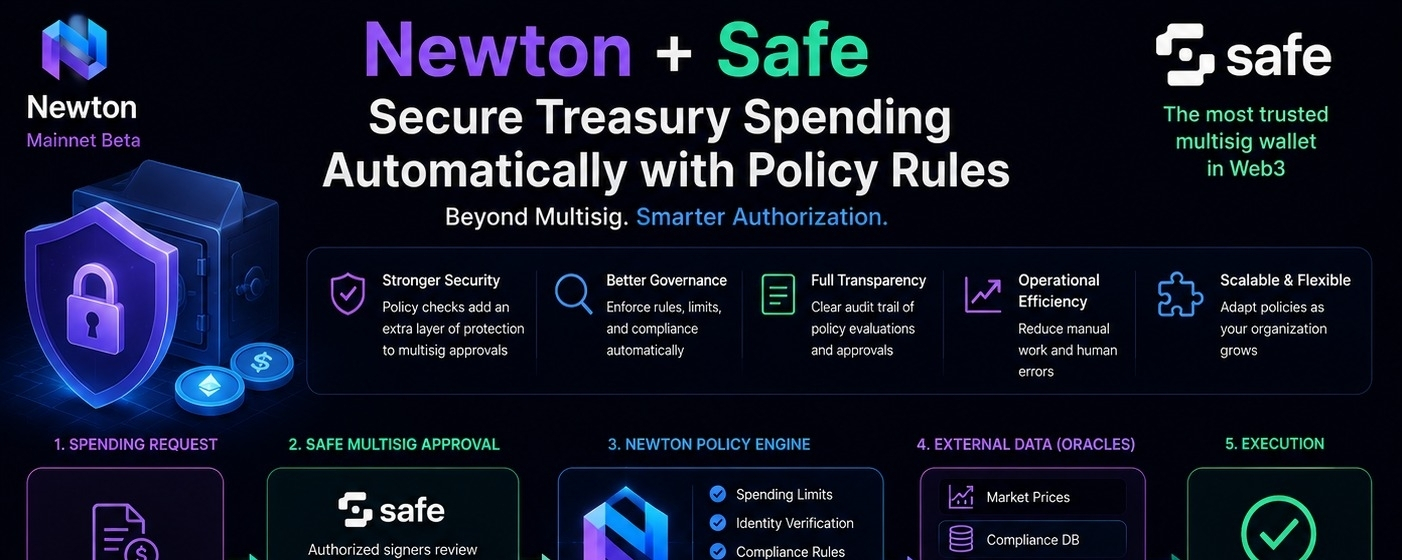

Việc quản lý tài sản số đã trở thành một trong những trách nhiệm quan trọng nhất đối với các tổ chức blockchain. Dù đó là một tổ chức tự trị phi tập trung (DAO), quỹ ngân sách của một startup, một quỹ đầu tư hay một dự án blockchain cấp doanh nghiệp, việc kiểm soát cách các quỹ được chi tiêu là điều thiết yếu cho cả bảo mật và trách nhiệm giải trình. Mặc dù ví đa chữ ký đã cải thiện đáng kể việc quản lý ngân quỹ, nhiều tổ chức hiện nay yêu cầu cơ chế ủy quyền nâng cao hơn, vượt ra ngoài việc chỉ thu thập nhiều chữ ký.
Trong quá trình khám phá tài liệu **Newton Mainnet Beta**, tôi nhận thấy **Newton Protocol** mở rộng bảo mật quản lý ngân quỹ truyền thống bằng cách đưa cơ chế ủy quyền dựa trên chính sách trước khi giao dịch được thực thi. Khi kết hợp với **Safe**—một trong những giải pháp ví đa chữ ký được sử dụng rộng rãi nhất trong Web3—các nhà phát triển và tổ chức có thể xây dựng hệ thống ngân quỹ tự động đánh giá các chính sách được xác định sẵn trước khi phê duyệt các yêu cầu chi tiêu.
Vì sao bảo mật ngân quỹ lại quan trọng
Khi hệ sinh thái blockchain trưởng thành, các tổ chức thường quản lý một lượng đáng kể tài sản kỹ thuật số.
Các quỹ này có thể chịu trách nhiệm cho:
* Trả tiền cho người đóng góp
* Các khoản tài trợ cho hệ sinh thái quỹ
* Quản lý chi phí vận hành
* Phân phối ưu đãi
* Thực thi chiến lược đầu tư
* Hỗ trợ các sáng kiến cộng đồng
Vì các tài sản này thường đại diện cho hàng triệu đô la, việc quản lý ngân quỹ cần nhiều hơn việc chỉ phê duyệt giao dịch đơn giản.
Các tổ chức cần các quy trình được chuẩn hóa để giảm sai sót trong khi vẫn bảo vệ quỹ khỏi các hoạt động trái phép.
Vai trò của Safe trong Web3
Safe đã trở thành một trong những giải pháp quản lý ngân quỹ được tin cậy nhất trong ngành blockchain.
Thay vì cho phép một cá nhân kiểm soát tài sản của tổ chức, Safe cho phép nhiều bên tham gia được ủy quyền phê duyệt giao dịch trước khi giao dịch được thực thi.
Mô hình đa chữ ký này giúp tăng cường bảo mật đáng kể vì không ai có thể tự ý chuyển tiền.
Đối với nhiều tổ chức, Safe cung cấp một nền tảng tuyệt vời cho việc quản lý ngân quỹ phi tập trung.
Tuy nhiên, khi các hoạt động ngân quỹ trở nên phức tạp hơn, chỉ dựa vào phê duyệt đa chữ ký có thể không đáp ứng được mọi yêu cầu vận hành.
Vượt Qua Phê Duyệt Đa Chữ Ký
Một chữ ký đa hợp lệ xác nhận rằng các bên tham gia được ủy quyền đã phê duyệt một giao dịch.
Nó không nhất thiết trả lời các câu hỏi vận hành quan trọng như:
* Khoản thanh toán này có vượt quá ngân sách đã được phê duyệt không?
* Người nhận đã hoàn tất xác minh danh tính chưa?
* Giao dịch có tuân thủ chính sách công ty không?
* Khoản thanh toán có cần phê duyệt của lãnh đạo điều hành không?
* Việc chi tiêu có nằm trong giới hạn ngân quỹ hằng ngày không?
* Rủi ro biến động giá thị trường bên ngoài có vượt quá ngưỡng chấp nhận được không?
Thay vì nhúng các điều kiện này trực tiếp vào smart contract, Newton giới thiệu ủy quyền dựa trên chính sách, đánh giá các yêu cầu này trước khi thực thi.
Giới thiệu Quản lý Ngân quỹ dựa trên Chính sách
Một trong những khái niệm nổi bật khi xem lại tài liệu Newton là sự tách bạch giữa phê duyệt giao dịch và đánh giá chính sách.
Thay vì coi ủy quyền là một sự kiện đơn lẻ, Newton giới thiệu một lớp quyết định thông minh.
Một quy trình ngân quỹ điển hình có thể trông như sau:
1. Một yêu cầu chi tiêu được tạo.
2. Safe thu thập các chữ ký cần thiết.
3. Newton đánh giá các chính sách ngân quỹ.
4. Thông tin bên ngoài được truy xuất nếu cần.
5. Chính sách xác định liệu mọi yêu cầu đã được đáp ứng hay chưa.
6. Chỉ các giao dịch đã được phê duyệt mới tiến hành thực thi.
Quy trình phân lớp này mang lại tính linh hoạt vượt trội đáng kể so với việc chỉ dựa vào chữ ký.
Tự động hóa các quy tắc của tổ chức
Mọi tổ chức đều vận hành theo các chính sách nội bộ.
Ví dụ bao gồm:
* Giới hạn chi tiêu cho các bộ phận khác nhau
* Yêu cầu phê duyệt cho các khoản chuyển lớn
* Các thủ tục xác minh nhà cung cấp
* Chính sách phân phối tài trợ
* Quy tắc phân bổ ngân quỹ
* Yêu cầu báo cáo tài chính
Newton cho phép các chính sách tổ chức này trở thành các quy tắc ủy quyền có thể lập trình.
Thay vì bắt các thành viên trong nhóm phải tự nhớ mọi thủ tục, công cụ chính sách sẽ tự động đánh giá chúng trước khi chuyển tiền.
Điều này giúp cải thiện tính nhất quán trong khi giảm sai sót vận hành.
Tích hợp Thông tin Bên Ngoài
Nhiều quyết định về ngân quỹ phụ thuộc vào thông tin nằm ngoài blockchain.
Newton hỗ trợ các **Data Oracles** an toàn, cho phép các chính sách truy xuất thông tin bên ngoài đáng tin cậy trong quá trình ủy quyền.
Chính sách có thể tham chiếu đến:
* Giá thị trường
* Tỷ giá hối đoái
* Các cơ sở dữ liệu tuân thủ
* Dịch vụ xác minh danh tính
* Các API cho doanh nghiệp
* Các nền tảng phân tích rủi ro
Điều này giúp các quyết định về ngân quỹ phản ánh điều kiện thực tế thay vì chỉ dựa vào thông tin on-chain.
Nâng cao Minh bạch và Kiểm toán
Một lợi thế khác của kiến trúc Newton là mức độ minh bạch được cải thiện.
Vì các chính sách ủy quyền tách rời khỏi logic nghiệp vụ, các tổ chức có thể dễ dàng hơn trong việc xem xét cách các quyết định về ngân quỹ được đưa ra.
Kiểm toán viên có thể xem xét:
* Các chính sách ngân quỹ
* Các quy trình ủy quyền
* Các điều kiện phê duyệt
* Các yêu cầu chi tiêu
* Cập nhật chính sách
Cấu trúc mô-đun này giúp việc quản trị dễ dàng hơn đồng thời làm cho các quyết định vận hành dễ hiểu.
Thay vì phải tìm kiếm trong mã hợp đồng phức tạp, logic chính sách vẫn được tổ chức gọn gàng và xác định rõ ràng.
Hỗ trợ các hoạt động quản lý ngân quỹ doanh nghiệp
Sự kết hợp giữa Newton và Safe phù hợp với nhiều loại tổ chức khác nhau.
Các ứng dụng tiềm năng bao gồm:
* Các DAO quản lý quỹ cộng đồng
* Nền tảng blockchain
* Các quỹ ngân sách đầu tư mạo hiểm
* Các phòng tài chính doanh nghiệp
* Nền tảng phân phối tài trợ
* Quản lý tài sản kỹ thuật số ở cấp tổ chức
* Hệ thống thanh toán xuyên biên giới
Dù trong trường hợp sử dụng nào, việc tự động đánh giá chính sách cung cấp thêm một lớp bảo vệ, bổ sung cho bảo mật đa chữ ký.
Xây dựng các luồng công việc tài chính có khả năng mở rộng
Khi các tổ chức phát triển, việc quản lý ngân quỹ tự nhiên trở nên phức tạp hơn.
Thêm thành viên trong nhóm tham gia.
Quy trình phê duyệt thay đổi theo thời gian.
Các yêu cầu tuân thủ thay đổi.
Cấu trúc ngân sách được mở rộng.
Kiến trúc chính sách mô-đun của Newton cho phép các thay đổi này được triển khai mà không cần thiết kế lại toàn bộ hệ thống ngân quỹ.
Các nhà phát triển có thể cập nhật các quy tắc ủy quyền độc lập trong khi vẫn dựa vào Safe để phê duyệt đa chữ ký.
Sự linh hoạt này hỗ trợ khả năng mở rộng trong dài hạn khi nhu cầu của tổ chức tiếp tục thay đổi.
Nhận xét cuối
Sau khi xem xét tài liệu **Newton Mainnet Beta**, tôi nhận thấy Newton Protocol nâng cao việc quản lý ngân quỹ bằng cách mở rộng bảo mật đa chữ ký truyền thống với cơ chế ủy quyền dựa trên chính sách thông minh. Mặc dù **Safe** vẫn là một trong những giải pháp được tin cậy nhất để bảo vệ tài sản của tổ chức thông qua phê duyệt đa chữ ký, Newton đưa thêm một lớp ra quyết định có khả năng đánh giá các quy tắc nghiệp vụ, yêu cầu tuân thủ, giới hạn chi tiêu, xác minh danh tính và dữ liệu bên ngoài đáng tin cậy trước khi giao dịch được thực thi.
Thay vì thay thế cơ sở hạ tầng quản lý ngân quỹ hiện có, Newton bổ sung bằng cách tách logic ủy quyền khỏi việc thực thi giao dịch. Kết quả là quản trị rõ ràng hơn, minh bạch hơn và các luồng công việc tài chính linh hoạt hơn, có thể thích ứng khi tổ chức phát triển.
Khi các tổ chức phi tập trung, doanh nghiệp và các dự án blockchain cấp tổ chức tiếp tục quản lý ngày càng nhiều tài sản kỹ thuật số có giá trị, việc ủy quyền tự động dựa trên chính sách nhiều khả năng sẽ trở thành một phần thiết yếu trong bảo mật quản lý ngân quỹ. Đối với các nhà phát triển và tổ chức xây dựng trên **Newton Mainnet Beta**, các tài nguyên do **@NewtonProtocol ** cung cấp mang đến hướng dẫn quý giá để kết hợp Safe với các quy tắc chính sách tùy chỉnh nhằm tạo ra hệ thống ngân quỹ an toàn, có khả năng mở rộng và sẵn sàng cho tương lai của tài chính Web3. **$NEWT #Newt #Web3 #Airdrop #Binance $BTC