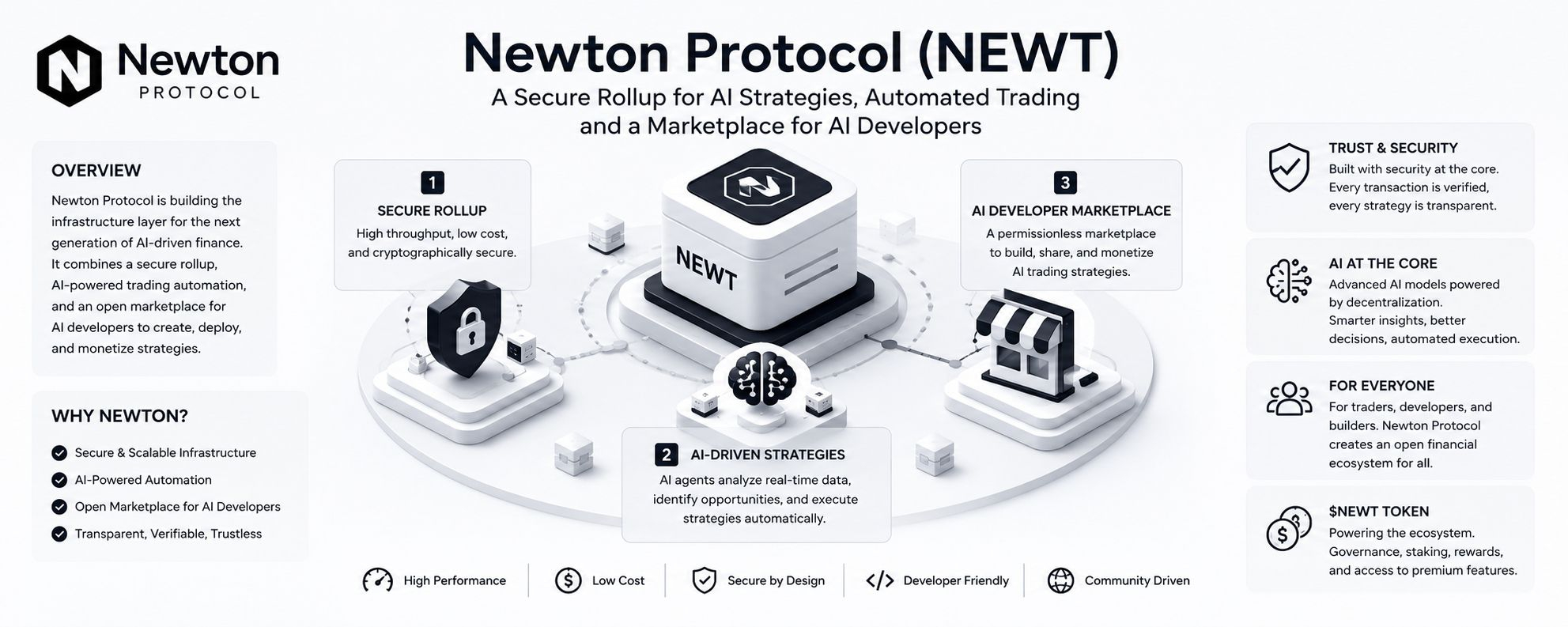

Hợp tác trả phí với @newton_xyz
Khi lần đầu tôi biết đến Newton Protocol ($NEWT), tôi đã nghĩ rằng mình hiểu trước cuộc trò chuyện sẽ như thế nào.
Một dự án khác kết hợp AI và crypto. Một cuộc thảo luận khác về tự động hóa, giao dịch thông minh hơn và các chiến lược hiệu quả hơn.
Ban đầu, mọi thứ có vẻ khá đơn giản.
Sau đó, tôi bắt đầu nhìn kỹ hơn.
Càng đọc, tôi càng nhận ra rằng mình đang hỏi sai những câu hỏi.
Thay vì tự hỏi AI có thể mạnh đến mức nào, tôi lại thấy mình tự hỏi rằng mọi người sẵn sàng đặt bao nhiêu niềm tin vào nó.
Điều đó đã thay đổi cách tôi nhìn nhận vấn đề.
Công nghệ luôn tiến nhanh hơn niềm tin của con người vào nó. Chúng ta ăn mừng những năng lực mới gần như ngay lập tức, nhưng niềm tin cần nhiều thời gian hơn để xây dựng. Niềm tin phát triển nhờ sự minh bạch, tính nhất quán và cảm giác rằng các động lực được đồng bộ—không chỉ nhờ hiệu năng tốt hơn.
Hầu hết các cuộc thảo luận đều dừng ở bề mặt.
Chúng tôi so sánh các tính năng, tốc độ và những cải tiến kỹ thuật. Những cuộc trò chuyện đó quan trọng, nhưng chúng thường bỏ lỡ bức tranh lớn hơn. Thách thức thực sự không phải là tạo ra các hệ thống thông minh hơn. Mà là tạo ra những hệ thống mà con người cảm thấy thoải mái khi dựa vào—khi có liên quan đến tiền thật và những quyết định thực sự.
Nghe có vẻ hợp lý.
Liệu nó có vận hành hiệu quả trong thực tế hay không lại là một câu hỏi khác.
Tôi nghĩ đó là nơi thách thức thực sự bắt đầu.
Crypto chưa bao giờ chỉ là để làm các giao dịch nhanh hơn. Về cốt lõi, nó đưa ra một cách tư duy khác về quyền sở hữu, xác minh và sự tin tưởng. Thay vì yêu cầu mọi người tin vào các tổ chức, nó đặt câu hỏi liệu các hệ thống có thể được thiết kế sao cho việc xác minh quan trọng hơn những lời hứa hay không.
Giờ đây AI đang trở thành một phần của cuộc trò chuyện đó.
Khi AI đảm nhận nhiều trách nhiệm hơn, câu hỏi chuyển từ "Nó có làm được điều này không?" sang "Làm sao chúng ta biết rằng nó đang hành động vì lợi ích tốt nhất của chúng ta?" Đó là hai câu hỏi rất khác nhau, và tôi nghĩ câu hỏi thứ hai sẽ quan trọng hơn nhiều theo thời gian.
Đó là một trong những lý do khiến Newton Protocol thu hút sự chú ý của tôi. Vượt ra ngoài ý tưởng về các chiến lược do AI điều khiển và tự động hóa, nó phản ánh một sự thay đổi lớn hơn trong tư duy về cách các hệ thống thông minh có thể hoạt động trong cơ sở hạ tầng phi tập trung. Liệu tầm nhìn ấy có thành công hay không thì chỉ có thời gian mới trả lời được.
Có lẽ tôi đã sai.
Nhưng tôi cứ nhận thấy cùng một kiểu mẫu.
Mọi bước chuyển đổi công nghệ lớn cuối cùng đều trở nên ít liên quan đến chính công nghệ hơn, và nhiều hơn liên quan đến những người sử dụng nó. Quản trị định hình kết quả. Động lực ảnh hưởng đến hành vi. Sự minh bạch tạo dựng niềm tin. Cộng đồng quyết định điều gì sẽ tồn tại.
Các công cụ sẽ tiếp tục được cải thiện.
Các mô hình AI sẽ trở nên nhanh hơn. Tự động hóa sẽ trở nên có năng lực hơn. Những giao thức mới sẽ tiếp tục xuất hiện.
Nhưng không có điều nào trong số đó tự động tạo ra sự tin tưởng.
Và tôi có cảm giác rằng những dự án hiểu được sự khác biệt đó hôm nay sẽ là những dự án mà người ta vẫn nhớ đến sau nhiều năm.
Đôi khi đổi mới lớn nhất không phải là làm cho máy móc suy nghĩ tốt hơn.
Nó đang tạo cho con người một lý do để tin tưởng họ.