#opg $OPG $BTW $CLO
i keep thinking Vanilla is maybe the most honest word in OpenGradient.
which is funny because it almost sounds insulting.
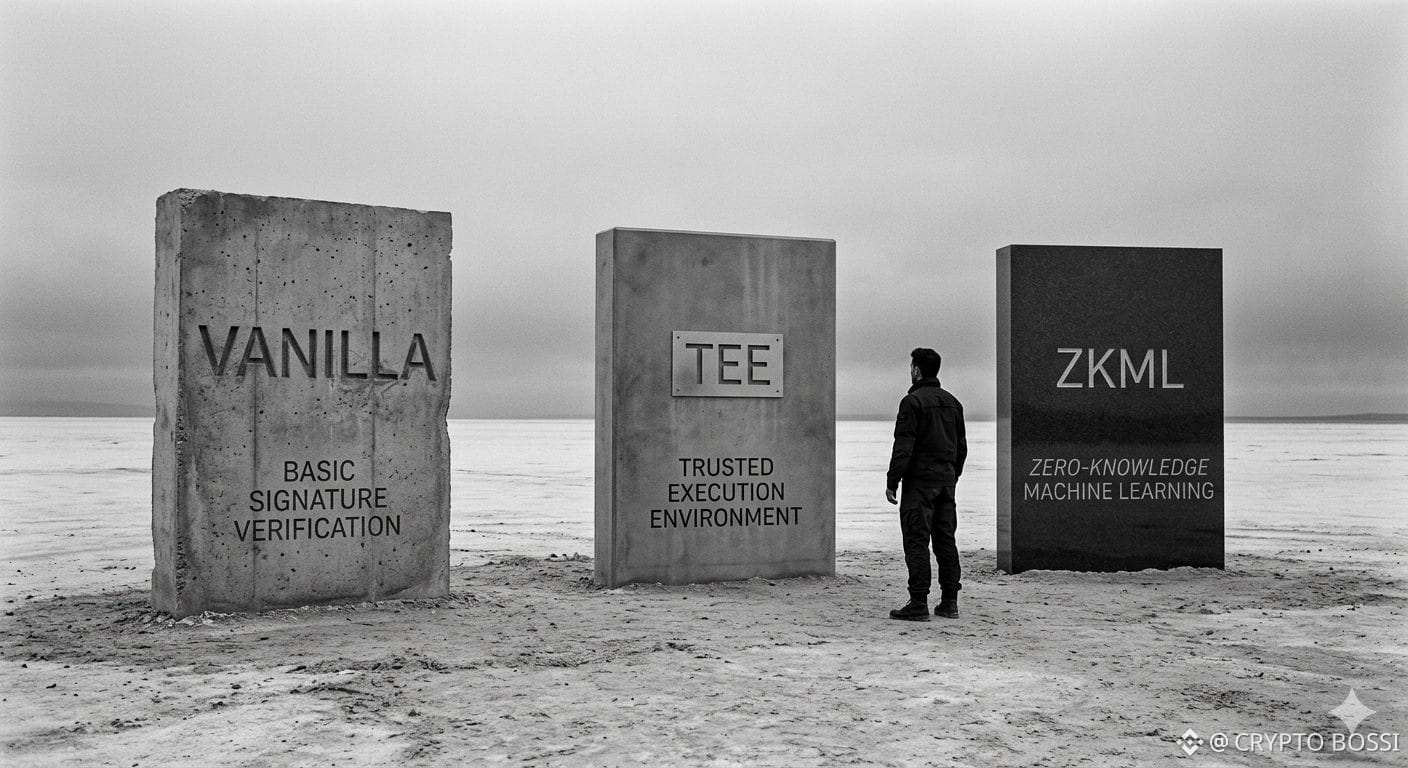
like OpenGradient Vanilla Signatures. Basic signature verification. that phrase has no glamour at all. no TEE aura. no ZKML seriousness. no hardware-based security flex. no zero-knowledge purity. just... okay, here is signature, here is signed inference record, here is what this verification tier is willing to promise and not one inch more.
and maybe that is exactly why it keeps catching on me.
because most verification layers try very hard to sound stronger than they are. safer than they are. more certain than they are. they hide edge. smooth it out. make every execution guarantee sound like same polished adult thing.
OpenGradient does something more interesting in its Three-Tier Verification spectrum.
Vanilla;
TEE.
ZKML.
and the weird part is i don’t read OpenGradient Vanilla as the weak one anymore. not exactly. i read it as tier that barely pretends. Basic signature verification is almost rude in that way. it does not act like it proved correct execution. it does not act like Trusted Execution Environments were involved. it does not act like zero-knowledge proofs carried the whole burden. it just tells you what kind of execution guarantee exists and stops there.
“the weakest verification tier might be least dishonest one.”
yeah. that line won’t leave me alone.
because once you put Vanilla beside TEE and ZKML, the whole Verification Spectrum starts reading less like a ladder and more like a set of different honesty levels about what the OpenGradient verification layer can actually guarantee. and once it reads that way, picking a verification tier stops sounding like “more security is better” and starts sounding more like... what kind of uncertainty are you actually willing to admit out loud.
and that sits a little weird honestly.
because sometimes the serious verification tier is not the one promising the most.
sometimes it is the one refusing to fake cryptographic certainty.
i keep thinking Vanilla is maybe the most honest word in OpenGradient.
which is funny because it almost sounds insulting.
like OpenGradient Vanilla Signatures. Basic signature verification. that phrase has no glamour at all. no TEE aura. no ZKML seriousness. no hardware-based security flex. no zero-knowledge purity. just... okay, here is signature, here is signed inference record, here is what this verification tier is willing to promise and not one inch more.
and maybe that is exactly why it keeps catching on me.
because most verification layers try very hard to sound stronger than they are. safer than they are. more certain than they are. they hide edge. smooth it out. make every execution guarantee sound like same polished adult thing.
OpenGradient does something more interesting in its Three-Tier Verification spectrum.
Vanilla;
TEE.
ZKML.
and the weird part is i don’t read OpenGradient Vanilla as the weak one anymore. not exactly. i read it as tier that barely pretends. Basic signature verification is almost rude in that way. it does not act like it proved correct execution. it does not act like Trusted Execution Environments were involved. it does not act like zero-knowledge proofs carried the whole burden. it just tells you what kind of execution guarantee exists and stops there.
“the weakest verification tier might be least dishonest one.”
yeah. that line won’t leave me alone.
because once you put Vanilla beside TEE and ZKML, the whole Verification Spectrum starts reading less like a ladder and more like a set of different honesty levels about what the OpenGradient verification layer can actually guarantee. and once it reads that way, picking a verification tier stops sounding like “more security is better” and starts sounding more like... what kind of uncertainty are you actually willing to admit out loud.
and that sits a little weird honestly.
because sometimes the serious verification tier is not the one promising the most.
sometimes it is the one refusing to fake cryptographic certainty.