
Zohaib Mushtaq05
4.7k Bài đăng

Zohaib Mushtaq05
 Đã xác minh trên Square
2.3K+ Đang theo dõi
32.7K+ Người theo dõi
11.3K+ Đã thích
Bài đăng
Tất cả
Trích dẫn
Video
Live
Xem bản dịch
Assalamu Alaikum Wa Rahmatullahi Wa Barakatuhu
Good Morning
Jumma Mubarak
May the shade of Allah’s blessings
always remain upon you like a shadow.
Ameen, Summa Ameen.
Good Morning
Jumma Mubarak
May the shade of Allah’s blessings
always remain upon you like a shadow.
Ameen, Summa Ameen.

chúc ngủ ngon❤
Zohaib Mushtaq05
·
--
[Phát lại] 🎙️ Chào mừng 🎉
01 giờ 00 phút 14 giây · 102 người nghe
Xem bản dịch
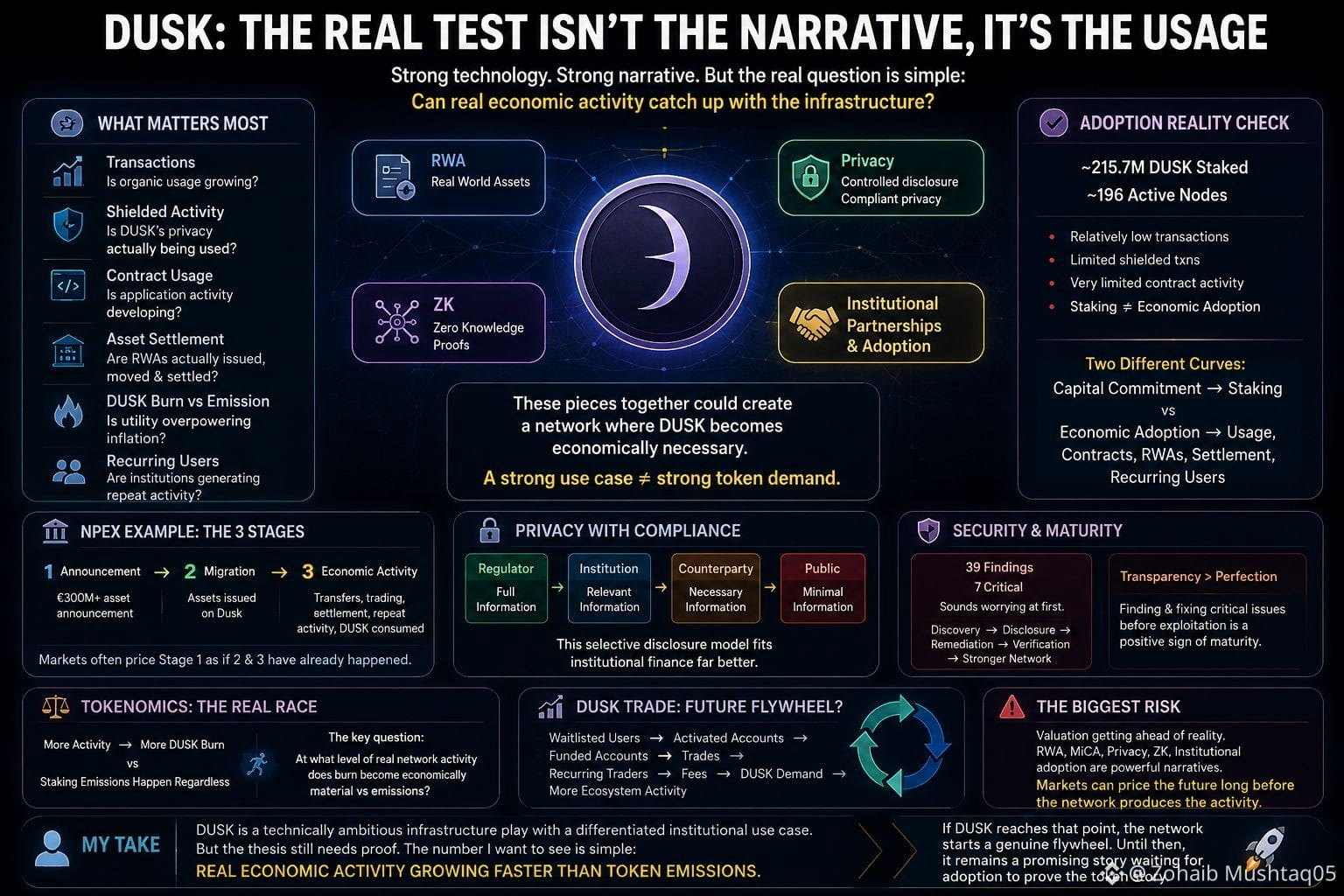
The more I look at DUSK, the more I think the thesis is being misunderstood. What makes DUSK interesting isn’t simply RWA, privacy, ZK, or institutional partnerships on their own. It’s the possibility that all of these pieces eventually create a network where the token becomes economically necessary. That distinction matters. A strong use case doesn’t automatically mean strong token demand. For me, the biggest question now is whether real activity can catch up with the infrastructure being built. Staking numbers can look impressive, but locked capital isn’t the same thing as economic adoption. I care much more about transactions, shielded activity, contract usage, actual asset settlement, recurring users and, eventually, how much DUSK gets consumed versus emitted. The NPEX story is a good example of this difference. Announcing assets is one thing; actually issuing them, moving them, settling them and creating repeat activity is where the thesis gets tested. The same applies to Dusk Trade: a waitlist is interesting, but funded accounts, completed trades and recurring users are what matter. I also think DUSK’s privacy proposition is more compelling than simply calling it a “private blockchain.” If institutions can keep sensitive financial information protected while still supporting controlled disclosure and compliance, that could be a meaningful niche. But technology alone cannot solve the legal and institutional side of finance. On security, the serious audit findings initially sound worrying, yet I view transparent disclosure and remediation as more important than pretending complex systems never have vulnerabilities. The bigger risk, in my opinion, is valuation getting ahead of reality. RWA, MiCA, privacy, ZK and institutional adoption are powerful narratives, and markets can price the future long before the network produces the activity needed to justify it. So I’m neither blindly bullish nor dismissive. #dusk $DUSK @Dusk
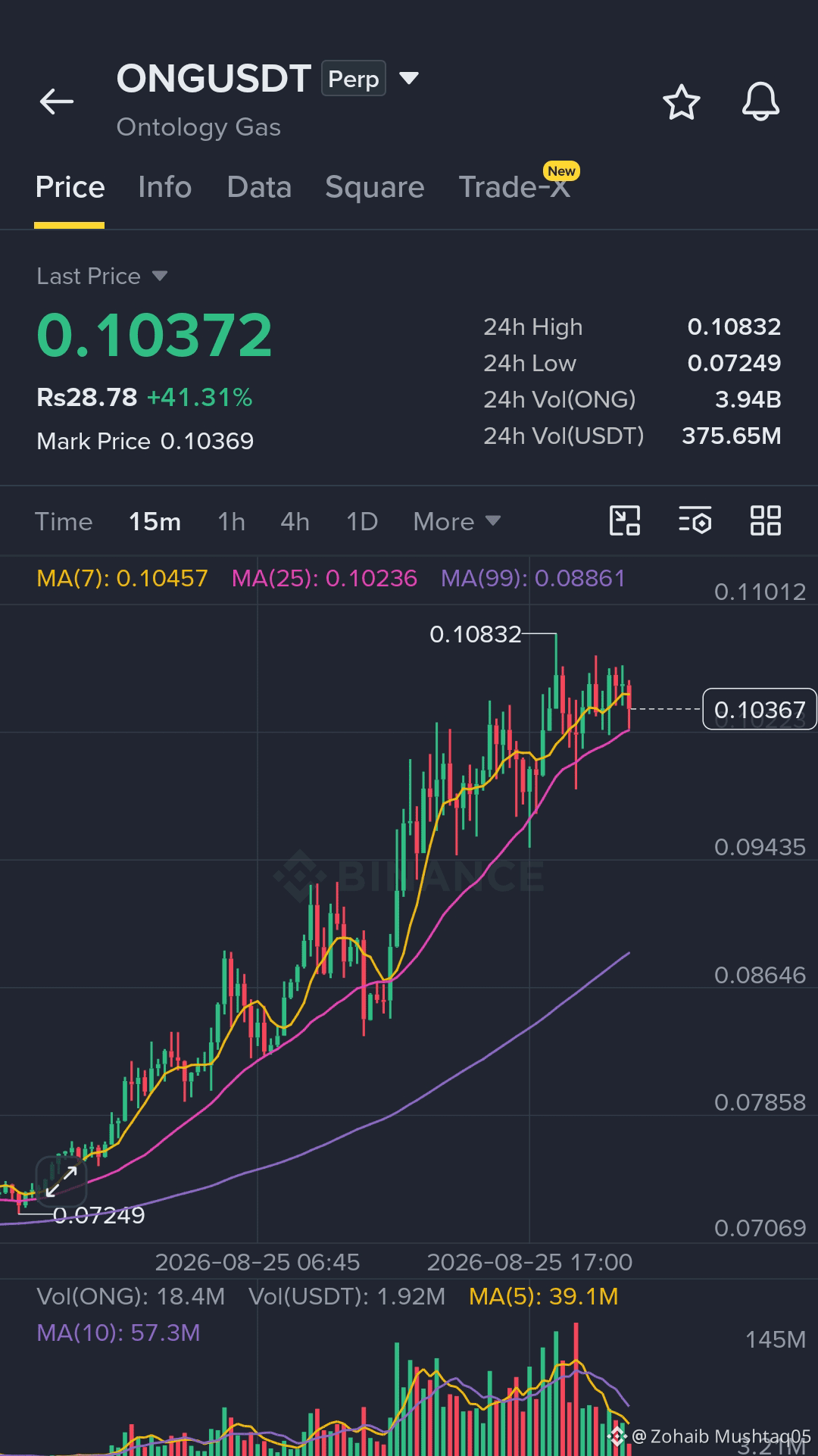
1. Tên Đồng Tiền & Định Nghĩa 🧠: Ontology Gas ($ONG ) — Token tiện ích được dùng để thanh toán phí giao dịch và các hợp đồng thông minh trên mạng lưới blockchain Ontology.
2. Giá Hiện Tại 💰: $0.10372
3. Thay Đổi 24h 📈📉: +41.31% 🚀
4. Vốn Hóa Thị Trường 🏦: Không hiển thị trên biểu đồ (Xem CoinMarketCap).
5. Khối Lượng 🔄: 375.65M USDT (24h) 🔥
6. Hỗ Trợ 🟢 & Kháng Cự 🔴:
Hỗ Trợ: $0.10236 (MA25) / $0.08861 (MA99)
Kháng Cự: $0.10832 (Đỉnh 24h)
7. Mục Tiêu Tiếp Theo 🎯: $0.11500
8. Xu Hướng 🐂🐻: Tăng giá 🐂 (Giá đang giao dịch tốt hơn đáng kể so với các đường trung bình động ngắn & dài hạn).
9. Thiết Lập Giao Dịch 📊:
Điểm Vào: $0.10200 – $0.10370
TP1: $0.10800 🎯
TP2: $0.11500 🚀
Cắt Lỗ: $0.09800 🛑
DYOR, Không phải lời khuyên tài chính.
2. Giá Hiện Tại 💰: $0.10372
3. Thay Đổi 24h 📈📉: +41.31% 🚀
4. Vốn Hóa Thị Trường 🏦: Không hiển thị trên biểu đồ (Xem CoinMarketCap).
5. Khối Lượng 🔄: 375.65M USDT (24h) 🔥
6. Hỗ Trợ 🟢 & Kháng Cự 🔴:
Hỗ Trợ: $0.10236 (MA25) / $0.08861 (MA99)
Kháng Cự: $0.10832 (Đỉnh 24h)
7. Mục Tiêu Tiếp Theo 🎯: $0.11500
8. Xu Hướng 🐂🐻: Tăng giá 🐂 (Giá đang giao dịch tốt hơn đáng kể so với các đường trung bình động ngắn & dài hạn).
9. Thiết Lập Giao Dịch 📊:
Điểm Vào: $0.10200 – $0.10370
TP1: $0.10800 🎯
TP2: $0.11500 🚀
Cắt Lỗ: $0.09800 🛑
DYOR, Không phải lời khuyên tài chính.
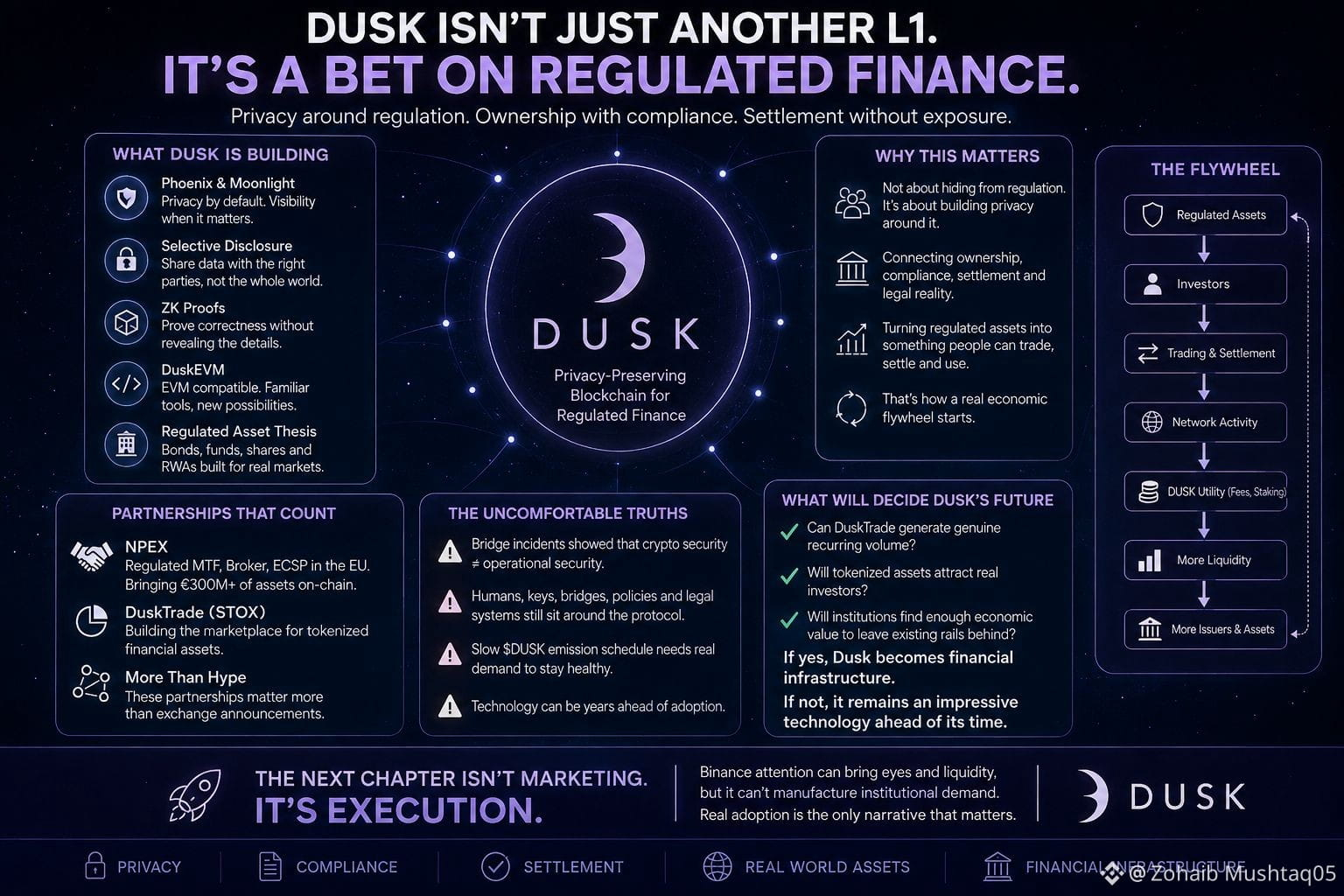
Tôi càng đào sâu vào $DUSK , càng thấy nó không chỉ là một L1 khác đang tìm kiếm sự chú ý. Tôi càng nhìn rõ đây là một cược vào điều còn khó hơn: làm cho các thị trường tài chính được quản lý trở nên thực sự thoải mái khi có blockchain. Điều nổi bật với tôi là Dusk không cố gắng loại bỏ quy định ra khỏi phương trình; nó đang cố gắng xây dựng quyền riêng tư xoay quanh quy định đó. Phoenix, Moonlight, tiết lộ chọn lọc, các bằng chứng ZK, DuskEVM và toàn bộ luận đề về tài sản được quản lý bắt đầu trở nên hợp lý hơn khi nhìn từ góc độ này. Phần thú vị không chỉ nằm ở việc đưa trái phiếu, quỹ hay cổ phần lên chuỗi. Thách thức thực sự là kết nối quyền sở hữu, tuân thủ, thanh toán và thực tế pháp lý mà không phơi bày mọi động thái tài chính ra cho thế giới. Vì vậy, mối quan hệ NPEX và định hướng hướng tới DuskTrade quan trọng hơn với tôi so với một thông báo sàn giao dịch khác. Nếu Dusk có thể biến các tài sản được quản lý thành thứ mà con người thực sự giao dịch, thanh toán và sử dụng lặp lại, thì mạng lưới bắt đầu hình thành một vòng quay kinh tế thực sự. Nhưng tôi cũng thấy mặt không mấy thoải mái. Các sự cố ở cầu (bridge) cho thấy mật mã học mạnh không tự động đồng nghĩa với việc mọi dịch vụ xung quanh đều được phi tập trung hoặc an toàn như nhau. Con người, khóa, cầu, chính sách và hệ thống pháp lý vẫn nằm ở “ngoài” giao thức. Và điều đó không nhất thiết là một thất bại—có thể đơn giản là thực tế của tài chính tổ chức. Tôi cũng tự hỏi liệu lịch phát hành chậm $DUSK emission đó có còn khỏe mạnh nếu nhu cầu thật từ mạng lưới đến chậm hơn. Công nghệ có thể đi trước việc được ứng dụng nhiều năm. Đó có lẽ là rủi ro lớn nhất của Dusk. Sự chú ý từ Binance có thể mang thêm người xem và thanh khoản, nhưng nó không thể tự tạo ra nhu cầu từ các tổ chức. Với tôi, chương tiếp theo không phải là việc Dusk có thể tiếp thị mạnh hơn hay không. Mà là liệu DuskTrade có thể tạo ra khối lượng giao dịch thực sự lặp lại, liệu các tài sản token hóa có thật sự thu hút nhà đầu tư hay không, và liệu các tổ chức có tìm thấy đủ giá trị kinh tế để rời bỏ các đường ray hiện tại hay không. Nếu điều đó xảy ra, Dusk có thể trở thành nhiều hơn một L1 chú trọng quyền riêng tư—nó có thể trở thành hạ tầng tài chính. Nếu không.#dusk $DUSK @Dusk
Xem bản dịch
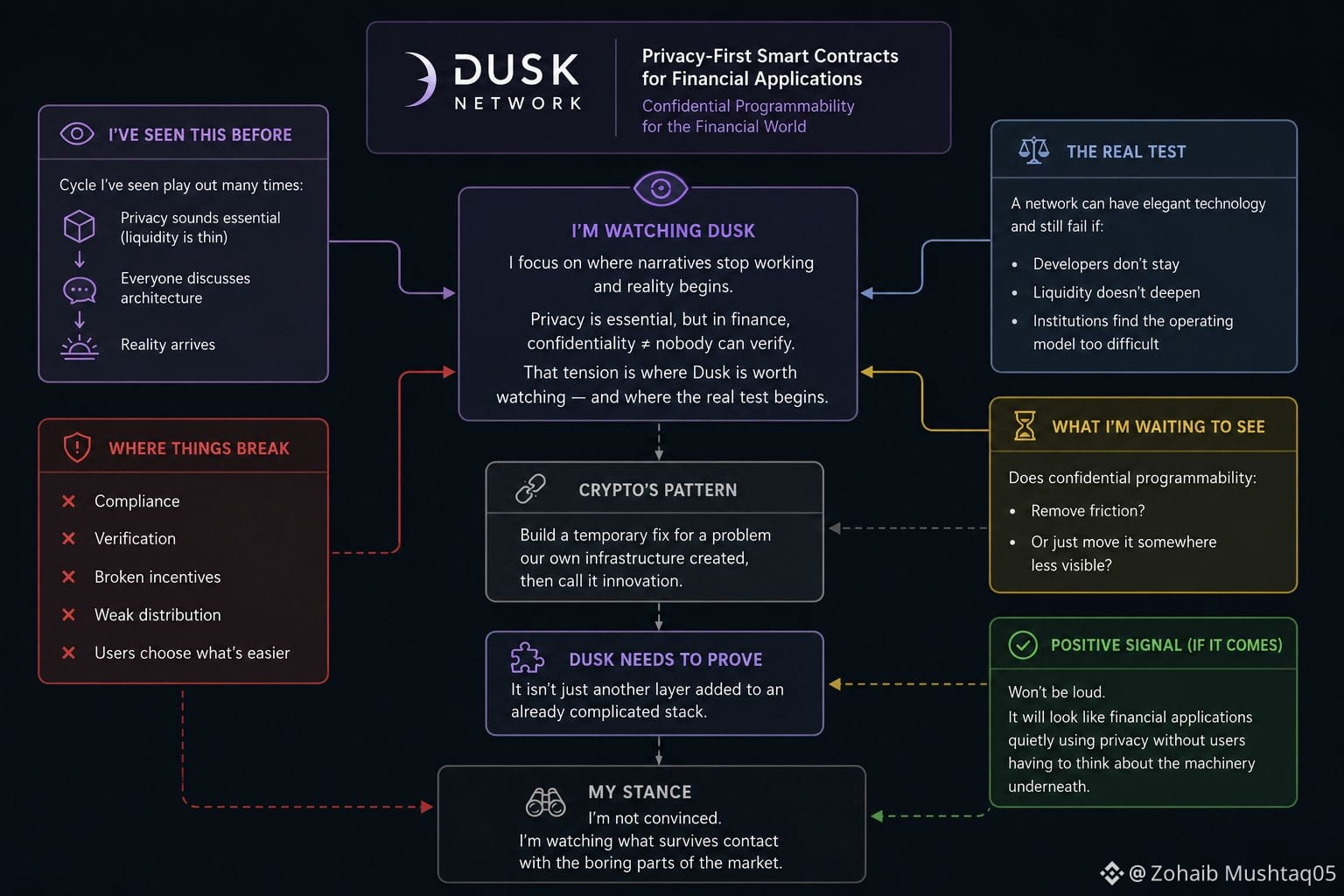
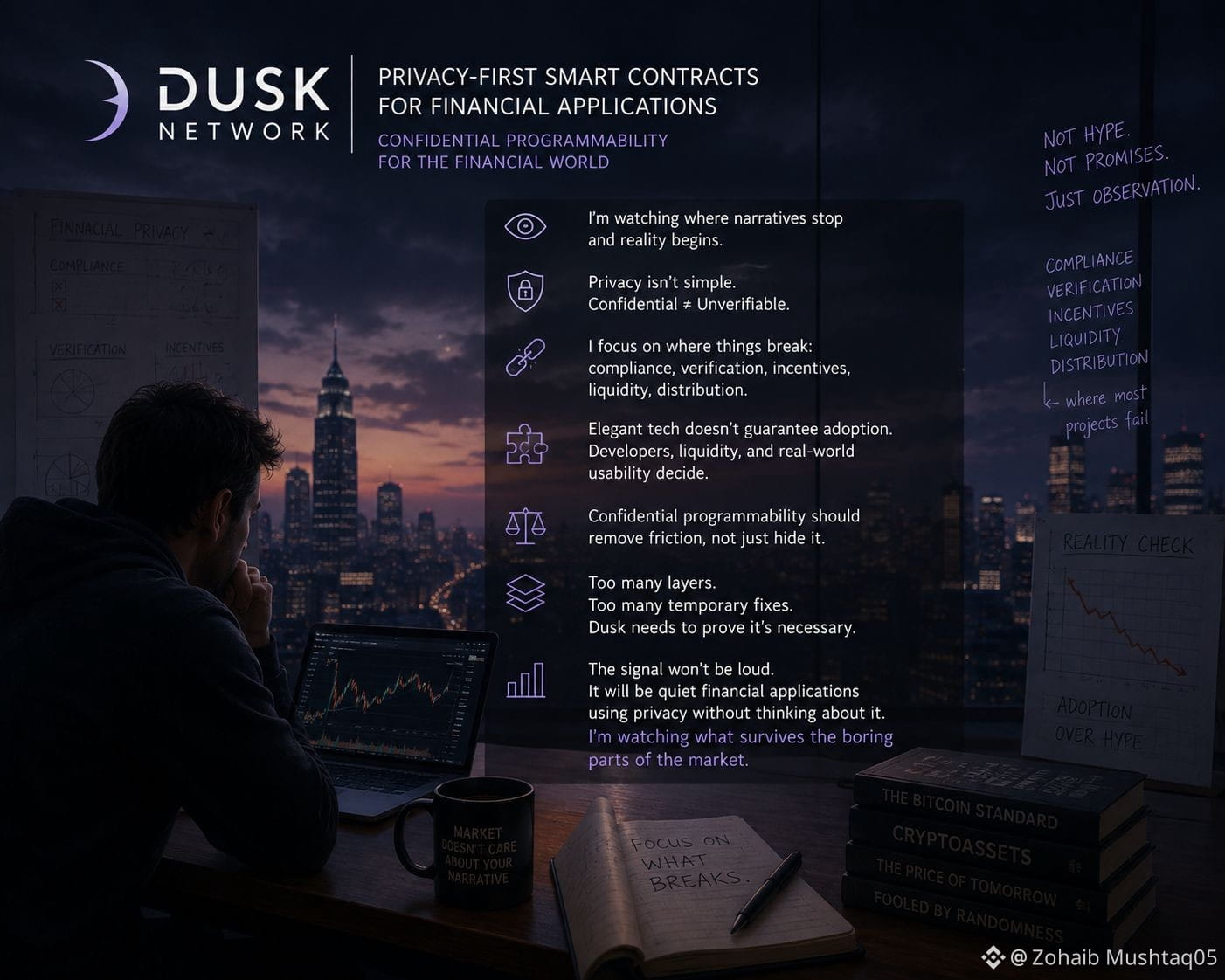
Dusk from the part of the market where narratives usually stop working. I’ve seen this before: privacy sounds essential when liquidity is thin and everyone is discussing architecture, then reality arrives through compliance, verification, broken incentives, weak distribution, and users who simply choose whatever is easier. I focus on where things break. Financial applications are exactly where privacy becomes complicated, because confidentiality cannot mean nobody can verify what happened. That tension is where Dusk becomes worth watching, but also where the real test begins. A network can have elegant technology and still fail if developers don’t stay, liquidity doesn’t deepen, or institutions find the operating model too difficult. I’m waiting to see whether confidential programmability actually removes friction or just moves it somewhere less visible. Crypto has a long history of building temporary fixes for problems created by its own infrastructure, then calling those fixes innovation. Dusk needs to prove it isn’t another layer added to an already complicated stack. The positive signal, if it comes, probably won’t be loud. It will look more like financial applications quietly using privacy without users having to think about the machinery underneath. Until then, I’m not convinced. what survives contact with the boring parts of the market.#dusk $DUSK @Dusk
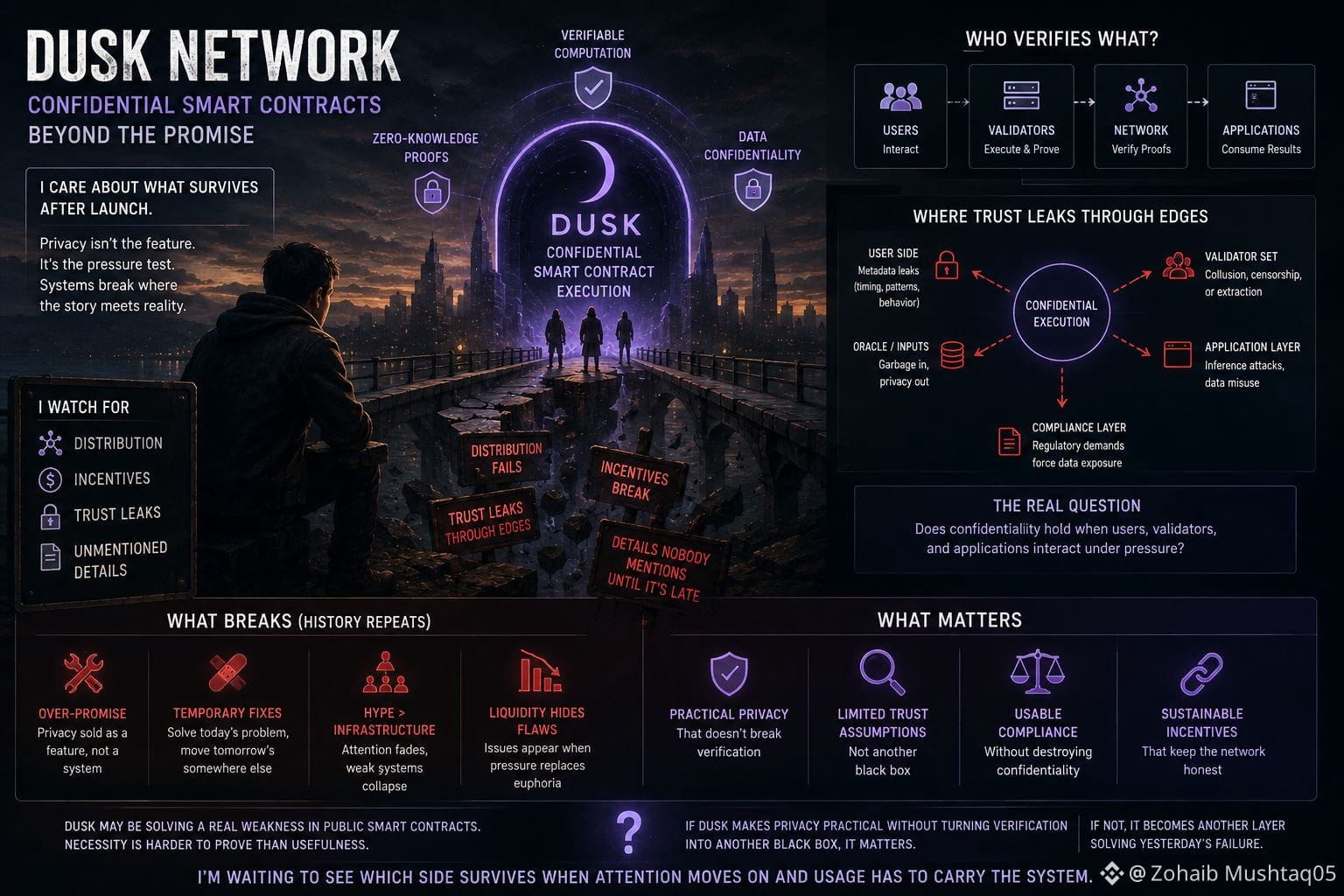
Mạng Lúc Hoàng Hôn từ góc nhìn mà tôi thường quan tâm: nơi các hệ thống vỡ tan khi câu chuyện chạm đến thực tế. Tôi đã thấy điều này trước đây. Quyền riêng tư được xem như một tính năng, rồi âm thầm trở thành vấn đề khi các hợp đồng cần xác minh thực sự, tuân thủ và việc thực thi có thể sử dụng. Phần thú vị ở đây là việc thực thi hợp đồng thông minh kín đáo, nhưng tôi quan tâm ít hơn đến lời hứa và nhiều hơn đến những gì còn lại sau khi ra mắt. Ai xác minh điều gì, mức độ niềm tin rò rỉ qua các rìa là bao nhiêu, và liệu tính bảo mật có còn được giữ vững khi người dùng, các validator và ứng dụng tương tác trong áp lực hay không. Tôi tập trung vào nơi mọi thứ hỏng hóc, đặc biệt là quanh phân phối, động lực, và những chi tiết mà chẳng ai nhắc đến khi thanh khoản đang chảy. Dusk có thể đang giải quyết một điểm yếu trong các hợp đồng thông minh công khai, nhưng tính “cần thiết” lại khó chứng minh hơn tính “hữu dụng”. Crypto có lịch sử lâu dài về việc tạo ra các bản vá tạm thời cho những vấn đề sau đó sẽ lại chuyển sang chỗ khác. Nếu Dusk có thể biến quyền riêng tư trở nên thực tế mà không biến việc xác minh thành một “hộp đen” khác, thì điều đó đáng giá. Nếu không, nó sẽ trở thành một lớp khác để giải quyết một thất bại của hôm qua. Tôi đang chờ xem bên nào sẽ sống sót khi sự chú ý chuyển đi và việc sử dụng phải gánh toàn bộ hệ thống.#dusk $DUSK @Dusk
Xem bản dịch
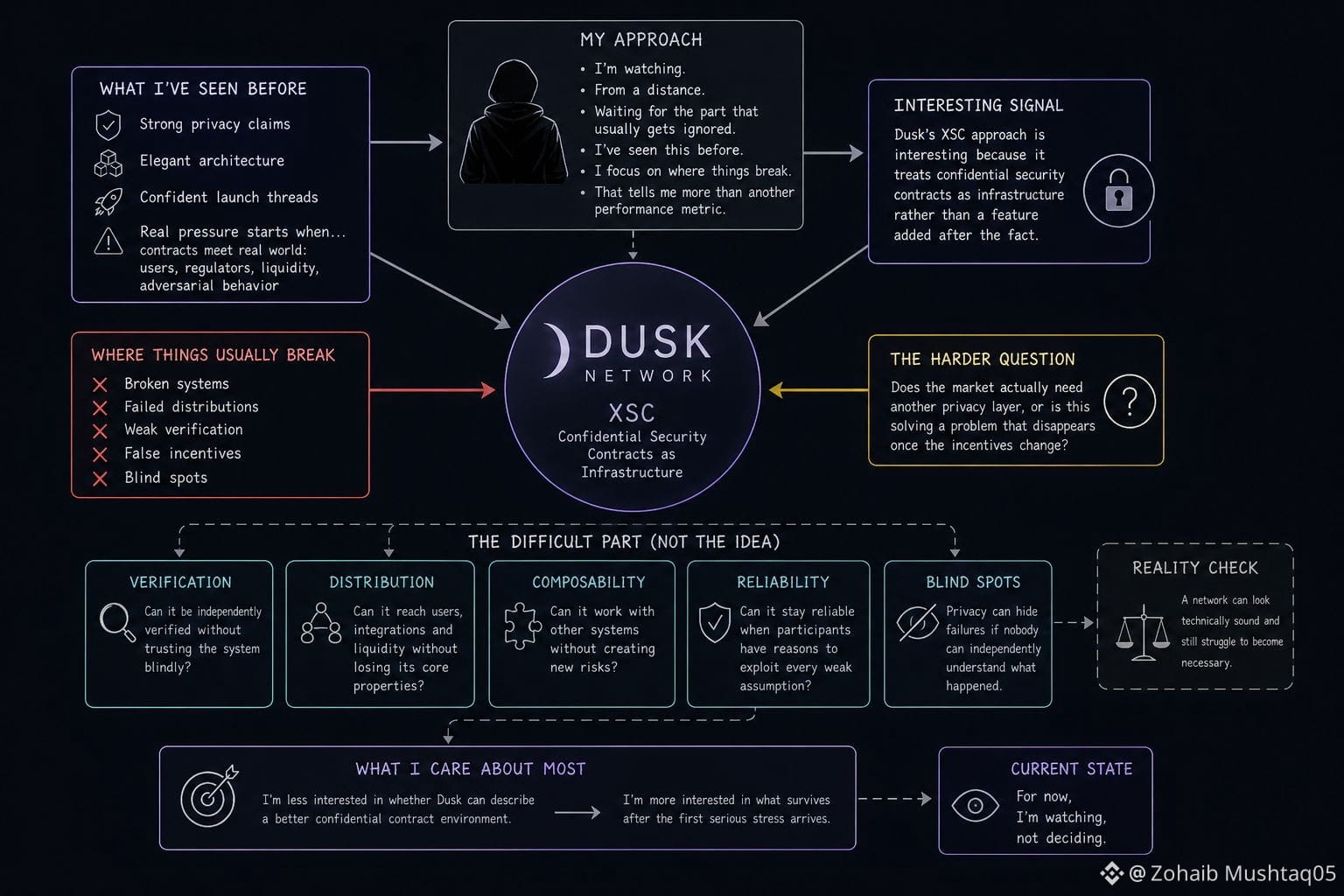
Dusk Network the way I watch most privacy projects now: from a distance, waiting for the part that usually gets ignored. I’ve seen this before. Strong privacy claims, elegant architecture, confident launch threads, and then the real pressure starts when contracts meet actual users, regulators, liquidity, and adversarial behavior. I focus on where things break, because that usually tells me more than another performance metric. Dusk’s XSC approach is interesting mainly because it treats confidential security contracts as infrastructure rather than a feature added after the fact. But that raises a harder question: does the market actually need another privacy layer, or is this solving a problem that disappears once the incentives change? The difficult part isn’t proving that private transactions are useful. Everyone already knows that. The difficult part is verification, distribution, composability, and keeping the system reliable when participants have reasons to exploit every weak assumption. Privacy can also create its own blind spots if nobody can independently understand what happened when something fails. That is where I’m still cautious. A network can look technically sound and still struggle to become necessary. I’m less interested in whether Dusk can describe a better confidential contract environment and more interested in what survives after the first serious stress arrives.#dusk $DUSK @Dusk
🎙️ $DUSK Live Trading Hub | Dusk Campaign Special 🔥
Kết thúc
03 giờ 05 phút 24 giây
1k
5
Xem bản dịch
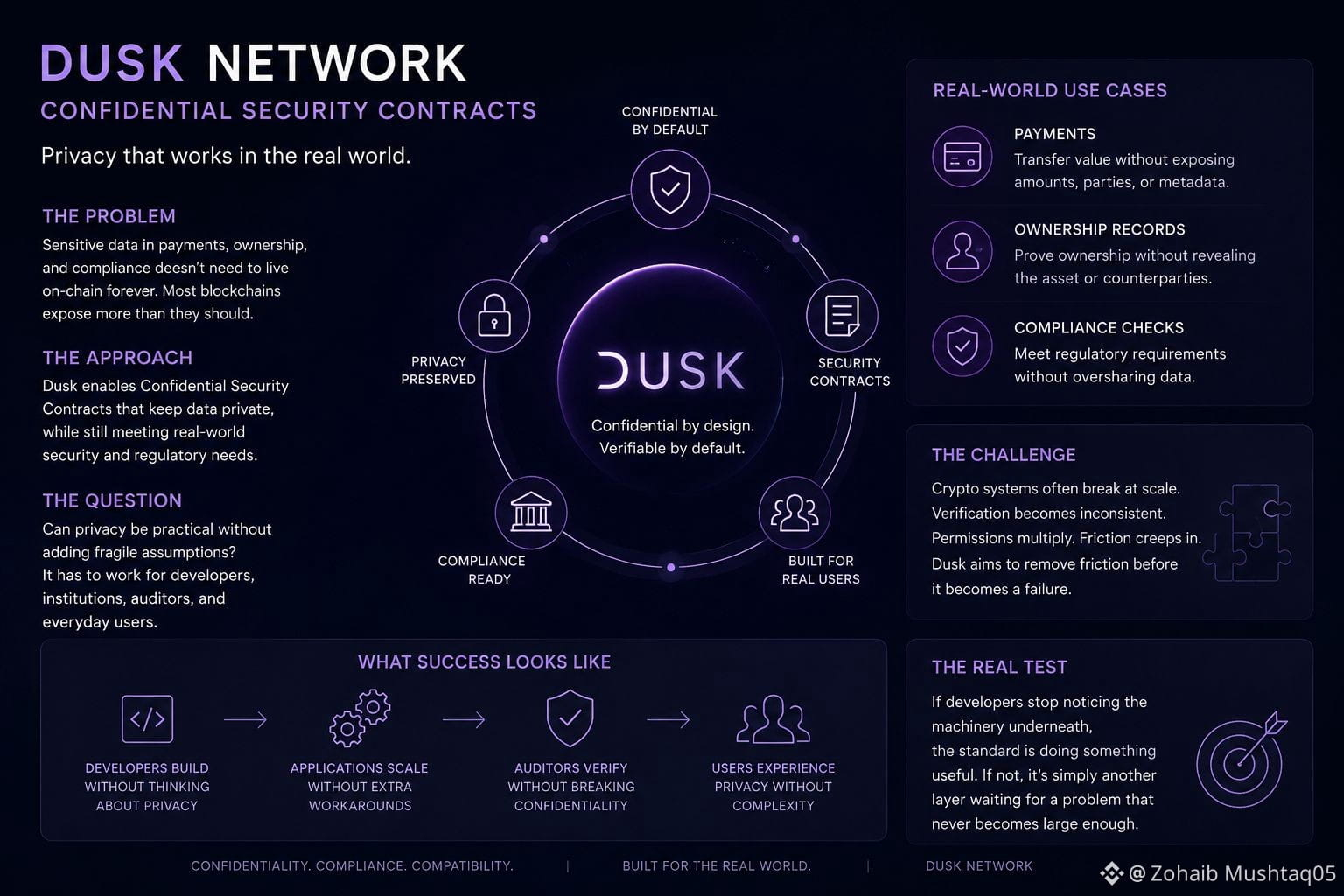
Dusk Network from the part of the market that usually gets ignored: what happens after the clean demo, when real contracts meet real constraints. Confidentiality sounds simple until sensitive information has to move between parties without exposing everything on-chain. A payment, an ownership record, a compliance check—each can contain details that users have no reason to publish forever.
That is where Dusk’s idea of confidential security contracts becomes worth examining. The interesting question is not whether privacy matters. It clearly does. The harder question is whether the system can make privacy practical without creating a new set of fragile assumptions.
Crypto has a long history of systems that work until someone tries to use them at scale. Verification becomes inconsistent. Permissions multiply. A process that looked elegant in a test environment turns awkward when lawyers, institutions, auditors, and ordinary users all touch it. The failure is rarely dramatic at first. It usually appears as friction: an extra approval, an unclear data boundary, a workaround added because the original design did not quite fit.
Dusk is operating in that uncomfortable space. Its approach tries to make confidential transactions compatible with security requirements rather than treating privacy as something bolted on afterward. That distinction matters, but it still needs to survive actual use.
I’m less interested in whether Dusk has a compelling story than whether developers eventually stop noticing the machinery underneath it. If that happens, the standard may be doing something useful. If not, it may simply be another layer waiting for a problem that never becomes large enough.#dusk $DUSK @Dusk
That is where Dusk’s idea of confidential security contracts becomes worth examining. The interesting question is not whether privacy matters. It clearly does. The harder question is whether the system can make privacy practical without creating a new set of fragile assumptions.
Crypto has a long history of systems that work until someone tries to use them at scale. Verification becomes inconsistent. Permissions multiply. A process that looked elegant in a test environment turns awkward when lawyers, institutions, auditors, and ordinary users all touch it. The failure is rarely dramatic at first. It usually appears as friction: an extra approval, an unclear data boundary, a workaround added because the original design did not quite fit.
Dusk is operating in that uncomfortable space. Its approach tries to make confidential transactions compatible with security requirements rather than treating privacy as something bolted on afterward. That distinction matters, but it still needs to survive actual use.
I’m less interested in whether Dusk has a compelling story than whether developers eventually stop noticing the machinery underneath it. If that happens, the standard may be doing something useful. If not, it may simply be another layer waiting for a problem that never becomes large enough.#dusk $DUSK @Dusk
Xem bản dịch
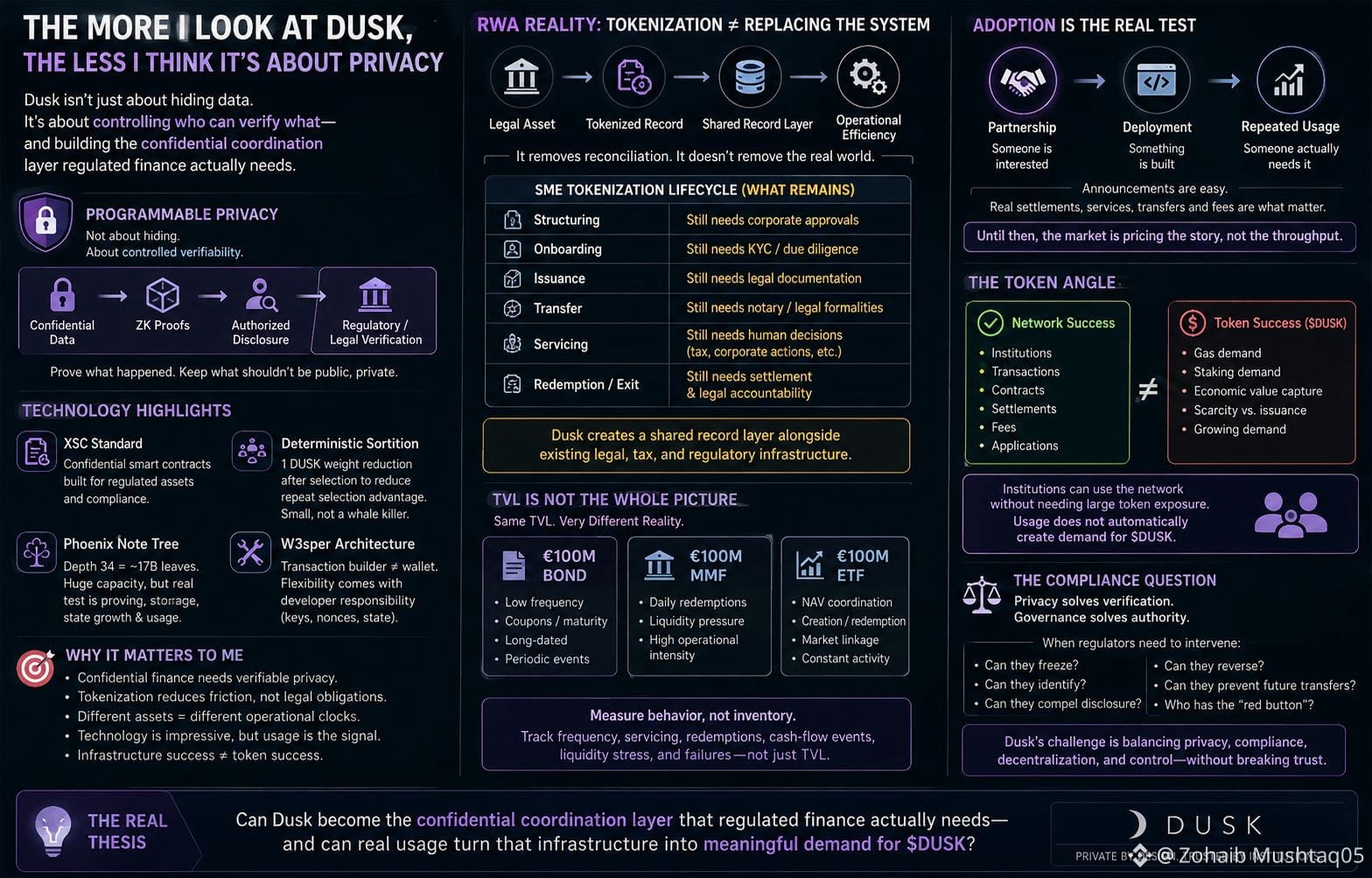
The more time I spend digging through @Dusk, the more my original view of the project has changed. I used to think financial blockchains became more trustworthy by making everything visible, but regulated finance clearly doesn’t work that way. A bank, fund or issuer needs to prove what happened without exposing every balance, counterparty or transaction to everyone. That’s where Dusk starts getting interesting to me. Its programmable privacy, ZK architecture, XSC approach and tools like W3sper seem less about simply hiding data and more about controlling who can verify what. But the RWA side made the picture even more interesting. Going through the SME tokenization lifecycle, I noticed how often the “what remains” column still includes corporate approvals, notaries, tax decisions and human accountability. That tells me tokenization isn’t replacing the legal system; it’s creating a shared record layer alongside it, potentially removing reconciliation and some operational friction while the real-world rules stay intact. Even the technical details gave me the same feeling. Deterministic Sortition’s 1 DUSK weight reduction after selection is a small balancing mechanism, not some magic solution to whale concentration. Phoenix’s huge note-tree capacity sounds impressive, but actual usage will test proving, storage and state growth far more than theoretical capacity. And W3sper’s separation between transaction construction and wallet state reminds me that flexibility also means developers inherit responsibilities. So I’m increasingly less interested in whether Dusk has good technology on paper. The real question for me is whether institutions actually use this infrastructure repeatedly, with real settlements, servicing, transfers and compliance workflows. A €100M bond, ETF and money-market fund may all look identical in TVL, but operationally they are completely different workloads. And even if Dusk succeeds as infrastructure, that doesn’t automatically mean $DUSK captures all that value.#dusk $DUSK @Dusk
$METAB
$METAB
Xem bản dịch
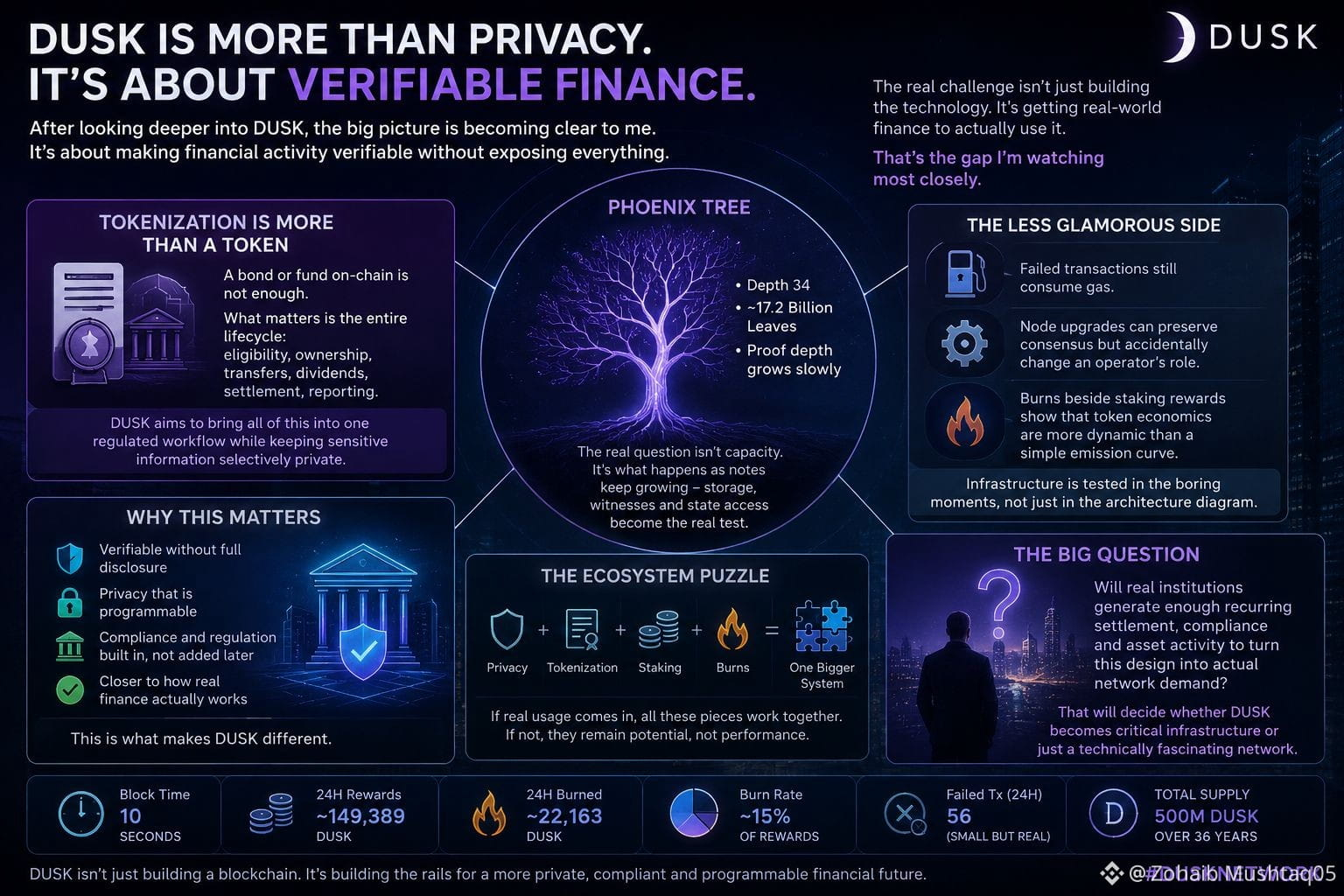
I’ve been looking deeper into @Dusk lately, and honestly, my view has changed quite a bit. At first, I saw DUSK mainly as a privacy-focused L1, but the more I connect the pieces, the more I think the bigger idea is about making financial activity verifiable without forcing everyone to expose everything. Phoenix is a good example. A depth of 34 gives the tree an enormous theoretical capacity, while proof depth only grows gradually, but the real question isn’t whether the tree can hold billions of notes. It’s what happens when those notes keep accumulating and proving, storage, witnesses and state access become part of everyday network activity. The same thinking applies to tokenization. Putting a bond, fund or security on-chain sounds impressive, but a token alone doesn’t fix ownership records, eligibility, transfers, dividends, settlement or reporting. What interests me about Dusk is the attempt to bring those pieces into one regulated workflow while keeping sensitive information selectively private. That feels much closer to how real finance actually works. I also noticed the less glamorous side: gas still gets consumed when transactions fail, node upgrades can preserve consensus while accidentally changing an operator’s role, and burns beside staking rewards show that token economics are more dynamic than a simple emission curve suggests. These details matter because infrastructure is tested in the boring moments, not just in the architecture diagram. For me, the biggest unanswered question is no longer whether Dusk has an interesting design. It clearly does. The question is whether real institutions will generate enough recurring settlement, compliance and asset activity to turn that design into actual network demand. If that happens, the privacy, tokenization, staking and burn mechanisms start looking like parts of the same bigger system. If it doesn’t, Dusk could remain a technically fascinating network whose real-world usage never catches up with the ambition.@Dusk #dusk $DUSK @Dusk
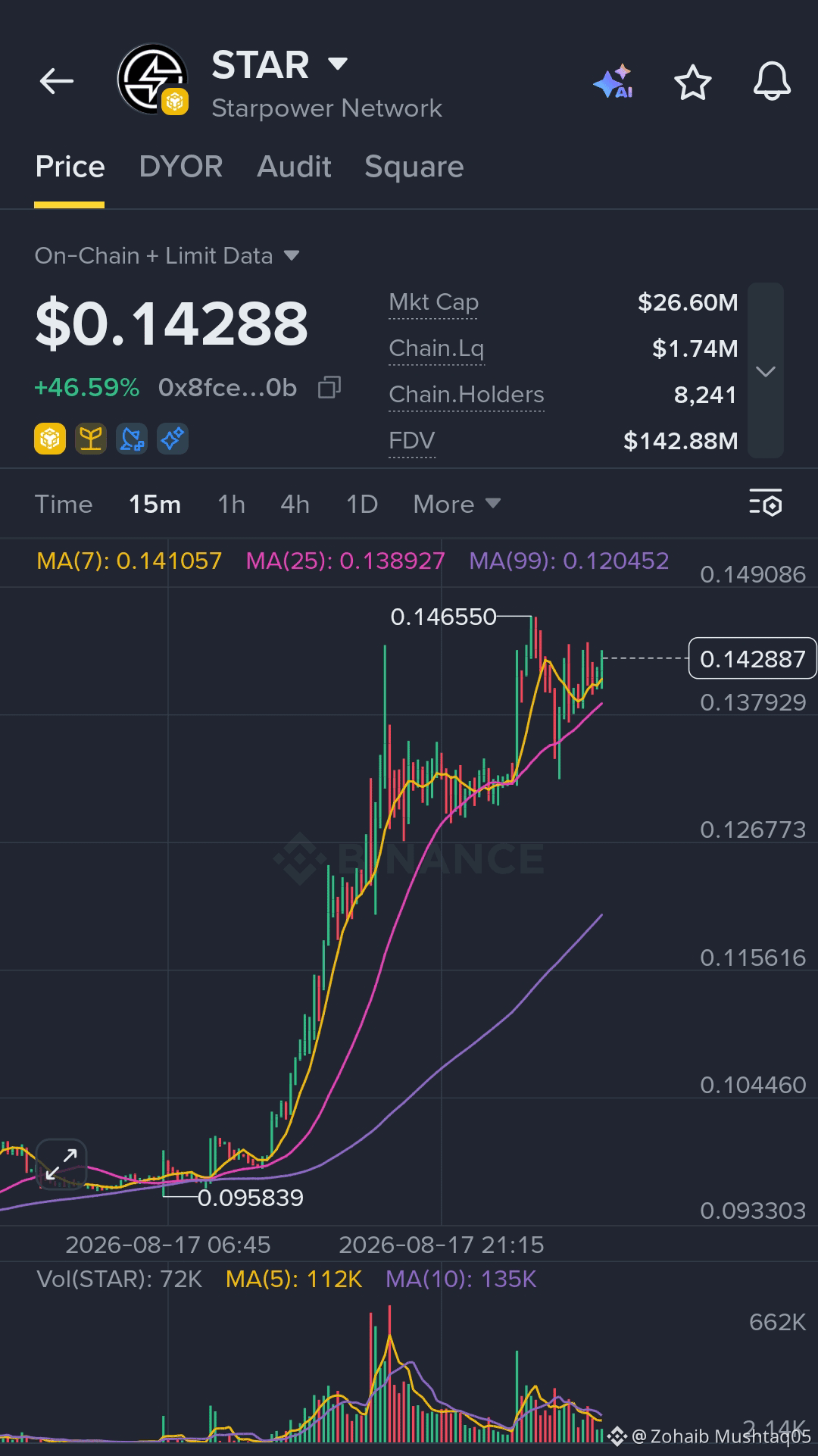
Định nghĩa Coin 🧠: $STAR
(Starpower Network) là một dự án DePIN kết nối các thiết bị năng lượng ngoài đời thực (như điện mặt trời/pin) vào các nhà máy điện ảo nhằm tối ưu việc sử dụng năng lượng ⚡.
Giá hiện tại 💰: $0.14288
Thay đổi 24h 📈: +46.59% 🔥
Vốn hóa thị trường 🏦: $26.60M
Khối lượng 🔄: 72K (STAR) (Khối lượng MA5: 112K)
Hỗ trợ & Kháng cự 🟢🔴:
Hỗ trợ 🟢: $0.1379 / $0.1267
Kháng cự 🔴: $0.1465 / $0.1490
Mục tiêu tiếp theo 🎯: $0.1500 - $0.1550 🚀
Xu hướng 🐂: Tích cực (giao dịch cao hơn 7, 25 và 99 MA)
Thiết lập giao dịch 📊:
Vào lệnh: $0.1380 - $0.1410 (khi điều chỉnh nhẹ)
Chốt lời 1 (TP1): $0.1465 🎯
Chốt lời 2 (TP2): $0.1550 🚀
Cắt lỗ (Stop-Loss): $0.1250 🛑
DYOR, đây không phải lời khuyên tài chính.
(Starpower Network) là một dự án DePIN kết nối các thiết bị năng lượng ngoài đời thực (như điện mặt trời/pin) vào các nhà máy điện ảo nhằm tối ưu việc sử dụng năng lượng ⚡.
Giá hiện tại 💰: $0.14288
Thay đổi 24h 📈: +46.59% 🔥
Vốn hóa thị trường 🏦: $26.60M
Khối lượng 🔄: 72K (STAR) (Khối lượng MA5: 112K)
Hỗ trợ & Kháng cự 🟢🔴:
Hỗ trợ 🟢: $0.1379 / $0.1267
Kháng cự 🔴: $0.1465 / $0.1490
Mục tiêu tiếp theo 🎯: $0.1500 - $0.1550 🚀
Xu hướng 🐂: Tích cực (giao dịch cao hơn 7, 25 và 99 MA)
Thiết lập giao dịch 📊:
Vào lệnh: $0.1380 - $0.1410 (khi điều chỉnh nhẹ)
Chốt lời 1 (TP1): $0.1465 🎯
Chốt lời 2 (TP2): $0.1550 🚀
Cắt lỗ (Stop-Loss): $0.1250 🛑
DYOR, đây không phải lời khuyên tài chính.
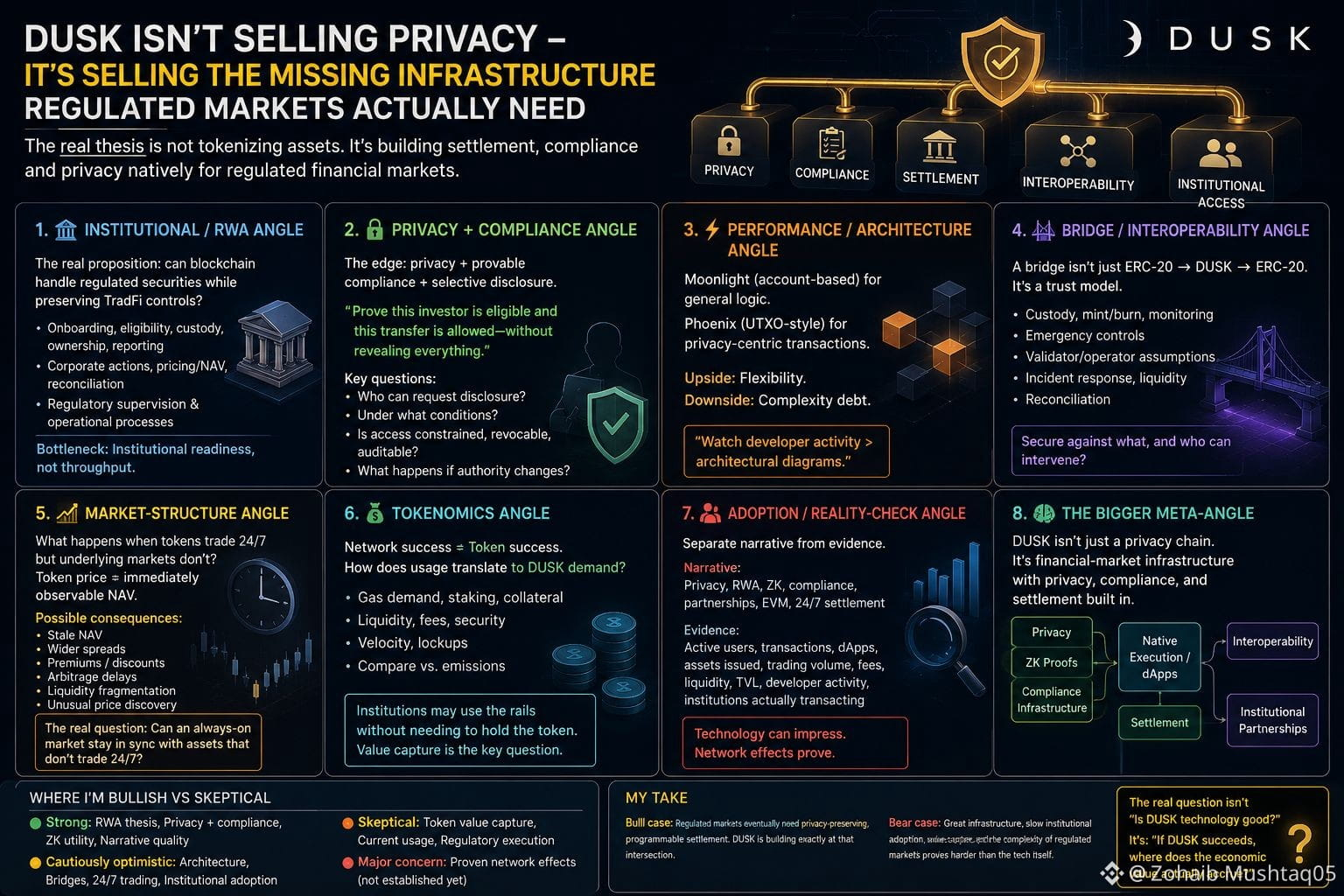
Càng đào sâu vào DUSK, tôi càng không xem nó chỉ là "một chuỗi quyền riêng tư khác"; tôi bắt đầu nhìn thấy đây là một nỗ lực xây dựng lớp hạ tầng mà các thị trường tài chính được quản lý đã thiếu — thanh toán, tuân thủ và quyền riêng tư được tích hợp sẵn ngay từ đầu, thay vì bị gắn thêm như các dịch vụ tách rời. Góc nhìn RWA là luận điểm cốt lõi ở đây, nhưng việc token hóa một tài sản không đồng nghĩa với việc di chuyển một thị trường: việc onboarding, lưu ký, báo cáo NAV, các hoạt động doanh nghiệp và sự giám sát theo quy định không biến mất chỉ vì thứ đó tồn tại trên on-chain. Vì vậy, khả năng sẵn sàng của tổ chức mới là nút thắt thực sự, chứ không phải thông lượng. Điều làm lớp quyền riêng tư trở nên thú vị không chỉ là quyền riêng tư — mà là khả năng chứng minh việc tuân thủ thông qua khai báo chọn lọc: chứng minh một nhà đầu tư đủ điều kiện mà không phơi bày mọi giao dịch lên mạng. Nhưng điều đó chỉ hoạt động nếu cơ chế quản trị xung quanh việc ai có quyền yêu cầu công bố, trong những điều kiện nào và với dấu vết kiểm toán ra sao là hoàn toàn chặt chẽ. Việc tách giữa Moonlight và Phoenix cũng là một lựa chọn thiết kế có thật: tính linh hoạt chỉ đáng giá nếu các nhà phát triển thực sự xây dựng trên cả hai mô hình, thay vì mặc định chỉ chọn một. Các cầu nối lại tạo thêm một lớp giả định về mức độ tin cậy đối với việc lưu ký và quyền kiểm soát mint/burn — thứ mà "secure" không diễn tả đầy đủ cho đến khi bạn tự hỏi: secure chống lại điều gì, chính xác là chống lại cái gì. Và rồi còn có câu hỏi mà chẳng ai nói đến đủ nhiều — điều gì xảy ra khi một token giao dịch 24/7 nhưng thị trường của tài sản cơ sở thì không? Khoảng trống đó một mình đã có thể tạo ra NAV bị lỗi thời, chênh lệch giá ảo (phantom premiums) và sự phân mảnh thanh khoản. Dù tất cả vận hành tốt về mặt kỹ thuật, câu hỏi sâu hơn là liệu việc sử dụng mạng có bao giờ chuyển hóa thành nhu cầu DUSK thật sự, hay các tổ chức dùng các đường ray mà không hề cần nắm giữ token. Narrative mạnh, kinh tế học còn bỏ ngỏ — đó chính là chỗ tôi sẽ tập trung thẩm định kỹ lưỡng trước khi hình thành một niềm tin vững chắc.#dusk $DUSK @Dusk
Xem bản dịch
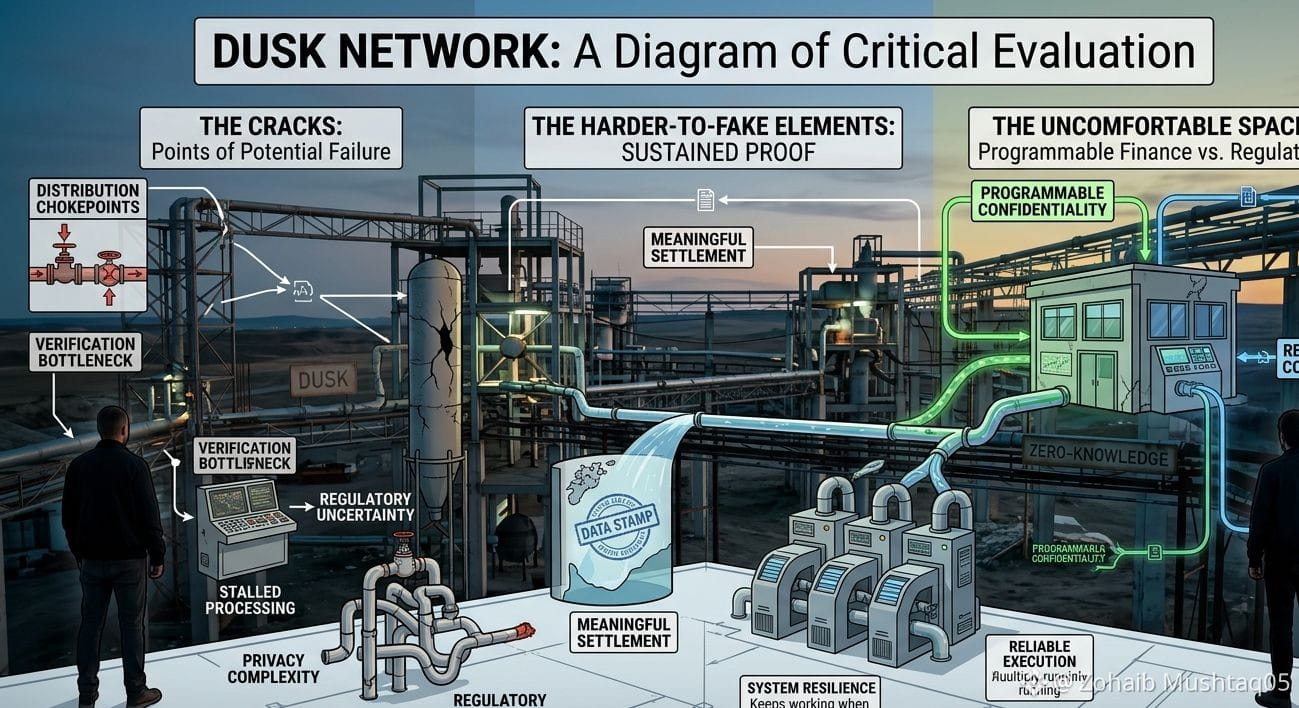
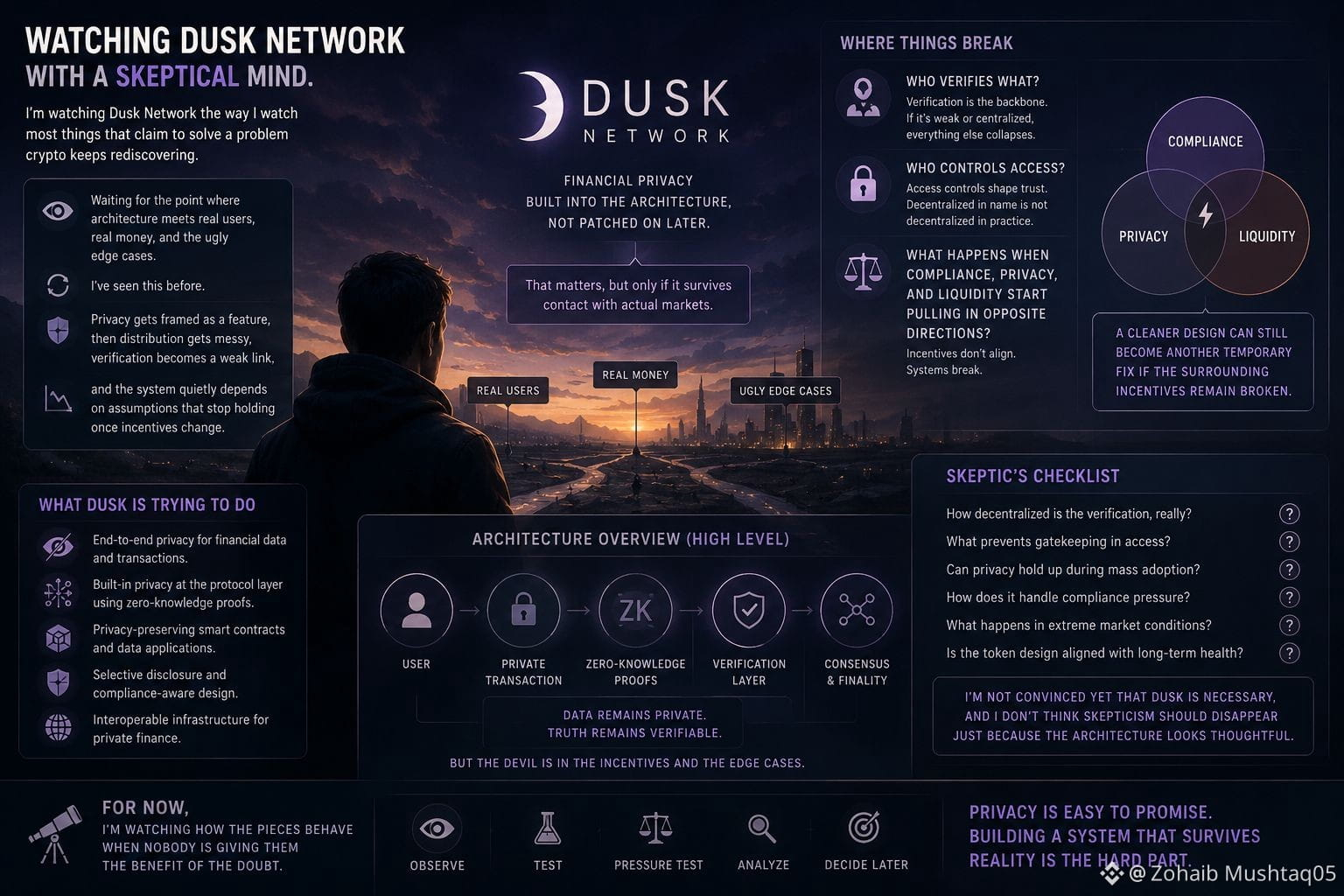
I’m watching Dusk Network from the angle that matters after the noise fades. I’ve seen this before: private finance sounds convincing until the system meets real users, real compliance, real liquidity, and the ugly edge cases nobody mentions. I focus on where things break. Distribution can fail. Verification can become a bottleneck. Privacy can turn into another layer of complexity instead of an advantage. Dusk is interesting because it seems aimed at that uncomfortable space between programmable finance and regulated environments, where confidentiality actually matters but rules cannot simply disappear. Still, that doesn’t make the network necessary by default. Crypto has produced plenty of infrastructure that solved a problem nobody was willing to pay to solve. The harder question is whether Dusk can survive beyond the narrative and prove that private, programmable transactions create enough practical value to justify another network. I’m waiting for the parts that are harder to fake: sustained usage, reliable execution, meaningful settlement, and systems that keep working when incentives weaken. There may be something here, but I’m not calling it yet. At this stage, I’m still watching where the cracks appear.
#dusk $DUSK @Dusk
#dusk $DUSK @Dusk
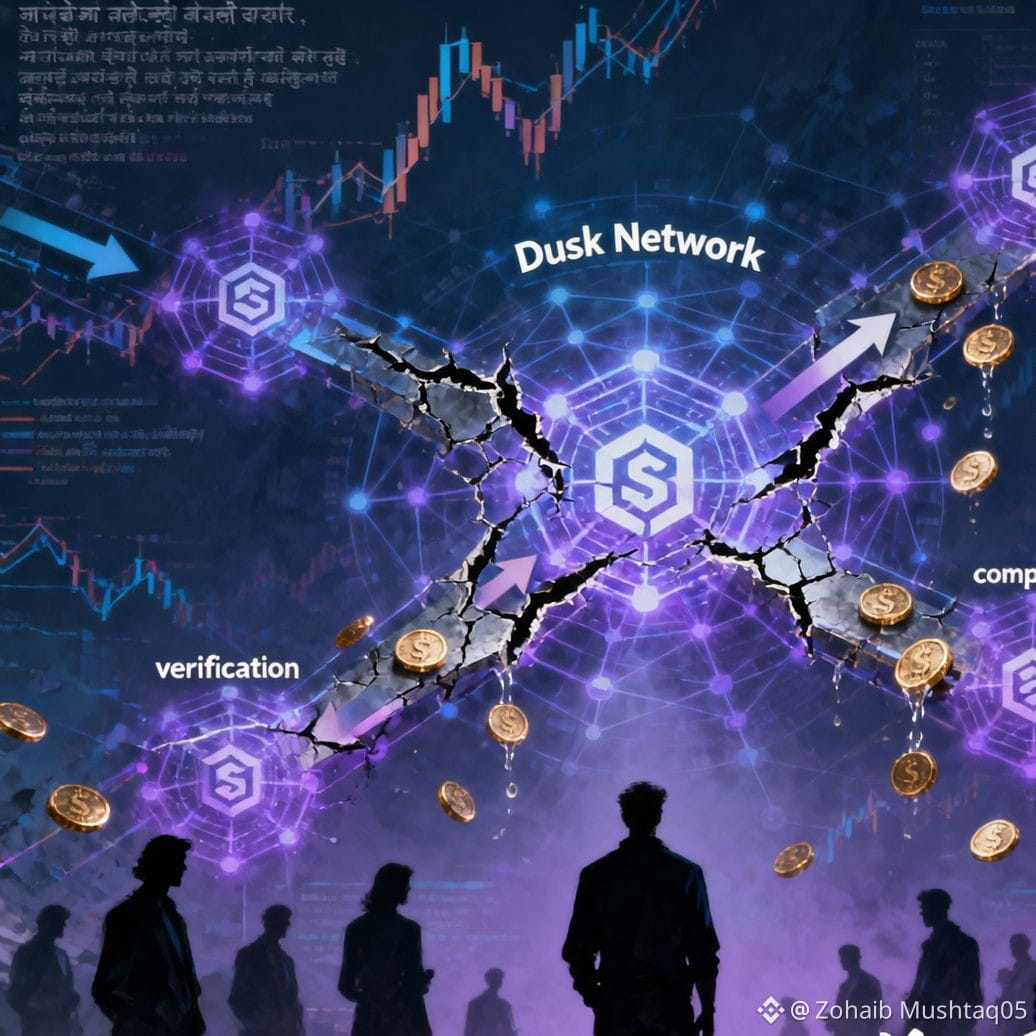
Tôi đang theo dõi Dusk Network theo cách tôi theo dõi hầu hết những thứ tự nhận là sẽ giải quyết một vấn đề mà crypto liên tục “tái phát hiện”. Tôi đang chờ khoảnh khắc mà kiến trúc chạm được tới người dùng thật, tiền thật và những tình huống biên xấu xí mà không ai đưa vào phần công bố. Tôi đã từng thấy điều này. Quyền riêng tư được đóng khung như một tính năng, rồi việc phân phối trở nên rối rắm, việc xác minh trở thành một mắt xích yếu, và hệ thống âm thầm dựa trên những giả định mà chỉ cần đến khi các động lực thay đổi là chúng không còn đúng nữa. Điều khiến tôi quan tâm ở Dusk là nỗ lực đưa quyền riêng tư tài chính vào ngay phần kiến trúc nền tảng, thay vì xem nó như một lớp được vá thêm sau đó. Điều đó quan trọng, nhưng chỉ khi nó sống sót khi đối diện với các thị trường thực tế. Tôi tập trung vào những chỗ mọi thứ bị gãy. Ai xác minh cái gì? Ai kiểm soát quyền truy cập? Điều gì xảy ra khi tuân thủ, quyền riêng tư và tính thanh khoản bắt đầu kéo theo những hướng ngược nhau? Một thiết kế gọn gàng vẫn có thể trở thành một giải pháp tạm thời khác nếu các động lực xung quanh vẫn bị hỏng. Hiện tại tôi chưa thật sự tin rằng Dusk là cần thiết, và tôi cũng không nghĩ sự hoài nghi nên biến mất chỉ vì kiến trúc trông có vẻ chu đáo. Trước mắt, tôi đang quan sát cách các mảnh ghép hoạt động khi không ai trao cho chúng đặc quyền được nghi ngờ theo hướng có lợi.
@Dusk #dusk $DUSK @Dusk
@Dusk #dusk $DUSK @Dusk
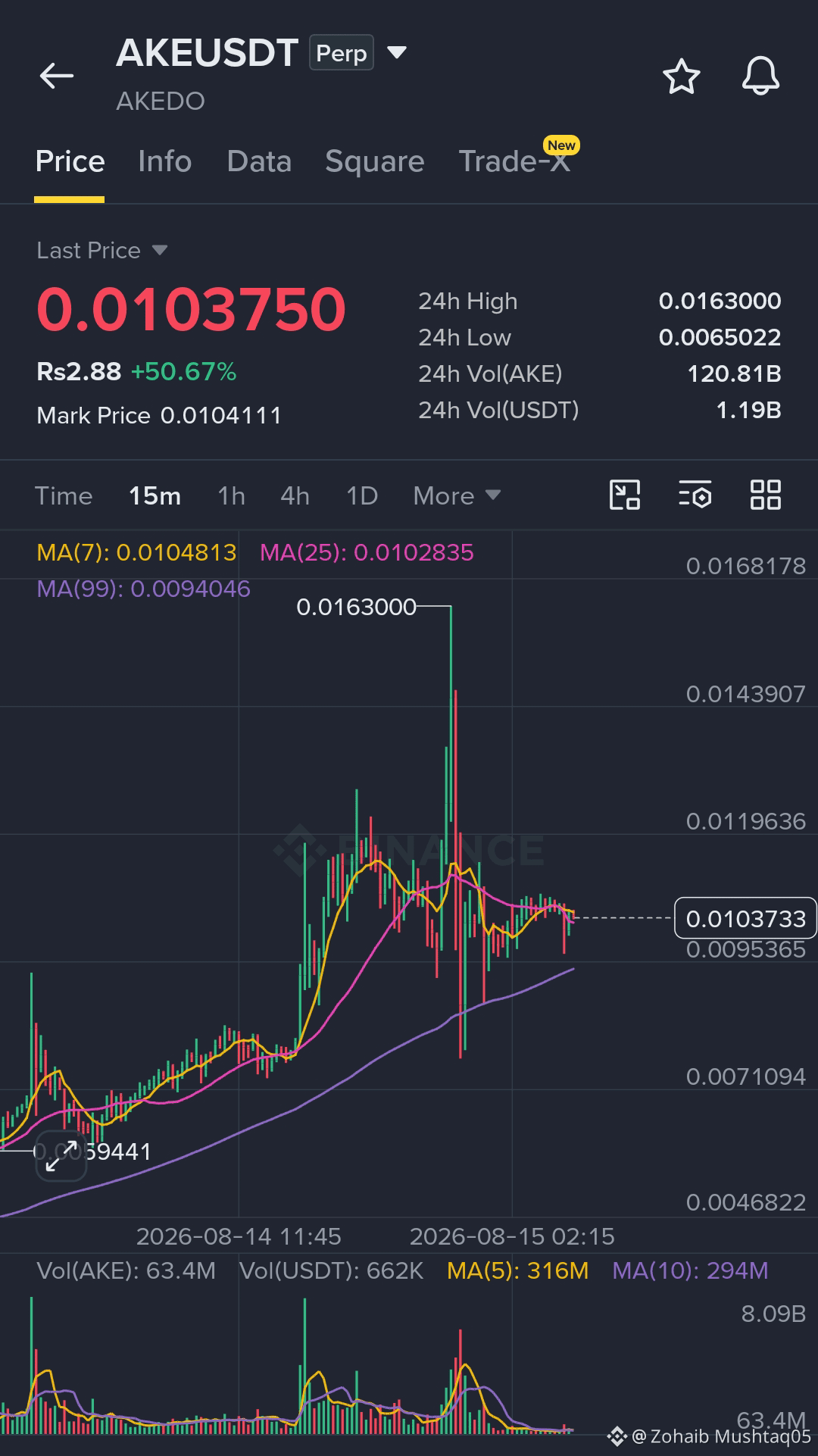
📊 $AKE USDT (Akedo) Phân tích kỹ thuật
Coin & Tiện ích 🧠: Akedo (AKE) — Một nền tảng động cơ gaming và launchpad được hỗ trợ bởi AI, cho phép người dùng xây dựng/ra mắt game thông qua ngôn ngữ tự nhiên.
Giá hiện tại 💰: $0.0103750 USDT (Rs 2.88)
Thay đổi 24h 📈: +50.67%
Vốn hóa thị trường 🏦: ~$236.5M (dựa trên ~22.8B cung lưu hành)
Khối lượng 24h 🔄: $1.19B USDT (120.81B AKE)
Hỗ trợ 🟢 & Kháng cự 🔴:
Hỗ trợ: $0.009400 (MA 99) / $0.006500 (Thấp 24h)
Kháng cự: $0.011960 / $0.016300 (Cao 24h)
Mục tiêu tiếp theo 🎯: $0.012500 → $0.016300
Xu hướng 🐂🐻: Trung lập / Điều chỉnh sau cú bứt phá tăng mạnh 🐂 (Giá giữ trên MA 25/99 sau một đợt pump cực lớn).
🔥 Ý tưởng giao dịch:
Entry: $0.009800 – $0.010200 (Gần MA 25 / MA 99 điều chỉnh)
TP1: $0.012000 🚀
TP2: $0.015500 💰
Cắt lỗ: $0.009100 🛑
DYOR. Không phải lời khuyên tài chính.
#EthereumFoundationDropsPoseidonForL1 #RedditToJoinSP500 #OilEdgesHigher #TapestryFallsNearly15%OnEarnings #AnthropicIPOMeetingsSkipFinancialsValuation
Coin & Tiện ích 🧠: Akedo (AKE) — Một nền tảng động cơ gaming và launchpad được hỗ trợ bởi AI, cho phép người dùng xây dựng/ra mắt game thông qua ngôn ngữ tự nhiên.
Giá hiện tại 💰: $0.0103750 USDT (Rs 2.88)
Thay đổi 24h 📈: +50.67%
Vốn hóa thị trường 🏦: ~$236.5M (dựa trên ~22.8B cung lưu hành)
Khối lượng 24h 🔄: $1.19B USDT (120.81B AKE)
Hỗ trợ 🟢 & Kháng cự 🔴:
Hỗ trợ: $0.009400 (MA 99) / $0.006500 (Thấp 24h)
Kháng cự: $0.011960 / $0.016300 (Cao 24h)
Mục tiêu tiếp theo 🎯: $0.012500 → $0.016300
Xu hướng 🐂🐻: Trung lập / Điều chỉnh sau cú bứt phá tăng mạnh 🐂 (Giá giữ trên MA 25/99 sau một đợt pump cực lớn).
🔥 Ý tưởng giao dịch:
Entry: $0.009800 – $0.010200 (Gần MA 25 / MA 99 điều chỉnh)
TP1: $0.012000 🚀
TP2: $0.015500 💰
Cắt lỗ: $0.009100 🛑
DYOR. Không phải lời khuyên tài chính.
#EthereumFoundationDropsPoseidonForL1 #RedditToJoinSP500 #OilEdgesHigher #TapestryFallsNearly15%OnEarnings #AnthropicIPOMeetingsSkipFinancialsValuation
Đăng nhập để khám phá thêm nội dung