#bitcoin #CrushBitcoin #NewsAboutCrypto #USACryptoTrends $BTC Biểu đồ đang cho thấy điều gì
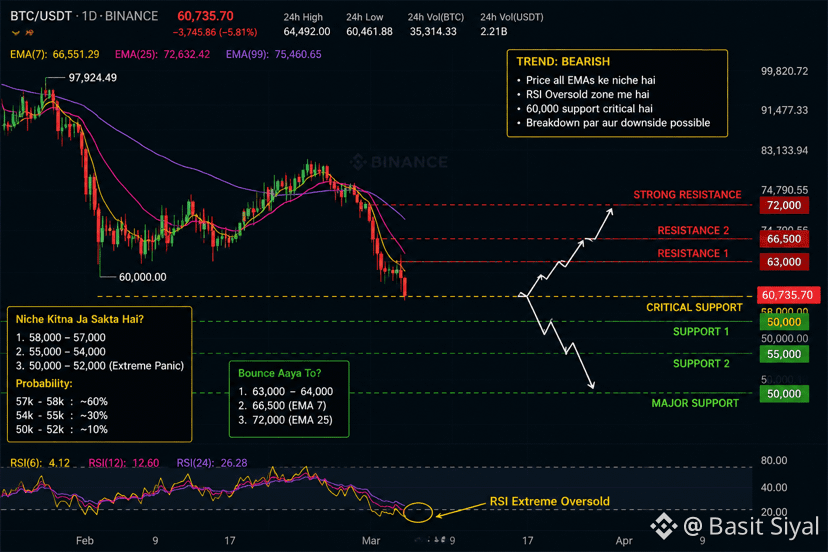
* Giá: 60,735
* Hỗ trợ gần đây: 60,000 (được đánh dấu trên biểu đồ)
* EMA(7): 66,551
* EMA(25): 72,632
* EMA(99): 75,460
* RSI(6): 4.12 → cực kỳ bán quá
* RSI(12): 12.60 → bán quá
* RSI(24): 26.28 → gần vùng bán quá
Phân tích Kỹ thuật
* Giá đang giao dịch dưới tất cả các EMA chính, cho thấy một xu hướng giảm mạnh.
* RSI đang ở mức cực kỳ bán quá, vì vậy có khả năng xảy ra một đợt hồi phục ngắn hạn.
* Tuy nhiên, xu hướng tổng thể vẫn giữ đà giảm trừ khi Bitcoin đóng cửa chắc chắn trên khu vực 66k–67k.
Nó có thể giảm sâu đến đâu?
Nếu mức hỗ trợ 60,000 bị phá vỡ, các mục tiêu giảm tiềm năng tiếp theo là:
1. 58,000–57,000
2. 55,000–54,000
3. 50,000–52,000 trong kịch bản bán tháo mạnh
Ước lượng xác suất (chỉ phân tích kỹ thuật)
* ~60% khả năng: Kiểm tra 57k–58k
* ~30% khả năng: Di chuyển về phía 54k–55k
* ~10% khả năng: Bán tháo cực đoan về 50k–52k
Nó có thể hồi phục cao đến đâu?
Nếu xảy ra đợt hồi phục bán quá:
* Kháng cự đầu tiên: 63k–64k
* Kháng cự tiếp theo: 66.5k (EMA 7)
* Mục tiêu phục hồi mạnh: 72k (EMA 25)
Diễn giải Biểu đồ Tổng thể
Dựa trên cấu trúc biểu đồ hiện tại, 60k là một mức hỗ trợ quan trọng. Nếu một nến hàng ngày đóng cửa thuyết phục dưới 60k, việc di chuyển về phía 57k–58k sẽ trở nên có khả năng cao hơn đáng kể.