
#plasma
plasma
24.9M lượt xem
332,953 đang thảo luận
Phổ biến
Mới nhất

{spot}(XPLUSDT)
@Plasma plasma đang xây dựng một tiêu chuẩn mới cho hạ tầng blockchain tập trung vào stablecoin, với tốc độ nhanh, hiệu quả cao và hoạt động ổn định. Tôi rất háo hức theo dõi sự phát triển của @Plasma và xem $XPL sẽ tiến triển như thế nào khi hệ sinh thái mở rộng. Tầm nhìn về các khoản thanh toán có khả năng mở rộng và stablecoin khiến Plasma trở thành một dự án đáng theo dõi.
#Plasma @Plasma $XPL #Plasma
@Plasma plasma đang xây dựng một tiêu chuẩn mới cho hạ tầng blockchain tập trung vào stablecoin, với tốc độ nhanh, hiệu quả cao và hoạt động ổn định. Tôi rất háo hức theo dõi sự phát triển của @Plasma và xem $XPL sẽ tiến triển như thế nào khi hệ sinh thái mở rộng. Tầm nhìn về các khoản thanh toán có khả năng mở rộng và stablecoin khiến Plasma trở thành một dự án đáng theo dõi.
#Plasma @Plasma $XPL #Plasma
#Plasma @Plasma $XPL #Plasma
1
144

·
--
Tăng giá
Plasma củng cố thẻ Platinum bằng cách bổ sung tính năng truy cập phòng chờ Priority Pass giữa những tin tức về các quan hệ đối tác mới. Mã XPL của công ty Plasma đã tăng giá sau khi thẻ Plasma One Platinum hiện đã bao gồm tính năng truy cập phòng chờ Priority Pass. Các quan hệ đối tác truyền thông chiến lược và khả năng tích hợp Sol Labs cũng đã góp phần vào đợt tăng giá gần đây này.
#Plasma #SolanaLabs
$XPL
{spot}(XPLUSDT)
Plasma củng cố thẻ Platinum bằng cách bổ sung tính năng truy cập phòng chờ Priority Pass giữa những tin tức về các quan hệ đối tác mới. Mã XPL của công ty Plasma đã tăng giá sau khi thẻ Plasma One Platinum hiện đã bao gồm tính năng truy cập phòng chờ Priority Pass. Các quan hệ đối tác truyền thông chiến lược và khả năng tích hợp Sol Labs cũng đã góp phần vào đợt tăng giá gần đây này.
#Plasma #SolanaLabs
$XPL
#Plasma #SolanaLabs
$XPL
1
47

·
--
Tăng giá
Thị trường lớn không mấy lực, nhưng nó lại đi trước: Plasma – chuỗi stablecoin ổn định này hôm nay tăng hơn 10%
Hôm nay thị trường chung khá lặng, BTC giảm nhẹ 0.91%, ETH cũng cơ bản đi ngang. Thế nhưng trong bảng tăng giá lại xuất hiện vài đồng không quá nhỏ mà cũng chẳng quá lớn, đi lên có vẻ tích cực hơn bất cứ ai. Nổi bật nhất là XPL, tức Plasma: trong 24 giờ tăng 10.06%, giá quay về vùng gần 0.10 USD, khối lượng giao dịch khoảng 16 triệu USD—đặt trong một bảng mà đa số đồng đang thu nhỏ thanh khoản, con số này khá đáng chú ý. #BTC
Plasma không phải một public chain thông thường. Mục tiêu của nó là lớp nền dành riêng cho stablecoin và thanh toán vi mô, phía sau gắn với Tether và Bitfinex. Khi vừa ra mắt vào năm 2025, nó cũng từng gây chú ý mạnh nhờ đợt airdrop. Còn lần kéo giá này cụ thể do ai đẩy, hiện tôi tạm thời chưa thấy tin tức mạch lạc nào; giống như sau khi thị trường lớn tạm ổn định, dòng tiền lại quay sang “nhặt” những chuỗi có câu chuyện thực tế. Tăng là tăng, nhưng có đáng để theo không thì điểm mấu chốt vẫn là xem nó có thể tạo ra được lượng sử dụng stablecoin thực sự hay không. #Plasma
Nhìn so sánh thì càng thú vị. Ở top bảng tăng, ATOM (Cosmos) tăng 8.55%, khối lượng giao dịch khoảng 4.4 triệu USD; PROM (Prometeus) tăng 6.41%, và khối lượng giao dịch lại đạt 15.6 triệu USD. Một bên tập trung vào tương tác liên chuỗi, một bên làm dịch vụ “ghép dữ liệu”—đều là những đường đua cũ nhưng mỗi dự án lại có cách nói riêng. Khi thị trường đi ngang, ngược lại chính các đồng vốn hoá vừa và nhỏ lại là nhóm “động đậy” trước; cấu trúc kiểu này trong vài chu kỳ gần đây thường là tín hiệu cho thấy dòng tiền âm thầm thăm dò ở vùng thấp.
Kéo giá thì có thể vẽ ra đường Kline đẹp, nhưng muốn viết được “câu chuyện thật” thì phải tập hợp được nhiều người. Thứ thật sự đáng để để ý không phải hôm nay tăng bao nhiêu, mà là liệu một nhóm người có thực sự đang nghiêm túc làm việc hay không—giống như đàn chó nhỏ đang quậy của anh Mã: ồn ào bên ngoài, nhưng đằng sau đó là không khí hứng khởi mà không giấu được.
🐶 Cùng xem đàn chó nhỏ của anh Mã ✨🚀
#马斯克爱小狗 #我爱小狗 #小狗狗
{web3_wallet_create}(10xcf91b70017eabde82c9671e30e5502d312ea6eb2)
Thị trường lớn không mấy lực, nhưng nó lại đi trước: Plasma – chuỗi stablecoin ổn định này hôm nay tăng hơn 10%
Hôm nay thị trường chung khá lặng, BTC giảm nhẹ 0.91%, ETH cũng cơ bản đi ngang. Thế nhưng trong bảng tăng giá lại xuất hiện vài đồng không quá nhỏ mà cũng chẳng quá lớn, đi lên có vẻ tích cực hơn bất cứ ai. Nổi bật nhất là XPL, tức Plasma: trong 24 giờ tăng 10.06%, giá quay về vùng gần 0.10 USD, khối lượng giao dịch khoảng 16 triệu USD—đặt trong một bảng mà đa số đồng đang thu nhỏ thanh khoản, con số này khá đáng chú ý. #BTC
Plasma không phải một public chain thông thường. Mục tiêu của nó là lớp nền dành riêng cho stablecoin và thanh toán vi mô, phía sau gắn với Tether và Bitfinex. Khi vừa ra mắt vào năm 2025, nó cũng từng gây chú ý mạnh nhờ đợt airdrop. Còn lần kéo giá này cụ thể do ai đẩy, hiện tôi tạm thời chưa thấy tin tức mạch lạc nào; giống như sau khi thị trường lớn tạm ổn định, dòng tiền lại quay sang “nhặt” những chuỗi có câu chuyện thực tế. Tăng là tăng, nhưng có đáng để theo không thì điểm mấu chốt vẫn là xem nó có thể tạo ra được lượng sử dụng stablecoin thực sự hay không. #Plasma
Nhìn so sánh thì càng thú vị. Ở top bảng tăng, ATOM (Cosmos) tăng 8.55%, khối lượng giao dịch khoảng 4.4 triệu USD; PROM (Prometeus) tăng 6.41%, và khối lượng giao dịch lại đạt 15.6 triệu USD. Một bên tập trung vào tương tác liên chuỗi, một bên làm dịch vụ “ghép dữ liệu”—đều là những đường đua cũ nhưng mỗi dự án lại có cách nói riêng. Khi thị trường đi ngang, ngược lại chính các đồng vốn hoá vừa và nhỏ lại là nhóm “động đậy” trước; cấu trúc kiểu này trong vài chu kỳ gần đây thường là tín hiệu cho thấy dòng tiền âm thầm thăm dò ở vùng thấp.
Kéo giá thì có thể vẽ ra đường Kline đẹp, nhưng muốn viết được “câu chuyện thật” thì phải tập hợp được nhiều người. Thứ thật sự đáng để để ý không phải hôm nay tăng bao nhiêu, mà là liệu một nhóm người có thực sự đang nghiêm túc làm việc hay không—giống như đàn chó nhỏ đang quậy của anh Mã: ồn ào bên ngoài, nhưng đằng sau đó là không khí hứng khởi mà không giấu được.
🐶 Cùng xem đàn chó nhỏ của anh Mã ✨🚀
#马斯克爱小狗 #我爱小狗 #小狗狗
Hôm nay thị trường chung khá lặng, BTC giảm nhẹ 0.91%, ETH cũng cơ bản đi ngang. Thế nhưng trong bảng tăng giá lại xuất hiện vài đồng không quá nhỏ mà cũng chẳng quá lớn, đi lên có vẻ tích cực hơn bất cứ ai. Nổi bật nhất là XPL, tức Plasma: trong 24 giờ tăng 10.06%, giá quay về vùng gần 0.10 USD, khối lượng giao dịch khoảng 16 triệu USD—đặt trong một bảng mà đa số đồng đang thu nhỏ thanh khoản, con số này khá đáng chú ý. #BTC
Plasma không phải một public chain thông thường. Mục tiêu của nó là lớp nền dành riêng cho stablecoin và thanh toán vi mô, phía sau gắn với Tether và Bitfinex. Khi vừa ra mắt vào năm 2025, nó cũng từng gây chú ý mạnh nhờ đợt airdrop. Còn lần kéo giá này cụ thể do ai đẩy, hiện tôi tạm thời chưa thấy tin tức mạch lạc nào; giống như sau khi thị trường lớn tạm ổn định, dòng tiền lại quay sang “nhặt” những chuỗi có câu chuyện thực tế. Tăng là tăng, nhưng có đáng để theo không thì điểm mấu chốt vẫn là xem nó có thể tạo ra được lượng sử dụng stablecoin thực sự hay không. #Plasma
Nhìn so sánh thì càng thú vị. Ở top bảng tăng, ATOM (Cosmos) tăng 8.55%, khối lượng giao dịch khoảng 4.4 triệu USD; PROM (Prometeus) tăng 6.41%, và khối lượng giao dịch lại đạt 15.6 triệu USD. Một bên tập trung vào tương tác liên chuỗi, một bên làm dịch vụ “ghép dữ liệu”—đều là những đường đua cũ nhưng mỗi dự án lại có cách nói riêng. Khi thị trường đi ngang, ngược lại chính các đồng vốn hoá vừa và nhỏ lại là nhóm “động đậy” trước; cấu trúc kiểu này trong vài chu kỳ gần đây thường là tín hiệu cho thấy dòng tiền âm thầm thăm dò ở vùng thấp.
Kéo giá thì có thể vẽ ra đường Kline đẹp, nhưng muốn viết được “câu chuyện thật” thì phải tập hợp được nhiều người. Thứ thật sự đáng để để ý không phải hôm nay tăng bao nhiêu, mà là liệu một nhóm người có thực sự đang nghiêm túc làm việc hay không—giống như đàn chó nhỏ đang quậy của anh Mã: ồn ào bên ngoài, nhưng đằng sau đó là không khí hứng khởi mà không giấu được.
🐶 Cùng xem đàn chó nhỏ của anh Mã ✨🚀
#马斯克爱小狗 #我爱小狗 #小狗狗
2
526

·
--
Thanh toán đang bùng nổ, tháng này $XPL không phải là không làm gìNói trước kết luận: đường đua thanh toán năm nay không phải chỉ hô khẩu hiệu, mà là sản phẩm đang được triển khai thực sự. Giá trị vốn hóa stablecoin liên tục được chất lên, nhưng thứ thiếu là một lớp “bật được - dùng được” và phí giao dịch không bị ăn mất lớp quỹ đạo đó. Plasma chính là nhằm vào mảng này.💸
Những việc đáng chú ý hơn trong tháng này. Circle đưa USDC và EURC bản gốc lên chuỗi, tiền USD và EUR tuân thủ không cần phải vòng qua wrapped nữa. Plasma One tấm Visa kia vẫn đang được kéo dài—quẹt thẻ toàn cầu, lợi suất và ưu đãi được gắn liền với nhau. Muốn lấy mức “đẹp” hơn thì phải khóa $XPL vào, tức là thật sự có người khóa tiền từ sàn đi. Chi tiêu du lịch cao nhất còn được hoàn lại 20%, ít nhất không phải chỉ biết phát thông báo.✈️
Thanh toán đang bùng nổ, tháng này $XPL không phải là không làm gì
Nói trước kết luận: đường đua thanh toán năm nay không phải chỉ hô khẩu hiệu, mà là sản phẩm đang được triển khai thực sự. Giá trị vốn hóa stablecoin liên tục được chất lên, nhưng thứ thiếu là một lớp “bật được - dùng được” và phí giao dịch không bị ăn mất lớp quỹ đạo đó. Plasma chính là nhằm vào mảng này.💸
Những việc đáng chú ý hơn trong tháng này. Circle đưa USDC và EURC bản gốc lên chuỗi, tiền USD và EUR tuân thủ không cần phải vòng qua wrapped nữa. Plasma One tấm Visa kia vẫn đang được kéo dài—quẹt thẻ toàn cầu, lợi suất và ưu đãi được gắn liền với nhau. Muốn lấy mức “đẹp” hơn thì phải khóa $XPL vào, tức là thật sự có người khóa tiền từ sàn đi. Chi tiêu du lịch cao nhất còn được hoàn lại 20%, ít nhất không phải chỉ biết phát thông báo.✈️
Những việc đáng chú ý hơn trong tháng này. Circle đưa USDC và EURC bản gốc lên chuỗi, tiền USD và EUR tuân thủ không cần phải vòng qua wrapped nữa. Plasma One tấm Visa kia vẫn đang được kéo dài—quẹt thẻ toàn cầu, lợi suất và ưu đãi được gắn liền với nhau. Muốn lấy mức “đẹp” hơn thì phải khóa $XPL vào, tức là thật sự có người khóa tiền từ sàn đi. Chi tiêu du lịch cao nhất còn được hoàn lại 20%, ít nhất không phải chỉ biết phát thông báo.✈️
269

·
--
Đã xác minh
🔶 $XPL (Plasma) — Trạng thái hiện tại
Plasma định vị mình là một blockchain L1 được xây dựng cho stablecoin (chuyển USDT không phí), nhưng năm vừa qua đầy biến động:
📉 Giá: sau màn ra mắt được thổi phồng vào tháng 9 năm 2025 (đỉnh $1.67), token đã giảm hơn 80%, hiện đang giao dịch quanh vùng $0.09–0.31 tùy theo thời điểm.
⚠️ Rủi ro chính — ngày 25 tháng 9 năm 2026: khoảng 1.81B XPL do đội ngũ và nhà đầu tư nắm giữ sẽ được mở khóa (xấp xỉ 65% nguồn cung lưu hành hiện tại), cộng thêm một phần phân bổ hệ sinh thái vào cùng ngày. Gộp lại, gần 19% tổng cung tối đa sẽ được giải phóng trong một ngày — một rủi ro áp lực nguồn cung kinh điển mà thị trường sẽ phải hấp thụ.
🏦 Các yếu tố tích cực:
Ra mắt Plasma One neobank (thẻ Visa, hoàn tiền) đã thúc đẩy đợt tăng +27% vào tháng 6 Circle triển khai USDC/EURC gốc trên mạng lưới Staking validator (bắt đầu với lạm phát hằng năm khoảng 5%) và cầu nối pBTC dự kiến sẽ đi vào hoạt động trong năm 2026
🔴 Các yếu tố tiêu cực:
Một vụ hack thẻ Plasma One (khoảng $1.1M) đã khiến token sụt khoảng 49% vào tháng 8 Thông lượng mạng thực tế thấp hơn nhiều so với mục tiêu 1,000 TPS được công bố Cạnh tranh gay gắt với Tron trong phân khúc thanh toán bằng stablecoin
Kết luận: XPL là một khoản cược vào việc liệu mức độ chấp nhận thanh toán stablecoin thực tế có thể tăng nhanh hơn làn sóng hưng phấn đầu cơ trước khi các đợt mở khóa sắp tới làm pha loãng giá hay không. Đợt mở khóa vào tháng 9 sẽ là một phép thử quan trọng.
#Plasma #stablecoin #Binance
🔶 $XPL (Plasma) — Trạng thái hiện tại
Plasma định vị mình là một blockchain L1 được xây dựng cho stablecoin (chuyển USDT không phí), nhưng năm vừa qua đầy biến động:
📉 Giá: sau màn ra mắt được thổi phồng vào tháng 9 năm 2025 (đỉnh $1.67), token đã giảm hơn 80%, hiện đang giao dịch quanh vùng $0.09–0.31 tùy theo thời điểm.
⚠️ Rủi ro chính — ngày 25 tháng 9 năm 2026: khoảng 1.81B XPL do đội ngũ và nhà đầu tư nắm giữ sẽ được mở khóa (xấp xỉ 65% nguồn cung lưu hành hiện tại), cộng thêm một phần phân bổ hệ sinh thái vào cùng ngày. Gộp lại, gần 19% tổng cung tối đa sẽ được giải phóng trong một ngày — một rủi ro áp lực nguồn cung kinh điển mà thị trường sẽ phải hấp thụ.
🏦 Các yếu tố tích cực:
Ra mắt Plasma One neobank (thẻ Visa, hoàn tiền) đã thúc đẩy đợt tăng +27% vào tháng 6 Circle triển khai USDC/EURC gốc trên mạng lưới Staking validator (bắt đầu với lạm phát hằng năm khoảng 5%) và cầu nối pBTC dự kiến sẽ đi vào hoạt động trong năm 2026
🔴 Các yếu tố tiêu cực:
Một vụ hack thẻ Plasma One (khoảng $1.1M) đã khiến token sụt khoảng 49% vào tháng 8 Thông lượng mạng thực tế thấp hơn nhiều so với mục tiêu 1,000 TPS được công bố Cạnh tranh gay gắt với Tron trong phân khúc thanh toán bằng stablecoin
Kết luận: XPL là một khoản cược vào việc liệu mức độ chấp nhận thanh toán stablecoin thực tế có thể tăng nhanh hơn làn sóng hưng phấn đầu cơ trước khi các đợt mở khóa sắp tới làm pha loãng giá hay không. Đợt mở khóa vào tháng 9 sẽ là một phép thử quan trọng.
#Plasma #stablecoin #Binance
Plasma định vị mình là một blockchain L1 được xây dựng cho stablecoin (chuyển USDT không phí), nhưng năm vừa qua đầy biến động:
📉 Giá: sau màn ra mắt được thổi phồng vào tháng 9 năm 2025 (đỉnh $1.67), token đã giảm hơn 80%, hiện đang giao dịch quanh vùng $0.09–0.31 tùy theo thời điểm.
⚠️ Rủi ro chính — ngày 25 tháng 9 năm 2026: khoảng 1.81B XPL do đội ngũ và nhà đầu tư nắm giữ sẽ được mở khóa (xấp xỉ 65% nguồn cung lưu hành hiện tại), cộng thêm một phần phân bổ hệ sinh thái vào cùng ngày. Gộp lại, gần 19% tổng cung tối đa sẽ được giải phóng trong một ngày — một rủi ro áp lực nguồn cung kinh điển mà thị trường sẽ phải hấp thụ.
🏦 Các yếu tố tích cực:
Ra mắt Plasma One neobank (thẻ Visa, hoàn tiền) đã thúc đẩy đợt tăng +27% vào tháng 6 Circle triển khai USDC/EURC gốc trên mạng lưới Staking validator (bắt đầu với lạm phát hằng năm khoảng 5%) và cầu nối pBTC dự kiến sẽ đi vào hoạt động trong năm 2026
🔴 Các yếu tố tiêu cực:
Một vụ hack thẻ Plasma One (khoảng $1.1M) đã khiến token sụt khoảng 49% vào tháng 8 Thông lượng mạng thực tế thấp hơn nhiều so với mục tiêu 1,000 TPS được công bố Cạnh tranh gay gắt với Tron trong phân khúc thanh toán bằng stablecoin
Kết luận: XPL là một khoản cược vào việc liệu mức độ chấp nhận thanh toán stablecoin thực tế có thể tăng nhanh hơn làn sóng hưng phấn đầu cơ trước khi các đợt mở khóa sắp tới làm pha loãng giá hay không. Đợt mở khóa vào tháng 9 sẽ là một phép thử quan trọng.
#Plasma #stablecoin #Binance
1
187

·
--
Chỉ còn 22 ngày nữa là đến ngày XPL mở khóa vào 26 tháng 9, hiện giá 0,18 USD.
Sự kiện mở khóa này sắp trở thành tâm điểm của thị trường — một lượng lớn token sắp được đưa vào lưu thông, rủi ro tạo áp lực lên giá là điều không thể xem nhẹ. Là token cốt lõi của hệ sinh thái Plasma, nhịp độ mở khóa của XPL, sự phân bổ của các nhà đầu tư sớm và mức độ tập trung nắm giữ hiện tại trong cộng đồng đều là những tín hiệu quan trọng đáng theo dõi sâu.
Vấn đề then chốt là: quy mô áp lực bán sau khi mở khóa lớn đến đâu? Thanh khoản thị trường liệu có đủ để hấp thụ? Khuyến nghị theo dõi dữ liệu on-chain và biến động khối lượng giao dịch, đồng thời chuẩn bị sớm cho việc quản lý vị thế và kiểm soát rủi ro.
#加密货币 #Plasma
Chỉ còn 22 ngày nữa là đến ngày XPL mở khóa vào 26 tháng 9, hiện giá 0,18 USD.
Sự kiện mở khóa này sắp trở thành tâm điểm của thị trường — một lượng lớn token sắp được đưa vào lưu thông, rủi ro tạo áp lực lên giá là điều không thể xem nhẹ. Là token cốt lõi của hệ sinh thái Plasma, nhịp độ mở khóa của XPL, sự phân bổ của các nhà đầu tư sớm và mức độ tập trung nắm giữ hiện tại trong cộng đồng đều là những tín hiệu quan trọng đáng theo dõi sâu.
Vấn đề then chốt là: quy mô áp lực bán sau khi mở khóa lớn đến đâu? Thanh khoản thị trường liệu có đủ để hấp thụ? Khuyến nghị theo dõi dữ liệu on-chain và biến động khối lượng giao dịch, đồng thời chuẩn bị sớm cho việc quản lý vị thế và kiểm soát rủi ro.
#加密货币 #Plasma
Sự kiện mở khóa này sắp trở thành tâm điểm của thị trường — một lượng lớn token sắp được đưa vào lưu thông, rủi ro tạo áp lực lên giá là điều không thể xem nhẹ. Là token cốt lõi của hệ sinh thái Plasma, nhịp độ mở khóa của XPL, sự phân bổ của các nhà đầu tư sớm và mức độ tập trung nắm giữ hiện tại trong cộng đồng đều là những tín hiệu quan trọng đáng theo dõi sâu.
Vấn đề then chốt là: quy mô áp lực bán sau khi mở khóa lớn đến đâu? Thanh khoản thị trường liệu có đủ để hấp thụ? Khuyến nghị theo dõi dữ liệu on-chain và biến động khối lượng giao dịch, đồng thời chuẩn bị sớm cho việc quản lý vị thế và kiểm soát rủi ro.
#加密货币 #Plasma
70

·
--
Tăng giá
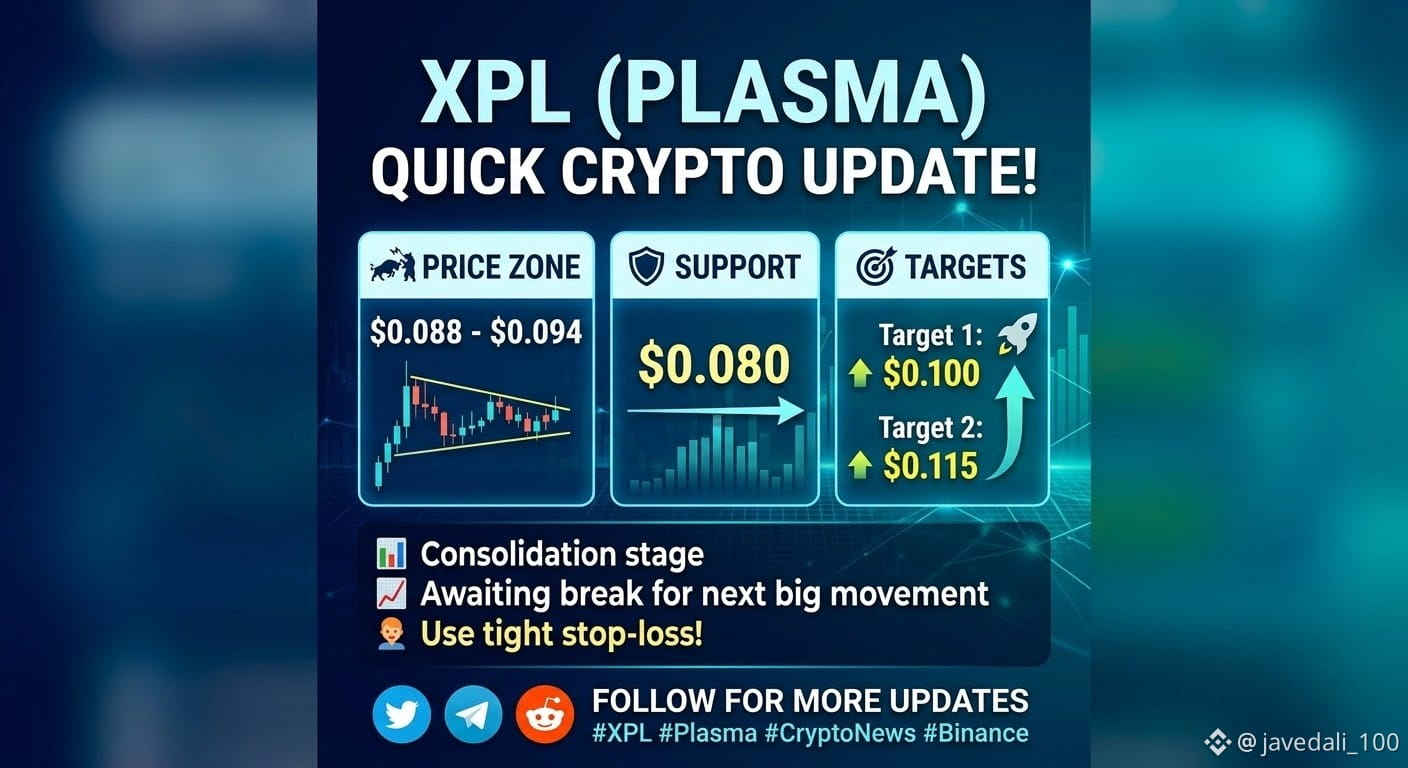
$XPL (Plasma) Cập nhật nhanh! 🔥
📍 Vùng giá: $0.088 - $0.094
🛡️ Hỗ trợ: $0.080
🎯 Mục tiêu: $0.100 | $0.115
Giai đoạn hợp nhất ngắn hạn là chính. Để có chuyển động lớn tiếp theo, cần phải vượt mốc $0.10. Giao dịch với lệnh dừng lỗ chặt chẽ! 📊🚀
#XPL #Plasma #CryptoNews #TradingSignals
{spot}(XPLUSDT)
$XPL (Plasma) Cập nhật nhanh! 🔥
📍 Vùng giá: $0.088 - $0.094
🛡️ Hỗ trợ: $0.080
🎯 Mục tiêu: $0.100 | $0.115
Giai đoạn hợp nhất ngắn hạn là chính. Để có chuyển động lớn tiếp theo, cần phải vượt mốc $0.10. Giao dịch với lệnh dừng lỗ chặt chẽ! 📊🚀
#XPL #Plasma #CryptoNews #TradingSignals
📍 Vùng giá: $0.088 - $0.094
🛡️ Hỗ trợ: $0.080
🎯 Mục tiêu: $0.100 | $0.115
Giai đoạn hợp nhất ngắn hạn là chính. Để có chuyển động lớn tiếp theo, cần phải vượt mốc $0.10. Giao dịch với lệnh dừng lỗ chặt chẽ! 📊🚀
#XPL #Plasma #CryptoNews #TradingSignals
29

·
--
Plasma ($XPL) Tăng Tốc với Khối Lượng 24h Khá
Plasma ($XPL) đang leo lên thứ hạng với mức tăng 3,64% trong 24h và 28M USD về khối lượng. 📈 Cộng đồng đang xôn xao, được thúc đẩy bởi các cập nhật gần đây và hoạt động on-chain mạnh mẽ. Giải pháp mở rộng Lớp 2 độc đáo của $XPL đang thu hút sự chú ý từ cả các nhà giao dịch lẫn nhà phát triển. Với vốn hóa thị trường 86,77M USD, $XPL đang dần khẳng định mình như một nhân tố quan trọng trong hệ sinh态. Hãy để ý đến dự án này khi nó tiếp tục tạo đà. 👀
Theo dõi để cập nhật tin tức crypto hằng ngày.
#DeGenYuv #Plasma
Plasma ($XPL ) Tăng Tốc với Khối Lượng 24h Khá
Plasma ($XPL ) đang leo lên thứ hạng với mức tăng 3,64% trong 24h và 28M USD về khối lượng. 📈 Cộng đồng đang xôn xao, được thúc đẩy bởi các cập nhật gần đây và hoạt động on-chain mạnh mẽ. Giải pháp mở rộng Lớp 2 độc đáo của $XPL đang thu hút sự chú ý từ cả các nhà giao dịch lẫn nhà phát triển. Với vốn hóa thị trường 86,77M USD, $XPL đang dần khẳng định mình như một nhân tố quan trọng trong hệ sinh态. Hãy để ý đến dự án này khi nó tiếp tục tạo đà. 👀
Theo dõi để cập nhật tin tức crypto hằng ngày.
#DeGenYuv #Plasma
Plasma ($XPL ) đang leo lên thứ hạng với mức tăng 3,64% trong 24h và 28M USD về khối lượng. 📈 Cộng đồng đang xôn xao, được thúc đẩy bởi các cập nhật gần đây và hoạt động on-chain mạnh mẽ. Giải pháp mở rộng Lớp 2 độc đáo của $XPL đang thu hút sự chú ý từ cả các nhà giao dịch lẫn nhà phát triển. Với vốn hóa thị trường 86,77M USD, $XPL đang dần khẳng định mình như một nhân tố quan trọng trong hệ sinh态. Hãy để ý đến dự án này khi nó tiếp tục tạo đà. 👀
Theo dõi để cập nhật tin tức crypto hằng ngày.
#DeGenYuv #Plasma
37
·
--
Plasma ($XPL) Tăng Tốc Nhờ Cộng Đồng Tích Cực và Khối Lượng Mạnh
Plasma ($XPL) đang tăng mạnh với mức tăng 3,55% trong 24h và đạt 28M USD về khối lượng. Cộng đồng đang sôi động, thúc đẩy sự quan tâm và tương tác. Hoạt động phát triển tích cực của $XPL và các cập nhật gần đây đang tiếp thêm đà tăng tốc. Các trader nên theo dõi viên ngọc mid-cap này khi nó tiếp tục thu hút lực kéo. ⚡👀
Theo dõi để xem thêm các thiết lập crypto.
#DeGenYuv #Plasma
Plasma ($XPL ) Tăng Tốc Nhờ Cộng Đồng Tích Cực và Khối Lượng Mạnh
Plasma ($XPL ) đang tăng mạnh với mức tăng 3,55% trong 24h và đạt 28M USD về khối lượng. Cộng đồng đang sôi động, thúc đẩy sự quan tâm và tương tác. Hoạt động phát triển tích cực của $XPL và các cập nhật gần đây đang tiếp thêm đà tăng tốc. Các trader nên theo dõi viên ngọc mid-cap này khi nó tiếp tục thu hút lực kéo. ⚡👀
Theo dõi để xem thêm các thiết lập crypto.
#DeGenYuv #Plasma
Plasma ($XPL ) đang tăng mạnh với mức tăng 3,55% trong 24h và đạt 28M USD về khối lượng. Cộng đồng đang sôi động, thúc đẩy sự quan tâm và tương tác. Hoạt động phát triển tích cực của $XPL và các cập nhật gần đây đang tiếp thêm đà tăng tốc. Các trader nên theo dõi viên ngọc mid-cap này khi nó tiếp tục thu hút lực kéo. ⚡👀
Theo dõi để xem thêm các thiết lập crypto.
#DeGenYuv #Plasma
20

·
--
Tăng giá
السلام عليكم
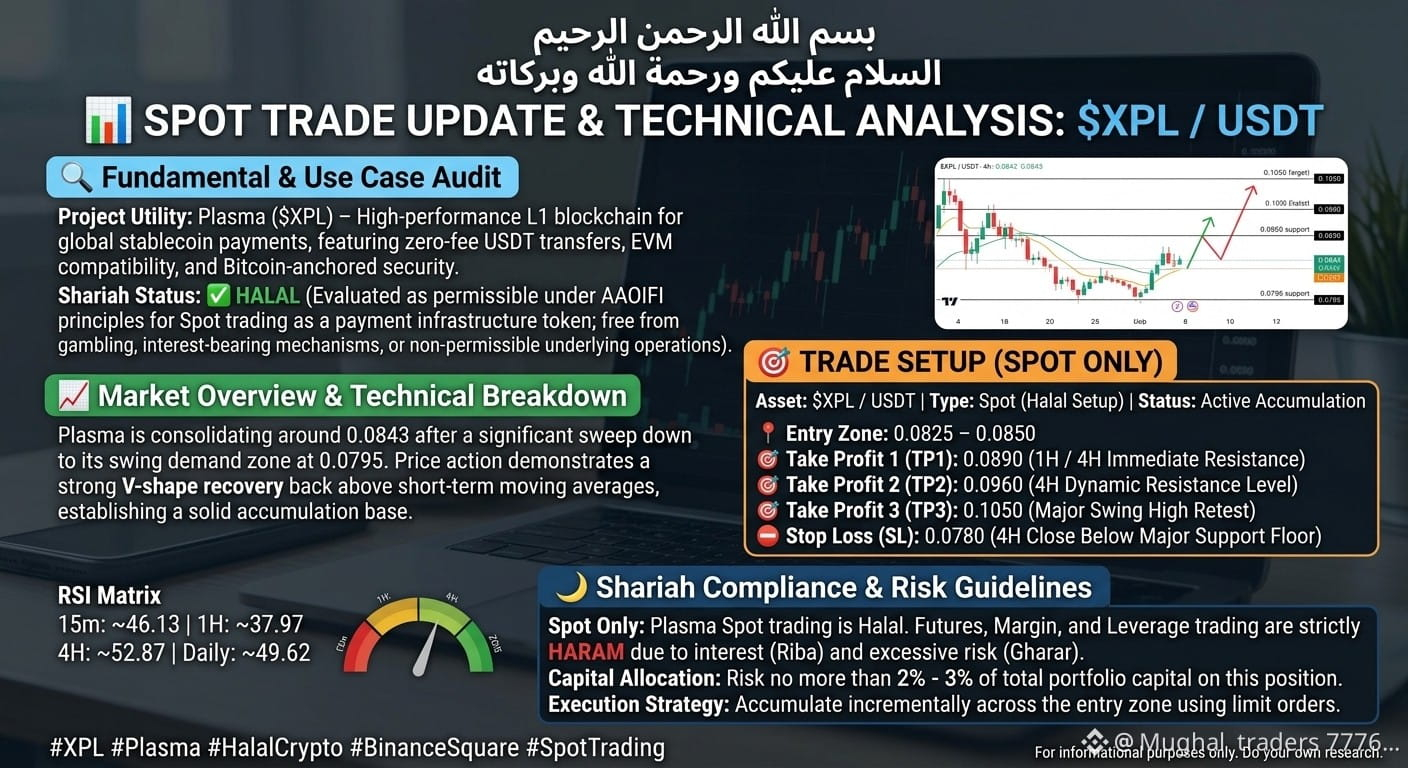
📊 CẬP NHẬT GIAO DỊCH SPOT & PHÂN TÍCH KỸ THUẬT: $XPL / USDT
🔍 Đánh giá Nền tảng & Trường hợp sử dụng
Tiện ích dự án: Plasma ($XPL) là một blockchain Layer-1 hiệu năng cao được thiết kế riêng cho các khoản thanh toán stablecoin toàn cầu, với chuyển USDT không phí, tương thích EVM và cơ chế bảo mật neo vào Bitcoin.
Tình trạng Shariah: HALAL (Được đánh giá là phù hợp theo các nguyên tắc AAOIFI cho giao dịch Spot như một token hạ tầng thanh toán; không có các yếu tố cờ bạc, cơ chế tính lãi, hoặc các hoạt động nền tảng không được phép).
📈 Tổng quan thị trường & Phân rã kỹ thuật
Plasma đang tích lũy quanh 0.0843 sau một đợt quét giảm đáng kể về vùng nhu cầu swing tại 0.0795. Diễn biến giá cho thấy sự phục hồi dạng chữ V mạnh mẽ trở lại trên các đường MA ngắn hạn, thiết lập một nền tảng tích lũy vững chắc.
Biểu đồ 15m & 1H: Biểu đồ 15m cho thấy giá tăng tiến về kháng cự MA(99) phía trên với RSI khoảng ~46.13, trong khi biểu đồ 1H cho thấy giá bật lên từ đáy wick 0.0795 với RSI 1H đang hạ nhiệt khoảng ~37.97.
Biểu đồ 4H & Daily: RSI 4H ở mức trung tính khoảng ~52.87, và RSI Daily ổn định quanh ~49.62, xác nhận đà phục hồi lành mạnh và còn dư địa cho một nhịp tăng kéo dài hướng đến các mức kháng cự cao hơn.
Ma trận RSI: 15m: ~46.13 | 1H: ~37.97 | 4H: ~52.87 | Daily: ~49.62.
🎯 THIẾT LẬP GIAO DỊCH (CHỈ SPOT)
Tài sản: $XPL / USDT | Loại: Spot (Thiết lập Halal) | Trạng thái: Tích lũy đang hoạt động
📍 Vùng vào lệnh: 0.0825 – 0.0850
🎯 Chốt lời 1 (TP1): 0.0890 (Kháng cự tức thời 1H / 4H)
🎯 Chốt lời 2 (TP2): 0.0960 (Mức kháng cự động 4H)
🎯 Chốt lời 3 (TP3): 0.1050 (Kiểm tra lại Swing High lớn)
⛔ Cắt lỗ (SL): 0.0780 (Đóng cửa 4H dưới ngưỡng hỗ trợ chính)
🌙 Tuân thủ Shariah & Hướng dẫn rủi ro
Chỉ Spot: Giao dịch Spot của Plasma là Halal. Giao dịch Futures, Margin và Leverage bị cấm nghiêm ngặt (HARAM) do yếu tố lãi và rủi ro quá mức.
Phân bổ vốn: Không rủi ro quá 2% - 3% tổng vốn của danh mục cho vị thế này.
Chiến lược thực thi: Tích lũy dần dần trong vùng vào lệnh bằng lệnh giới hạn.
{spot}(XPLUSDT)
#XPL #Plasma #HalalCrypto #SpotTrading
السلام عليكم
📊 CẬP NHẬT GIAO DỊCH SPOT & PHÂN TÍCH KỸ THUẬT: $XPL / USDT
🔍 Đánh giá Nền tảng & Trường hợp sử dụng
Tiện ích dự án: Plasma ($XPL) là một blockchain Layer-1 hiệu năng cao được thiết kế riêng cho các khoản thanh toán stablecoin toàn cầu, với chuyển USDT không phí, tương thích EVM và cơ chế bảo mật neo vào Bitcoin.
Tình trạng Shariah: HALAL (Được đánh giá là phù hợp theo các nguyên tắc AAOIFI cho giao dịch Spot như một token hạ tầng thanh toán; không có các yếu tố cờ bạc, cơ chế tính lãi, hoặc các hoạt động nền tảng không được phép).
📈 Tổng quan thị trường & Phân rã kỹ thuật
Plasma đang tích lũy quanh 0.0843 sau một đợt quét giảm đáng kể về vùng nhu cầu swing tại 0.0795. Diễn biến giá cho thấy sự phục hồi dạng chữ V mạnh mẽ trở lại trên các đường MA ngắn hạn, thiết lập một nền tảng tích lũy vững chắc.
Biểu đồ 15m & 1H: Biểu đồ 15m cho thấy giá tăng tiến về kháng cự MA(99) phía trên với RSI khoảng ~46.13, trong khi biểu đồ 1H cho thấy giá bật lên từ đáy wick 0.0795 với RSI 1H đang hạ nhiệt khoảng ~37.97.
Biểu đồ 4H & Daily: RSI 4H ở mức trung tính khoảng ~52.87, và RSI Daily ổn định quanh ~49.62, xác nhận đà phục hồi lành mạnh và còn dư địa cho một nhịp tăng kéo dài hướng đến các mức kháng cự cao hơn.
Ma trận RSI: 15m: ~46.13 | 1H: ~37.97 | 4H: ~52.87 | Daily: ~49.62.
🎯 THIẾT LẬP GIAO DỊCH (CHỈ SPOT)
Tài sản: $XPL / USDT | Loại: Spot (Thiết lập Halal) | Trạng thái: Tích lũy đang hoạt động
📍 Vùng vào lệnh: 0.0825 – 0.0850
🎯 Chốt lời 1 (TP1): 0.0890 (Kháng cự tức thời 1H / 4H)
🎯 Chốt lời 2 (TP2): 0.0960 (Mức kháng cự động 4H)
🎯 Chốt lời 3 (TP3): 0.1050 (Kiểm tra lại Swing High lớn)
⛔ Cắt lỗ (SL): 0.0780 (Đóng cửa 4H dưới ngưỡng hỗ trợ chính)
🌙 Tuân thủ Shariah & Hướng dẫn rủi ro
Chỉ Spot: Giao dịch Spot của Plasma là Halal. Giao dịch Futures, Margin và Leverage bị cấm nghiêm ngặt (HARAM) do yếu tố lãi và rủi ro quá mức.
Phân bổ vốn: Không rủi ro quá 2% - 3% tổng vốn của danh mục cho vị thế này.
Chiến lược thực thi: Tích lũy dần dần trong vùng vào lệnh bằng lệnh giới hạn.
#XPL #Plasma #HalalCrypto #SpotTrading
📊 CẬP NHẬT GIAO DỊCH SPOT & PHÂN TÍCH KỸ THUẬT: $XPL / USDT
🔍 Đánh giá Nền tảng & Trường hợp sử dụng
Tiện ích dự án: Plasma ($XPL) là một blockchain Layer-1 hiệu năng cao được thiết kế riêng cho các khoản thanh toán stablecoin toàn cầu, với chuyển USDT không phí, tương thích EVM và cơ chế bảo mật neo vào Bitcoin.
Tình trạng Shariah: HALAL (Được đánh giá là phù hợp theo các nguyên tắc AAOIFI cho giao dịch Spot như một token hạ tầng thanh toán; không có các yếu tố cờ bạc, cơ chế tính lãi, hoặc các hoạt động nền tảng không được phép).
📈 Tổng quan thị trường & Phân rã kỹ thuật
Plasma đang tích lũy quanh 0.0843 sau một đợt quét giảm đáng kể về vùng nhu cầu swing tại 0.0795. Diễn biến giá cho thấy sự phục hồi dạng chữ V mạnh mẽ trở lại trên các đường MA ngắn hạn, thiết lập một nền tảng tích lũy vững chắc.
Biểu đồ 15m & 1H: Biểu đồ 15m cho thấy giá tăng tiến về kháng cự MA(99) phía trên với RSI khoảng ~46.13, trong khi biểu đồ 1H cho thấy giá bật lên từ đáy wick 0.0795 với RSI 1H đang hạ nhiệt khoảng ~37.97.
Biểu đồ 4H & Daily: RSI 4H ở mức trung tính khoảng ~52.87, và RSI Daily ổn định quanh ~49.62, xác nhận đà phục hồi lành mạnh và còn dư địa cho một nhịp tăng kéo dài hướng đến các mức kháng cự cao hơn.
Ma trận RSI: 15m: ~46.13 | 1H: ~37.97 | 4H: ~52.87 | Daily: ~49.62.
🎯 THIẾT LẬP GIAO DỊCH (CHỈ SPOT)
Tài sản: $XPL / USDT | Loại: Spot (Thiết lập Halal) | Trạng thái: Tích lũy đang hoạt động
📍 Vùng vào lệnh: 0.0825 – 0.0850
🎯 Chốt lời 1 (TP1): 0.0890 (Kháng cự tức thời 1H / 4H)
🎯 Chốt lời 2 (TP2): 0.0960 (Mức kháng cự động 4H)
🎯 Chốt lời 3 (TP3): 0.1050 (Kiểm tra lại Swing High lớn)
⛔ Cắt lỗ (SL): 0.0780 (Đóng cửa 4H dưới ngưỡng hỗ trợ chính)
🌙 Tuân thủ Shariah & Hướng dẫn rủi ro
Chỉ Spot: Giao dịch Spot của Plasma là Halal. Giao dịch Futures, Margin và Leverage bị cấm nghiêm ngặt (HARAM) do yếu tố lãi và rủi ro quá mức.
Phân bổ vốn: Không rủi ro quá 2% - 3% tổng vốn của danh mục cho vị thế này.
Chiến lược thực thi: Tích lũy dần dần trong vùng vào lệnh bằng lệnh giới hạn.
#XPL #Plasma #HalalCrypto #SpotTrading
103


·
--
Tăng giá
Đã xác minh
Giao thức CCTP của Circle hiện đã sẵn sàng trên mạng Plasma 🚀
Bước này mở ra cánh cửa để chuyển USDC và EURC giữa các chuỗi một cách gốc (native), không cần các cầu nối bên ngoài hay các thao tác kết nối phức tạp.
Kết quả là thanh khoản mượt mà hơn, nhanh hơn và an toàn hơn giữa Plasma và các mạng khác được Circle hỗ trợ.
@Plasma
#marouan47 #Plasma #crc
$CRCL $XPL
{future}(XPLUSDT)
{future}(CRCLUSDT)
Giao thức CCTP của Circle hiện đã sẵn sàng trên mạng Plasma 🚀
Bước này mở ra cánh cửa để chuyển USDC và EURC giữa các chuỗi một cách gốc (native), không cần các cầu nối bên ngoài hay các thao tác kết nối phức tạp.
Kết quả là thanh khoản mượt mà hơn, nhanh hơn và an toàn hơn giữa Plasma và các mạng khác được Circle hỗ trợ.
@Plasma
#marouan47 #Plasma #crc
$CRCL $XPL
Bước này mở ra cánh cửa để chuyển USDC và EURC giữa các chuỗi một cách gốc (native), không cần các cầu nối bên ngoài hay các thao tác kết nối phức tạp.
Kết quả là thanh khoản mượt mà hơn, nhanh hơn và an toàn hơn giữa Plasma và các mạng khác được Circle hỗ trợ.
@Plasma
#marouan47 #Plasma #crc
$CRCL $XPL

2
673

·
--
Plasma Nổi Bật Trên Thị Trường Crypto: Nhà Đầu Tư Cần Biết GìPlasma đã xuất hiện như một chủ đề đang được quan tâm trong thị trường crypto trong 24 giờ qua theo dữ liệu của CoinGecko. Diễn biến này có thể liên quan đến việc tăng mức độ tương tác trên mạng xã hội và hoạt động tìm kiếm xoay quanh dự án. Plasma được biết đến như một giải pháp mở rộng lớp 2 được xây dựng trên blockchain Ethereum, nhằm nâng cao tốc độ giao dịch và giảm phí. Cách tiếp cận như vậy có thể hấp dẫn đối với các ứng dụng tài chính có khối lượng giao dịch lớn và các nền tảng game.
Danh sách thịnh hành của CoinGecko thường nêu bật các tài sản có khối lượng giao dịch ngắn hạn tăng lên và các tín hiệu xã hội. Việc Plasma được đưa vào danh sách cho thấy hoạt động giao dịch của dự án đã tăng rõ rệt. Dữ liệu thị trường cho thấy khối lượng giao dịch của Plasma trong 24 giờ qua đã tăng khoảng 20% trong ngày gần đây, phản ánh nhu cầu của người mua đang gia tăng. Không có mức giá mục tiêu cụ thể được đưa ra, và không nên đưa ra các dự đoán mang tính tương lai; chỉ ghi nhận diễn biến về khối lượng đã quan sát được.
Plasma Nổi Bật Trên Thị Trường Crypto: Nhà Đầu Tư Cần Biết Gì
Plasma đã xuất hiện như một chủ đề đang được quan tâm trong thị trường crypto trong 24 giờ qua theo dữ liệu của CoinGecko. Diễn biến này có thể liên quan đến việc tăng mức độ tương tác trên mạng xã hội và hoạt động tìm kiếm xoay quanh dự án. Plasma được biết đến như một giải pháp mở rộng lớp 2 được xây dựng trên blockchain Ethereum, nhằm nâng cao tốc độ giao dịch và giảm phí. Cách tiếp cận như vậy có thể hấp dẫn đối với các ứng dụng tài chính có khối lượng giao dịch lớn và các nền tảng game.
Danh sách thịnh hành của CoinGecko thường nêu bật các tài sản có khối lượng giao dịch ngắn hạn tăng lên và các tín hiệu xã hội. Việc Plasma được đưa vào danh sách cho thấy hoạt động giao dịch của dự án đã tăng rõ rệt. Dữ liệu thị trường cho thấy khối lượng giao dịch của Plasma trong 24 giờ qua đã tăng khoảng 20% trong ngày gần đây, phản ánh nhu cầu của người mua đang gia tăng. Không có mức giá mục tiêu cụ thể được đưa ra, và không nên đưa ra các dự đoán mang tính tương lai; chỉ ghi nhận diễn biến về khối lượng đã quan sát được.
Danh sách thịnh hành của CoinGecko thường nêu bật các tài sản có khối lượng giao dịch ngắn hạn tăng lên và các tín hiệu xã hội. Việc Plasma được đưa vào danh sách cho thấy hoạt động giao dịch của dự án đã tăng rõ rệt. Dữ liệu thị trường cho thấy khối lượng giao dịch của Plasma trong 24 giờ qua đã tăng khoảng 20% trong ngày gần đây, phản ánh nhu cầu của người mua đang gia tăng. Không có mức giá mục tiêu cụ thể được đưa ra, và không nên đưa ra các dự đoán mang tính tương lai; chỉ ghi nhận diễn biến về khối lượng đã quan sát được.
65
·
--
Plasma Trở Thành Xu Hướng Trên Thị Trường Crypto: Chi Tiết và Tác ĐộngPlasma, 24 giờ qua theo dữ liệu của CoinGecko đã dường như trở thành chủ đề đang thịnh hành trên thị trường tiền mã hóa. Tình trạng này có thể được liên hệ với sự gia tăng tương tác trên mạng xã hội liên quan đến dự án và sự bùng nổ về lượng tìm kiếm. Plasma được biết đến như một giải pháp mở rộng lớp-2 được xây dựng trên chuỗi khối Ethereum, nhằm tăng tốc độ xử lý giao dịch và giảm chi phí (phí). Cách tiếp cận kỹ thuật này có thể đặc biệt hấp dẫn đối với các ứng dụng tài chính và nền tảng trò chơi vốn cần khối lượng giao dịch lớn.
Plasma Trở Thành Xu Hướng Trên Thị Trường Crypto: Chi Tiết và Tác Động
Plasma, 24 giờ qua theo dữ liệu của CoinGecko đã dường như trở thành chủ đề đang thịnh hành trên thị trường tiền mã hóa. Tình trạng này có thể được liên hệ với sự gia tăng tương tác trên mạng xã hội liên quan đến dự án và sự bùng nổ về lượng tìm kiếm. Plasma được biết đến như một giải pháp mở rộng lớp-2 được xây dựng trên chuỗi khối Ethereum, nhằm tăng tốc độ xử lý giao dịch và giảm chi phí (phí). Cách tiếp cận kỹ thuật này có thể đặc biệt hấp dẫn đối với các ứng dụng tài chính và nền tảng trò chơi vốn cần khối lượng giao dịch lớn.
58

·
--
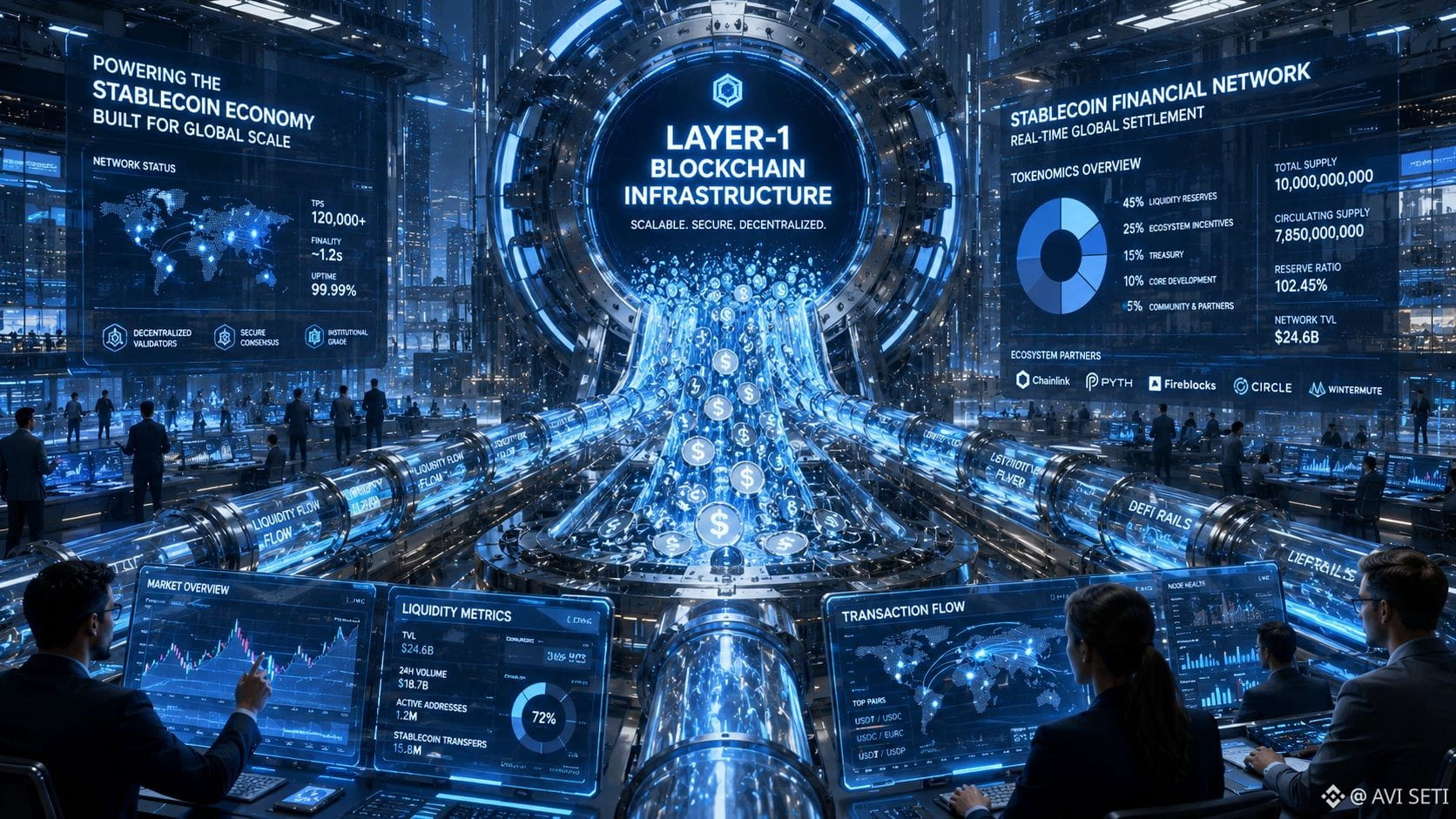
💧 XPL Hôm nay Có Sự Kiện Cung Cấp — Nhưng Câu Chuyện Lớn Hơn Mới Là Điều Quan Trọng
Plasma dự kiến sẽ mở khóa khoảng 88.89M XPL hôm nay, trị giá xấp xỉ 8.91M USD.
Các token được phân bổ cho hệ sinh thái và tăng trưởng, dựa trên dữ liệu mở khóa gần đây.
Điều này quan trọng vì không phải mọi lần mở khóa đều có tác động thị trường như nhau.
Các token được chuyển cho phát triển hệ sinh thái có thể hoạt động khác với token chuyển trực tiếp cho nhà đầu tư hoặc người đóng góp giai đoạn đầu.
Vì vậy, nhiệm vụ của nhà giao dịch không chỉ đơn giản là đếm số lượng token.
Mà là phải hiểu:
Ai là người nhận?
Vì sao chúng được phát hành?
Chúng có thể đến được thị trường nhanh đến mức nào?
Đó là lúc tokenomics trở nên hữu ích.
$XPL
#Plasma #XPL #Layer1 #Stablecoins #Crypto
💧 XPL Hôm nay Có Sự Kiện Cung Cấp — Nhưng Câu Chuyện Lớn Hơn Mới Là Điều Quan Trọng
Plasma dự kiến sẽ mở khóa khoảng 88.89M XPL hôm nay, trị giá xấp xỉ 8.91M USD.
Các token được phân bổ cho hệ sinh thái và tăng trưởng, dựa trên dữ liệu mở khóa gần đây.
Điều này quan trọng vì không phải mọi lần mở khóa đều có tác động thị trường như nhau.
Các token được chuyển cho phát triển hệ sinh thái có thể hoạt động khác với token chuyển trực tiếp cho nhà đầu tư hoặc người đóng góp giai đoạn đầu.
Vì vậy, nhiệm vụ của nhà giao dịch không chỉ đơn giản là đếm số lượng token.
Mà là phải hiểu:
Ai là người nhận?
Vì sao chúng được phát hành?
Chúng có thể đến được thị trường nhanh đến mức nào?
Đó là lúc tokenomics trở nên hữu ích.
$XPL
#Plasma #XPL #Layer1 #Stablecoins #Crypto
Plasma dự kiến sẽ mở khóa khoảng 88.89M XPL hôm nay, trị giá xấp xỉ 8.91M USD.
Các token được phân bổ cho hệ sinh thái và tăng trưởng, dựa trên dữ liệu mở khóa gần đây.
Điều này quan trọng vì không phải mọi lần mở khóa đều có tác động thị trường như nhau.
Các token được chuyển cho phát triển hệ sinh thái có thể hoạt động khác với token chuyển trực tiếp cho nhà đầu tư hoặc người đóng góp giai đoạn đầu.
Vì vậy, nhiệm vụ của nhà giao dịch không chỉ đơn giản là đếm số lượng token.
Mà là phải hiểu:
Ai là người nhận?
Vì sao chúng được phát hành?
Chúng có thể đến được thị trường nhanh đến mức nào?
Đó là lúc tokenomics trở nên hữu ích.
$XPL
#Plasma #XPL #Layer1 #Stablecoins #Crypto
146

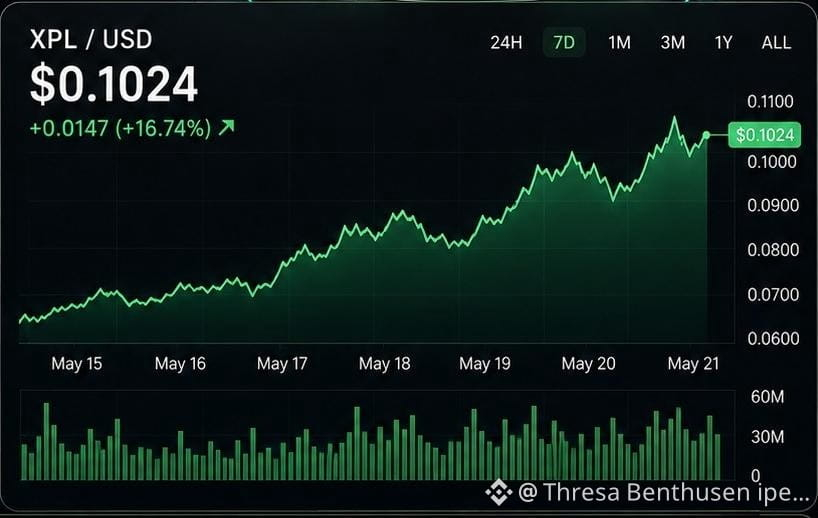
#plasma 🔥 Plasma (XPL) Vượt Trội Hơn Thị Trường — Tăng 28%+ Trong 1 Tuần
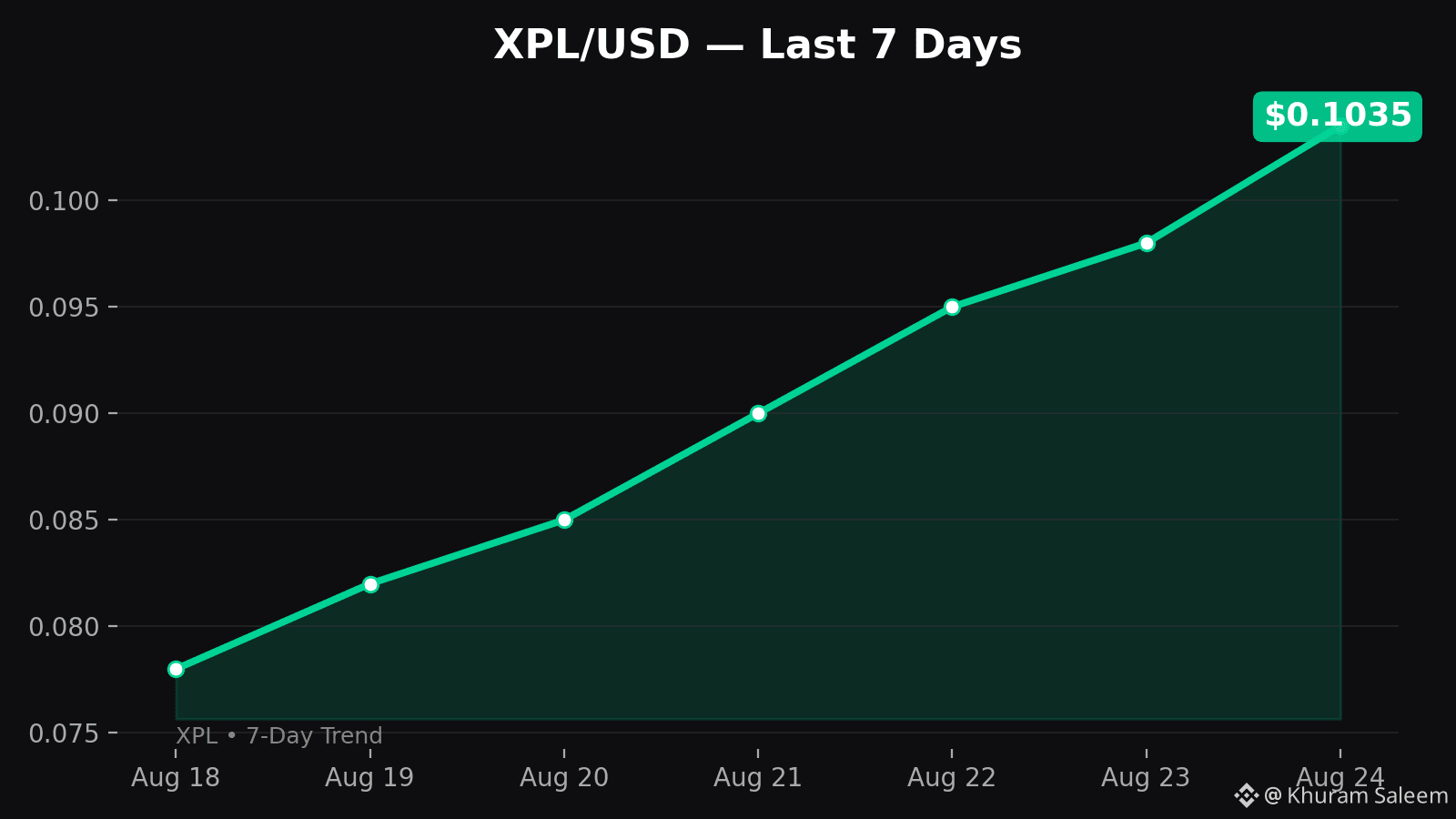
XPL đang giao dịch quanh $0.10, tăng gần 29% trong 7 ngày qua — vượt trội so với mức tăng hàng tuần 19% của toàn thị trường crypto. Plasma là chuỗi L1 được xây dựng cho các giao dịch chuyển USDT không phí, được hậu thuẫn bởi Tether.
📊 Thống kê nổi bật:
• Vốn hóa thị trường: ~$265M–$286M
• Khối lượng cung lưu hành: ~2.69B XPL
• Khối lượng giao dịch 24h: $140M+
🔍 Điều gì đang thúc đẩy:
Sự gia tăng mức độ hấp dẫn của hạ tầng thanh toán stablecoin của Plasma và cầu nối Bitcoin đang tạo động lực mới sau giai đoạn sụt giảm hậu ra mắt (XPL vẫn thấp hơn ~93% so với ATH vào tháng 9/2025 là $1.68).
⚠️ Cần theo dõi: Lịch mở khóa token vào ngày 25/08 (88.89M XPL, ~$8.7M) có thể tạo áp lực bán ngắn hạn. Biến động vẫn cao — đây vẫn là token giai đoạn sớm.
Không phải lời khuyên tài chính — hãy luôn tự nghiên cứu (DYOR). 🔶
#XPL #Plasma #WriteToEarn #BinanceSquare #CryptoAnalysis
{future}(XPLUSDT)
#BitcoinOpenInterestFallsToTwoMonthLow #BitcoinRises23.6%Weekly #AIHardwareStocksFallPreMarketAAOIDown11.66%
#plasma 🔥 Plasma (XPL) Vượt Trội Hơn Thị Trường — Tăng 28%+ Trong 1 Tuần
XPL đang giao dịch quanh $0.10, tăng gần 29% trong 7 ngày qua — vượt trội so với mức tăng hàng tuần 19% của toàn thị trường crypto. Plasma là chuỗi L1 được xây dựng cho các giao dịch chuyển USDT không phí, được hậu thuẫn bởi Tether.
📊 Thống kê nổi bật:
• Vốn hóa thị trường: ~$265M–$286M
• Khối lượng cung lưu hành: ~2.69B XPL
• Khối lượng giao dịch 24h: $140M+
🔍 Điều gì đang thúc đẩy:
Sự gia tăng mức độ hấp dẫn của hạ tầng thanh toán stablecoin của Plasma và cầu nối Bitcoin đang tạo động lực mới sau giai đoạn sụt giảm hậu ra mắt (XPL vẫn thấp hơn ~93% so với ATH vào tháng 9/2025 là $1.68).
⚠️ Cần theo dõi: Lịch mở khóa token vào ngày 25/08 (88.89M XPL, ~$8.7M) có thể tạo áp lực bán ngắn hạn. Biến động vẫn cao — đây vẫn là token giai đoạn sớm.
Không phải lời khuyên tài chính — hãy luôn tự nghiên cứu (DYOR). 🔶
#XPL #Plasma #WriteToEarn #BinanceSquare #CryptoAnalysis
#BitcoinOpenInterestFallsToTwoMonthLow #BitcoinRises23.6%Weekly #AIHardwareStocksFallPreMarketAAOIDown11.66%
XPL đang giao dịch quanh $0.10, tăng gần 29% trong 7 ngày qua — vượt trội so với mức tăng hàng tuần 19% của toàn thị trường crypto. Plasma là chuỗi L1 được xây dựng cho các giao dịch chuyển USDT không phí, được hậu thuẫn bởi Tether.
📊 Thống kê nổi bật:
• Vốn hóa thị trường: ~$265M–$286M
• Khối lượng cung lưu hành: ~2.69B XPL
• Khối lượng giao dịch 24h: $140M+
🔍 Điều gì đang thúc đẩy:
Sự gia tăng mức độ hấp dẫn của hạ tầng thanh toán stablecoin của Plasma và cầu nối Bitcoin đang tạo động lực mới sau giai đoạn sụt giảm hậu ra mắt (XPL vẫn thấp hơn ~93% so với ATH vào tháng 9/2025 là $1.68).
⚠️ Cần theo dõi: Lịch mở khóa token vào ngày 25/08 (88.89M XPL, ~$8.7M) có thể tạo áp lực bán ngắn hạn. Biến động vẫn cao — đây vẫn là token giai đoạn sớm.
Không phải lời khuyên tài chính — hãy luôn tự nghiên cứu (DYOR). 🔶
#XPL #Plasma #WriteToEarn #BinanceSquare #CryptoAnalysis
#BitcoinOpenInterestFallsToTwoMonthLow #BitcoinRises23.6%Weekly #AIHardwareStocksFallPreMarketAAOIDown11.66%
82

·
--
Bạn đã đánh giá tiềm năng của Plasma $XPL ?
{future}(XPLUSDT)
Lớp 1 này được thiết kế đặc biệt cho các khoản thanh toán toàn cầu với stablecoins, cung cấp chuyển khoản $USDT mà không tính phí và tương thích EVM.
Trong một bối cảnh vĩ mô nơi hiệu quả sử dụng vốn và tính thanh khoản ổn định được ưu tiên, hạ tầng của bạn nhằm thu hút khối lượng từ các tổ chức. Tuy nhiên, tôi cảnh báo: sự cạnh tranh trong các giải pháp thanh toán L1 rất khốc liệt và việc áp dụng thực sự cần vượt qua sự đầu cơ ban đầu#CTRARK #Plasma
Bạn đã đánh giá tiềm năng của Plasma $XPL ?
Lớp 1 này được thiết kế đặc biệt cho các khoản thanh toán toàn cầu với stablecoins, cung cấp chuyển khoản $USDT mà không tính phí và tương thích EVM.
Trong một bối cảnh vĩ mô nơi hiệu quả sử dụng vốn và tính thanh khoản ổn định được ưu tiên, hạ tầng của bạn nhằm thu hút khối lượng từ các tổ chức. Tuy nhiên, tôi cảnh báo: sự cạnh tranh trong các giải pháp thanh toán L1 rất khốc liệt và việc áp dụng thực sự cần vượt qua sự đầu cơ ban đầu#CTRARK #Plasma
Lớp 1 này được thiết kế đặc biệt cho các khoản thanh toán toàn cầu với stablecoins, cung cấp chuyển khoản $USDT mà không tính phí và tương thích EVM.
Trong một bối cảnh vĩ mô nơi hiệu quả sử dụng vốn và tính thanh khoản ổn định được ưu tiên, hạ tầng của bạn nhằm thu hút khối lượng từ các tổ chức. Tuy nhiên, tôi cảnh báo: sự cạnh tranh trong các giải pháp thanh toán L1 rất khốc liệt và việc áp dụng thực sự cần vượt qua sự đầu cơ ban đầu#CTRARK #Plasma
1
185

·
--
Trong thời gian gần đây, toàn bộ hiệu suất hệ sinh thái Plasma do $XPL dẫn dắt đang cho thấy sự nổi bật ấn tượng, với nhiều chỉ số ở các khía cạnh khác nhau đều thể hiện xu hướng tích cực.
Trước hết, khối lượng giao dịch thanh toán thẻ thực thể đã lập mức cao kỷ lục mới trong lịch sử. Điều này trực tiếp phản ánh nhu cầu người dùng thực tế đối với dự án đang không ngừng tăng lên, và tiến độ ứng dụng thực tế đã vượt xa kỳ vọng của thị trường.
Thứ hai, mức độ hoạt động của người dùng nhìn chung tiếp tục được cải thiện. Ngày càng nhiều vốn và người dùng bắt đầu đổ vào hệ sinh thái; dù là tỷ lệ giữ chân người dùng mới hay tần suất mua lại của người dùng cũ đều cho thấy kết quả rất tốt.
Cùng với đó, Plasma thời gian gần đây cũng không ngừng mở rộng mạng lưới đối tác. Nhiều tổ chức đầu ngành trong các lĩnh vực khác nhau tham gia hệ sinh thái hơn nữa, qua đó củng cố thêm vững chắc nền tảng cơ bản của dự án.
Điều đáng mong đợi hơn là dự án vẫn còn nhiều tính năng mới chưa được mở khóa. Ở giai đoạn tiếp theo, vẫn còn đủ các sự kiện xúc tác để thúc đẩy diễn biến thị trường phát triển.
Hiện tại, tâm lý chung của thị trường đã chuyển sang hướng lạc quan khá rõ rệt, với nhiều yếu tố thuận lợi chồng lấn. Do đó, trong thời gian tới, giá của $XPL có thể sẽ tiếp tục được đẩy lên.
#Plasma #tiền mã hóa
Trong thời gian gần đây, toàn bộ hiệu suất hệ sinh thái Plasma do $XPL dẫn dắt đang cho thấy sự nổi bật ấn tượng, với nhiều chỉ số ở các khía cạnh khác nhau đều thể hiện xu hướng tích cực.
Trước hết, khối lượng giao dịch thanh toán thẻ thực thể đã lập mức cao kỷ lục mới trong lịch sử. Điều này trực tiếp phản ánh nhu cầu người dùng thực tế đối với dự án đang không ngừng tăng lên, và tiến độ ứng dụng thực tế đã vượt xa kỳ vọng của thị trường.
Thứ hai, mức độ hoạt động của người dùng nhìn chung tiếp tục được cải thiện. Ngày càng nhiều vốn và người dùng bắt đầu đổ vào hệ sinh thái; dù là tỷ lệ giữ chân người dùng mới hay tần suất mua lại của người dùng cũ đều cho thấy kết quả rất tốt.
Cùng với đó, Plasma thời gian gần đây cũng không ngừng mở rộng mạng lưới đối tác. Nhiều tổ chức đầu ngành trong các lĩnh vực khác nhau tham gia hệ sinh thái hơn nữa, qua đó củng cố thêm vững chắc nền tảng cơ bản của dự án.
Điều đáng mong đợi hơn là dự án vẫn còn nhiều tính năng mới chưa được mở khóa. Ở giai đoạn tiếp theo, vẫn còn đủ các sự kiện xúc tác để thúc đẩy diễn biến thị trường phát triển.
Hiện tại, tâm lý chung của thị trường đã chuyển sang hướng lạc quan khá rõ rệt, với nhiều yếu tố thuận lợi chồng lấn. Do đó, trong thời gian tới, giá của $XPL có thể sẽ tiếp tục được đẩy lên.
#Plasma #tiền mã hóa
Trước hết, khối lượng giao dịch thanh toán thẻ thực thể đã lập mức cao kỷ lục mới trong lịch sử. Điều này trực tiếp phản ánh nhu cầu người dùng thực tế đối với dự án đang không ngừng tăng lên, và tiến độ ứng dụng thực tế đã vượt xa kỳ vọng của thị trường.
Thứ hai, mức độ hoạt động của người dùng nhìn chung tiếp tục được cải thiện. Ngày càng nhiều vốn và người dùng bắt đầu đổ vào hệ sinh thái; dù là tỷ lệ giữ chân người dùng mới hay tần suất mua lại của người dùng cũ đều cho thấy kết quả rất tốt.
Cùng với đó, Plasma thời gian gần đây cũng không ngừng mở rộng mạng lưới đối tác. Nhiều tổ chức đầu ngành trong các lĩnh vực khác nhau tham gia hệ sinh thái hơn nữa, qua đó củng cố thêm vững chắc nền tảng cơ bản của dự án.
Điều đáng mong đợi hơn là dự án vẫn còn nhiều tính năng mới chưa được mở khóa. Ở giai đoạn tiếp theo, vẫn còn đủ các sự kiện xúc tác để thúc đẩy diễn biến thị trường phát triển.
Hiện tại, tâm lý chung của thị trường đã chuyển sang hướng lạc quan khá rõ rệt, với nhiều yếu tố thuận lợi chồng lấn. Do đó, trong thời gian tới, giá của $XPL có thể sẽ tiếp tục được đẩy lên.
#Plasma #tiền mã hóa
11

·
--
Môi trường thị trường mà $XPL đang ở nhìn chung đang thuận lợi, nhiều tin tốt cùng lúc đã thúc đẩy giá đi lên.
Trước hết, khối lượng giao dịch thanh toán bằng thẻ vật lý của Plasma đã đạt mức cao kỷ lục, ngày càng nhiều người dùng bắt đầu sử dụng nó cho các khoản thanh toán hằng ngày, qua đó thể hiện rõ năng lực triển khai dự án và nhu cầu người dùng đang tăng trưởng.
Thứ hai, trong thời gian gần đây, mức độ hoạt động của người dùng trên nền tảng đã tăng rõ rệt; cho dù là tốc độ tăng trưởng người dùng mới hay tỷ lệ người dùng cũ quay lại, đều có những kết quả tốt, hiệu ứng mạng đang dần lộ diện.
Đồng thời, phía dự án cũng liên tục mở rộng đối tác, quy mô hệ sinh thái không ngừng được mở rộng, qua đó nâng cao hơn nữa giá trị tổng thể của dự án và sức ảnh hưởng trên thị trường.
Điều đáng chú ý hơn nữa là Plasma sắp được mở khóa một tính năng hoàn toàn mới; thị trường đang rất kỳ vọng vào tính năng này, tâm lý nhà đầu tư liên tục nóng lên.
Nhìn chung, xét cả về mặt cơ bản lẫn tâm lý thị trường, $XPL đang có một cơ hội phát triển khá tốt, và hiệu suất trong giai đoạn tiếp theo đáng để tiếp tục theo dõi.
#Plasma #支付创新 #triển khai blockchain
Môi trường thị trường mà $XPL đang ở nhìn chung đang thuận lợi, nhiều tin tốt cùng lúc đã thúc đẩy giá đi lên.
Trước hết, khối lượng giao dịch thanh toán bằng thẻ vật lý của Plasma đã đạt mức cao kỷ lục, ngày càng nhiều người dùng bắt đầu sử dụng nó cho các khoản thanh toán hằng ngày, qua đó thể hiện rõ năng lực triển khai dự án và nhu cầu người dùng đang tăng trưởng.
Thứ hai, trong thời gian gần đây, mức độ hoạt động của người dùng trên nền tảng đã tăng rõ rệt; cho dù là tốc độ tăng trưởng người dùng mới hay tỷ lệ người dùng cũ quay lại, đều có những kết quả tốt, hiệu ứng mạng đang dần lộ diện.
Đồng thời, phía dự án cũng liên tục mở rộng đối tác, quy mô hệ sinh thái không ngừng được mở rộng, qua đó nâng cao hơn nữa giá trị tổng thể của dự án và sức ảnh hưởng trên thị trường.
Điều đáng chú ý hơn nữa là Plasma sắp được mở khóa một tính năng hoàn toàn mới; thị trường đang rất kỳ vọng vào tính năng này, tâm lý nhà đầu tư liên tục nóng lên.
Nhìn chung, xét cả về mặt cơ bản lẫn tâm lý thị trường, $XPL đang có một cơ hội phát triển khá tốt, và hiệu suất trong giai đoạn tiếp theo đáng để tiếp tục theo dõi.
#Plasma #支付创新 #triển khai blockchain
Trước hết, khối lượng giao dịch thanh toán bằng thẻ vật lý của Plasma đã đạt mức cao kỷ lục, ngày càng nhiều người dùng bắt đầu sử dụng nó cho các khoản thanh toán hằng ngày, qua đó thể hiện rõ năng lực triển khai dự án và nhu cầu người dùng đang tăng trưởng.
Thứ hai, trong thời gian gần đây, mức độ hoạt động của người dùng trên nền tảng đã tăng rõ rệt; cho dù là tốc độ tăng trưởng người dùng mới hay tỷ lệ người dùng cũ quay lại, đều có những kết quả tốt, hiệu ứng mạng đang dần lộ diện.
Đồng thời, phía dự án cũng liên tục mở rộng đối tác, quy mô hệ sinh thái không ngừng được mở rộng, qua đó nâng cao hơn nữa giá trị tổng thể của dự án và sức ảnh hưởng trên thị trường.
Điều đáng chú ý hơn nữa là Plasma sắp được mở khóa một tính năng hoàn toàn mới; thị trường đang rất kỳ vọng vào tính năng này, tâm lý nhà đầu tư liên tục nóng lên.
Nhìn chung, xét cả về mặt cơ bản lẫn tâm lý thị trường, $XPL đang có một cơ hội phát triển khá tốt, và hiệu suất trong giai đoạn tiếp theo đáng để tiếp tục theo dõi.
#Plasma #支付创新 #triển khai blockchain
51

·
--
Trong thời gian gần đây, hệ sinh thái Plasma do $XPL dẫn dắt đã đón nhận nhiều chất xúc tác tích cực, khiến tâm lý thị trường tiếp tục nóng lên.
Xét từ nền tảng cơ bản, khối lượng giao dịch thẻ thanh toán thực thể của Plasma đã lập kỷ lục lịch sử mới, phản ánh trực tiếp nhu cầu người dùng thực tăng trưởng; đồng thời, mức độ hoạt động tổng thể của người dùng trên nền tảng cũng rõ rệt hơn, hệ sinh thái hợp tác liên tục được mở rộng, và phía dự án còn sắp mở khóa thêm các tính năng mới, qua đó mở rộng thêm dư địa tăng trưởng trong tương lai.
Hiện tại, giá của $XPL là 0.09826 USD, khối lượng giao dịch trong 24 giờ đạt 235 triệu USD, vốn hóa khoảng 264 triệu USD. Trong bối cảnh toàn thị trường gần đây nhìn chung tích cực, các tín hiệu tốt từ nền tảng cơ bản nhiều khả năng sẽ tiếp tục thúc đẩy giá đi lên.
$XPL #Plasma #tiền mã hóa
Trong thời gian gần đây, hệ sinh thái Plasma do $XPL dẫn dắt đã đón nhận nhiều chất xúc tác tích cực, khiến tâm lý thị trường tiếp tục nóng lên.
Xét từ nền tảng cơ bản, khối lượng giao dịch thẻ thanh toán thực thể của Plasma đã lập kỷ lục lịch sử mới, phản ánh trực tiếp nhu cầu người dùng thực tăng trưởng; đồng thời, mức độ hoạt động tổng thể của người dùng trên nền tảng cũng rõ rệt hơn, hệ sinh thái hợp tác liên tục được mở rộng, và phía dự án còn sắp mở khóa thêm các tính năng mới, qua đó mở rộng thêm dư địa tăng trưởng trong tương lai.
Hiện tại, giá của $XPL là 0.09826 USD, khối lượng giao dịch trong 24 giờ đạt 235 triệu USD, vốn hóa khoảng 264 triệu USD. Trong bối cảnh toàn thị trường gần đây nhìn chung tích cực, các tín hiệu tốt từ nền tảng cơ bản nhiều khả năng sẽ tiếp tục thúc đẩy giá đi lên.
$XPL #Plasma #tiền mã hóa
Xét từ nền tảng cơ bản, khối lượng giao dịch thẻ thanh toán thực thể của Plasma đã lập kỷ lục lịch sử mới, phản ánh trực tiếp nhu cầu người dùng thực tăng trưởng; đồng thời, mức độ hoạt động tổng thể của người dùng trên nền tảng cũng rõ rệt hơn, hệ sinh thái hợp tác liên tục được mở rộng, và phía dự án còn sắp mở khóa thêm các tính năng mới, qua đó mở rộng thêm dư địa tăng trưởng trong tương lai.
Hiện tại, giá của $XPL là 0.09826 USD, khối lượng giao dịch trong 24 giờ đạt 235 triệu USD, vốn hóa khoảng 264 triệu USD. Trong bối cảnh toàn thị trường gần đây nhìn chung tích cực, các tín hiệu tốt từ nền tảng cơ bản nhiều khả năng sẽ tiếp tục thúc đẩy giá đi lên.
$XPL #Plasma #tiền mã hóa
34

·
--
🚀 XPL | PLASMA — BLOCKCHAIN STABLECOIN ỔN ĐỊNH
Plasma ($XPL ) đang xây dựng một blockchain tập trung vào các khoản thanh toán stablecoin nhanh chóng, có thể mở rộng và tài chính số.
⚡ Nhanh & Có thể mở rộng — Được thiết kế cho các giao dịch thông lượng cao.
💵 Tập trung vào Stablecoin — Được xây dựng xoay quanh các khoản thanh toán digital-dollar hiệu quả.
🌐 Hạ tầng toàn cầu — Được thiết kế để chuyển giá trị không biên giới.
🔗 Hệ sinh thái Plasma — Mở rộng trên lĩnh vực thanh toán, DeFi và các ứng dụng on-chain.
📊 XPL là dự án cần theo dõi khi hệ sinh thái kinh tế stablecoin tiếp tục phát triển.
Tự nghiên cứu của bạn. Hãy luôn cập nhật thông tin. 🚀
#XPL #Plasma #Web3
{spot}(XPLUSDT)
🚀 XPL | PLASMA — BLOCKCHAIN STABLECOIN ỔN ĐỊNH
Plasma ($XPL ) đang xây dựng một blockchain tập trung vào các khoản thanh toán stablecoin nhanh chóng, có thể mở rộng và tài chính số.
⚡ Nhanh & Có thể mở rộng — Được thiết kế cho các giao dịch thông lượng cao.
💵 Tập trung vào Stablecoin — Được xây dựng xoay quanh các khoản thanh toán digital-dollar hiệu quả.
🌐 Hạ tầng toàn cầu — Được thiết kế để chuyển giá trị không biên giới.
🔗 Hệ sinh thái Plasma — Mở rộng trên lĩnh vực thanh toán, DeFi và các ứng dụng on-chain.
📊 XPL là dự án cần theo dõi khi hệ sinh thái kinh tế stablecoin tiếp tục phát triển.
Tự nghiên cứu của bạn. Hãy luôn cập nhật thông tin. 🚀
#XPL #Plasma #Web3
Plasma ($XPL ) đang xây dựng một blockchain tập trung vào các khoản thanh toán stablecoin nhanh chóng, có thể mở rộng và tài chính số.
⚡ Nhanh & Có thể mở rộng — Được thiết kế cho các giao dịch thông lượng cao.
💵 Tập trung vào Stablecoin — Được xây dựng xoay quanh các khoản thanh toán digital-dollar hiệu quả.
🌐 Hạ tầng toàn cầu — Được thiết kế để chuyển giá trị không biên giới.
🔗 Hệ sinh thái Plasma — Mở rộng trên lĩnh vực thanh toán, DeFi và các ứng dụng on-chain.
📊 XPL là dự án cần theo dõi khi hệ sinh thái kinh tế stablecoin tiếp tục phát triển.
Tự nghiên cứu của bạn. Hãy luôn cập nhật thông tin. 🚀
#XPL #Plasma #Web3
1
69
Đăng nhập để khám phá thêm nội dung
Tham gia cùng người dùng tiền mã hóa toàn cầu trên Binance Square
⚡️ Nhận thông tin mới nhất và hữu ích về tiền mã hóa.
💬 Được tin cậy bởi sàn giao dịch tiền mã hóa lớn nhất thế giới.
👍 Khám phá những thông tin chuyên sâu thực tế từ những nhà sáng tạo đã xác minh.
Email / Số điện thoại
Chủ đề thịnh hành
1
#CPIWatch
87.3M lượt xem
503,821 đang thảo luận
2
#45NgayTuDoTaiChinh
894,567 lượt xem
3,027 đang thảo luận
3
#TheoDõiFOMC
73,806 lượt xem
490 đang thảo luận
4
#TinFed
65,144 lượt xem
289 đang thảo luận
5
#USBankCompletesCrossBorderPaymentPilotOnStellar
202 lượt xem
22 đang thảo luận
6
#NvidiaInTalksToInvestUpTo$10BInAnthropicIPO
32 lượt xem
9 đang thảo luận
7
#EtherRalliesAsBearishBetsLiquidate
10,640 lượt xem
315 đang thảo luận
8
#EthereumHits$2600FirstTimeInSevenMonths
1,891 lượt xem
46 đang thảo luận
9
#OpticalCommsStocksRallyOver3%
7,939 lượt xem
161 đang thảo luận
10
#USInflationHoldsAt3.4%InAugust
11,736 lượt xem
198 đang thảo luận