

Cryptocurrency scams have emerged as the field has spread and become more popular, and Binance urges users to be vigilant and take the necessary actions to protect themselves from falling victim to these scams.
Common cryptocurrency scams
Scammers are turning to new ways to find their next target, hence we advise you to be on the lookout for any possible scams at all times. You can refer to these "Learn about the scam" articles for more details.
Here are some common examples:
1. Impersonating Binance employees
Some scammers may impersonate the Binance customer service team and contact you outside our official channels. Please note that Binance support staff will not ask you to reveal any sensitive information or send funds to any address for any reason, and if you suspect that you are speaking with a scammer, please notify our security team representative immediately.
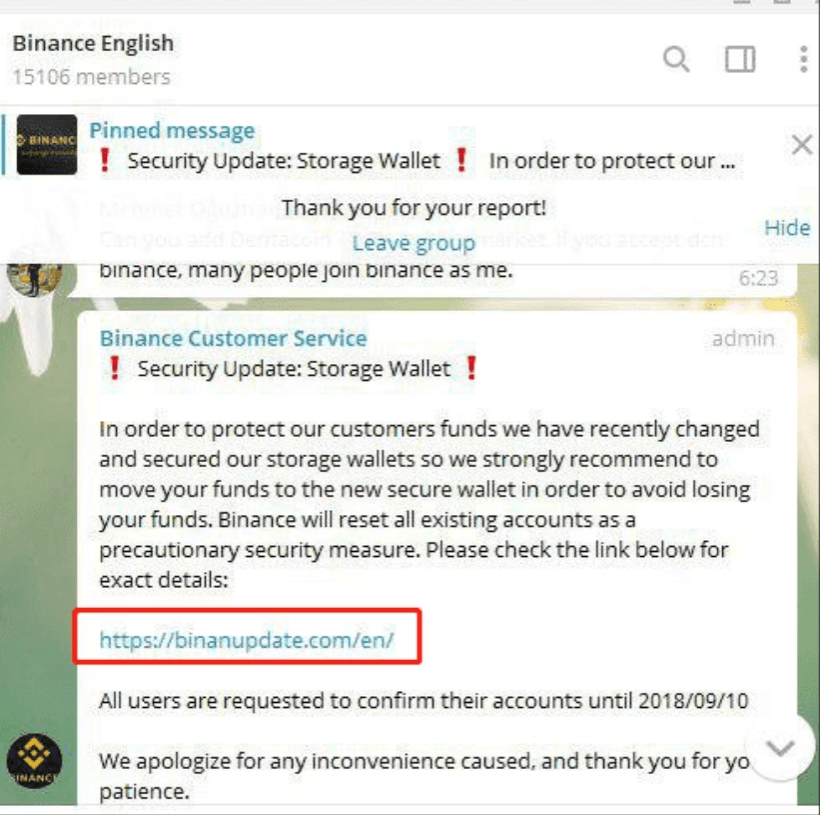
. Phishing attacks
Phishing is a fraudulent attempt to obtain sensitive information such as your username, password, or two-factor authentication code by impersonating Binance in emails, fake websites, social media accounts, instant messages, etc.
Protecting yourself from phishing attacks requires steps by users and Binance. Here are some steps you can take to protect yourself:
Enable two-factor authentication (2FA), such as Binance Authenticator, passkeys, or SMS. Never disclose your backup keys to anyone or any website;
Enable the anti-phishing code to add multiple protections to your emails;
Always update your browser to the latest version, as recent versions warn users about phishing sites or high-risk unsafe websites;
Always log in to Binance through the official website. We also advise you to check whether the domain name binance.com.* or binance.net.* has an SSL certificate or not.
Please report any phishing sites you see named Binance to our security team representative.
3. Fake law enforcement messages
Some scammers may also try to impersonate law enforcement and ask you to take urgent action or your account will be frozen.
For example, they may inform you that your account received funds from illicit sources and that they are investigating for anti-money laundering, and they will ask you to disclose sensitive information about your account or transfer funds to the scammer's account to "verify" your identity.
If you receive these messages, do not respond to them or disclose your account information. Please note that law enforcement authorities will not contact you directly under the pretext that your account is at risk of money laundering, ask you for your password, or make a transfer to unknown accounts.
Be sure to check out Binance's official announcements about the latest updates. Please report any fake messages to our security team representative immediately or contact Binance Support for assistance.
Safety tips
You can verify the identity of the person contacting you by entering your Telegram email address, phone number or username (ID).
You can also whitelist official Binance email addresses in your email:
Whitelist your Binance email addresses.
do-not-reply@binance.com
Most importantly, you must:
Never share your password with anyone;
Do not contact anyone claiming to be a Binance employee or Binance support team;
Do not send funds to anyone claiming to be an employee of Binance;
Enable at least one two-factor authentication.