
CoinPulseHq
431 Публікації

CoinPulseHq
Поскаржитись
Заблокувати користувача
CoinPulseHQ is an independent digital newsroom covering cryptocurrency, blockchain and artificial intelligence.
3 Підписки
14 Підписники
19 Вподобань
Публікації
·
--
Стаття
Переглянути переклад
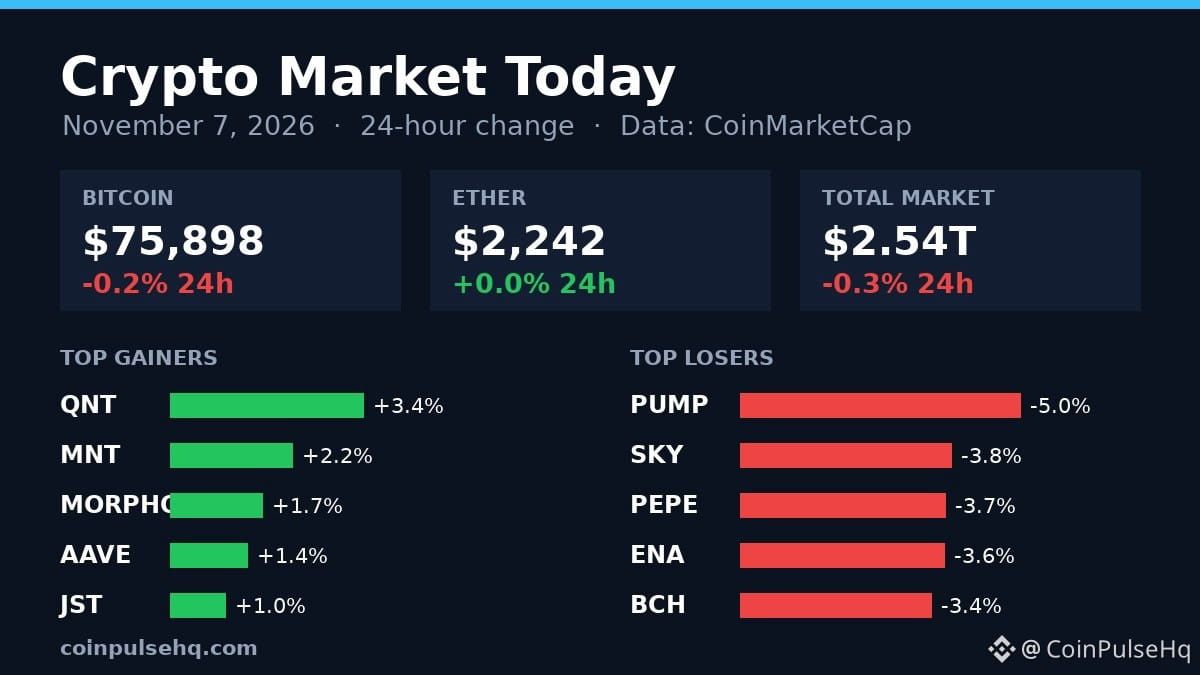
Crypto Market Today, Nov 7, 2026: Bitcoin Steady Near $75.9K as Quant Jumps 3%The crypto market was little changed over the past 24 hours. Total market value moved -0.3% to $2.54 trillion as of 13:00 UTC on Saturday, November 7, 2026. Bitcoin traded at $75,898 (-0.2%) and Ether at $2,242 (+0.0%). 14 of the 50 largest coins were higher, and the median move was -0.9%.
Why is crypto flat today? What the numbers show
• Breadth. There was no clear direction: 14 of 50 large coins rose and 36 fell, so gains in some coins offset losses in others.
• Bitcoin versus altcoins. Only 17 of the other 49 large coins did better than Bitcoin, so money favoured the largest asset. Bitcoin dominance stands at 60.0%, and Ether outperformed Bitcoin by 0.3 percentage points.
• Trading activity. 24-hour volume across the market was $53.1 billion, down 51.4% on the previous day. Volume did not change sharply, so the move was not driven by a surge of trading.
• Bitcoin's 24-hour range. From $75,105 (15:05 UTC, Nov 6) to $76,125 (09:00 UTC), a 1.4% swing. The high came after the low.
Stocks, the dollar and gold
Crypto often trades alongside other risk assets. Latest session for each (the date is the market's last close or update):
Market Level Change As of
S&P 500 7,376.86 +0.3% Nov 6
Nasdaq Composite 24,579.43 +1.1% Nov 6
US dollar index 102.28 +0.7% Nov 6
Gold 4,079.50 -0.8% Nov 7
US 10-year Treasury yield 4.859% +2.2 bp Nov 6
Biggest movers in the top 50
Gainers
Coin Price 24 hours 7 days
Quant (QNT) $196.78 +3.4% +0.2%
Mantle (MNT) $0.4535 +2.2% -4.4%
Morpho (MORPHO) $2.12 +1.7% -1.9%
Aave (AAVE) $131.73 +1.4% -1.4%
JUST (JST) $0.1427 +1.0% +3.7%
Losers
Coin Price 24 hours 7 days
Pump.fun (PUMP) $0.003803 -5.0% -7.8%
Sky (SKY) $0.06382 -3.8% -6.1%
Pepe (PEPE) $0.0000049 -3.7% -2.9%
Ethena (ENA) $0.1605 -3.6% -16.1%
Bitcoin Cash (BCH) $258.55 -3.4% -10.9%
The stories behind today's moves
What CoinPulseHQ reported in the past 24 hours:
• Crypto ETFs Shed $530M as Wall Street Rout Hits Bitcoin — Bitcoin and Ether spot ETFs lost $530M on November 5, 2026 as a Wall Street rout wiped out trillions in stock market value and sent BTC below $76,000.
• Bitcoin drops below $75K as jobs data lifts Fed hike odds — Bitcoin fell to $74,762, its lowest since Aug. 21, after October payrolls beat forecasts and December rate-hike odds rose to 76.8%.
• Magnificent 7 Lose $1 Trillion; Devere CEO Sees More Selective Market — Magnificent 7 lost over $1 trillion on Nov 5, 2026; Devere CEO Nigel Green says the era of buying all seven as one trade is over.
• Russia caps retail crypto buying at 300,000 rubles from Nov. 17 — Russia's central bank set final crypto trading rules on Nov. 6, capping retail buyers at 300,000 rubles per intermediary from Nov. 17.
• Strive Posts $509M Q3 Profit on Bitcoin Gains — Strive posted $509M Q3 net income on $533.7M in unrealized bitcoin gains and held 43,124 BTC by Nov. 2, while American Bitcoin reported $126M profit.
Live prices for the top 50 coins are on our Markets page, and today's biggest movers are on top crypto gainers and losers. Every daily report is collected on Crypto Market Today, and the previous one is Why Is Crypto Down Today, Nov 6, 2026? Bitcoin Falls 4.7% to $76.2K. For the bigger picture, read our weekly market wraps, and if you are wondering about trading hours, see is the crypto market open on weekends.
How this report is made
CoinPulseHQ calculates every figure in this report from CoinMarketCap and CoinGecko market data recorded at 13:00 UTC on Saturday, November 7, 2026, and stock, dollar, gold and bond levels from CNBC quotes. Stablecoins and wrapped or staked versions of other coins are left out of the rankings. Changes are over the previous 24 hours. The report describes what prices did and which measurable factors moved with them; it does not claim a single cause and does not predict prices. It is not financial advice.
Originally published on CoinPulseHQ: https://coinpulsehq.com/crypto-market-today-2026-11-07/?utm_source=binance_square&utm_medium=social&utm_campaign=auto_post
Crypto Market Today, Nov 7, 2026: Bitcoin Steady Near $75.9K as Quant Jumps 3%
The crypto market was little changed over the past 24 hours. Total market value moved -0.3% to $2.54 trillion as of 13:00 UTC on Saturday, November 7, 2026. Bitcoin traded at $75,898 (-0.2%) and Ether at $2,242 (+0.0%). 14 of the 50 largest coins were higher, and the median move was -0.9%.
Why is crypto flat today? What the numbers show
• Breadth. There was no clear direction: 14 of 50 large coins rose and 36 fell, so gains in some coins offset losses in others.
• Bitcoin versus altcoins. Only 17 of the other 49 large coins did better than Bitcoin, so money favoured the largest asset. Bitcoin dominance stands at 60.0%, and Ether outperformed Bitcoin by 0.3 percentage points.
• Trading activity. 24-hour volume across the market was $53.1 billion, down 51.4% on the previous day. Volume did not change sharply, so the move was not driven by a surge of trading.
• Bitcoin's 24-hour range. From $75,105 (15:05 UTC, Nov 6) to $76,125 (09:00 UTC), a 1.4% swing. The high came after the low.
Stocks, the dollar and gold
Crypto often trades alongside other risk assets. Latest session for each (the date is the market's last close or update):
Market Level Change As of
S&P 500 7,376.86 +0.3% Nov 6
Nasdaq Composite 24,579.43 +1.1% Nov 6
US dollar index 102.28 +0.7% Nov 6
Gold 4,079.50 -0.8% Nov 7
US 10-year Treasury yield 4.859% +2.2 bp Nov 6
Biggest movers in the top 50
Gainers
Coin Price 24 hours 7 days
Quant (QNT) $196.78 +3.4% +0.2%
Mantle (MNT) $0.4535 +2.2% -4.4%
Morpho (MORPHO) $2.12 +1.7% -1.9%
Aave (AAVE) $131.73 +1.4% -1.4%
JUST (JST) $0.1427 +1.0% +3.7%
Losers
Coin Price 24 hours 7 days
Pump.fun (PUMP) $0.003803 -5.0% -7.8%
Sky (SKY) $0.06382 -3.8% -6.1%
Pepe (PEPE) $0.0000049 -3.7% -2.9%
Ethena (ENA) $0.1605 -3.6% -16.1%
Bitcoin Cash (BCH) $258.55 -3.4% -10.9%
The stories behind today's moves
What CoinPulseHQ reported in the past 24 hours:
• Crypto ETFs Shed $530M as Wall Street Rout Hits Bitcoin — Bitcoin and Ether spot ETFs lost $530M on November 5, 2026 as a Wall Street rout wiped out trillions in stock market value and sent BTC below $76,000.
• Bitcoin drops below $75K as jobs data lifts Fed hike odds — Bitcoin fell to $74,762, its lowest since Aug. 21, after October payrolls beat forecasts and December rate-hike odds rose to 76.8%.
• Magnificent 7 Lose $1 Trillion; Devere CEO Sees More Selective Market — Magnificent 7 lost over $1 trillion on Nov 5, 2026; Devere CEO Nigel Green says the era of buying all seven as one trade is over.
• Russia caps retail crypto buying at 300,000 rubles from Nov. 17 — Russia's central bank set final crypto trading rules on Nov. 6, capping retail buyers at 300,000 rubles per intermediary from Nov. 17.
• Strive Posts $509M Q3 Profit on Bitcoin Gains — Strive posted $509M Q3 net income on $533.7M in unrealized bitcoin gains and held 43,124 BTC by Nov. 2, while American Bitcoin reported $126M profit.
Live prices for the top 50 coins are on our Markets page, and today's biggest movers are on top crypto gainers and losers. Every daily report is collected on Crypto Market Today, and the previous one is Why Is Crypto Down Today, Nov 6, 2026? Bitcoin Falls 4.7% to $76.2K. For the bigger picture, read our weekly market wraps, and if you are wondering about trading hours, see is the crypto market open on weekends.
How this report is made
CoinPulseHQ calculates every figure in this report from CoinMarketCap and CoinGecko market data recorded at 13:00 UTC on Saturday, November 7, 2026, and stock, dollar, gold and bond levels from CNBC quotes. Stablecoins and wrapped or staked versions of other coins are left out of the rankings. Changes are over the previous 24 hours. The report describes what prices did and which measurable factors moved with them; it does not claim a single cause and does not predict prices. It is not financial advice.
Originally published on CoinPulseHQ: https://coinpulsehq.com/crypto-market-today-2026-11-07/?utm_source=binance_square&utm_medium=social&utm_campaign=auto_post
40
·
--
Стаття
Переглянути переклад
Tom Lee’s ETH bottom call tested by $45.3M whale longEthereum's price has held up better than futures positioning would suggest, and a leveraged trader appears to be counting on that. According to AMBCrypto, a trader claiming a perfect win rate opened a long on 20,277 ETH using 25x leverage, a position worth $45.3 million that was already $252,000 in profit at the time of reporting.
The same trader's previous 10 trades were all profitable, producing $6.32 million in realized gains, AMBCrypto reported on November 6. The bet adds weight to Tom Lee's argument that Ethereum is bottoming, though the on-chain and flow data the outlet cites point the other way.
Key facts
• Nearly $300 million in long positions were liquidated over the past 48 hours, yet ETH fell just over 1%.
• Earlier in October, almost $500 million in positions were liquidated when ETH broke below $2.5k support, triggering a 7% correction.
• About 1,036,882 ETH, worth more than $2.3 billion, is waiting in the Ethereum mainnet validator queue, down from 3,737,802 ETH six months earlier.
• Ethereum ETFs have recorded $270 million in net outflows in under a week since November began, after five consecutive weeks of outflows.
• October's ETF outflows totaled $1.6 billion, a level November could exceed if the current pace holds.
Why the price held while futures sold off
The comparison AMBCrypto draws is between October and the past two days. October's break below $2.5k forced a deeper correction because liquidation volume was larger. This time the liquidation total was smaller and the price response was muted, which the report reads as contained selling pressure rather than a signal of a turn.
That gap is what makes the whale trade notable. A trader with a claimed 100% win rate is positioning before any confirmed recovery in the data, and the report presents the bet as a possible lead indicator rather than proof that a floor has formed.
What the supply and flow data show
Staking demand has cooled. The validator queue has fallen to roughly a quarter of its level six months ago, which the report interprets as fewer holders willing to lock ETH for rewards. Institutional flows are also negative: five straight weeks of ETF outflows, with $270 million leaving in less than a week of November, put this month on pace to pass October's $1.6 billion.
Liquidation levels add a third pressure point. A large cluster of long liquidations sits below $2,200 ETH, and AMBCrypto notes that a sweep of that liquidity could take the price under $2k before any reversal.
Why it matters
Leveraged longs are a two-way signal for holders. They show conviction, but they also create the fuel for the liquidation cascades the report describes, so a cluster below $2,200 makes a deeper move self-reinforcing if sentiment stays weak. For ETF investors, the outflow trend matters more than any single trade, since it reflects institutional positioning rather than one trader's view. Tom Lee's bottom thesis now depends on staking demand and ETF flows turning, not on one whale being right. This is not financial advice, and crypto markets are volatile and uncertain.
What to watch
Two data points will settle the debate in the near term: whether November ETF outflows pass October's $1.6 billion, and whether the validator queue keeps shrinking. ETH's reaction around the $2,200 liquidation cluster is the immediate price test of Lee's call.
Originally published on CoinPulseHQ: https://coinpulsehq.com/tom-lee-ethereum-bottom-45m-whale-long/?utm_source=binance_square&utm_medium=social&utm_campaign=auto_post
Tom Lee’s ETH bottom call tested by $45.3M whale long
Ethereum's price has held up better than futures positioning would suggest, and a leveraged trader appears to be counting on that. According to AMBCrypto, a trader claiming a perfect win rate opened a long on 20,277 ETH using 25x leverage, a position worth $45.3 million that was already $252,000 in profit at the time of reporting.
The same trader's previous 10 trades were all profitable, producing $6.32 million in realized gains, AMBCrypto reported on November 6. The bet adds weight to Tom Lee's argument that Ethereum is bottoming, though the on-chain and flow data the outlet cites point the other way.
Key facts
• Nearly $300 million in long positions were liquidated over the past 48 hours, yet ETH fell just over 1%.
• Earlier in October, almost $500 million in positions were liquidated when ETH broke below $2.5k support, triggering a 7% correction.
• About 1,036,882 ETH, worth more than $2.3 billion, is waiting in the Ethereum mainnet validator queue, down from 3,737,802 ETH six months earlier.
• Ethereum ETFs have recorded $270 million in net outflows in under a week since November began, after five consecutive weeks of outflows.
• October's ETF outflows totaled $1.6 billion, a level November could exceed if the current pace holds.
Why the price held while futures sold off
The comparison AMBCrypto draws is between October and the past two days. October's break below $2.5k forced a deeper correction because liquidation volume was larger. This time the liquidation total was smaller and the price response was muted, which the report reads as contained selling pressure rather than a signal of a turn.
That gap is what makes the whale trade notable. A trader with a claimed 100% win rate is positioning before any confirmed recovery in the data, and the report presents the bet as a possible lead indicator rather than proof that a floor has formed.
What the supply and flow data show
Staking demand has cooled. The validator queue has fallen to roughly a quarter of its level six months ago, which the report interprets as fewer holders willing to lock ETH for rewards. Institutional flows are also negative: five straight weeks of ETF outflows, with $270 million leaving in less than a week of November, put this month on pace to pass October's $1.6 billion.
Liquidation levels add a third pressure point. A large cluster of long liquidations sits below $2,200 ETH, and AMBCrypto notes that a sweep of that liquidity could take the price under $2k before any reversal.
Why it matters
Leveraged longs are a two-way signal for holders. They show conviction, but they also create the fuel for the liquidation cascades the report describes, so a cluster below $2,200 makes a deeper move self-reinforcing if sentiment stays weak. For ETF investors, the outflow trend matters more than any single trade, since it reflects institutional positioning rather than one trader's view. Tom Lee's bottom thesis now depends on staking demand and ETF flows turning, not on one whale being right. This is not financial advice, and crypto markets are volatile and uncertain.
What to watch
Two data points will settle the debate in the near term: whether November ETF outflows pass October's $1.6 billion, and whether the validator queue keeps shrinking. ETH's reaction around the $2,200 liquidation cluster is the immediate price test of Lee's call.
Originally published on CoinPulseHQ: https://coinpulsehq.com/tom-lee-ethereum-bottom-45m-whale-long/?utm_source=binance_square&utm_medium=social&utm_campaign=auto_post
77
·
--

Стаття
Переглянути переклад
Terawulf Loss Widens to $88.2M as IREN Mining Revenue Falls 58%Terawulf's third-quarter operating loss widened to $88.2 million from $24.7 million a year earlier, even as total revenue rose to $76.2 million, according to Bitcoin.com News. The U.S. digital infrastructure provider said high-performance computing (HPC) leasing brought in $63 million, about 83% of the top line, while bitcoin mining and legacy digital asset revenue kept shrinking as a share of sales.
The results, released Nov. 6, landed the same week that Nasdaq-listed IREN reported a 58% quarterly drop in bitcoin mining revenue to $28 million. Both companies are redirecting power and capital toward AI computing, and both are being judged on whether the new business can outrun the costs of building it.
Key facts
• Terawulf's total costs and expenses more than doubled to $164.5 million from $75.3 million a year earlier, with the widening loss tied to higher selling, general and administrative spending and interest costs.
• The company ended the quarter with about $2.4 billion in cash, cash equivalents and restricted cash, and completed the sale of its 50.1% stake in the Abernathy Joint Venture for $250 million in upfront cash.
• IREN's bitcoin mining revenue fell to $28 million from $67 million in the June quarter and from $233 million a year earlier, per its quarterly filing with the SEC.
• IREN mined 402 BTC versus 2,039 BTC a year earlier, and its average operating hashrate fell to 8.8 EH/s from 45.3 EH/s as miners were removed.
• IREN's AI cloud revenue rose 182% to $200 million, lifting total quarterly revenue 66% to $228 million, according to crypto.news.
What changed at Terawulf
Terawulf is no longer primarily a miner. Its third-quarter financial results show HPC leasing carrying the business, while the Lake Mariner facility had 102 megawatts of operational IT capacity as of Sept. 30, with another 336 MW under construction at an estimated $8 million to $10 million per MW.
The company's contracted pipeline has grown alongside the buildout. It holds a 20-year lease with Anthropic at its Justified Campus worth roughly $19 billion in contracted revenue, backed by a Google credit backstop for project financing. It expanded the Muskie Campus in Kentucky to 1 gigawatt of contracted power and expects to begin delivering Anthropic data centers there by late 2027. It also raised commitments under its revolving credit agreement to $400 million.
IREN's mining exit and the Microsoft delay
IREN's filing states the company aims to substantially complete its move away from bitcoin mining by Dec. 31, 2026, with immaterial mining operations continuing through calendar 2027. It held no bitcoin on its balance sheet at the end of September and sells mined coins daily.
The bitcoin decline was offset by AI cloud growth, which came in at 86% gross margin and nearly 88% of quarterly revenue, up from roughly 52% in June. Cloud services contributed $135 million of the AI total and cloud leasing $65 million. IREN reported a net loss of $263 million, narrower than the prior quarter's $684 million, and adjusted EBITDA of $66 million, up from $19 million.
The company's $4 billion annual recurring revenue target slipped. IREN had expected to reach it by December 2026; co-CEO Daniel Roberts said the goal is now targeted for January 2027, with a possible extension into February, citing a customer-requested design change and supplier timing. On the earnings call he named Microsoft, which requested network infrastructure changes for its 200-megawatt deployment. Bernstein rated the stock Outperform with a $55 price target, CoinCentral reported.
Shares closed at $18.03 on Nov. 5, down from $21.71 the prior session — a fall of nearly 17% — during a sell-off in AI and technology stocks, though the stock recovered some ground after hours.
Why it matters
Both companies are testing whether data center leasing can replace mining economics before the old business fades. Terawulf's revenue is growing and its losses are widening at the same time; IREN's mining arm is shrinking quickly while its AI backlog reached $20.3 billion, up 22%, with about two-thirds tied to investment-grade customers.
The pattern is not limited to these two firms. MARA has partnered with Starwood on AI data centers and CleanSpark has expanded into AI computing, and IREN's total assets of $20.6 billion now include $6 billion in data center assets, supported by agreements involving Nvidia, Microsoft and 13 other customers.
What to watch
IREN's Dec. 31, 2026 target for completing its mining exit and the January 2027 date for its $4 billion ARR goal are the next checkpoints. Terawulf's delivery of Anthropic data centers at Muskie, expected by late 2027, and progress on the 336 MW under construction at Lake Mariner will show whether its spending converts into lease revenue. IREN also faces roughly $15 billion in remaining fiscal 2027 capital expenditure, with $6 billion still dependent on financing it has not yet secured.
Investors should note that analyst targets such as Bernstein's $55 figure are forecasts, not outcomes. This is not financial advice, and the market for AI and mining-linked equities remains volatile and uncertain.
Originally published on CoinPulseHQ: https://coinpulsehq.com/terawulf-iren-ai-pivot-mining-revenue-falls/?utm_source=binance_square&utm_medium=social&utm_campaign=auto_post
Terawulf Loss Widens to $88.2M as IREN Mining Revenue Falls 58%
Terawulf's third-quarter operating loss widened to $88.2 million from $24.7 million a year earlier, even as total revenue rose to $76.2 million, according to Bitcoin.com News. The U.S. digital infrastructure provider said high-performance computing (HPC) leasing brought in $63 million, about 83% of the top line, while bitcoin mining and legacy digital asset revenue kept shrinking as a share of sales.
The results, released Nov. 6, landed the same week that Nasdaq-listed IREN reported a 58% quarterly drop in bitcoin mining revenue to $28 million. Both companies are redirecting power and capital toward AI computing, and both are being judged on whether the new business can outrun the costs of building it.
Key facts
• Terawulf's total costs and expenses more than doubled to $164.5 million from $75.3 million a year earlier, with the widening loss tied to higher selling, general and administrative spending and interest costs.
• The company ended the quarter with about $2.4 billion in cash, cash equivalents and restricted cash, and completed the sale of its 50.1% stake in the Abernathy Joint Venture for $250 million in upfront cash.
• IREN's bitcoin mining revenue fell to $28 million from $67 million in the June quarter and from $233 million a year earlier, per its quarterly filing with the SEC.
• IREN mined 402 BTC versus 2,039 BTC a year earlier, and its average operating hashrate fell to 8.8 EH/s from 45.3 EH/s as miners were removed.
• IREN's AI cloud revenue rose 182% to $200 million, lifting total quarterly revenue 66% to $228 million, according to crypto.news.
What changed at Terawulf
Terawulf is no longer primarily a miner. Its third-quarter financial results show HPC leasing carrying the business, while the Lake Mariner facility had 102 megawatts of operational IT capacity as of Sept. 30, with another 336 MW under construction at an estimated $8 million to $10 million per MW.
The company's contracted pipeline has grown alongside the buildout. It holds a 20-year lease with Anthropic at its Justified Campus worth roughly $19 billion in contracted revenue, backed by a Google credit backstop for project financing. It expanded the Muskie Campus in Kentucky to 1 gigawatt of contracted power and expects to begin delivering Anthropic data centers there by late 2027. It also raised commitments under its revolving credit agreement to $400 million.
IREN's mining exit and the Microsoft delay
IREN's filing states the company aims to substantially complete its move away from bitcoin mining by Dec. 31, 2026, with immaterial mining operations continuing through calendar 2027. It held no bitcoin on its balance sheet at the end of September and sells mined coins daily.
The bitcoin decline was offset by AI cloud growth, which came in at 86% gross margin and nearly 88% of quarterly revenue, up from roughly 52% in June. Cloud services contributed $135 million of the AI total and cloud leasing $65 million. IREN reported a net loss of $263 million, narrower than the prior quarter's $684 million, and adjusted EBITDA of $66 million, up from $19 million.
The company's $4 billion annual recurring revenue target slipped. IREN had expected to reach it by December 2026; co-CEO Daniel Roberts said the goal is now targeted for January 2027, with a possible extension into February, citing a customer-requested design change and supplier timing. On the earnings call he named Microsoft, which requested network infrastructure changes for its 200-megawatt deployment. Bernstein rated the stock Outperform with a $55 price target, CoinCentral reported.
Shares closed at $18.03 on Nov. 5, down from $21.71 the prior session — a fall of nearly 17% — during a sell-off in AI and technology stocks, though the stock recovered some ground after hours.
Why it matters
Both companies are testing whether data center leasing can replace mining economics before the old business fades. Terawulf's revenue is growing and its losses are widening at the same time; IREN's mining arm is shrinking quickly while its AI backlog reached $20.3 billion, up 22%, with about two-thirds tied to investment-grade customers.
The pattern is not limited to these two firms. MARA has partnered with Starwood on AI data centers and CleanSpark has expanded into AI computing, and IREN's total assets of $20.6 billion now include $6 billion in data center assets, supported by agreements involving Nvidia, Microsoft and 13 other customers.
What to watch
IREN's Dec. 31, 2026 target for completing its mining exit and the January 2027 date for its $4 billion ARR goal are the next checkpoints. Terawulf's delivery of Anthropic data centers at Muskie, expected by late 2027, and progress on the 336 MW under construction at Lake Mariner will show whether its spending converts into lease revenue. IREN also faces roughly $15 billion in remaining fiscal 2027 capital expenditure, with $6 billion still dependent on financing it has not yet secured.
Investors should note that analyst targets such as Bernstein's $55 figure are forecasts, not outcomes. This is not financial advice, and the market for AI and mining-linked equities remains volatile and uncertain.
Originally published on CoinPulseHQ: https://coinpulsehq.com/terawulf-iren-ai-pivot-mining-revenue-falls/?utm_source=binance_square&utm_medium=social&utm_campaign=auto_post
113
·
--
Стаття
Переглянути переклад
Bitcoin drops below $75K as jobs data lifts Fed hike oddsBitcoin fell to $74,762 shortly after Friday's US stock market open, its weakest level since Aug. 21, as cryptocurrencies failed to follow a rebound in technology shares, Cointelegraph reported. The decline came after October's US employment report beat forecasts by a wide margin.
Cointelegraph noted that the total value of the crypto market slipped 0.5% over the day, while US equities moved in the opposite direction. The S&P 500 was up 0.6% and the Nasdaq Composite up 1.2% at the time of writing.
Key facts
• BTC/USD reached $74,762, its lowest price since Aug. 21, and traded back below $75,000.
• US nonfarm payrolls showed 165,000 jobs added in October versus expectations of 65,000, with September's figure revised up to 60,000 from 29,000.
• The unemployment rate came in at 4.1%, below the 4.2% forecast.
• Odds of a 25-basis-point Fed hike in December rose from 66.9% to 76.8% on CME Group's FedWatch Tool.
• Tech names SanDisk and Micron Technologies each gained 6.3%.
Jobs surprise lifts rate-hike expectations
According to the Bureau of Labor Statistics release, hiring rose in professional and business services, health care, and transportation and warehousing. A firmer labour market can weigh on crypto and other risk assets, since it suggests the economy can absorb tighter financial policy, which can limit the liquidity flowing into markets.
That read was reflected in rate expectations. A comparison of target-rate probabilities for the December Federal Open Market Committee meeting, published through the CME FedWatch Tool, showed the chance of a hike climbing to 76.8% from 66.9% before the data.
Bitcoin tests the 50-week moving average
Bitcoin touched support around its 50-week simple moving average at $77,533. Keith Alan, cofounder of trading platform Material Indicators, said the trend line had held since mid-September, but he cautioned that its strength could not be confirmed before the weekly close.
Alan said BTC/USD could fall as far as $69,000 if the region near $75,500 gives way. A recovery, in his view, would require the pair to print a run of higher highs and higher lows on shorter time frames.
Why it matters
The session showed bitcoin detaching from the equity market it has often tracked, a pattern that leaves crypto holders more exposed to rate expectations than to stock sentiment. Traders who bought into the post-election advance are now watching a key technical level decide whether the pullback deepens. The gap matters for leveraged positions and for funds that treat bitcoin as a risk proxy.
What to watch
The weekly candle close will show whether the 50-week moving average holds as support. The December FOMC meeting is the next major policy marker, with rate expectations now leaning further toward tightening.
Price levels discussed here reflect analyst views and are not financial advice; crypto markets are volatile and can move sharply in either direction.
Originally published on CoinPulseHQ: https://coinpulsehq.com/bitcoin-below-75k-jobs-data-fed-hike-odds/?utm_source=binance_square&utm_medium=social&utm_campaign=auto_post
Bitcoin drops below $75K as jobs data lifts Fed hike odds
Bitcoin fell to $74,762 shortly after Friday's US stock market open, its weakest level since Aug. 21, as cryptocurrencies failed to follow a rebound in technology shares, Cointelegraph reported. The decline came after October's US employment report beat forecasts by a wide margin.
Cointelegraph noted that the total value of the crypto market slipped 0.5% over the day, while US equities moved in the opposite direction. The S&P 500 was up 0.6% and the Nasdaq Composite up 1.2% at the time of writing.
Key facts
• BTC/USD reached $74,762, its lowest price since Aug. 21, and traded back below $75,000.
• US nonfarm payrolls showed 165,000 jobs added in October versus expectations of 65,000, with September's figure revised up to 60,000 from 29,000.
• The unemployment rate came in at 4.1%, below the 4.2% forecast.
• Odds of a 25-basis-point Fed hike in December rose from 66.9% to 76.8% on CME Group's FedWatch Tool.
• Tech names SanDisk and Micron Technologies each gained 6.3%.
Jobs surprise lifts rate-hike expectations
According to the Bureau of Labor Statistics release, hiring rose in professional and business services, health care, and transportation and warehousing. A firmer labour market can weigh on crypto and other risk assets, since it suggests the economy can absorb tighter financial policy, which can limit the liquidity flowing into markets.
That read was reflected in rate expectations. A comparison of target-rate probabilities for the December Federal Open Market Committee meeting, published through the CME FedWatch Tool, showed the chance of a hike climbing to 76.8% from 66.9% before the data.
Bitcoin tests the 50-week moving average
Bitcoin touched support around its 50-week simple moving average at $77,533. Keith Alan, cofounder of trading platform Material Indicators, said the trend line had held since mid-September, but he cautioned that its strength could not be confirmed before the weekly close.
Alan said BTC/USD could fall as far as $69,000 if the region near $75,500 gives way. A recovery, in his view, would require the pair to print a run of higher highs and higher lows on shorter time frames.
Why it matters
The session showed bitcoin detaching from the equity market it has often tracked, a pattern that leaves crypto holders more exposed to rate expectations than to stock sentiment. Traders who bought into the post-election advance are now watching a key technical level decide whether the pullback deepens. The gap matters for leveraged positions and for funds that treat bitcoin as a risk proxy.
What to watch
The weekly candle close will show whether the 50-week moving average holds as support. The December FOMC meeting is the next major policy marker, with rate expectations now leaning further toward tightening.
Price levels discussed here reflect analyst views and are not financial advice; crypto markets are volatile and can move sharply in either direction.
Originally published on CoinPulseHQ: https://coinpulsehq.com/bitcoin-below-75k-jobs-data-fed-hike-odds/?utm_source=binance_square&utm_medium=social&utm_campaign=auto_post
·
--

Стаття
«Чудова сімка» втратила 1 трильйон доларів; генеральний директор Devere очікує вибірковішого підходу ринкуУ четвер, 5 листопада, «Чудова сімка» втратила понад 1 трильйон доларів ринкової вартості, а генеральний директор Devere Group Найджел Ґрін заявив, що лідерство групи в технологічному секторі не завершилося — завершилася лише звичка купувати всі сім акцій в межах однієї угоди. Ґрін надіслав свою оцінку Bitcoin.com News 6 листопада, наступного дня після розпродажу.
Ґрін зазначив, що одноденна втрата 1 трильйона доларів природно порушує питання, чи завершилося панування цієї групи, і відповів, що ні. Він стверджував, що відтепер кожну компанію оцінюватимуть за її власними показниками, а багато інвесторів сприймуть падіння як нагоду купити акції на спаді.
«Чудова сімка» втратила 1 трильйон доларів; генеральний директор Devere очікує вибірковішого підходу ринку
У четвер, 5 листопада, «Чудова сімка» втратила понад 1 трильйон доларів ринкової вартості, а генеральний директор Devere Group Найджел Ґрін заявив, що лідерство групи в технологічному секторі не завершилося — завершилася лише звичка купувати всі сім акцій в межах однієї угоди. Ґрін надіслав свою оцінку Bitcoin.com News 6 листопада, наступного дня після розпродажу.
Ґрін зазначив, що одноденна втрата 1 трильйона доларів природно порушує питання, чи завершилося панування цієї групи, і відповів, що ні. Він стверджував, що відтепер кожну компанію оцінюватимуть за її власними показниками, а багато інвесторів сприймуть падіння як нагоду купити акції на спаді.
Ґрін зазначив, що одноденна втрата 1 трильйона доларів природно порушує питання, чи завершилося панування цієї групи, і відповів, що ні. Він стверджував, що відтепер кожну компанію оцінюватимуть за її власними показниками, а багато інвесторів сприймуть падіння як нагоду купити акції на спаді.
80
·
--

Стаття
З 17 листопада Росія обмежить купівлю криптовалют роздрібними інвесторами сумою 300 000 рублів6 листопада центральний банк Росії підписав директиву, що встановлює остаточні умови регульованої торгівлі криптовалютами: перелік дозволених активів обмежено біткоїном, ефіром і USDT компанії Tether, а для некваліфікованих інвесторів встановлено ліміт на купівлю — 300 000 рублів через одного посередника протягом календарного року. Як повідомив Cointelegraph, організатори торгів можуть допустити ці три активи до публічного обігу з 17 листопада.
Ця вказівка, підписана головою Банку Росії Ельвірою Набіулліною відповідно до Федерального закону № 282-ФЗ від 4 серпня, набуває чинності через десять днів після опублікування, тож після підписання 6 листопада вона почне діяти 17 листопада. Ліміт для роздрібних інвесторів стосується витрат на купівлю в рублях, а не вартості активів, якими володіє інвестор.
З 17 листопада Росія обмежить купівлю криптовалют роздрібними інвесторами сумою 300 000 рублів
6 листопада центральний банк Росії підписав директиву, що встановлює остаточні умови регульованої торгівлі криптовалютами: перелік дозволених активів обмежено біткоїном, ефіром і USDT компанії Tether, а для некваліфікованих інвесторів встановлено ліміт на купівлю — 300 000 рублів через одного посередника протягом календарного року. Як повідомив Cointelegraph, організатори торгів можуть допустити ці три активи до публічного обігу з 17 листопада.
Ця вказівка, підписана головою Банку Росії Ельвірою Набіулліною відповідно до Федерального закону № 282-ФЗ від 4 серпня, набуває чинності через десять днів після опублікування, тож після підписання 6 листопада вона почне діяти 17 листопада. Ліміт для роздрібних інвесторів стосується витрат на купівлю в рублях, а не вартості активів, якими володіє інвестор.
Ця вказівка, підписана головою Банку Росії Ельвірою Набіулліною відповідно до Федерального закону № 282-ФЗ від 4 серпня, набуває чинності через десять днів після опублікування, тож після підписання 6 листопада вона почне діяти 17 листопада. Ліміт для роздрібних інвесторів стосується витрат на купівлю в рублях, а не вартості активів, якими володіє інвестор.
31
·
--

Стаття
Переглянути переклад
Strive Posts $509M Q3 Profit on Bitcoin GainsStrive Inc. (Nasdaq: ASST) reported net income of $509 million for the third quarter of 2026, or $5.24 per diluted common share, according to Bitcoin.com News. The result rested mainly on $533.7 million of unrealized gains on the company's digital assets rather than on its operating businesses, which brought in $2.7 million of revenue against $38.7 million in operating expenses.
Adjusted net income attributable to common shareholders was $494.6 million, or $5.46 per diluted share, Bitcoin.com News reported. The split between mark-to-market gains and thin operating revenue shows how much of the quarter's headline figure came from bitcoin's price rather than from customers.
Key facts
• Strive’s digital asset holdings were valued at $2.34 billion at quarter-end, up from $668.5 million at the end of 2025; total assets reached $2.68 billion.
• The company bought 8,136 BTC during the quarter and 20,373 BTC over the first nine months of 2026.
• Between Oct. 1 and Oct. 30 it added 15,124 BTC, lifting holdings to 43,000 BTC, more than 54% above the Sept. 30 level of 27,876 BTC.
• A Oct. 26 disclosure covered 6,182 BTC bought for roughly $511.4 million; a further 124 BTC for about $10 million took holdings to 43,124 BTC as of Nov. 2.
• On Oct. 20 Strive completed a 7 million-share public offering of SATS preferred stock, raising $609 million in net proceeds from a $630 million gross offering at a 15% annual dividend rate.
Preferred stock funds the buying
Strive's expansion has been financed largely through preferred equity. The SATS offering was followed by continued use of the company's SATA variable-rate preferred program. As of Oct. 30, Strive held $490.4 million in cash and cash equivalents and about $50.1 million in Strategy's STRC preferred shares, according to Bitcoin.com News.
The structure avoids conventional borrowing but obliges Strive to keep paying dividends even in a falling bitcoin market. Chairman and CEO Matthew Cole, in the company's quarterly release, credited the treasury strategy and the SATS issuance for the common stock's performance against bitcoin this year and said the company is reviewing banking, brokerage, decentralized finance, reinsurance, asset-backed securities and tokenization as uses for its balance sheet.
American Bitcoin's paper profit
A second bitcoin treasury and mining company told a similar story in the same earnings season. Bitcoin Magazine reported that American Bitcoin Corp. (Nasdaq: ABTC), majority-owned by Hut 8 Corp., posted about $126 million of third-quarter net income, a reversal from a $57.2 million loss in the prior quarter.
American Bitcoin's profit leaned on a $197.3 million gain on its bitcoin holdings, against a $71.2 million loss on that line in the second quarter. Mining revenue fell to about $63.4 million from about $67.0 million, and the company mined about 891 bitcoin at roughly $42,100 each, up from about $36,500. Holdings reached about 8,427 BTC as of Sept. 30, including about 3,090 BTC pledged for miner purchases under agreements with Bitmain, Bitcoin Magazine reported. Management said satoshis per share rose about 5% to roughly 11,572.
Why it matters
For shareholders, both results tie reported earnings to bitcoin's price, and the gap between headline profit and operating income is the clearest measure of that exposure. Strive's preferred dividends add a fixed cost that its $2.7 million of quarterly operating revenue does not cover on its own. The filings also show how quickly the corporate treasury sector has grown: Strive, which held $668.5 million of digital assets a year earlier, closed the quarter with $2.34 billion and has kept buying since.
What to watch
Strive's next quarterly filing will show whether its Oct. 20 preferred offering and $490.4 million cash pile translate into further purchases, and whether the dividend obligations on SATS and SATA stay covered as bitcoin moves. American Bitcoin's next report will test whether its mining margins hold up after the rise in per-coin costs.
This article is not financial advice; cryptocurrency prices are volatile and can move sharply in either direction.
Originally published on CoinPulseHQ: https://coinpulsehq.com/strive-509m-q3-profit-bitcoin-holdings/?utm_source=binance_square&utm_medium=social&utm_campaign=auto_post
Strive Posts $509M Q3 Profit on Bitcoin Gains
Strive Inc. (Nasdaq: ASST) reported net income of $509 million for the third quarter of 2026, or $5.24 per diluted common share, according to Bitcoin.com News. The result rested mainly on $533.7 million of unrealized gains on the company's digital assets rather than on its operating businesses, which brought in $2.7 million of revenue against $38.7 million in operating expenses.
Adjusted net income attributable to common shareholders was $494.6 million, or $5.46 per diluted share, Bitcoin.com News reported. The split between mark-to-market gains and thin operating revenue shows how much of the quarter's headline figure came from bitcoin's price rather than from customers.
Key facts
• Strive’s digital asset holdings were valued at $2.34 billion at quarter-end, up from $668.5 million at the end of 2025; total assets reached $2.68 billion.
• The company bought 8,136 BTC during the quarter and 20,373 BTC over the first nine months of 2026.
• Between Oct. 1 and Oct. 30 it added 15,124 BTC, lifting holdings to 43,000 BTC, more than 54% above the Sept. 30 level of 27,876 BTC.
• A Oct. 26 disclosure covered 6,182 BTC bought for roughly $511.4 million; a further 124 BTC for about $10 million took holdings to 43,124 BTC as of Nov. 2.
• On Oct. 20 Strive completed a 7 million-share public offering of SATS preferred stock, raising $609 million in net proceeds from a $630 million gross offering at a 15% annual dividend rate.
Preferred stock funds the buying
Strive's expansion has been financed largely through preferred equity. The SATS offering was followed by continued use of the company's SATA variable-rate preferred program. As of Oct. 30, Strive held $490.4 million in cash and cash equivalents and about $50.1 million in Strategy's STRC preferred shares, according to Bitcoin.com News.
The structure avoids conventional borrowing but obliges Strive to keep paying dividends even in a falling bitcoin market. Chairman and CEO Matthew Cole, in the company's quarterly release, credited the treasury strategy and the SATS issuance for the common stock's performance against bitcoin this year and said the company is reviewing banking, brokerage, decentralized finance, reinsurance, asset-backed securities and tokenization as uses for its balance sheet.
American Bitcoin's paper profit
A second bitcoin treasury and mining company told a similar story in the same earnings season. Bitcoin Magazine reported that American Bitcoin Corp. (Nasdaq: ABTC), majority-owned by Hut 8 Corp., posted about $126 million of third-quarter net income, a reversal from a $57.2 million loss in the prior quarter.
American Bitcoin's profit leaned on a $197.3 million gain on its bitcoin holdings, against a $71.2 million loss on that line in the second quarter. Mining revenue fell to about $63.4 million from about $67.0 million, and the company mined about 891 bitcoin at roughly $42,100 each, up from about $36,500. Holdings reached about 8,427 BTC as of Sept. 30, including about 3,090 BTC pledged for miner purchases under agreements with Bitmain, Bitcoin Magazine reported. Management said satoshis per share rose about 5% to roughly 11,572.
Why it matters
For shareholders, both results tie reported earnings to bitcoin's price, and the gap between headline profit and operating income is the clearest measure of that exposure. Strive's preferred dividends add a fixed cost that its $2.7 million of quarterly operating revenue does not cover on its own. The filings also show how quickly the corporate treasury sector has grown: Strive, which held $668.5 million of digital assets a year earlier, closed the quarter with $2.34 billion and has kept buying since.
What to watch
Strive's next quarterly filing will show whether its Oct. 20 preferred offering and $490.4 million cash pile translate into further purchases, and whether the dividend obligations on SATS and SATA stay covered as bitcoin moves. American Bitcoin's next report will test whether its mining margins hold up after the rise in per-coin costs.
This article is not financial advice; cryptocurrency prices are volatile and can move sharply in either direction.
Originally published on CoinPulseHQ: https://coinpulsehq.com/strive-509m-q3-profit-bitcoin-holdings/?utm_source=binance_square&utm_medium=social&utm_campaign=auto_post
2
·
--
Стаття
Переглянути переклад
Democrats’ Midterm Sweep Puts CLARITY Act Back in PlayDemocrats won both chambers of Congress in the 2026 US midterms and will take control in January, handing them a chance to rewrite the stalled CLARITY Act, the bill meant to set federal rules for crypto markets, Cointelegraph reported on Nov. 6. Crypto companies spent $233 million on political committees during the cycle, according to Public Citizen's analysis of federal filings cited by the outlet.
That money did not buy the result the industry wanted in Ohio. Democrat Sherrod Brown, a longtime crypto skeptic, defeated Republican Sen. Jon Husted, even though crypto-backed political action committees spent $64 million trying to beat him. Cointelegraph also reported that Sen. Elizabeth Warren, among crypto's loudest critics in Washington and the most senior Democrat on the Senate Banking Committee, is expected to chair the panel next Congress.
Key facts
• Crypto interests contributed $233 million to political committees in the 2026 midterm cycle, per Public Citizen's analysis of federal filings.
• Democrats won both chambers and take control in January, giving them leverage over the CLARITY Act, which the Senate failed to advance in September over ethics provisions.
• Crypto-backed PACs spent $64 million to defeat Sherrod Brown in Ohio; he won anyway.
• Sen. Elizabeth Warren is expected to chair the Senate Banking Committee in the next Congress.
• The Binance hack of Oct. 29, in which over $6.3 billion was stolen, landed as lawmakers were already weighing the bill.
A different bargain for market structure
House Democrats are said to be considering expanding proposals from Rep. Maxine Waters into a full market structure bill, according to Cointelegraph. Such a bill could carry tougher consumer protections, a larger role for the Securities and Exchange Commission and new ethics restrictions on public officials' crypto dealings. Rep. Shri Thanedar told the outlet he still believes the CLARITY Act can pass, but only with stronger ethics requirements, and said President Trump's conduct had set back crypto legislation.
Hadley Stern, head of institutions at Silence Laboratories and a founder of Fidelity Digital Assets, told Cointelegraph that Democrats are right to pursue the Trump family's crypto ventures, calling them the thing poisoning the bipartisan deal. Paul Brody of Nightfall Networks, a former global blockchain lead at EY, expects banks to come out ahead and said the industry would be wise to accept consumer-protection conditions similar to those imposed on banks.
Election jitters reach AI and data centers
Fox Business reported that investors and business leaders gave the Democratic sweep mixed reviews. US stock futures dipped overnight on fears of tighter rules for AI, crypto and data centers, then recovered after President Trump said he would accept the results, according to Reuters as cited by Fox Business. Capital.com analyst Daniela Hathorn told Reuters the outcome eased worries about prolonged political gridlock, while Federated Hermes' Deborah Cunningham said divided government could form a blockade against new legislation.
Fox Business reported that Elon Musk, who spent more than $400 million backing Republican candidates, reacted on X to several of his picks losing. It also reported that Texas Gov.-elect Gina Hinojosa campaigned on keeping a moratorium on new data center construction, and that Altimeter Capital's Brad Gerstner estimated 10 to 15 gigawatts of expected AI capacity could be affected, per MarketWatch. Continental CFO Roland Welzbacher told Reuters that what US operations need is stability and a reliable economic framework.
Why it matters
The industry's Washington spending is now measured against a Congress that will write the rules it has to live under. A Democratic majority does not have to bury market structure legislation, but the price of passage has shifted toward consumer protection and ethics language aimed at the White House as much as at exchanges. Brody told Cointelegraph a presidential veto remains possible and that crypto is likely a low priority next to corruption investigations and budget fights.
What to watch
The next test is the coming vote on CLARITY and whether House Democrats formally fold Waters' proposals into a broader bill. 1inch deputy general counsel Maylea Ma told Cointelegraph the Binance hack is likely to affect that vote and could harden lawmakers against a bill without stronger safeguards.
This article is not financial advice, and crypto markets are volatile and uncertain.
Originally published on CoinPulseHQ: https://coinpulsehq.com/democrats-midterm-sweep-clarity-act-2026/?utm_source=binance_square&utm_medium=social&utm_campaign=auto_post
Democrats’ Midterm Sweep Puts CLARITY Act Back in Play
Democrats won both chambers of Congress in the 2026 US midterms and will take control in January, handing them a chance to rewrite the stalled CLARITY Act, the bill meant to set federal rules for crypto markets, Cointelegraph reported on Nov. 6. Crypto companies spent $233 million on political committees during the cycle, according to Public Citizen's analysis of federal filings cited by the outlet.
That money did not buy the result the industry wanted in Ohio. Democrat Sherrod Brown, a longtime crypto skeptic, defeated Republican Sen. Jon Husted, even though crypto-backed political action committees spent $64 million trying to beat him. Cointelegraph also reported that Sen. Elizabeth Warren, among crypto's loudest critics in Washington and the most senior Democrat on the Senate Banking Committee, is expected to chair the panel next Congress.
Key facts
• Crypto interests contributed $233 million to political committees in the 2026 midterm cycle, per Public Citizen's analysis of federal filings.
• Democrats won both chambers and take control in January, giving them leverage over the CLARITY Act, which the Senate failed to advance in September over ethics provisions.
• Crypto-backed PACs spent $64 million to defeat Sherrod Brown in Ohio; he won anyway.
• Sen. Elizabeth Warren is expected to chair the Senate Banking Committee in the next Congress.
• The Binance hack of Oct. 29, in which over $6.3 billion was stolen, landed as lawmakers were already weighing the bill.
A different bargain for market structure
House Democrats are said to be considering expanding proposals from Rep. Maxine Waters into a full market structure bill, according to Cointelegraph. Such a bill could carry tougher consumer protections, a larger role for the Securities and Exchange Commission and new ethics restrictions on public officials' crypto dealings. Rep. Shri Thanedar told the outlet he still believes the CLARITY Act can pass, but only with stronger ethics requirements, and said President Trump's conduct had set back crypto legislation.
Hadley Stern, head of institutions at Silence Laboratories and a founder of Fidelity Digital Assets, told Cointelegraph that Democrats are right to pursue the Trump family's crypto ventures, calling them the thing poisoning the bipartisan deal. Paul Brody of Nightfall Networks, a former global blockchain lead at EY, expects banks to come out ahead and said the industry would be wise to accept consumer-protection conditions similar to those imposed on banks.
Election jitters reach AI and data centers
Fox Business reported that investors and business leaders gave the Democratic sweep mixed reviews. US stock futures dipped overnight on fears of tighter rules for AI, crypto and data centers, then recovered after President Trump said he would accept the results, according to Reuters as cited by Fox Business. Capital.com analyst Daniela Hathorn told Reuters the outcome eased worries about prolonged political gridlock, while Federated Hermes' Deborah Cunningham said divided government could form a blockade against new legislation.
Fox Business reported that Elon Musk, who spent more than $400 million backing Republican candidates, reacted on X to several of his picks losing. It also reported that Texas Gov.-elect Gina Hinojosa campaigned on keeping a moratorium on new data center construction, and that Altimeter Capital's Brad Gerstner estimated 10 to 15 gigawatts of expected AI capacity could be affected, per MarketWatch. Continental CFO Roland Welzbacher told Reuters that what US operations need is stability and a reliable economic framework.
Why it matters
The industry's Washington spending is now measured against a Congress that will write the rules it has to live under. A Democratic majority does not have to bury market structure legislation, but the price of passage has shifted toward consumer protection and ethics language aimed at the White House as much as at exchanges. Brody told Cointelegraph a presidential veto remains possible and that crypto is likely a low priority next to corruption investigations and budget fights.
What to watch
The next test is the coming vote on CLARITY and whether House Democrats formally fold Waters' proposals into a broader bill. 1inch deputy general counsel Maylea Ma told Cointelegraph the Binance hack is likely to affect that vote and could harden lawmakers against a bill without stronger safeguards.
This article is not financial advice, and crypto markets are volatile and uncertain.
Originally published on CoinPulseHQ: https://coinpulsehq.com/democrats-midterm-sweep-clarity-act-2026/?utm_source=binance_square&utm_medium=social&utm_campaign=auto_post
3
·
--
Стаття
Переглянути переклад
Elliptic: $3.1B of Stolen Binance Funds Still Not LaunderedRoughly half of the $6.43 billion taken from Binance in October had still not been laundered as of Friday, when blockchain analytics firm Elliptic published an update on the flow of funds. About $3.11 billion sits in addresses tied to the theft, mostly in ether and bitcoin, and Elliptic said those holdings are very likely still in North Korean hands, Decrypt reported.
The attackers have begun routing the stolen XRP into bitcoin. Bitcoin Magazine reported that about 42 million XRP, worth roughly $50 million, had already been swapped, mostly through cross-chain service THORChain, leaving about 192 million XRP (around $226 million) unswapped. The FBI attributed the October 29 theft to North Korean hackers it calls TraderTraitor; Pyongyang has denied involvement.
Key facts
• Elliptic put about $3.11 billion still in addresses linked to the Binance theft, versus $2.85 billion (44% of the haul) frozen or seized, chiefly stablecoins locked by issuers including Tether and Circle within an hour of the breach.
• The laundering trail covers more than 20,000 wallets on 16 blockchains, at least 36 services and at least 65,000 transactions — about one new wallet every 30 seconds, per Elliptic.
• All of the stolen Solana, about $87 million at current prices, has been swapped, bridged or mixed, and about $220 million in TRX moved through Tron via a single distribution wallet that sent 684.6 million TRX over 51 hours.
• Bitcoin Magazine reported that five hot wallets sent 233.46 million XRP to an attacker address between 20:05 and 20:09 UTC on October 29, and that all of it shifted into six new addresses on November 2 before two of them began forwarding funds on November 5.
• Binance said users can now verify balances at least 1:1 through the zero-knowledge proof in its latest proof-of-reserves snapshot, and it aims to reopen withdrawals for all tokens on restored networks by the end of next week, per its post on withdrawal restoration.
The big pools have stayed put
The two largest stashes have not moved. Binance's 18,270 BTC, worth about $1.5 billion at the time of the hack, was split across 19 addresses on the day of the theft and has sat untouched since, while the nine biggest Ethereum addresses holding 89% of the attacker's ETH have not moved since October 30. Elliptic's Friday update tracked the XRP conversion through its post on the laundering progress.
Elliptic said the converted bitcoin pile from other stolen assets reached about 1,650 BTC, roughly $124 million, nearly double the figure a day earlier, with most of the jump coming from the XRP route. Some funds have been mixed: about 33 BTC, around $2.5 million, passed through Wasabi-style coinjoins, and about $1.1 million in ETH and SOL went into the Privacy Cash pool before it paused deposits for about a day.
The two firms' wallets do not quite line up on the size of the theft. Decrypt cited $6.43 billion, while Bitcoin Magazine put Binance's own figure at $6.34 billion.
Automation, not AI, Elliptic says
The pace of the transfers has prompted speculation that AI agents are running the laundering. Elliptic rejected that, saying the activity is clearly automated but that nothing observed shows an AI agent making decisions. Bitcoin Magazine described the pattern as fixed timing, set amounts, blind retries and new tactics introduced hours apart.
Elliptic expects the attacker to keep converting ether into bitcoin before attempting to cash out through over-the-counter brokers and exchanges over months. It compared the case to the Bybit hack of February 2025, when roughly 3% of the $1.5 billion haul was frozen, against 44% this time. After Bybit, North Korea moved all 499,000 stolen ETH within 10 days but took months to cash out, the firm noted.
Why it matters
The gap between how much was frozen this time and how little was frozen after Bybit shows how much faster stablecoin issuers now react to a large breach. The remaining risk sits with bitcoin and ether, which cannot be frozen the way stablecoins can, so the speed at which bridges and exchanges block flagged addresses will decide whether the rest of the XRP follows the first $50 million into BTC.
What to watch
Elliptic and Bitcoin Magazine both point to the roughly 192 million XRP still unconverted as the next measurable step, along with any movement in the parked ether and bitcoin. Binance's stated target of reopening withdrawals for all tokens on restored networks by the end of next week is the other deadline to track.
Originally published on CoinPulseHQ: https://coinpulsehq.com/binance-hack-3-1b-unlaundered-elliptic/?utm_source=binance_square&utm_medium=social&utm_campaign=auto_post
Elliptic: $3.1B of Stolen Binance Funds Still Not Laundered
Roughly half of the $6.43 billion taken from Binance in October had still not been laundered as of Friday, when blockchain analytics firm Elliptic published an update on the flow of funds. About $3.11 billion sits in addresses tied to the theft, mostly in ether and bitcoin, and Elliptic said those holdings are very likely still in North Korean hands, Decrypt reported.
The attackers have begun routing the stolen XRP into bitcoin. Bitcoin Magazine reported that about 42 million XRP, worth roughly $50 million, had already been swapped, mostly through cross-chain service THORChain, leaving about 192 million XRP (around $226 million) unswapped. The FBI attributed the October 29 theft to North Korean hackers it calls TraderTraitor; Pyongyang has denied involvement.
Key facts
• Elliptic put about $3.11 billion still in addresses linked to the Binance theft, versus $2.85 billion (44% of the haul) frozen or seized, chiefly stablecoins locked by issuers including Tether and Circle within an hour of the breach.
• The laundering trail covers more than 20,000 wallets on 16 blockchains, at least 36 services and at least 65,000 transactions — about one new wallet every 30 seconds, per Elliptic.
• All of the stolen Solana, about $87 million at current prices, has been swapped, bridged or mixed, and about $220 million in TRX moved through Tron via a single distribution wallet that sent 684.6 million TRX over 51 hours.
• Bitcoin Magazine reported that five hot wallets sent 233.46 million XRP to an attacker address between 20:05 and 20:09 UTC on October 29, and that all of it shifted into six new addresses on November 2 before two of them began forwarding funds on November 5.
• Binance said users can now verify balances at least 1:1 through the zero-knowledge proof in its latest proof-of-reserves snapshot, and it aims to reopen withdrawals for all tokens on restored networks by the end of next week, per its post on withdrawal restoration.
The big pools have stayed put
The two largest stashes have not moved. Binance's 18,270 BTC, worth about $1.5 billion at the time of the hack, was split across 19 addresses on the day of the theft and has sat untouched since, while the nine biggest Ethereum addresses holding 89% of the attacker's ETH have not moved since October 30. Elliptic's Friday update tracked the XRP conversion through its post on the laundering progress.
Elliptic said the converted bitcoin pile from other stolen assets reached about 1,650 BTC, roughly $124 million, nearly double the figure a day earlier, with most of the jump coming from the XRP route. Some funds have been mixed: about 33 BTC, around $2.5 million, passed through Wasabi-style coinjoins, and about $1.1 million in ETH and SOL went into the Privacy Cash pool before it paused deposits for about a day.
The two firms' wallets do not quite line up on the size of the theft. Decrypt cited $6.43 billion, while Bitcoin Magazine put Binance's own figure at $6.34 billion.
Automation, not AI, Elliptic says
The pace of the transfers has prompted speculation that AI agents are running the laundering. Elliptic rejected that, saying the activity is clearly automated but that nothing observed shows an AI agent making decisions. Bitcoin Magazine described the pattern as fixed timing, set amounts, blind retries and new tactics introduced hours apart.
Elliptic expects the attacker to keep converting ether into bitcoin before attempting to cash out through over-the-counter brokers and exchanges over months. It compared the case to the Bybit hack of February 2025, when roughly 3% of the $1.5 billion haul was frozen, against 44% this time. After Bybit, North Korea moved all 499,000 stolen ETH within 10 days but took months to cash out, the firm noted.
Why it matters
The gap between how much was frozen this time and how little was frozen after Bybit shows how much faster stablecoin issuers now react to a large breach. The remaining risk sits with bitcoin and ether, which cannot be frozen the way stablecoins can, so the speed at which bridges and exchanges block flagged addresses will decide whether the rest of the XRP follows the first $50 million into BTC.
What to watch
Elliptic and Bitcoin Magazine both point to the roughly 192 million XRP still unconverted as the next measurable step, along with any movement in the parked ether and bitcoin. Binance's stated target of reopening withdrawals for all tokens on restored networks by the end of next week is the other deadline to track.
Originally published on CoinPulseHQ: https://coinpulsehq.com/binance-hack-3-1b-unlaundered-elliptic/?utm_source=binance_square&utm_medium=social&utm_campaign=auto_post
·
--

Стаття
Переглянути переклад
Crypto ETFs Shed $530M as Wall Street Rout Hits BitcoinUS spot Bitcoin and Ether exchange-traded funds bled $530 million in net outflows on November 5, 2026, the same session a broad Wall Street selloff erased nearly $3 trillion in market value, according to Cointribune. Bitcoin slipped below $76,000 and Ether traded near $2,237 as the risk-off move reached crypto.
The twelve US Bitcoin ETFs accounted for $430.23 million of the withdrawals, with Ether funds losing a further $99.98 million. Not a single Bitcoin ETF booked positive inflows for the session, Cointribune reported.
Key facts
• Bitcoin ETFs lost $430.23 million and Ether ETFs $99.98 million on November 5, 2026, for a combined $530 million in net outflows (Cointribune).
• Fidelity's FBTC led losses at $199.87 million, followed by BlackRock's IBIT at $105 million, Grayscale's GBTC at $49.9 million, Franklin Templeton at $32.92 million and VanEck at $23.64 million (Cointribune).
• On the Ether side, BlackRock's ETHA shed $75.2 million and its staking Ether product ETHB lost $22 million (Cointribune).
• The Nasdaq 100 plunged more than 6% on Thursday, its worst single-day fall since March 2020, while the S&P 500 fell 4.4%, per Mint.
• India's Nifty 50 opened at 24,538.20 on November 6 and was down 51.65 points at 24,484.95, while Japan's Nikkei 225 fell about 5.9% and South Korea's Kospi dropped more than 8.5%, triggering a circuit breaker, BusinessLine reported.
A one-day inflow gives way to a longer run of redemptions
The reversal was sharp. Bitcoin and Ether ETFs had pulled in $127.6 million the day before, as investors appeared to welcome the end of uncertainty around the US midterm elections. Fidelity's FBTC alone took in $236.7 million on November 4 before surrendering close to $200 million the next session, Cointribune noted — a round trip the outlet read as tactical repositioning rather than durable accumulation.
The trend started earlier. BlackRock's IBIT had already logged five straight sessions of outflows totalling about $1.04 billion, and the full US Bitcoin ETF pool had lost nearly $1.51 billion since October 30. Through early November, Bitcoin funds showed roughly $869.8 million in net outflows and Ether funds nearly $272 million, despite the prior day's inflows.
AI stocks set off a wider deleveraging
Mint reported the selloff began with AI-related names and widened well beyond Big Tech. A Goldman Sachs basket of the most-shorted US stocks fell nearly 8%, unprofitable tech companies dropped 7.7%, and the Russell 2000 slipped 4.5% into correction territory. The iShares MSCI USA Momentum Factor ETF lost 8.2%, its worst day since 2020.
Democratic wins in the midterms added a political layer: candidates campaigned on slowing data-centre expansion and tightening AI oversight, and took both chambers, Mint reported. The outlet also cited Saxo UK strategist Neil Wilson saying fund managers were cutting AI exposure, and Morgan Stanley data showing equity long/short hedge funds posted their biggest gross-flow drawdown since 2016. The VIX closed at 28.18, up 11.57 points.
Differences between outlets are worth noting. Cointribune put the Nasdaq loss at 5.5%, its worst since April 2025; Mint said the Nasdaq 100 fell more than 6%; BusinessLine cited 5.52% for the Nasdaq and 3.45% for the Dow. Each figure reflects a different index or source.
Why it matters
Spot crypto ETFs were sold as a bridge between digital assets and traditional portfolios. November 5 showed the bridge works in both directions: when a manager trims risk, Bitcoin and Ether funds can be sold alongside tech stocks in the same rebalancing. Cointribune noted that more than $1 billion in leveraged crypto positions were forcibly closed during the session.
Asia carried the shock into Friday. BusinessLine said Japan's Nikkei 225 fell roughly 20% from its June peak, nearing bear-market territory, while Taiwan's benchmark dropped 7.5%. Dr V K Vijayakumar of Geojit Investments told the outlet the tech rout "will turn out to be beneficial for India," pointing to continued foreign buying of $35,781 crore over five sessions.
What to watch
Cointribune framed the test as ETF flows once Wall Street steadies: renewed inflows would make November 5 look like a risk adjustment, while continued outflows would signal deeper institutional disengagement. Crypto investors are also watching whether US equities extend the correction after a session that President Donald Trump called "one of the worst days in market history." This is not financial advice, and crypto and equity markets remain volatile and uncertain.
Originally published on CoinPulseHQ: https://coinpulsehq.com/crypto-etfs-530m-outflows-wall-street-rout/?utm_source=binance_square&utm_medium=social&utm_campaign=auto_post
Crypto ETFs Shed $530M as Wall Street Rout Hits Bitcoin
US spot Bitcoin and Ether exchange-traded funds bled $530 million in net outflows on November 5, 2026, the same session a broad Wall Street selloff erased nearly $3 trillion in market value, according to Cointribune. Bitcoin slipped below $76,000 and Ether traded near $2,237 as the risk-off move reached crypto.
The twelve US Bitcoin ETFs accounted for $430.23 million of the withdrawals, with Ether funds losing a further $99.98 million. Not a single Bitcoin ETF booked positive inflows for the session, Cointribune reported.
Key facts
• Bitcoin ETFs lost $430.23 million and Ether ETFs $99.98 million on November 5, 2026, for a combined $530 million in net outflows (Cointribune).
• Fidelity's FBTC led losses at $199.87 million, followed by BlackRock's IBIT at $105 million, Grayscale's GBTC at $49.9 million, Franklin Templeton at $32.92 million and VanEck at $23.64 million (Cointribune).
• On the Ether side, BlackRock's ETHA shed $75.2 million and its staking Ether product ETHB lost $22 million (Cointribune).
• The Nasdaq 100 plunged more than 6% on Thursday, its worst single-day fall since March 2020, while the S&P 500 fell 4.4%, per Mint.
• India's Nifty 50 opened at 24,538.20 on November 6 and was down 51.65 points at 24,484.95, while Japan's Nikkei 225 fell about 5.9% and South Korea's Kospi dropped more than 8.5%, triggering a circuit breaker, BusinessLine reported.
A one-day inflow gives way to a longer run of redemptions
The reversal was sharp. Bitcoin and Ether ETFs had pulled in $127.6 million the day before, as investors appeared to welcome the end of uncertainty around the US midterm elections. Fidelity's FBTC alone took in $236.7 million on November 4 before surrendering close to $200 million the next session, Cointribune noted — a round trip the outlet read as tactical repositioning rather than durable accumulation.
The trend started earlier. BlackRock's IBIT had already logged five straight sessions of outflows totalling about $1.04 billion, and the full US Bitcoin ETF pool had lost nearly $1.51 billion since October 30. Through early November, Bitcoin funds showed roughly $869.8 million in net outflows and Ether funds nearly $272 million, despite the prior day's inflows.
AI stocks set off a wider deleveraging
Mint reported the selloff began with AI-related names and widened well beyond Big Tech. A Goldman Sachs basket of the most-shorted US stocks fell nearly 8%, unprofitable tech companies dropped 7.7%, and the Russell 2000 slipped 4.5% into correction territory. The iShares MSCI USA Momentum Factor ETF lost 8.2%, its worst day since 2020.
Democratic wins in the midterms added a political layer: candidates campaigned on slowing data-centre expansion and tightening AI oversight, and took both chambers, Mint reported. The outlet also cited Saxo UK strategist Neil Wilson saying fund managers were cutting AI exposure, and Morgan Stanley data showing equity long/short hedge funds posted their biggest gross-flow drawdown since 2016. The VIX closed at 28.18, up 11.57 points.
Differences between outlets are worth noting. Cointribune put the Nasdaq loss at 5.5%, its worst since April 2025; Mint said the Nasdaq 100 fell more than 6%; BusinessLine cited 5.52% for the Nasdaq and 3.45% for the Dow. Each figure reflects a different index or source.
Why it matters
Spot crypto ETFs were sold as a bridge between digital assets and traditional portfolios. November 5 showed the bridge works in both directions: when a manager trims risk, Bitcoin and Ether funds can be sold alongside tech stocks in the same rebalancing. Cointribune noted that more than $1 billion in leveraged crypto positions were forcibly closed during the session.
Asia carried the shock into Friday. BusinessLine said Japan's Nikkei 225 fell roughly 20% from its June peak, nearing bear-market territory, while Taiwan's benchmark dropped 7.5%. Dr V K Vijayakumar of Geojit Investments told the outlet the tech rout "will turn out to be beneficial for India," pointing to continued foreign buying of $35,781 crore over five sessions.
What to watch
Cointribune framed the test as ETF flows once Wall Street steadies: renewed inflows would make November 5 look like a risk adjustment, while continued outflows would signal deeper institutional disengagement. Crypto investors are also watching whether US equities extend the correction after a session that President Donald Trump called "one of the worst days in market history." This is not financial advice, and crypto and equity markets remain volatile and uncertain.
Originally published on CoinPulseHQ: https://coinpulsehq.com/crypto-etfs-530m-outflows-wall-street-rout/?utm_source=binance_square&utm_medium=social&utm_campaign=auto_post
27
·
--
Стаття
Переглянути переклад
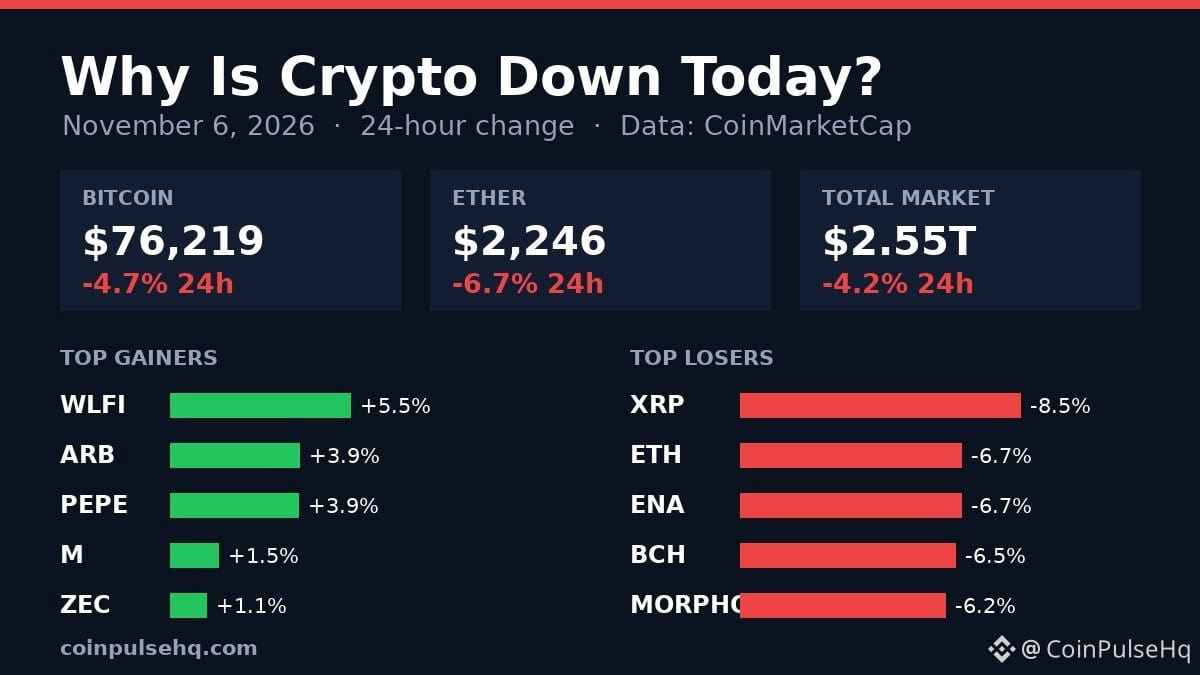
Why Is Crypto Down Today, Nov 6, 2026? Bitcoin Falls 4.7% to $76.2KCrypto is down today. Total market value fell 4.2% in 24 hours to $2.55 trillion as of 13:00 UTC on Friday, November 6, 2026. Bitcoin traded at $76,219 (-4.7%) and Ether at $2,246 (-6.7%). 6 of the 50 largest coins were higher, and the median move was -3.2%.
Why is crypto down today? What the numbers show
• Breadth. The move was broad: 44 of 50 large coins fell, so selling was market-wide rather than limited to one coin.
• Bitcoin versus altcoins. 35 of the other 49 large coins did better than Bitcoin, a sign of appetite for smaller, riskier assets. Bitcoin dominance stands at 59.9%, and Ether underperformed Bitcoin by 2.0 percentage points.
• Trading activity. 24-hour volume across the market was $109.3 billion, up 27.6% on the previous day. A price move on sharply higher volume carries more weight than one on thin trading.
• Bitcoin's 24-hour range. From $75,279 (07:30 UTC) to $79,790 (13:50 UTC, Nov 5), a 6.0% swing. The low came after the high.
Stocks, the dollar and gold
Crypto often trades alongside other risk assets. Latest session for each (the date is the market's last close or update):
Market Level Change As of
S&P 500 7,353.73 -4.4% Nov 5
Nasdaq Composite 24,315.00 -5.5% Nov 5
Gold 4,072.60 -1.0% Nov 6
US 10-year Treasury yield 4.872% +3.5 bp Nov 6
The Nasdaq fell 5.5% in its latest session, so crypto moved in the same direction as tech stocks. That points to a broad shift in risk appetite rather than a crypto-only story.
Biggest movers in the top 50
Gainers
Coin Price 24 hours 7 days
World Liberty Financial (WLFI) $0.04686 +5.5% -7.2%
Arbitrum (ARB) $0.1685 +3.9% +2.4%
Pepe (PEPE) $0.000005127 +3.9% -2.2%
MemeCore (M) $0.8272 +1.5% -15.7%
Zcash (ZEC) $1,327 +1.1% +6.5%
Losers
Coin Price 24 hours 7 days
XRP (XRP) $1.20 -8.5% -3.8%
Ethereum (ETH) $2,246 -6.7% +0.6%
Ethena (ENA) $0.1675 -6.7% -10.7%
Bitcoin Cash (BCH) $270.70 -6.5% -4.3%
Morpho (MORPHO) $2.10 -6.2% +2.4%
The stories behind today's moves
What CoinPulseHQ reported in the past 24 hours:
• American Bitcoin Posts $126M Q3 Profit as ABTC Shares Slide — American Bitcoin reported $126M in Q3 net income and 8,427 BTC held, but ABTC shares fell nearly 17% as mining costs rose 15.3% and margins narrowed.
• GOPAX Halts Trading After Hack Threat, Moves Assets to Cold Storage — GOPAX halted trading and withdrawals on Nov 6 after a hack threat and will move all customer crypto to cold wallets, days after Binance's $6.3B theft.
• Zcash NU7 goes live, stranding 12,224 ZEC in Sprout pool — Zcash's NU7 upgrade went live at block 3,543,405, rejecting v4 transactions and freezing roughly 12,224 ZEC in the legacy Sprout pool.
• Core Scientific to Finish Bitcoin Mining Exit by End of 2026 — Core Scientific targets a full Bitcoin mining exit by end of 2026, CFO Jim Nygaard said, as colocation reached $215.4M of Q3 revenue.
• Keel Infrastructure Sells All 2,520 BTC for $192M in AI Shift — Keel Infrastructure sold its full Bitcoin treasury in Q3 — 2,520 BTC for $192 million — as it pivots to AI data centers and revenue fell to $28 million.
Live prices for the top 50 coins are on our Markets page, and today's biggest movers are on top crypto gainers and losers. Every daily report is collected on Crypto Market Today, and the previous one is Why Is Crypto Up Today, Nov 5, 2026? Bitcoin Rises 2.4% to $80.1K. For the bigger picture, read our weekly market wraps, and if you are wondering about trading hours, see is the crypto market open on weekends.
How this report is made
CoinPulseHQ calculates every figure in this report from CoinMarketCap and CoinGecko market data recorded at 13:00 UTC on Friday, November 6, 2026, and stock, dollar, gold and bond levels from CNBC quotes. Stablecoins and wrapped or staked versions of other coins are left out of the rankings. Changes are over the previous 24 hours. The report describes what prices did and which measurable factors moved with them; it does not claim a single cause and does not predict prices. It is not financial advice.
Originally published on CoinPulseHQ: https://coinpulsehq.com/why-is-crypto-down-today-2026-11-06/?utm_source=binance_square&utm_medium=social&utm_campaign=auto_post
Why Is Crypto Down Today, Nov 6, 2026? Bitcoin Falls 4.7% to $76.2K
Crypto is down today. Total market value fell 4.2% in 24 hours to $2.55 trillion as of 13:00 UTC on Friday, November 6, 2026. Bitcoin traded at $76,219 (-4.7%) and Ether at $2,246 (-6.7%). 6 of the 50 largest coins were higher, and the median move was -3.2%.
Why is crypto down today? What the numbers show
• Breadth. The move was broad: 44 of 50 large coins fell, so selling was market-wide rather than limited to one coin.
• Bitcoin versus altcoins. 35 of the other 49 large coins did better than Bitcoin, a sign of appetite for smaller, riskier assets. Bitcoin dominance stands at 59.9%, and Ether underperformed Bitcoin by 2.0 percentage points.
• Trading activity. 24-hour volume across the market was $109.3 billion, up 27.6% on the previous day. A price move on sharply higher volume carries more weight than one on thin trading.
• Bitcoin's 24-hour range. From $75,279 (07:30 UTC) to $79,790 (13:50 UTC, Nov 5), a 6.0% swing. The low came after the high.
Stocks, the dollar and gold
Crypto often trades alongside other risk assets. Latest session for each (the date is the market's last close or update):
Market Level Change As of
S&P 500 7,353.73 -4.4% Nov 5
Nasdaq Composite 24,315.00 -5.5% Nov 5
Gold 4,072.60 -1.0% Nov 6
US 10-year Treasury yield 4.872% +3.5 bp Nov 6
The Nasdaq fell 5.5% in its latest session, so crypto moved in the same direction as tech stocks. That points to a broad shift in risk appetite rather than a crypto-only story.
Biggest movers in the top 50
Gainers
Coin Price 24 hours 7 days
World Liberty Financial (WLFI) $0.04686 +5.5% -7.2%
Arbitrum (ARB) $0.1685 +3.9% +2.4%
Pepe (PEPE) $0.000005127 +3.9% -2.2%
MemeCore (M) $0.8272 +1.5% -15.7%
Zcash (ZEC) $1,327 +1.1% +6.5%
Losers
Coin Price 24 hours 7 days
XRP (XRP) $1.20 -8.5% -3.8%
Ethereum (ETH) $2,246 -6.7% +0.6%
Ethena (ENA) $0.1675 -6.7% -10.7%
Bitcoin Cash (BCH) $270.70 -6.5% -4.3%
Morpho (MORPHO) $2.10 -6.2% +2.4%
The stories behind today's moves
What CoinPulseHQ reported in the past 24 hours:
• American Bitcoin Posts $126M Q3 Profit as ABTC Shares Slide — American Bitcoin reported $126M in Q3 net income and 8,427 BTC held, but ABTC shares fell nearly 17% as mining costs rose 15.3% and margins narrowed.
• GOPAX Halts Trading After Hack Threat, Moves Assets to Cold Storage — GOPAX halted trading and withdrawals on Nov 6 after a hack threat and will move all customer crypto to cold wallets, days after Binance's $6.3B theft.
• Zcash NU7 goes live, stranding 12,224 ZEC in Sprout pool — Zcash's NU7 upgrade went live at block 3,543,405, rejecting v4 transactions and freezing roughly 12,224 ZEC in the legacy Sprout pool.
• Core Scientific to Finish Bitcoin Mining Exit by End of 2026 — Core Scientific targets a full Bitcoin mining exit by end of 2026, CFO Jim Nygaard said, as colocation reached $215.4M of Q3 revenue.
• Keel Infrastructure Sells All 2,520 BTC for $192M in AI Shift — Keel Infrastructure sold its full Bitcoin treasury in Q3 — 2,520 BTC for $192 million — as it pivots to AI data centers and revenue fell to $28 million.
Live prices for the top 50 coins are on our Markets page, and today's biggest movers are on top crypto gainers and losers. Every daily report is collected on Crypto Market Today, and the previous one is Why Is Crypto Up Today, Nov 5, 2026? Bitcoin Rises 2.4% to $80.1K. For the bigger picture, read our weekly market wraps, and if you are wondering about trading hours, see is the crypto market open on weekends.
How this report is made
CoinPulseHQ calculates every figure in this report from CoinMarketCap and CoinGecko market data recorded at 13:00 UTC on Friday, November 6, 2026, and stock, dollar, gold and bond levels from CNBC quotes. Stablecoins and wrapped or staked versions of other coins are left out of the rankings. Changes are over the previous 24 hours. The report describes what prices did and which measurable factors moved with them; it does not claim a single cause and does not predict prices. It is not financial advice.
Originally published on CoinPulseHQ: https://coinpulsehq.com/why-is-crypto-down-today-2026-11-06/?utm_source=binance_square&utm_medium=social&utm_campaign=auto_post
37
·
--
Стаття
Переглянути переклад
GOPAX Halts Trading After Hack Threat, Moves Assets to Cold StorageSouth Korea's GOPAX halted trading, deposits and standard withdrawals on Friday, November 6, 2026, after an email threatened a hack, according to Cointelegraph, which cited the newspaper Kyunghyang Shinmun. A GOPAX representative told the paper that no hack or attempted theft had occurred at that point.
Deposits and normal withdrawals stopped at 5:55 am UTC and trading ceased at 6:53 UTC, per a second exchange notice. All unfilled orders were canceled. Customers can still ask for withdrawals through the support center, though GOPAX warned that manual checks and approvals could slow processing.
Key facts
• GOPAX suspended deposits and standard withdrawals at 5:55 am UTC and trading at 6:53 UTC on November 6, 2026, canceling all unfilled orders.
• The exchange said it would move all crypto assets into offline wallets, citing financial regulators' recommendations and recent leaks and hacks at financial institutions.
• Days earlier, South Korea's Financial Services Commission urged domestic exchanges to raise cold-wallet holdings after the $6.3 billion Binance hack; South Korean exchanges must keep at least 80% of customer crypto offline.
• Financial Supervisory Service data showed GOPAX held 80.54% of user assets offline at the end of September, near the required minimum.
• The FSC named GOPAX operator Streami and exchange Prabang among 16 companies tied to earlier security incidents, per Cointelegraph.
Regulators push exchanges toward cold wallets
The halt came in a week when custody practices drew fresh attention. Bitcoin.com News reported that Coinbase said on November 4 that more than 99% of customer assets sit in offline cold storage after the Binance breach on October 29. Coinbase said the incident did not affect its infrastructure or customer funds and reported $377 billion in platform assets as of September 30, along with $8.6 billion in cash and equivalents and $2.2 billion in crypto held for investment.
CoinCentral reported that Coinbase described a multiparty computation setup that splits signing power, plus withdrawal limits, anomaly detection and controls that can stop transaction signing, and that Coinbase Vault can require several approvals before a withdrawal. Bitcoin.com News noted the 99% figure is self-reported and has not been independently established by third parties. Both the Bitcoin.com News and CoinCentral accounts put Binance's theft in the billions and describe a social engineering campaign that began with a fake job interview; CoinCentral added that Binance said on Wednesday it had replenished about 98% of affected assets.
Why it matters
GOPAX's move turns a threat email into a self-imposed outage, showing how quickly a warning can shut an exchange in a market where regulators are already pressing for offline custody. The rule that South Korean exchanges must keep at least 80% of customer crypto in cold storage puts GOPAX's 80.54% figure close to the line, so shifting the remainder offline is a direct response to both the email and the regulator's stance. For users, the practical change is slower access: trading is paused and withdrawals are manual. It also arrives days after the Binance theft and alongside a separate incident at Prabang, another South Korean venue, which suspended services after detecting abnormal hot-wallet withdrawals on October 24 and reported about 100 million won ($70,000) in losses, according to Yonhap News Agency via Cointelegraph.
What to watch
Whether GOPAX restores deposits and automated withdrawals, and when the planned transfer of assets to offline wallets is completed, are the next concrete markers. Also worth watching: the FSC's tighter cybersecurity oversight plans for the 16 companies it identified after reviewing 555 financial firms, of which it reported deficiencies at 130 in October.
Originally published on CoinPulseHQ: https://coinpulsehq.com/gopax-halts-trading-hack-threat-cold-storage/?utm_source=binance_square&utm_medium=social&utm_campaign=auto_post
GOPAX Halts Trading After Hack Threat, Moves Assets to Cold Storage
South Korea's GOPAX halted trading, deposits and standard withdrawals on Friday, November 6, 2026, after an email threatened a hack, according to Cointelegraph, which cited the newspaper Kyunghyang Shinmun. A GOPAX representative told the paper that no hack or attempted theft had occurred at that point.
Deposits and normal withdrawals stopped at 5:55 am UTC and trading ceased at 6:53 UTC, per a second exchange notice. All unfilled orders were canceled. Customers can still ask for withdrawals through the support center, though GOPAX warned that manual checks and approvals could slow processing.
Key facts
• GOPAX suspended deposits and standard withdrawals at 5:55 am UTC and trading at 6:53 UTC on November 6, 2026, canceling all unfilled orders.
• The exchange said it would move all crypto assets into offline wallets, citing financial regulators' recommendations and recent leaks and hacks at financial institutions.
• Days earlier, South Korea's Financial Services Commission urged domestic exchanges to raise cold-wallet holdings after the $6.3 billion Binance hack; South Korean exchanges must keep at least 80% of customer crypto offline.
• Financial Supervisory Service data showed GOPAX held 80.54% of user assets offline at the end of September, near the required minimum.
• The FSC named GOPAX operator Streami and exchange Prabang among 16 companies tied to earlier security incidents, per Cointelegraph.
Regulators push exchanges toward cold wallets
The halt came in a week when custody practices drew fresh attention. Bitcoin.com News reported that Coinbase said on November 4 that more than 99% of customer assets sit in offline cold storage after the Binance breach on October 29. Coinbase said the incident did not affect its infrastructure or customer funds and reported $377 billion in platform assets as of September 30, along with $8.6 billion in cash and equivalents and $2.2 billion in crypto held for investment.
CoinCentral reported that Coinbase described a multiparty computation setup that splits signing power, plus withdrawal limits, anomaly detection and controls that can stop transaction signing, and that Coinbase Vault can require several approvals before a withdrawal. Bitcoin.com News noted the 99% figure is self-reported and has not been independently established by third parties. Both the Bitcoin.com News and CoinCentral accounts put Binance's theft in the billions and describe a social engineering campaign that began with a fake job interview; CoinCentral added that Binance said on Wednesday it had replenished about 98% of affected assets.
Why it matters
GOPAX's move turns a threat email into a self-imposed outage, showing how quickly a warning can shut an exchange in a market where regulators are already pressing for offline custody. The rule that South Korean exchanges must keep at least 80% of customer crypto in cold storage puts GOPAX's 80.54% figure close to the line, so shifting the remainder offline is a direct response to both the email and the regulator's stance. For users, the practical change is slower access: trading is paused and withdrawals are manual. It also arrives days after the Binance theft and alongside a separate incident at Prabang, another South Korean venue, which suspended services after detecting abnormal hot-wallet withdrawals on October 24 and reported about 100 million won ($70,000) in losses, according to Yonhap News Agency via Cointelegraph.
What to watch
Whether GOPAX restores deposits and automated withdrawals, and when the planned transfer of assets to offline wallets is completed, are the next concrete markers. Also worth watching: the FSC's tighter cybersecurity oversight plans for the 16 companies it identified after reviewing 555 financial firms, of which it reported deficiencies at 130 in October.
Originally published on CoinPulseHQ: https://coinpulsehq.com/gopax-halts-trading-hack-threat-cold-storage/?utm_source=binance_square&utm_medium=social&utm_campaign=auto_post
27
·
--
Верифіковано
Стаття
Оновлення Zcash NU7 запущено: 12 224 ZEC залишилися заблокованими в пулі SproutМережеве оновлення NU7 у Zcash активувалося в п’ятницю на блоці 3,543,405 о 02:34 UTC, відключивши єдиний формат транзакцій, який давав змогу виводити кошти з оригінального захищеного пулу Sprout мережі. За даними Cointelegraph, блокчейн-трекер ZecStats вказує, що в Sprout досі залишається близько 12 224 ZEC вартістю приблизно 15 мільйонів доларів, і тепер їх неможливо використати.
За даними Crypto Briefing, монети не було знищено, а приватні ключі не викрадено. Вони й далі враховуються в загальній пропозиції, але за новими правилами їх неможливо переказати.
Оновлення Zcash NU7 запущено: 12 224 ZEC залишилися заблокованими в пулі Sprout
Мережеве оновлення NU7 у Zcash активувалося в п’ятницю на блоці 3,543,405 о 02:34 UTC, відключивши єдиний формат транзакцій, який давав змогу виводити кошти з оригінального захищеного пулу Sprout мережі. За даними Cointelegraph, блокчейн-трекер ZecStats вказує, що в Sprout досі залишається близько 12 224 ZEC вартістю приблизно 15 мільйонів доларів, і тепер їх неможливо використати.
За даними Crypto Briefing, монети не було знищено, а приватні ключі не викрадено. Вони й далі враховуються в загальній пропозиції, але за новими правилами їх неможливо переказати.
За даними Crypto Briefing, монети не було знищено, а приватні ключі не викрадено. Вони й далі враховуються в загальній пропозиції, але за новими правилами їх неможливо переказати.
1
1
749
·
--
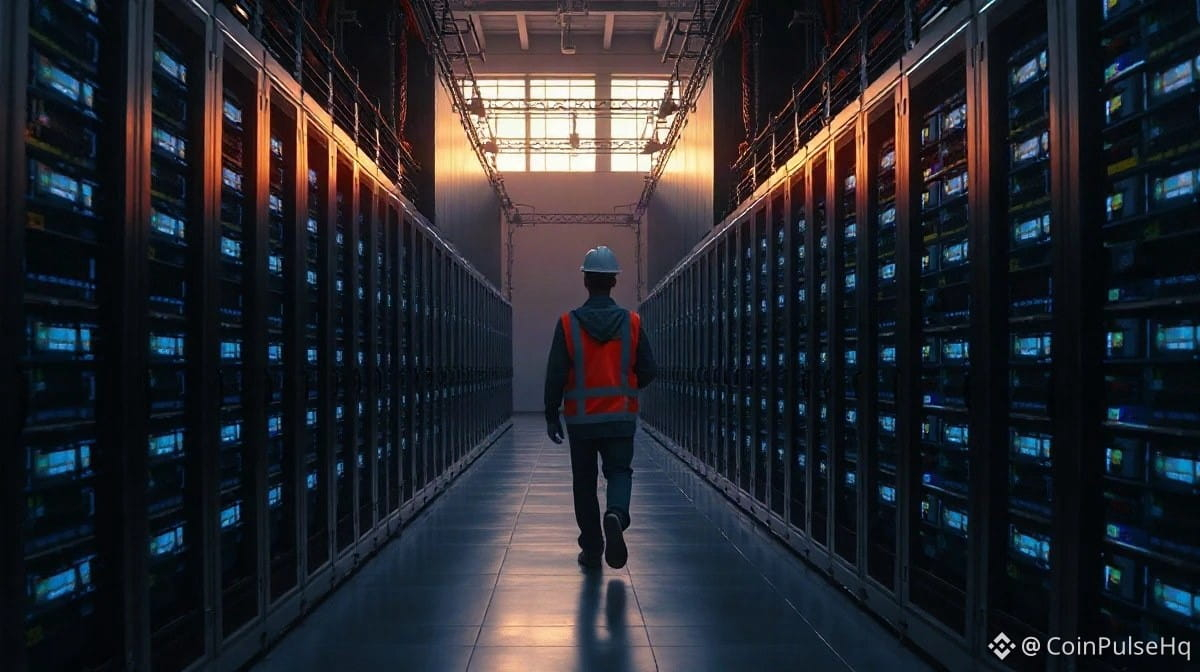
Стаття
Переглянути переклад
Core Scientific to Finish Bitcoin Mining Exit by End of 2026Core Scientific expects to finish winding down Bitcoin mining during the fourth quarter of 2026 and begin 2027 as a high-density colocation provider, chief financial officer Jim Nygaard said on the company's Q3 earnings call, according to Cointelegraph. The company reported $232.9 million in third-quarter revenue, of which mining and mining hosting contributed $17.5 million, or 7.5%.
Colocation accounted for the remaining $215.4 million. The figures show how far the business has moved from its mining origins, and they landed a day after the company published its third-quarter results. Blockchain Reporter calculated that colocation made up 92.5% of revenue, against 18.5% a year earlier, when the same business reported $81.1 million in total revenue and $15.0 million from colocation.
Key facts
• Third-quarter self-mining revenue fell to $12.3 million from $57.4 million a year earlier, while hosting revenue for other miners dropped to $5.2 million from $8.7 million.
• Core Scientific had nearly 50% fewer miners online at the end of September than at the end of 2025, Nygaard said.
• The company recorded $266.5 million in mining-related asset impairments in the first quarter of 2026, citing weaker Bitcoin prices and low hashprice, and took a $41.9 million loss in the second quarter when it terminated its mining equipment agreement with Block and Proto.
• Blockchain Reporter reported that net income was $1,178.1 million, driven primarily by the change in fair value of warrants, and that $985.1 million went to property, plant, equipment, land and development rights in the quarter.
• Coinpedia reported that MARA Holdings, Riot Platforms and HIVE Digital have also shifted toward AI and HPC infrastructure, and that at least 35 EH/s of computing power is scheduled to leave publicly listed Bitcoin miners.
A revenue mix that flipped in two quarters
Publishing its third-quarter 2026 results, Core Scientific said it is "in the process of repurposing its remaining mining facilities to support its high-density colocation services business as circumstances allow." Blockchain Reporter noted that the release does not use the word "exit" and that the phrasing ties timing to construction schedules rather than a public shutdown date, while Cointelegraph reported the July filing had already put hosted mining's end at December 31.
Capacity has moved steadily. Blockchain Reporter reported billing capacity of 120 megawatts in the fourth quarter of 2025, then 225 MW, 395 MW and 485 MW in the third quarter of 2026, with colocation revenue of $31.3 million, $77.5 million, $136.7 million and $215.4 million across the same quarters. Chief executive Adam Sullivan said in the release that the company is nearing full delivery under its first colocation agreement while construction under its second is underway across five campuses.
Two tenants, more than $24 billion contracted
Blockchain Reporter reported that contracted revenue exceeds $24 billion across about 1.1 gigawatts of customer-contracted power, split between roughly 590 MW leased to CoreWeave — across Denton, Texas; Dalton, Georgia; Muskogee, Oklahoma; Marble, North Carolina; and Austin, Texas — and an AMD-backed block of about 530 MW. Of the CoreWeave capacity, 485 MW was billing on November 5, with the remaining 105 MW at Dalton scheduled to complete early in 2027.
Coinpedia reported an additional AMD reservation for 1,925 MW of potential capacity, a figure Blockchain Reporter's summary of the deck does not state. Coinpedia also reported a separate 20-year Riot Platforms lease for 191 MW with an estimated $9.1 billion in contract revenue, which Blockchain Reporter described as the largest version of the trade announced this year.
Why it matters
For a public miner, the same power capacity now supports a different product: long-dated rental of space, power and cooling to AI tenants. Coinpedia cited an energy infrastructure analyst's estimate that one megawatt of power can generate roughly $1.9 million over five years from Bitcoin mining against about $7.9 million from AI workloads, which helps explain why miners with grid connections are finding buyers for capacity rather than hashpower. Coin Scientific's shift also changes what investors own — a colocation landlord whose reported earnings can swing with its warrant liabilities, not a company whose results track the price of Bitcoin.
The planned exit coincides with new political uncertainty. Cointelegraph reported that opponents of data-center development were among the winners in the Democrats' midterm gains, with the backlash centering partly on electricity bills and the demands large facilities place on local resources.
What to watch
The fourth-quarter filing and the early-2027 completion of the remaining 105 MW at Dalton will show whether the company states a dated mining shutdown on the record. Core Scientific's current disclosure describes an ongoing conversion, not a completed one.
This article is for information only and is not financial advice; markets for crypto assets and related equities are volatile and uncertain.
Originally published on CoinPulseHQ: https://coinpulsehq.com/core-scientific-bitcoin-mining-exit-2026/?utm_source=binance_square&utm_medium=social&utm_campaign=auto_post
Core Scientific to Finish Bitcoin Mining Exit by End of 2026
Core Scientific expects to finish winding down Bitcoin mining during the fourth quarter of 2026 and begin 2027 as a high-density colocation provider, chief financial officer Jim Nygaard said on the company's Q3 earnings call, according to Cointelegraph. The company reported $232.9 million in third-quarter revenue, of which mining and mining hosting contributed $17.5 million, or 7.5%.
Colocation accounted for the remaining $215.4 million. The figures show how far the business has moved from its mining origins, and they landed a day after the company published its third-quarter results. Blockchain Reporter calculated that colocation made up 92.5% of revenue, against 18.5% a year earlier, when the same business reported $81.1 million in total revenue and $15.0 million from colocation.
Key facts
• Third-quarter self-mining revenue fell to $12.3 million from $57.4 million a year earlier, while hosting revenue for other miners dropped to $5.2 million from $8.7 million.
• Core Scientific had nearly 50% fewer miners online at the end of September than at the end of 2025, Nygaard said.
• The company recorded $266.5 million in mining-related asset impairments in the first quarter of 2026, citing weaker Bitcoin prices and low hashprice, and took a $41.9 million loss in the second quarter when it terminated its mining equipment agreement with Block and Proto.
• Blockchain Reporter reported that net income was $1,178.1 million, driven primarily by the change in fair value of warrants, and that $985.1 million went to property, plant, equipment, land and development rights in the quarter.
• Coinpedia reported that MARA Holdings, Riot Platforms and HIVE Digital have also shifted toward AI and HPC infrastructure, and that at least 35 EH/s of computing power is scheduled to leave publicly listed Bitcoin miners.
A revenue mix that flipped in two quarters
Publishing its third-quarter 2026 results, Core Scientific said it is "in the process of repurposing its remaining mining facilities to support its high-density colocation services business as circumstances allow." Blockchain Reporter noted that the release does not use the word "exit" and that the phrasing ties timing to construction schedules rather than a public shutdown date, while Cointelegraph reported the July filing had already put hosted mining's end at December 31.
Capacity has moved steadily. Blockchain Reporter reported billing capacity of 120 megawatts in the fourth quarter of 2025, then 225 MW, 395 MW and 485 MW in the third quarter of 2026, with colocation revenue of $31.3 million, $77.5 million, $136.7 million and $215.4 million across the same quarters. Chief executive Adam Sullivan said in the release that the company is nearing full delivery under its first colocation agreement while construction under its second is underway across five campuses.
Two tenants, more than $24 billion contracted
Blockchain Reporter reported that contracted revenue exceeds $24 billion across about 1.1 gigawatts of customer-contracted power, split between roughly 590 MW leased to CoreWeave — across Denton, Texas; Dalton, Georgia; Muskogee, Oklahoma; Marble, North Carolina; and Austin, Texas — and an AMD-backed block of about 530 MW. Of the CoreWeave capacity, 485 MW was billing on November 5, with the remaining 105 MW at Dalton scheduled to complete early in 2027.
Coinpedia reported an additional AMD reservation for 1,925 MW of potential capacity, a figure Blockchain Reporter's summary of the deck does not state. Coinpedia also reported a separate 20-year Riot Platforms lease for 191 MW with an estimated $9.1 billion in contract revenue, which Blockchain Reporter described as the largest version of the trade announced this year.
Why it matters
For a public miner, the same power capacity now supports a different product: long-dated rental of space, power and cooling to AI tenants. Coinpedia cited an energy infrastructure analyst's estimate that one megawatt of power can generate roughly $1.9 million over five years from Bitcoin mining against about $7.9 million from AI workloads, which helps explain why miners with grid connections are finding buyers for capacity rather than hashpower. Coin Scientific's shift also changes what investors own — a colocation landlord whose reported earnings can swing with its warrant liabilities, not a company whose results track the price of Bitcoin.
The planned exit coincides with new political uncertainty. Cointelegraph reported that opponents of data-center development were among the winners in the Democrats' midterm gains, with the backlash centering partly on electricity bills and the demands large facilities place on local resources.
What to watch
The fourth-quarter filing and the early-2027 completion of the remaining 105 MW at Dalton will show whether the company states a dated mining shutdown on the record. Core Scientific's current disclosure describes an ongoing conversion, not a completed one.
This article is for information only and is not financial advice; markets for crypto assets and related equities are volatile and uncertain.
Originally published on CoinPulseHQ: https://coinpulsehq.com/core-scientific-bitcoin-mining-exit-2026/?utm_source=binance_square&utm_medium=social&utm_campaign=auto_post
48
·
--
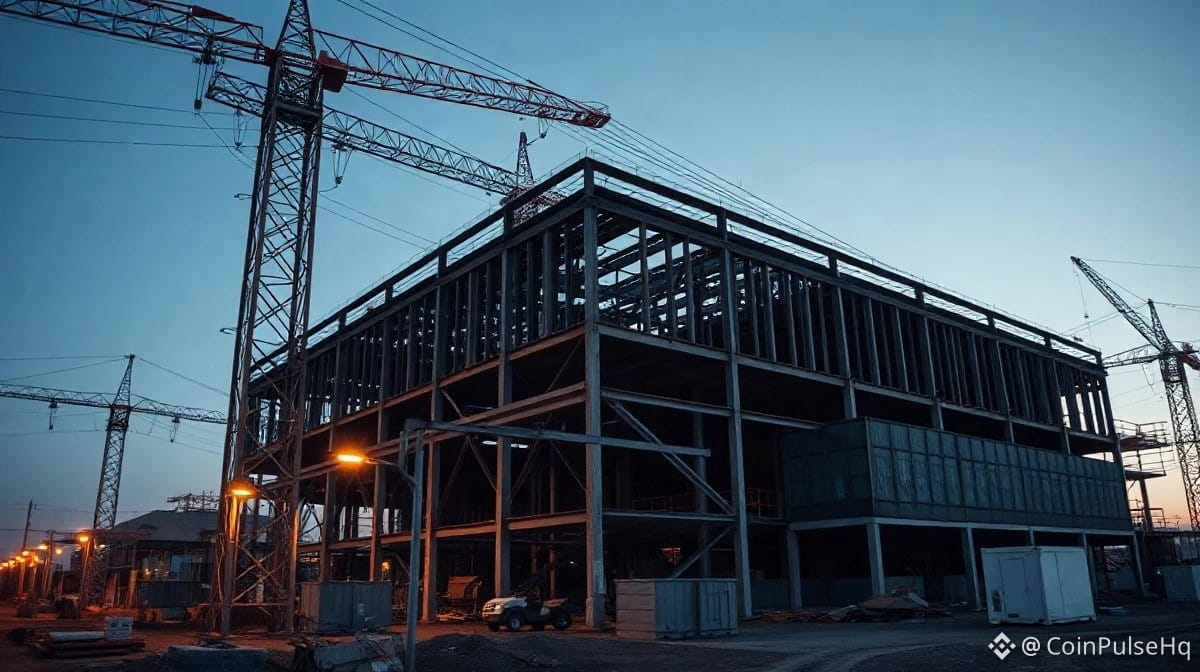
Стаття
Keel Infrastructure продає всі 2 520 BTC за 192 млн доларів у межах переходу до ШІЗа даними Bitcoin.com News, компанія Keel Infrastructure продала 2 520 BTC за 192 млн доларів США протягом кварталу, що завершився 30 вересня, спустошивши резерв біткоїнів, який вона накопичила як майнер, і переорієнтувавши баланс на центри обробки даних для ШІ та високопродуктивних обчислень. Загальна сума охоплювала весь резерв компанії — 2 261 BTC — і ще 259 BTC, видобутих на майнінгових підприємствах, які вона досі експлуатує в Квебеку.
Колишня Bitfarms у повідомленні про результати третього кварталу заявила, що приурочила продажі до періодів ринкового піднесення, а завершила вересень із незначними запасами біткоїна. Bitcoin.com News повідомило про це 5 листопада — того самого дня, коли акції KEEL впали на 21% на тлі ширшого розпродажу акцій технологічних компаній, майнерів і компаній, що розвивають інфраструктуру для ШІ.
Keel Infrastructure продає всі 2 520 BTC за 192 млн доларів у межах переходу до ШІ
За даними Bitcoin.com News, компанія Keel Infrastructure продала 2 520 BTC за 192 млн доларів США протягом кварталу, що завершився 30 вересня, спустошивши резерв біткоїнів, який вона накопичила як майнер, і переорієнтувавши баланс на центри обробки даних для ШІ та високопродуктивних обчислень. Загальна сума охоплювала весь резерв компанії — 2 261 BTC — і ще 259 BTC, видобутих на майнінгових підприємствах, які вона досі експлуатує в Квебеку.
Колишня Bitfarms у повідомленні про результати третього кварталу заявила, що приурочила продажі до періодів ринкового піднесення, а завершила вересень із незначними запасами біткоїна. Bitcoin.com News повідомило про це 5 листопада — того самого дня, коли акції KEEL впали на 21% на тлі ширшого розпродажу акцій технологічних компаній, майнерів і компаній, що розвивають інфраструктуру для ШІ.
Колишня Bitfarms у повідомленні про результати третього кварталу заявила, що приурочила продажі до періодів ринкового піднесення, а завершила вересень із незначними запасами біткоїна. Bitcoin.com News повідомило про це 5 листопада — того самого дня, коли акції KEEL впали на 21% на тлі ширшого розпродажу акцій технологічних компаній, майнерів і компаній, що розвивають інфраструктуру для ШІ.
85
·
--

Стаття
Переглянути переклад
American Bitcoin Posts $126M Q3 Profit as ABTC Shares SlideAmerican Bitcoin Corp. (Nasdaq: ABTC), the bitcoin miner co-founded by Eric Trump, reported roughly $126 million in third-quarter net income and approximately $221 million in adjusted EBITDA for the three months ended September 30, according to Bitcoin.com News. The result reverses a $57.2 million net loss in the second quarter, when adjusted EBITDA was negative $45 million.
The headline turnaround did not lift the stock. ABTC shares fell nearly 17% on Thursday to a recent price of $5.18 amid a wider sell-off in technology and mining stocks, and are down more than 40% over the past month, Bitcoin.com News reported.
Key facts
• Net income of about $126 million in Q3 2026, versus a $57.2 million loss in Q2 2026.
• Bitcoin holdings of 8,427 BTC at September 30, up roughly 425 BTC from 8,002 BTC at June 30.
• Mining revenue fell to $63.4 million from $67 million, and gross profit slipped to $25.8 million from $33 million.
• Cost to mine one bitcoin rose to $42,100 from $36,500, a 15.3% quarterly increase.
• Production declined 4.4%, from about 932 BTC to 891 BTC.
Where the profit came from
The profit was driven less by mining than by accounting gains on the company's bitcoin reserve. Coverage by crypto.news put a $197.3 million digital-asset valuation gain in the quarter, reversing a $71.2 million loss on holdings in the prior period, against a $64.3 million derivative loss tied mainly to Bitcoin redemption and put options linked to equipment supplier Bitmain. American Bitcoin carries its bitcoin at fair value, so price moves flow through earnings whether or not coins are sold.
Bitcoin.com News reported adjusted EBITDA of approximately $221 million; crypto.news gave the figure as $220.8 million, a rounding difference. Both outlets put gross margin at 41%, down from 49% in the second quarter, which American Bitcoin attributed to seasonal electricity costs.
CEO Mike Ho said the company expanded its reserve without buying bitcoin on the open market or issuing shares under its at-the-market program during the quarter, and that operations kept mining at a structural discount to spot prices despite seasonal power costs. Satoshis per share rose about 5%, from 10,989 to 11,572.
Treasury ranking and equipment
BitcoinTreasuries.net ranked American Bitcoin 13th among public corporate bitcoin holders, ahead of GD Culture Group and Galaxy Digital Holdings. About 3,090 BTC of the total were pledged under Bitmain miner-purchase agreements, split into 2,385 BTC as current assets and 705 BTC as noncurrent, crypto.news reported, citing the SEC filing. The company's owned fleet stood at roughly 89,242 machines and 28.1 EH/s of capacity at quarter-end.
crypto.news also reported details from the filing that Bitcoin.com News did not carry: 7.76 million Class A shares sold under the at-the-market program in the first nine months of 2026 for $144.7 million in gross proceeds, and $72.4 million in net cash used by operating activities over that period.
Why it matters
The quarter separates accounting income from mining economics: earnings rose sharply while revenue, output and margins all fell. Shareholders are exposed to that gap because reported profit on held bitcoin does not add coins, and further share issuance would dilute per-share holdings. Placing 3,090 BTC as collateral for mining hardware also ties part of the treasury to equipment commitments.
What to watch
Next up is whether Q4 electricity costs ease and whether the company resumes share sales under its at-the-market program. Peer results in the same reporting period — Hut 8's $189.5 million net income and Riot Platforms' $181.4 million in revenue — set a comparison point for how much of sector earnings depends on valuation gains.
Bitcoin traded around $76,111 on November 5, according to Bitcoin.com News. This article is not financial advice; cryptocurrency prices are volatile and the figures above describe reported results, not expected future performance.
Originally published on CoinPulseHQ: https://coinpulsehq.com/american-bitcoin-q3-profit-abtc-shares-slide/?utm_source=binance_square&utm_medium=social&utm_campaign=auto_post
American Bitcoin Posts $126M Q3 Profit as ABTC Shares Slide
American Bitcoin Corp. (Nasdaq: ABTC), the bitcoin miner co-founded by Eric Trump, reported roughly $126 million in third-quarter net income and approximately $221 million in adjusted EBITDA for the three months ended September 30, according to Bitcoin.com News. The result reverses a $57.2 million net loss in the second quarter, when adjusted EBITDA was negative $45 million.
The headline turnaround did not lift the stock. ABTC shares fell nearly 17% on Thursday to a recent price of $5.18 amid a wider sell-off in technology and mining stocks, and are down more than 40% over the past month, Bitcoin.com News reported.
Key facts
• Net income of about $126 million in Q3 2026, versus a $57.2 million loss in Q2 2026.
• Bitcoin holdings of 8,427 BTC at September 30, up roughly 425 BTC from 8,002 BTC at June 30.
• Mining revenue fell to $63.4 million from $67 million, and gross profit slipped to $25.8 million from $33 million.
• Cost to mine one bitcoin rose to $42,100 from $36,500, a 15.3% quarterly increase.
• Production declined 4.4%, from about 932 BTC to 891 BTC.
Where the profit came from
The profit was driven less by mining than by accounting gains on the company's bitcoin reserve. Coverage by crypto.news put a $197.3 million digital-asset valuation gain in the quarter, reversing a $71.2 million loss on holdings in the prior period, against a $64.3 million derivative loss tied mainly to Bitcoin redemption and put options linked to equipment supplier Bitmain. American Bitcoin carries its bitcoin at fair value, so price moves flow through earnings whether or not coins are sold.
Bitcoin.com News reported adjusted EBITDA of approximately $221 million; crypto.news gave the figure as $220.8 million, a rounding difference. Both outlets put gross margin at 41%, down from 49% in the second quarter, which American Bitcoin attributed to seasonal electricity costs.
CEO Mike Ho said the company expanded its reserve without buying bitcoin on the open market or issuing shares under its at-the-market program during the quarter, and that operations kept mining at a structural discount to spot prices despite seasonal power costs. Satoshis per share rose about 5%, from 10,989 to 11,572.
Treasury ranking and equipment
BitcoinTreasuries.net ranked American Bitcoin 13th among public corporate bitcoin holders, ahead of GD Culture Group and Galaxy Digital Holdings. About 3,090 BTC of the total were pledged under Bitmain miner-purchase agreements, split into 2,385 BTC as current assets and 705 BTC as noncurrent, crypto.news reported, citing the SEC filing. The company's owned fleet stood at roughly 89,242 machines and 28.1 EH/s of capacity at quarter-end.
crypto.news also reported details from the filing that Bitcoin.com News did not carry: 7.76 million Class A shares sold under the at-the-market program in the first nine months of 2026 for $144.7 million in gross proceeds, and $72.4 million in net cash used by operating activities over that period.
Why it matters
The quarter separates accounting income from mining economics: earnings rose sharply while revenue, output and margins all fell. Shareholders are exposed to that gap because reported profit on held bitcoin does not add coins, and further share issuance would dilute per-share holdings. Placing 3,090 BTC as collateral for mining hardware also ties part of the treasury to equipment commitments.
What to watch
Next up is whether Q4 electricity costs ease and whether the company resumes share sales under its at-the-market program. Peer results in the same reporting period — Hut 8's $189.5 million net income and Riot Platforms' $181.4 million in revenue — set a comparison point for how much of sector earnings depends on valuation gains.
Bitcoin traded around $76,111 on November 5, according to Bitcoin.com News. This article is not financial advice; cryptocurrency prices are volatile and the figures above describe reported results, not expected future performance.
Originally published on CoinPulseHQ: https://coinpulsehq.com/american-bitcoin-q3-profit-abtc-shares-slide/?utm_source=binance_square&utm_medium=social&utm_campaign=auto_post
BTC+0,22%
ABTCUS+2,45%
46
·
--

Стаття
Переглянути переклад
Binance Revokes SignalPlus API Keys After Security WarningBinance removed every API key connected to third-party trading platform SignalPlus on Nov. 5, 2026, after SignalPlus reported a potential security issue, according to Bitcoin.com News. The exchange said its internal systems were unaffected and that customer funds stayed safe.
In an announcement posted on X, Binance described the removal of the SignalPlus-linked keys as an immediate precautionary measure. crypto.news reported that the decision applies specifically to API keys tied to SignalPlus, which lets traders connect exchange accounts to outside trading tools.
Key facts
• Binance revoked all SignalPlus API keys on Thursday, Nov. 5, 2026, after the platform reported a possible security problem.
• Binance said its own systems were unaffected and user funds remained safe.
• Founder Changpeng Zhao urged traders using SignalPlus on any other exchange to revoke their API keys as well.
• Binance has not established a link between the SignalPlus issue and its $6.34 billion hack of Oct. 29.
• Affected customers were told to check positions and open orders directly in their Binance accounts and to enable IP whitelisting before reconnecting.
What SignalPlus users were told to do
SignalPlus is a Hong Kong-based fintech company that offers AI-enabled trading tools, options analytics and execution services. Its software plugs into exchanges through APIs, which let customers trade without moving assets off the exchange.
Binance advised users to review their positions and outstanding orders in their own accounts and to wait until SignalPlus confirms the problem is resolved before setting up new API connections. It also recommended IP whitelisting, which limits API access to approved internet addresses, and asked other integrated platforms to review their security controls.
Zhao's warning went beyond Binance. In a social media post, he said traders who use SignalPlus with other exchange platforms should revoke all their API keys, and he generally advised against storing API keys with any third party. He also referenced Deribit, the options and futures exchange, noting it had reported the concern. CoinCentral and crypto.news both reported that Deribit flagged the issue earlier.
Co-founder Yi He repeated the exchange's position that Binance's own systems were unaffected and advised customers to inspect open orders, hold off reconnecting credentials and use IP whitelisting. According to crypto.news, she framed the warning as aimed at third-party integration partners in general rather than SignalPlus alone, saying on X that this was not a challenge for any single company.
The Oct. 29 breach in the background
The revocation lands a week after a separate attack. On Oct. 29, attackers drained roughly $6.34 billion in cryptocurrency from Binance, with Bitcoin.com News reporting that 17 hot wallets were compromised across multiple blockchains.
CoinCentral, citing the exchange's postmortem, reported that the campaign began in June when an engineer downloaded a tampered software package, and that in September attackers posing as recruiters sent another engineer a coding assignment that was actually malware. Access to the internal wallet-signing service followed, allowing transfers outside the normal withdrawal process.
crypto.news reported that Binance's investigation found fraudulent recruitment interviews, malicious software and compromised internal AI tools were used, and that part of the attack relied on Ethereum's EIP-7702 authorization mechanism. Stablecoin issuers and industry partners froze or intercepted about $2.85 billion, and Binance said it would absorb the losses. CoinCentral reported that 98% of affected token assets had been replenished by Oct. 31, while crypto.news put that recovery at about 98% by Nov. 4, with less-liquid tokens still being bought. The FBI attributed the theft to North Korea's TraderTraitor group; North Korea denied responsibility.
Why it matters
The two incidents are different in kind. October's breach involved Binance's own wallet infrastructure, while the latest response concerns credentials held by an independent trading platform. That distinction matters for traders who granted SignalPlus permission to place orders on their behalf, because API keys can carry transaction rights without requiring a manual login each time.
What to watch
The next marker is SignalPlus itself: Binance said users should wait for the platform to confirm the issue is resolved before connecting again. Neither the nature of the suspected vulnerability nor whether customer credentials were accessed has been established publicly.
Originally published on CoinPulseHQ: https://coinpulsehq.com/binance-revokes-signalplus-api-keys/?utm_source=binance_square&utm_medium=social&utm_campaign=auto_post
Binance Revokes SignalPlus API Keys After Security Warning
Binance removed every API key connected to third-party trading platform SignalPlus on Nov. 5, 2026, after SignalPlus reported a potential security issue, according to Bitcoin.com News. The exchange said its internal systems were unaffected and that customer funds stayed safe.
In an announcement posted on X, Binance described the removal of the SignalPlus-linked keys as an immediate precautionary measure. crypto.news reported that the decision applies specifically to API keys tied to SignalPlus, which lets traders connect exchange accounts to outside trading tools.
Key facts
• Binance revoked all SignalPlus API keys on Thursday, Nov. 5, 2026, after the platform reported a possible security problem.
• Binance said its own systems were unaffected and user funds remained safe.
• Founder Changpeng Zhao urged traders using SignalPlus on any other exchange to revoke their API keys as well.
• Binance has not established a link between the SignalPlus issue and its $6.34 billion hack of Oct. 29.
• Affected customers were told to check positions and open orders directly in their Binance accounts and to enable IP whitelisting before reconnecting.
What SignalPlus users were told to do
SignalPlus is a Hong Kong-based fintech company that offers AI-enabled trading tools, options analytics and execution services. Its software plugs into exchanges through APIs, which let customers trade without moving assets off the exchange.
Binance advised users to review their positions and outstanding orders in their own accounts and to wait until SignalPlus confirms the problem is resolved before setting up new API connections. It also recommended IP whitelisting, which limits API access to approved internet addresses, and asked other integrated platforms to review their security controls.
Zhao's warning went beyond Binance. In a social media post, he said traders who use SignalPlus with other exchange platforms should revoke all their API keys, and he generally advised against storing API keys with any third party. He also referenced Deribit, the options and futures exchange, noting it had reported the concern. CoinCentral and crypto.news both reported that Deribit flagged the issue earlier.
Co-founder Yi He repeated the exchange's position that Binance's own systems were unaffected and advised customers to inspect open orders, hold off reconnecting credentials and use IP whitelisting. According to crypto.news, she framed the warning as aimed at third-party integration partners in general rather than SignalPlus alone, saying on X that this was not a challenge for any single company.
The Oct. 29 breach in the background
The revocation lands a week after a separate attack. On Oct. 29, attackers drained roughly $6.34 billion in cryptocurrency from Binance, with Bitcoin.com News reporting that 17 hot wallets were compromised across multiple blockchains.
CoinCentral, citing the exchange's postmortem, reported that the campaign began in June when an engineer downloaded a tampered software package, and that in September attackers posing as recruiters sent another engineer a coding assignment that was actually malware. Access to the internal wallet-signing service followed, allowing transfers outside the normal withdrawal process.
crypto.news reported that Binance's investigation found fraudulent recruitment interviews, malicious software and compromised internal AI tools were used, and that part of the attack relied on Ethereum's EIP-7702 authorization mechanism. Stablecoin issuers and industry partners froze or intercepted about $2.85 billion, and Binance said it would absorb the losses. CoinCentral reported that 98% of affected token assets had been replenished by Oct. 31, while crypto.news put that recovery at about 98% by Nov. 4, with less-liquid tokens still being bought. The FBI attributed the theft to North Korea's TraderTraitor group; North Korea denied responsibility.
Why it matters
The two incidents are different in kind. October's breach involved Binance's own wallet infrastructure, while the latest response concerns credentials held by an independent trading platform. That distinction matters for traders who granted SignalPlus permission to place orders on their behalf, because API keys can carry transaction rights without requiring a manual login each time.
What to watch
The next marker is SignalPlus itself: Binance said users should wait for the platform to confirm the issue is resolved before connecting again. Neither the nature of the suspected vulnerability nor whether customer credentials were accessed has been established publicly.
Originally published on CoinPulseHQ: https://coinpulsehq.com/binance-revokes-signalplus-api-keys/?utm_source=binance_square&utm_medium=social&utm_campaign=auto_post
76
·
--
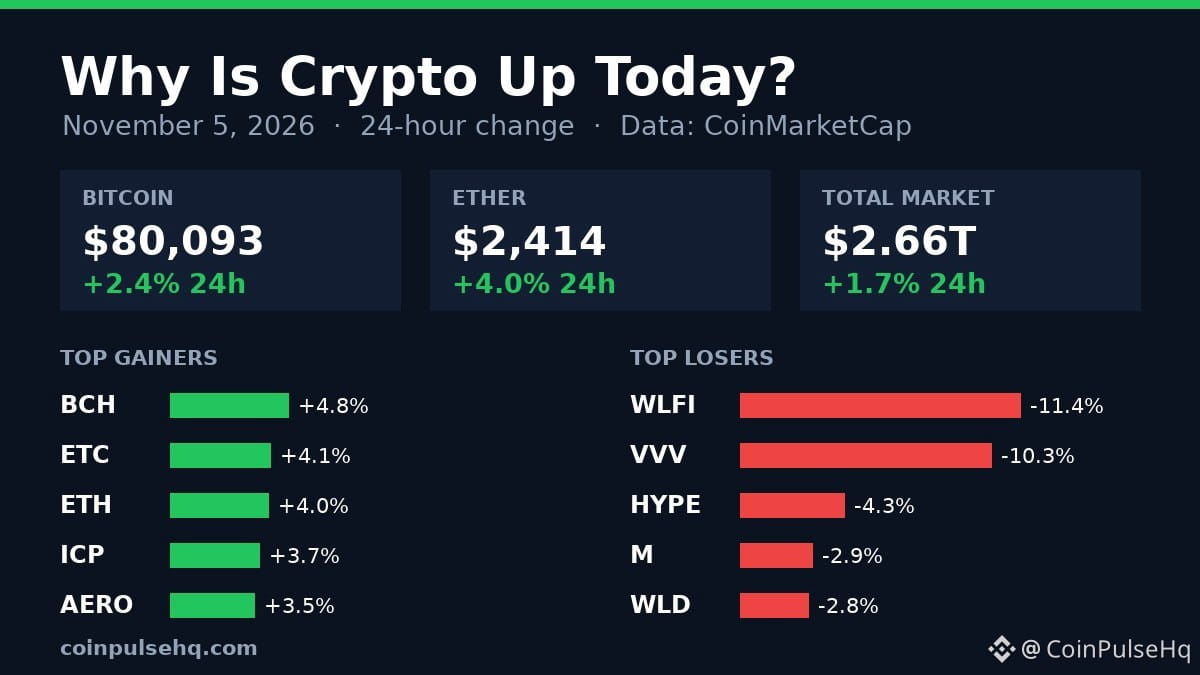
Стаття
Чому сьогодні зростають криптовалюти — 5 листопада 2026 року? Біткоїн подорожчав на 2,4% — до $80,1 тис.Сьогодні криптовалюти зростають. За 24 години загальна капіталізація ринку збільшилася на 1,7% — до $2,66 трлн станом на 13:00 UTC у четвер, 5 листопада 2026 року. Біткоїн торгувався по $80 093 (+2,4%), а ефір — по $2 414 (+4,0%). 35 із 50 найбільших монет подорожчали, а медіанне зростання становило +1,3%.
Чому сьогодні зростають криптовалюти? Що показують цифри
• Ширина ринку. Ситуація була неоднозначною: 35 із 50 найбільших монет подорожчали, а 15 подешевшали. Отже, загальне зростання зумовили кілька великих активів, а не весь ринок.
• Біткоїн та альткоїни. Лише 8 із решти 49 найбільших монет показали кращий результат, ніж біткоїн, тож інвестори віддавали перевагу найбільшому активу. Домінування біткоїна становить 60,1%, а ефір випередив біткоїн на 1,6 відсоткового пункта.
Чому сьогодні зростають криптовалюти — 5 листопада 2026 року? Біткоїн подорожчав на 2,4% — до $80,1 тис.
Сьогодні криптовалюти зростають. За 24 години загальна капіталізація ринку збільшилася на 1,7% — до $2,66 трлн станом на 13:00 UTC у четвер, 5 листопада 2026 року. Біткоїн торгувався по $80 093 (+2,4%), а ефір — по $2 414 (+4,0%). 35 із 50 найбільших монет подорожчали, а медіанне зростання становило +1,3%.
Чому сьогодні зростають криптовалюти? Що показують цифри
• Ширина ринку. Ситуація була неоднозначною: 35 із 50 найбільших монет подорожчали, а 15 подешевшали. Отже, загальне зростання зумовили кілька великих активів, а не весь ринок.
• Біткоїн та альткоїни. Лише 8 із решти 49 найбільших монет показали кращий результат, ніж біткоїн, тож інвестори віддавали перевагу найбільшому активу. Домінування біткоїна становить 60,1%, а ефір випередив біткоїн на 1,6 відсоткового пункта.
90
·
--

Стаття
Aave, Kamino і Veda просять SEC звільнити більшість DeFi-сховищ від регулюванняЯк повідомляє AMBCrypto, Aave Labs, Kamino Foundation і Veda Tech Labs Inc. попросили Комісію з цінних паперів і бірж США вважати, що більшість криптовалютних сховищ, які генерують дохід, і децентралізованих схем кредитування не підпадають під дію федерального законодавства про цінні папери. Три організації подали конфіденційну правову концепцію та попросили про зустріч зі співробітниками SEC, що спричинило публічні розбіжності з Morpho і Crypto Council for Innovation щодо того, наскільки важливою має бути свобода розсуду людини всередині сховища.
Ключові факти
Aave, Kamino і Veda просять SEC звільнити більшість DeFi-сховищ від регулювання
Як повідомляє AMBCrypto, Aave Labs, Kamino Foundation і Veda Tech Labs Inc. попросили Комісію з цінних паперів і бірж США вважати, що більшість криптовалютних сховищ, які генерують дохід, і децентралізованих схем кредитування не підпадають під дію федерального законодавства про цінні папери. Три організації подали конфіденційну правову концепцію та попросили про зустріч зі співробітниками SEC, що спричинило публічні розбіжності з Morpho і Crypto Council for Innovation щодо того, наскільки важливою має бути свобода розсуду людини всередині сховища.
Ключові факти
Ключові факти
112
·
--

Стаття
Переглянути переклад
Blockchain Life 2026 Sets Dubai Agenda for December 1-2The preliminary agenda for Blockchain Life 2026 lists 34 sessions across two days at Dubai's Festival Arena on December 1 and 2, with Wall Street-adjacent institutions, exchange executives, gaming figures and UAE regulators sharing the Space Stage, Cointribune reported.
Organisers divide the schedule evenly, with 17 slots on each day, and state that the programme is provisional and subject to change. A second stage tied to the AI Future Forum is also referenced, though all detailed sessions listed so far run on the Space Stage.
Key facts
• Day one opens with a keynote by Sergei Khitrov, founder of Listing.Help, Jets.Capital and Blockchain Life; day two opens with a fireside chat with Arthur Hayes of Maelstrom, whose session title is still to be announced.
• Speakers on December 1 include Ben Zhou (Bybit), Sandeep Nailwal (Polygon), Felix Fan (Trust Wallet), Rajat Sakhuja (Mastercard) and Luke Judges (Ripple).
• December 2 brings Yat Siu (Animoca Brands) on the agent economy, Jamie King (Rockstar Games) on gaming and ownership, and a regulation panel with Ruben Bombardi (VARA) and Dmitry Fedotov (ADGM).
• A "Mining After the Halving" panel is set for 5:00 p.m. on December 2 with Naeem Aslam (Zaye Capital Markets), Davis Hui (Canaan) and Li HanQiang (SpiderPool).
• AMBCrypto reported that Toobit returns as a Premium Sponsor at Booth A10, after winning Best CEX User Interface and Best CEX Educational Platform at the Blockchain Life Awards 2025 through public voting.
Institutions and exchanges share the opening day
The first day begins with an institutional panel moderated by Danil Gaidamakin of Jets.Capital, joined by John Cahil (Galaxy Digital), Andrei Grachev (DWF Labs), Amit Mehra (Borderless) and James Wo (Digital Finance Group). A later session on trading platforms pairs a fireside chat between Alex Falcon and Bybit's Ben Zhou with a panel drawing on BingX, MEXC, KuCoin, Bybit and BitMart to discuss AI-driven trading and its attack surfaces.
Sandeep Nailwal delivers a keynote titled "The 2 Quadrillion Dollar Wave", Mert Mumtaz of Helius addresses privacy in the age of AI and quantum computing, and Felix Fan of Trust Wallet covers social wallets. Marius Smith (Ethereum Institutional) and Marcin Kaźmierczak (RedStone) each give tokenization keynotes, while a BTCFi panel features Hadir Gaber of ChainMena alongside crypto commentators including Chris MMCrypto.
Payments run through the afternoon. Koray Koska of Ether.fi Cash moderates a stablecoin cards panel with Polygon Labs, Bakkt, Bitcoin.com and Mastercard, while Nic Puckrin of Coin Bureau moderates a session on stablecoins as a cross-border rail for remittances and corporate FX with Ripple, BCG and others.
UAE regulation and mining close the forum
The second day pairs a regulatory discussion with commercial detail: Bombardi of VARA, Fedotov of ADGM and Ahmed Allam of the Ruler's Court of Dubai explain the UAE's pace-setting stance, and at 3:00 p.m. Irina Heaver of NeosLegal interviews Bombardi on building a licensed digital-asset business. A tokenization panel moderated by Marcin Matyja of BCG covers treasuries, credit and funds on-chain with CoinMarketCap, Algorand Foundation, Cardano Foundation and Oracle.
Mining appears only on day two. The day ends with the Startup Pitch ceremony at 5:35 p.m., the Blockchain Life Awards 2026 at 5:40 p.m., and a close at 6:10 p.m., followed by a VIP afterparty from 9 p.m. to 2 a.m.
Tickets are currently at the early bird rate of $189 for Standard, $329 for Business and $999 for VIP, rising to $399, $729 and $2,099 at the last-chance price. Each ticket also grants access to the AI Future Forum, and Cointribune offers readers a 10% discount with the code Cointribune.
Why it matters
The agenda is a useful read on where the industry's attention sits: stablecoins and tokenization occupy as much stage time as price and mining, and institutional allocation gets its own panel with Bitcoin Suisse, XBTO and Rakbank. It also puts UAE regulators on the same programme as the exchanges and payment firms they supervise, at a point when the country's digital-asset rules are shaping how firms set up in the region.
The two reports differ in scope. Cointribune carries the full session-by-session schedule and ticket tiers; AMBCrypto reports Toobit's sponsorship and cites Henley & Partners' 2026 Crypto Adoption Index, which placed the UAE second among 36 markets, up from fifth previously, and expects more than 15,000 attendees from over 130 countries with more than 200 speakers.
What to watch
Organisers say more sessions remain to be announced, and Arthur Hayes' fireside chat title is still unfixed. Confirmation of those slots, and whether the early bird pricing holds as tickets sell, are the next concrete signals before the doors open in Dubai.
Originally published on CoinPulseHQ: https://coinpulsehq.com/blockchain-life-2026-agenda-dubai/?utm_source=binance_square&utm_medium=social&utm_campaign=auto_post
Blockchain Life 2026 Sets Dubai Agenda for December 1-2
The preliminary agenda for Blockchain Life 2026 lists 34 sessions across two days at Dubai's Festival Arena on December 1 and 2, with Wall Street-adjacent institutions, exchange executives, gaming figures and UAE regulators sharing the Space Stage, Cointribune reported.
Organisers divide the schedule evenly, with 17 slots on each day, and state that the programme is provisional and subject to change. A second stage tied to the AI Future Forum is also referenced, though all detailed sessions listed so far run on the Space Stage.
Key facts
• Day one opens with a keynote by Sergei Khitrov, founder of Listing.Help, Jets.Capital and Blockchain Life; day two opens with a fireside chat with Arthur Hayes of Maelstrom, whose session title is still to be announced.
• Speakers on December 1 include Ben Zhou (Bybit), Sandeep Nailwal (Polygon), Felix Fan (Trust Wallet), Rajat Sakhuja (Mastercard) and Luke Judges (Ripple).
• December 2 brings Yat Siu (Animoca Brands) on the agent economy, Jamie King (Rockstar Games) on gaming and ownership, and a regulation panel with Ruben Bombardi (VARA) and Dmitry Fedotov (ADGM).
• A "Mining After the Halving" panel is set for 5:00 p.m. on December 2 with Naeem Aslam (Zaye Capital Markets), Davis Hui (Canaan) and Li HanQiang (SpiderPool).
• AMBCrypto reported that Toobit returns as a Premium Sponsor at Booth A10, after winning Best CEX User Interface and Best CEX Educational Platform at the Blockchain Life Awards 2025 through public voting.
Institutions and exchanges share the opening day
The first day begins with an institutional panel moderated by Danil Gaidamakin of Jets.Capital, joined by John Cahil (Galaxy Digital), Andrei Grachev (DWF Labs), Amit Mehra (Borderless) and James Wo (Digital Finance Group). A later session on trading platforms pairs a fireside chat between Alex Falcon and Bybit's Ben Zhou with a panel drawing on BingX, MEXC, KuCoin, Bybit and BitMart to discuss AI-driven trading and its attack surfaces.
Sandeep Nailwal delivers a keynote titled "The 2 Quadrillion Dollar Wave", Mert Mumtaz of Helius addresses privacy in the age of AI and quantum computing, and Felix Fan of Trust Wallet covers social wallets. Marius Smith (Ethereum Institutional) and Marcin Kaźmierczak (RedStone) each give tokenization keynotes, while a BTCFi panel features Hadir Gaber of ChainMena alongside crypto commentators including Chris MMCrypto.
Payments run through the afternoon. Koray Koska of Ether.fi Cash moderates a stablecoin cards panel with Polygon Labs, Bakkt, Bitcoin.com and Mastercard, while Nic Puckrin of Coin Bureau moderates a session on stablecoins as a cross-border rail for remittances and corporate FX with Ripple, BCG and others.
UAE regulation and mining close the forum
The second day pairs a regulatory discussion with commercial detail: Bombardi of VARA, Fedotov of ADGM and Ahmed Allam of the Ruler's Court of Dubai explain the UAE's pace-setting stance, and at 3:00 p.m. Irina Heaver of NeosLegal interviews Bombardi on building a licensed digital-asset business. A tokenization panel moderated by Marcin Matyja of BCG covers treasuries, credit and funds on-chain with CoinMarketCap, Algorand Foundation, Cardano Foundation and Oracle.
Mining appears only on day two. The day ends with the Startup Pitch ceremony at 5:35 p.m., the Blockchain Life Awards 2026 at 5:40 p.m., and a close at 6:10 p.m., followed by a VIP afterparty from 9 p.m. to 2 a.m.
Tickets are currently at the early bird rate of $189 for Standard, $329 for Business and $999 for VIP, rising to $399, $729 and $2,099 at the last-chance price. Each ticket also grants access to the AI Future Forum, and Cointribune offers readers a 10% discount with the code Cointribune.
Why it matters
The agenda is a useful read on where the industry's attention sits: stablecoins and tokenization occupy as much stage time as price and mining, and institutional allocation gets its own panel with Bitcoin Suisse, XBTO and Rakbank. It also puts UAE regulators on the same programme as the exchanges and payment firms they supervise, at a point when the country's digital-asset rules are shaping how firms set up in the region.
The two reports differ in scope. Cointribune carries the full session-by-session schedule and ticket tiers; AMBCrypto reports Toobit's sponsorship and cites Henley & Partners' 2026 Crypto Adoption Index, which placed the UAE second among 36 markets, up from fifth previously, and expects more than 15,000 attendees from over 130 countries with more than 200 speakers.
What to watch
Organisers say more sessions remain to be announced, and Arthur Hayes' fireside chat title is still unfixed. Confirmation of those slots, and whether the early bird pricing holds as tickets sell, are the next concrete signals before the doors open in Dubai.
Originally published on CoinPulseHQ: https://coinpulsehq.com/blockchain-life-2026-agenda-dubai/?utm_source=binance_square&utm_medium=social&utm_campaign=auto_post
GLXYUS+5,42%
Увійдіть, щоб переглянути інший контент
Приєднуйтесь до користувачів криптовалют по всьому світу на Binance Square
⚡️ Отримуйте актуальну та корисну інформацію про криптовалюти.
💬 Приєднуйтесь до найбільшої у світі криптобіржі.
👍 Відкрийте справжні ідеї від перевірених авторів.
Електронна пошта / номер телефону
Трендові теми
fomcвідстеження
109,431 переглядів
516 обговорюють
#fomcвідстеження Жовтневий ІСЦ США у центрі уваги: ринки оцінюють перспективи підвищення ставок у грудні
Дані щодо інфляції у США, які мають оприлюднити наступного тижня, будуть під пильною увагою інвесторів, які оцінюватимуть, чи можуть стійкі цінові чинники спонукати Федеральну резервну систему знову підвищити процентні ставки у грудні. Водночас дедалі більші побоювання щодо інвестиційного буму у сфері ШІ та його потенційного впливу на економічне зростання додають невизначеності прогнозам щодо монетарної політики.$AAPLB
SergioDiaz
·1 вподобань
·102 переглядів
JobsReportRaisesHikeOdds
344,132 переглядів
2,633 обговорюють
CPITestsDecemberRateOutlook
64,136 переглядів
702 обговорюють