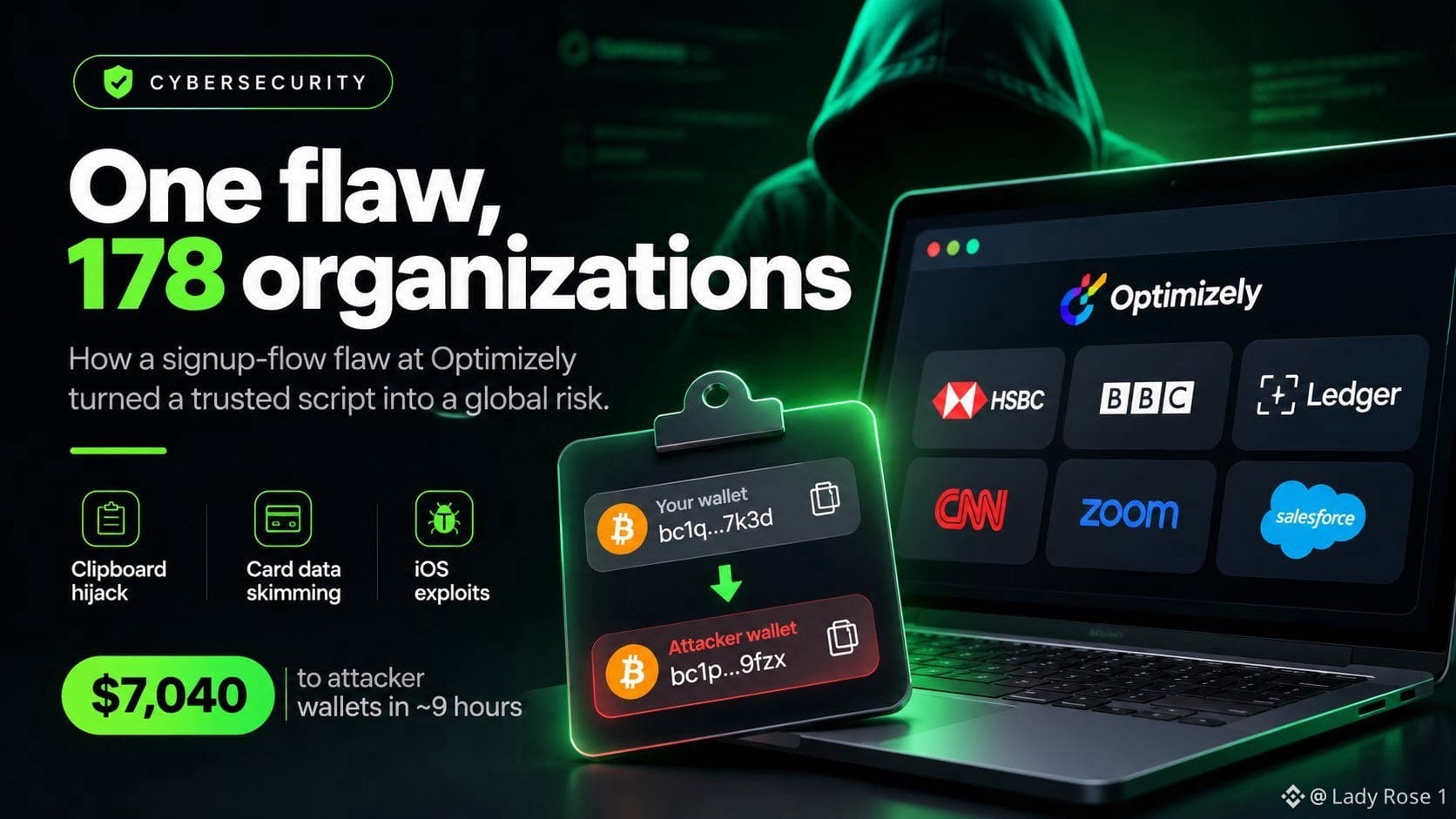
A signup-flow flaw at Optimizely exposed 178 organizations to malicious code, including HSBC, BBC, CNN, Ledger, Zoom and Salesforce.
On 16 November, attackers impersonated users on customer accounts and injected JavaScript through Optimizely Web Experimentation. The code could replace crypto wallet addresses in the clipboard, skim card details, steal cookies and capture screenshots. Around $7,040 in crypto, mostly $BTC , reached the attackers’ wallets in roughly nine hours.
Responsibility sits at three levels:
• The attackers, who built and deployed the malicious code.
• Optimizely, whose flaw allowed unauthorized access to customer accounts.
• The affected websites, which gave a dynamic third-party script permission to run across their pages.
The striking detail: a trusted script, served from a familiar domain with a valid certificate, could redirect a crypto payment through one copied address.
Third-party scripts deserve the same security checks as code built in-house.