CoinVoice recently learned that on October 7, Ethereum co-founder Vitalik Buterin published a blog post saying that the current state of Ethereum can be described as including a large part of the emerging two-layer staking. There are two types of participants in the two-layer staking: node operators and delegators.
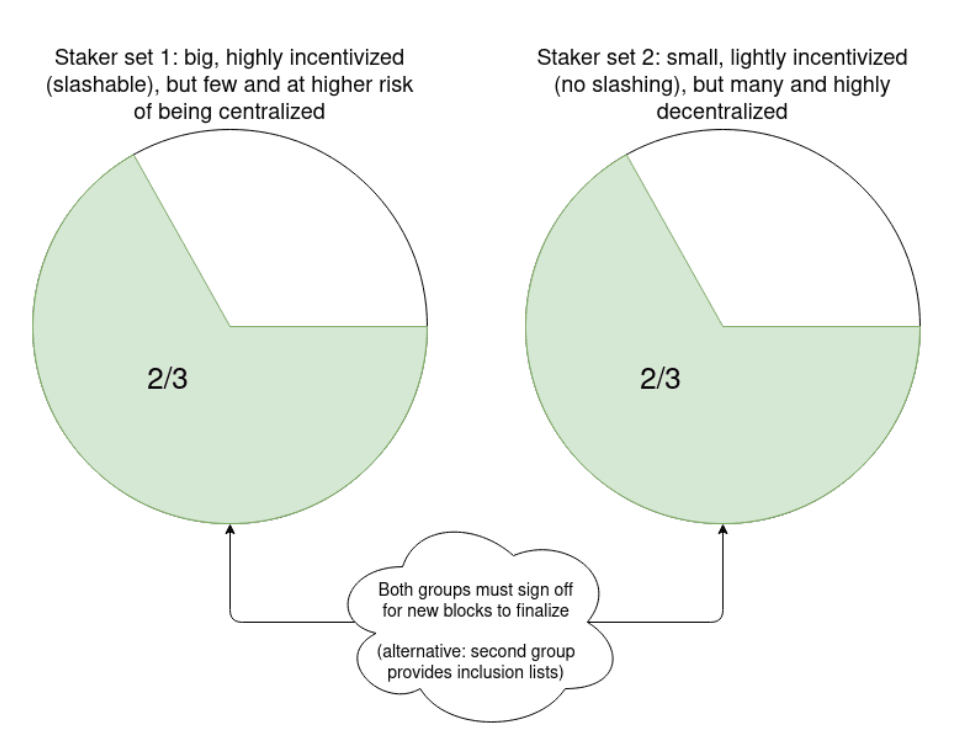
But these two types of staking have two major flaws: centralization risk for node operators and no consensus layer burden. Vitalik believes that this can be solved by expanding representative selection and increasing consensus participation. If done well, adjusting the staking design can solve the problem:
1. Give people who don’t have the resources or ability to stake individually today the opportunity to participate in staking, putting more power in their hands. 2. Reduce the number of signatures that the Ethereum consensus layer needs to process in each time slot to a much smaller number, such as around 10,000.
For solutions like this, there are different layers of abstraction where the solution to the problem can exist: the power granted to users in the staking pool protocol, the choice of users between staking pool protocols, and the provisions within the protocol. This choice should be carefully considered, and the minimum feasible provisions, the minimum degree of change in protocol complexity and protocol economics, while still achieving the desired goals, are usually best. [Original link]