

打龟佬
394 Posts

打龟佬
Report
Block User
情绪无法创造价值!
2 Following
9.6K+ Followers
12.1K+ Liked
Posts
All
Quotes
PINNED
·
--
My chatroom ID: cc13579
I've set up a group focused on technical indicators where I'll teach you how to find coins, pick coins, analyze indicators, and manage positions to maximize profits, among other things. Everything I know is yours to learn, so you won't have to worry about what to buy today anymore!
My chatroom ID: cc13579
I've set up a group focused on technical indicators where I'll teach you how to find coins, pick coins, analyze indicators, and manage positions to maximize profits, among other things. Everything I know is yours to learn, so you won't have to worry about what to buy today anymore!
I've set up a group focused on technical indicators where I'll teach you how to find coins, pick coins, analyze indicators, and manage positions to maximize profits, among other things. Everything I know is yours to learn, so you won't have to worry about what to buy today anymore!

17
3
9
3.7k
·
--
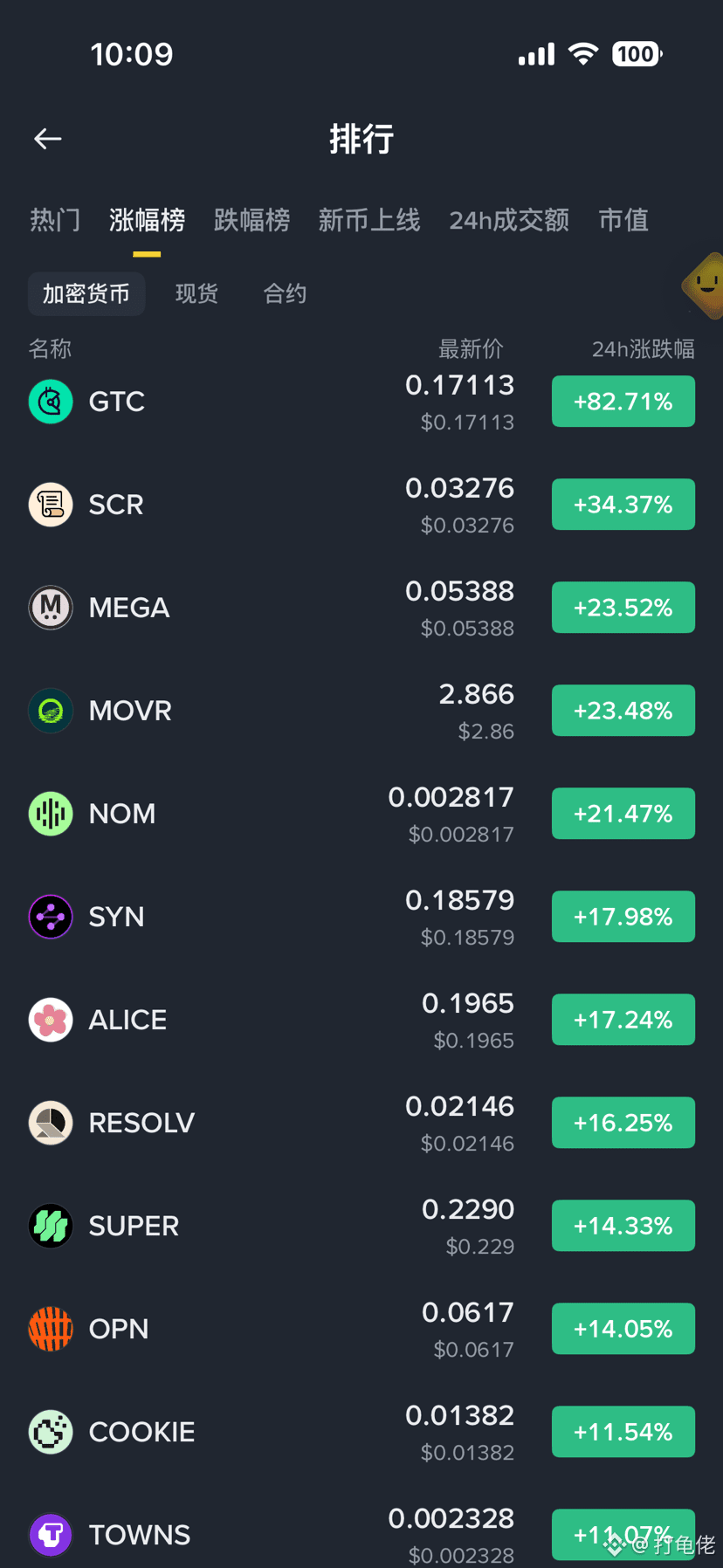
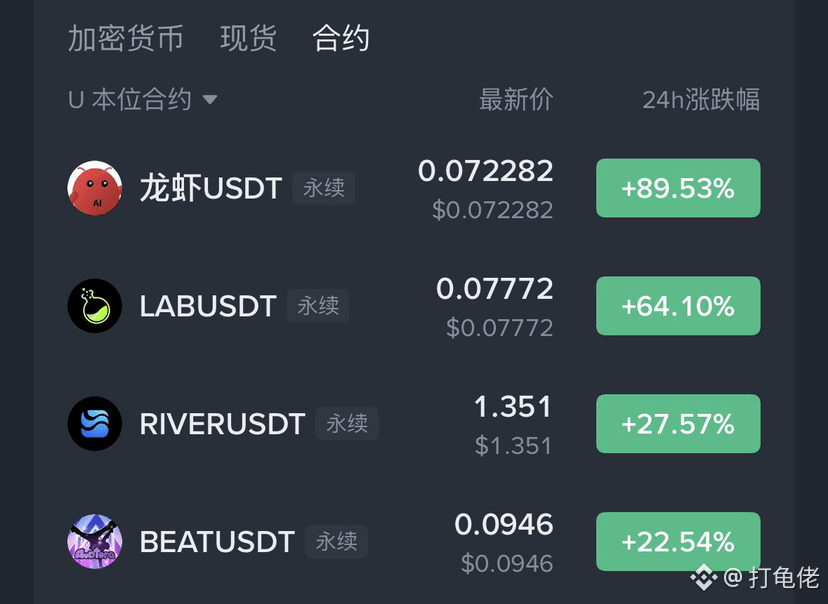
Where are the hot topics these days? Open the spot gainers list page—there are 7 tokens in there that are basically watchlist sectors. Got it!
Where are the hot topics these days? Open the spot gainers list page—there are 7 tokens in there that are basically watchlist sectors. Got it!
4
3
6.2k
·
--
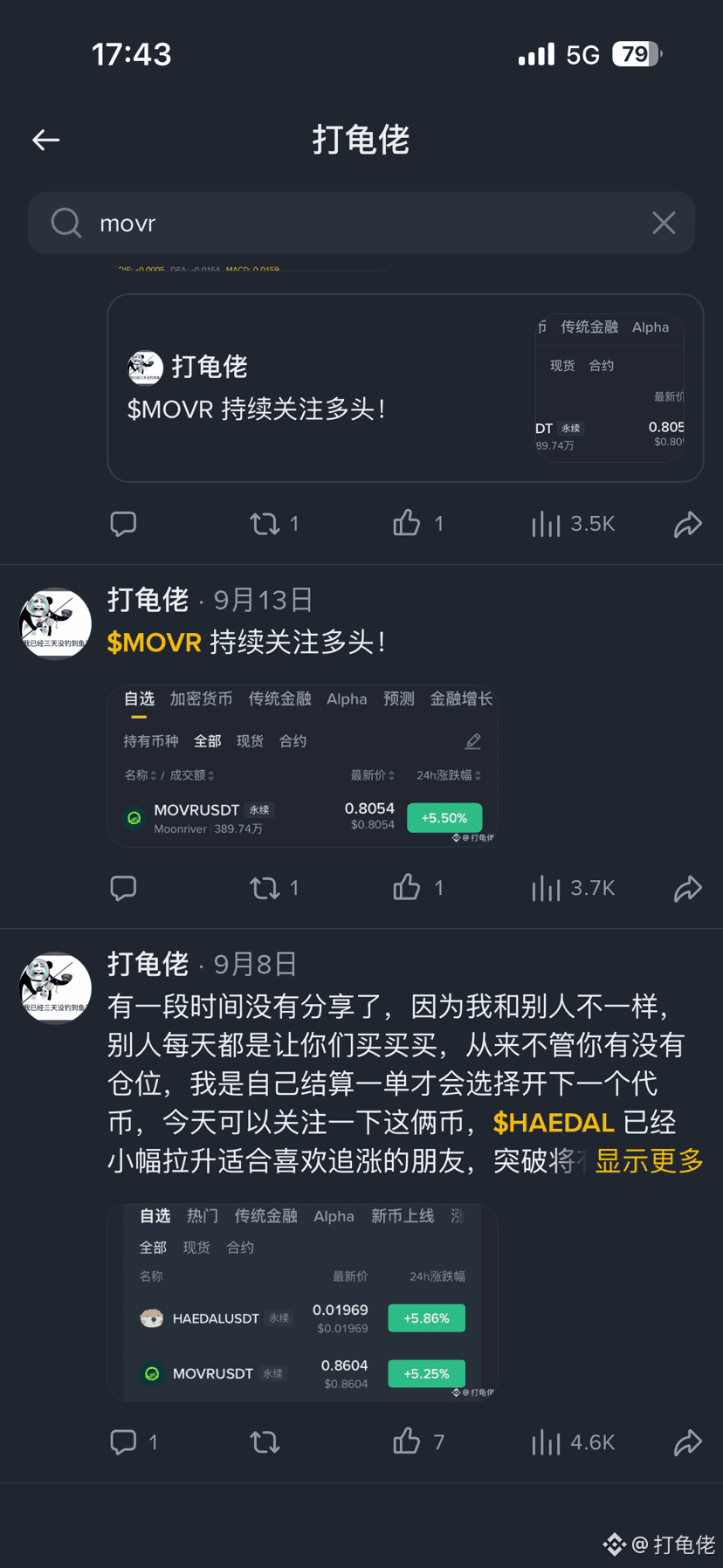
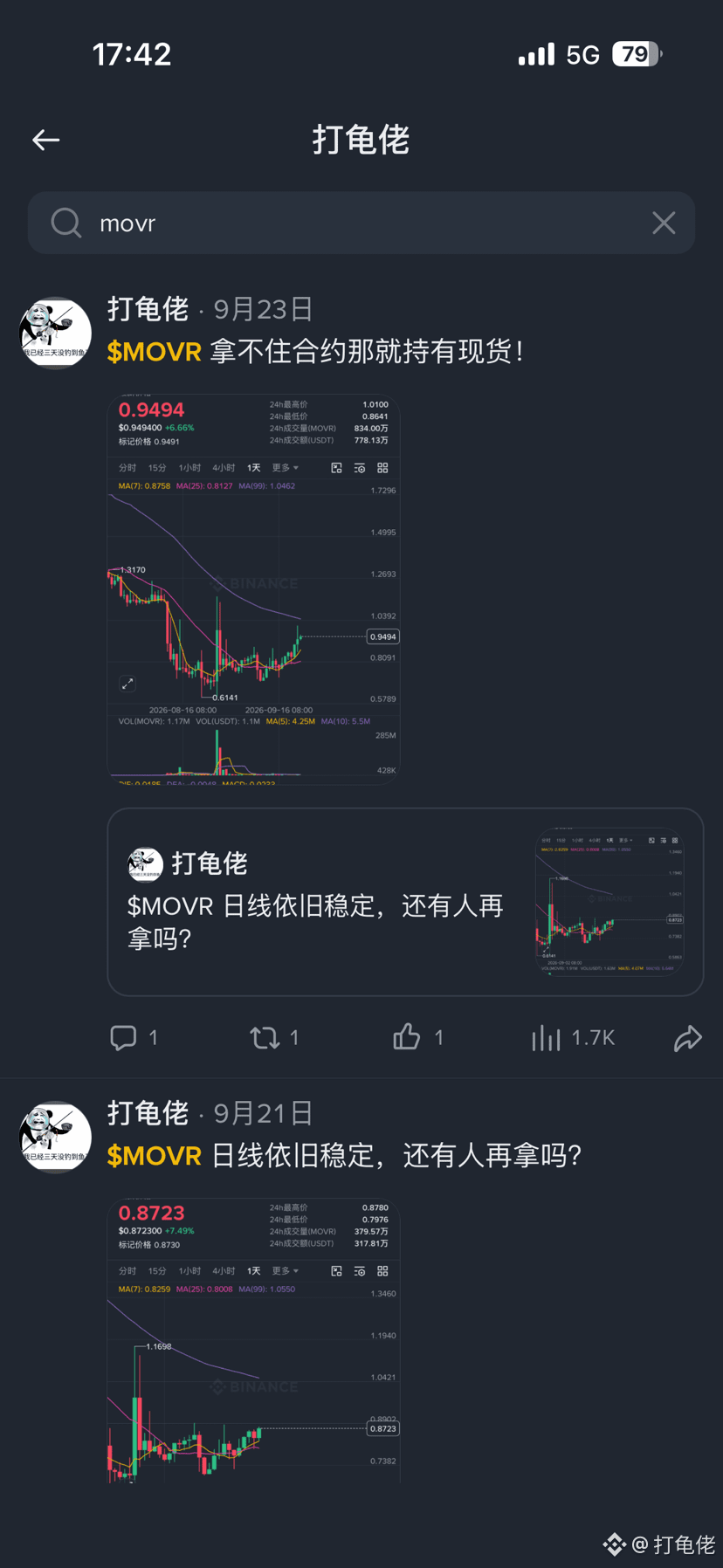
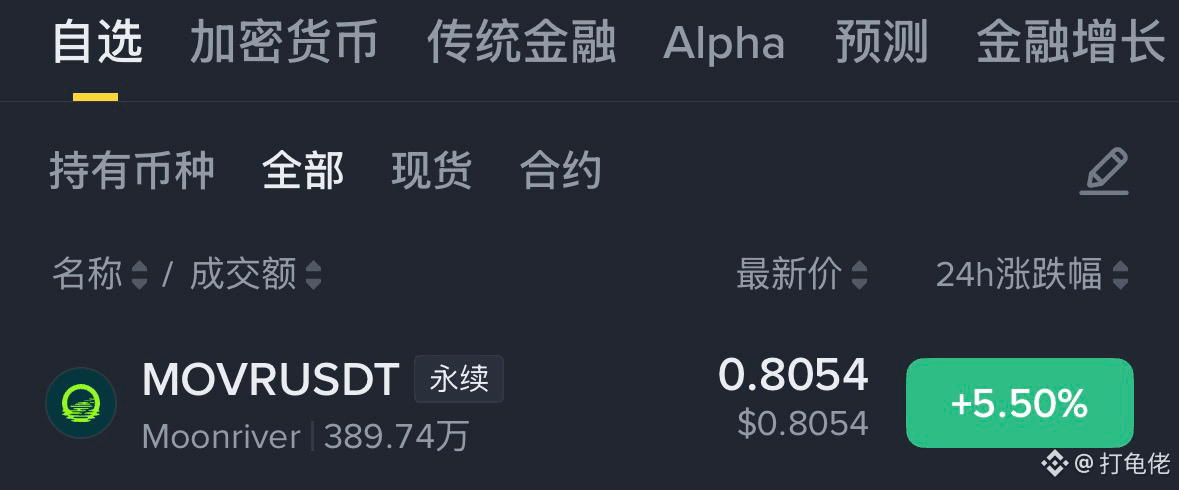
$MOVR is also a token that has been repeated multiple times this month. I said if you can’t hold it, just buy the spot. If you can hold until the National Day mini-holiday, won’t that basically pay for itself? Hahaha!
$MOVR is also a token that has been repeated multiple times this month. I said if you can’t hold it, just buy the spot. If you can hold until the National Day mini-holiday, won’t that basically pay for itself? Hahaha!
3
1
3
2.9k
·
--
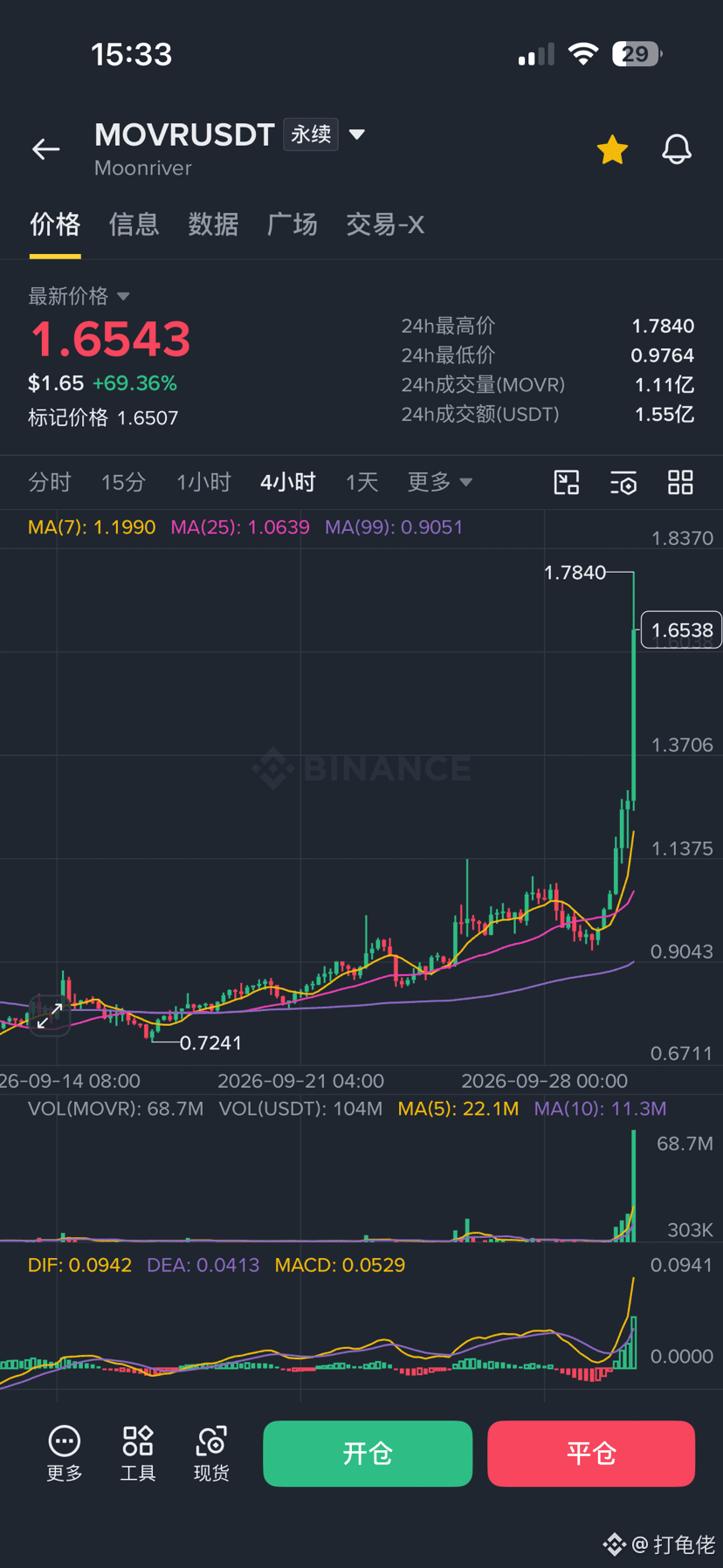
$MOVR 0.8 Let you start buying now, and it’s doubled too!
$MOVR 0.8 Let you start buying now, and it’s doubled too!
打龟佬
·
--
$MOVR can't hold the contract, then hold spot!
6
2
3k
·
--
Accept selling too early and stick to exit discipline!
Profits were never meant to be sold at the very highest point. They’re made by triggering your exit conditions and executing decisively—even if the market keeps rising afterward. The portion of profit you didn’t actually capture in the first place doesn’t belong to you.
Exiting according to plan is far more stable than trying to guess the top every time, and it’s also much easier to replicate long-term.
After you sell, it’s inevitable to feel regret watching the price continue to climb. But realized gains and the upside you didn’t capture later are simply two different things. Making a little less doesn’t mean you did something wrong. You also can’t judge your own trades afterward by working backward from the highest point.
The real risk of selling too early isn’t missing the subsequent rise—it’s your inner unwillingness. It makes you chase the next opportunity in a hurry to “make up” for losses. Once you disrupt your original trading rhythm just to chase profits back, this dissatisfaction becomes the starting point for a chain of mistakes.
How do you manage the mindset imbalance after selling too early? Rely on rules, rely on compounding, rely on a long-term perspective. No one can achieve consistent profitability by always selling at the very top. The core is repeatedly executing the same correct actions until they’re done properly. Allow yourself to sell too early, and maintain consistent execution for every trade—then your account can gradually accumulate gains through each correct choice!
Accept selling too early and stick to exit discipline!
Profits were never meant to be sold at the very highest point. They’re made by triggering your exit conditions and executing decisively—even if the market keeps rising afterward. The portion of profit you didn’t actually capture in the first place doesn’t belong to you.
Exiting according to plan is far more stable than trying to guess the top every time, and it’s also much easier to replicate long-term.
After you sell, it’s inevitable to feel regret watching the price continue to climb. But realized gains and the upside you didn’t capture later are simply two different things. Making a little less doesn’t mean you did something wrong. You also can’t judge your own trades afterward by working backward from the highest point.
The real risk of selling too early isn’t missing the subsequent rise—it’s your inner unwillingness. It makes you chase the next opportunity in a hurry to “make up” for losses. Once you disrupt your original trading rhythm just to chase profits back, this dissatisfaction becomes the starting point for a chain of mistakes.
How do you manage the mindset imbalance after selling too early? Rely on rules, rely on compounding, rely on a long-term perspective. No one can achieve consistent profitability by always selling at the very top. The core is repeatedly executing the same correct actions until they’re done properly. Allow yourself to sell too early, and maintain consistent execution for every trade—then your account can gradually accumulate gains through each correct choice!
Profits were never meant to be sold at the very highest point. They’re made by triggering your exit conditions and executing decisively—even if the market keeps rising afterward. The portion of profit you didn’t actually capture in the first place doesn’t belong to you.
Exiting according to plan is far more stable than trying to guess the top every time, and it’s also much easier to replicate long-term.
After you sell, it’s inevitable to feel regret watching the price continue to climb. But realized gains and the upside you didn’t capture later are simply two different things. Making a little less doesn’t mean you did something wrong. You also can’t judge your own trades afterward by working backward from the highest point.
The real risk of selling too early isn’t missing the subsequent rise—it’s your inner unwillingness. It makes you chase the next opportunity in a hurry to “make up” for losses. Once you disrupt your original trading rhythm just to chase profits back, this dissatisfaction becomes the starting point for a chain of mistakes.
How do you manage the mindset imbalance after selling too early? Rely on rules, rely on compounding, rely on a long-term perspective. No one can achieve consistent profitability by always selling at the very top. The core is repeatedly executing the same correct actions until they’re done properly. Allow yourself to sell too early, and maintain consistent execution for every trade—then your account can gradually accumulate gains through each correct choice!
1
6
2.3k
·
--
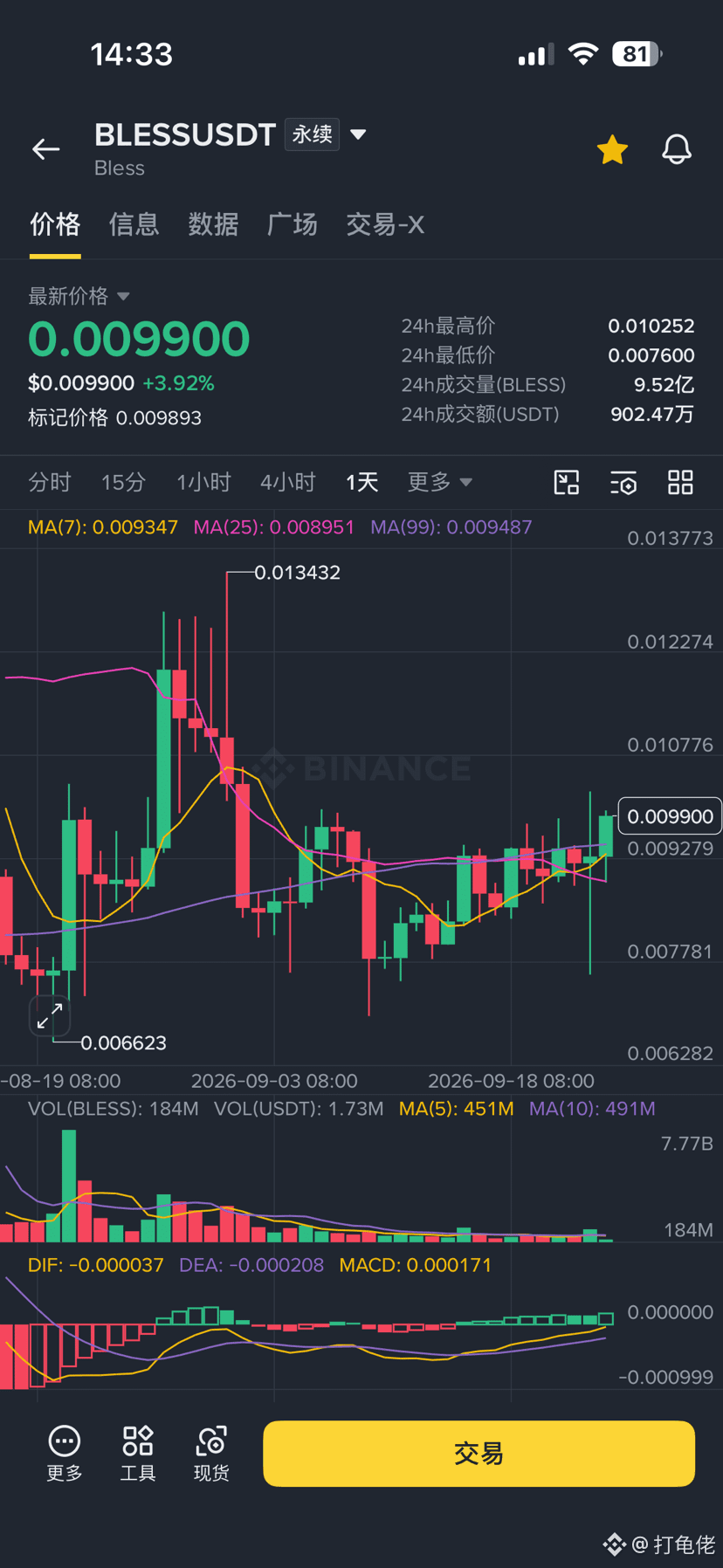
$BLESS Last night it fell more than 20% after inserting the needle; it has now been pulled back again—this could be worth a look for long positions. After a small pullback, you can decide whether to buy yourself!
$BLESS Last night it fell more than 20% after inserting the needle; it has now been pulled back again—this could be worth a look for long positions. After a small pullback, you can decide whether to buy yourself!
1
1
2.3k
·
--
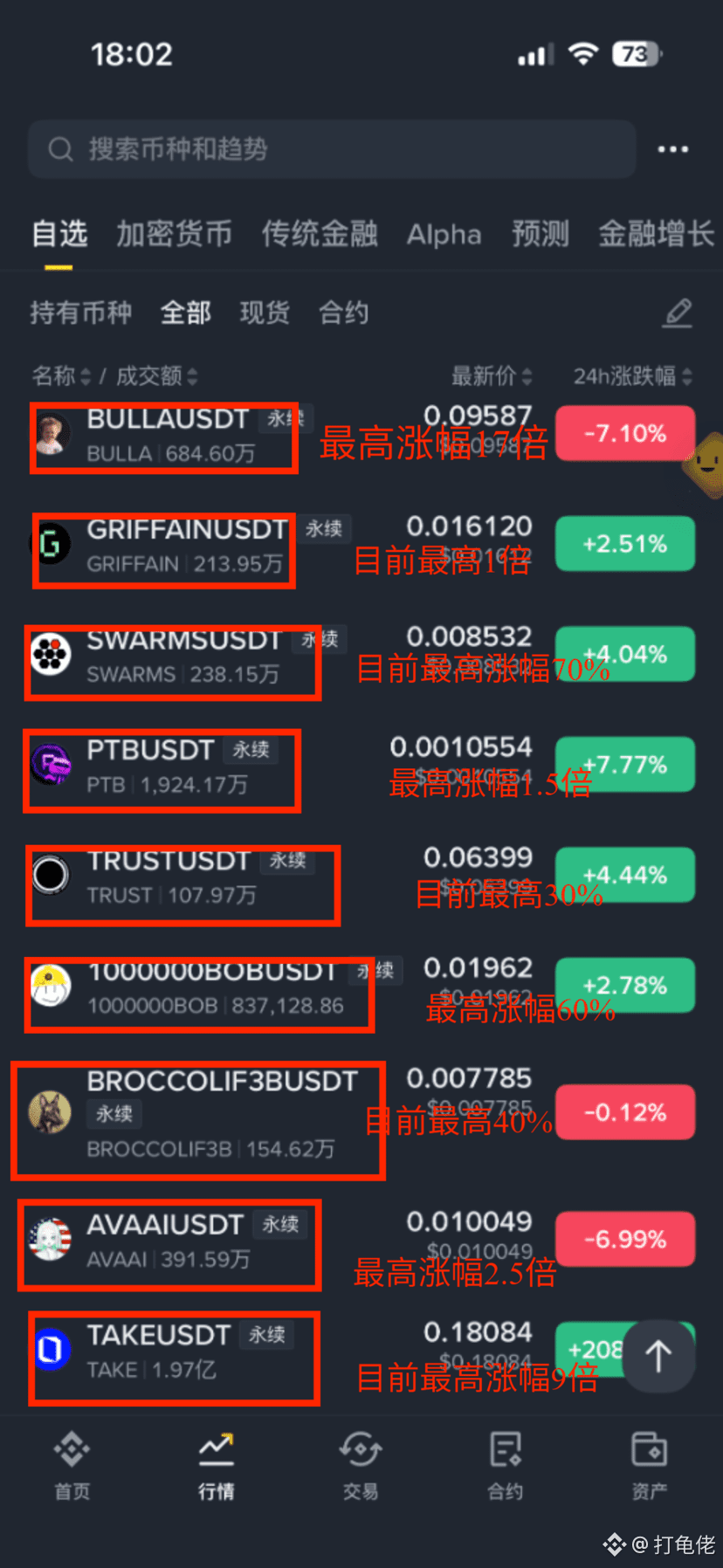
The batch of tokens I chose earlier: after $BULLA hit its peak, it rose 17x; $TAKE is now up 9x. The rest also have some gains, but a few have already pulled back to around their previous levels—take a look. For those that haven’t risen yet, you can follow and set up a layout if you’d like!
The batch of tokens I chose earlier: after $BULLA hit its peak, it rose 17x; $TAKE is now up 9x. The rest also have some gains, but a few have already pulled back to around their previous levels—take a look. For those that haven’t risen yet, you can follow and set up a layout if you’d like!
打龟佬
·
--
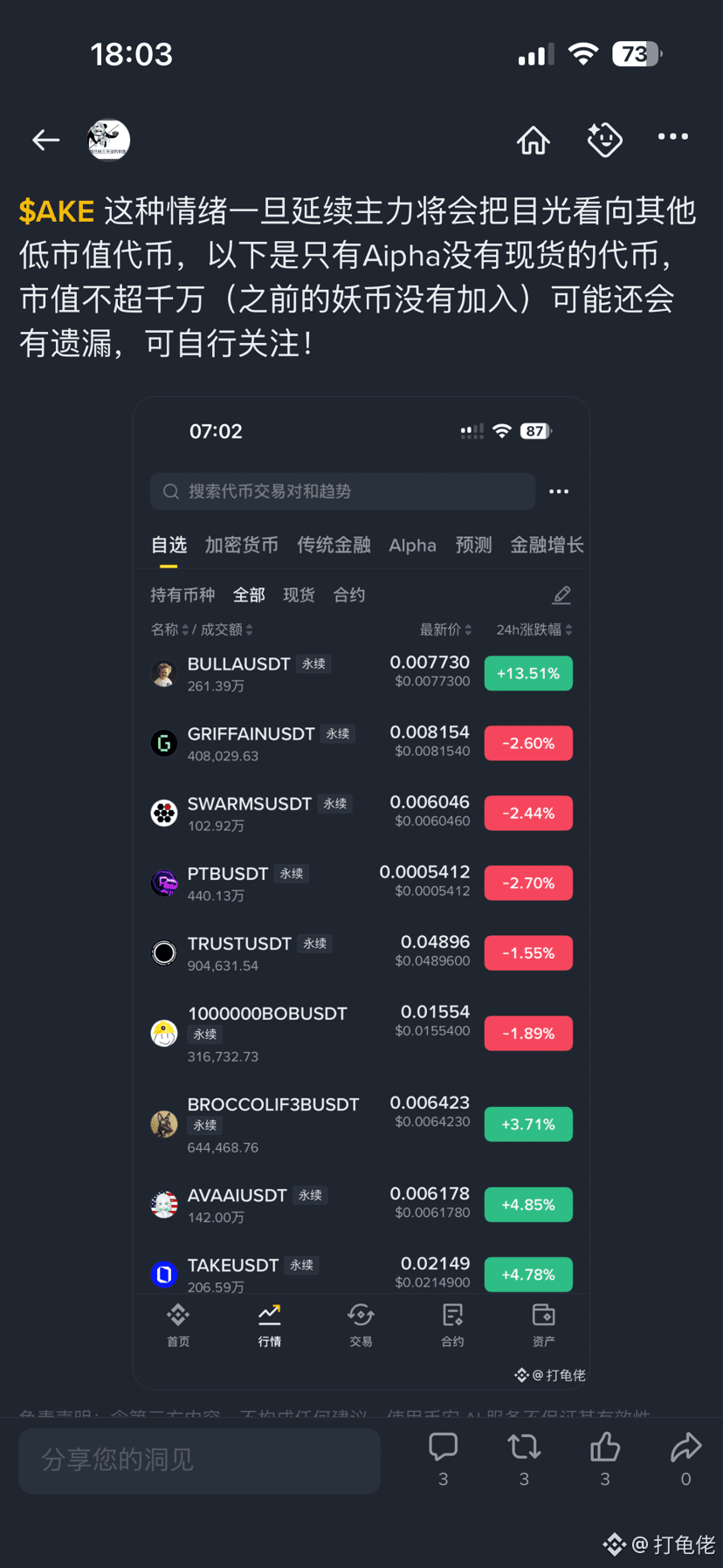
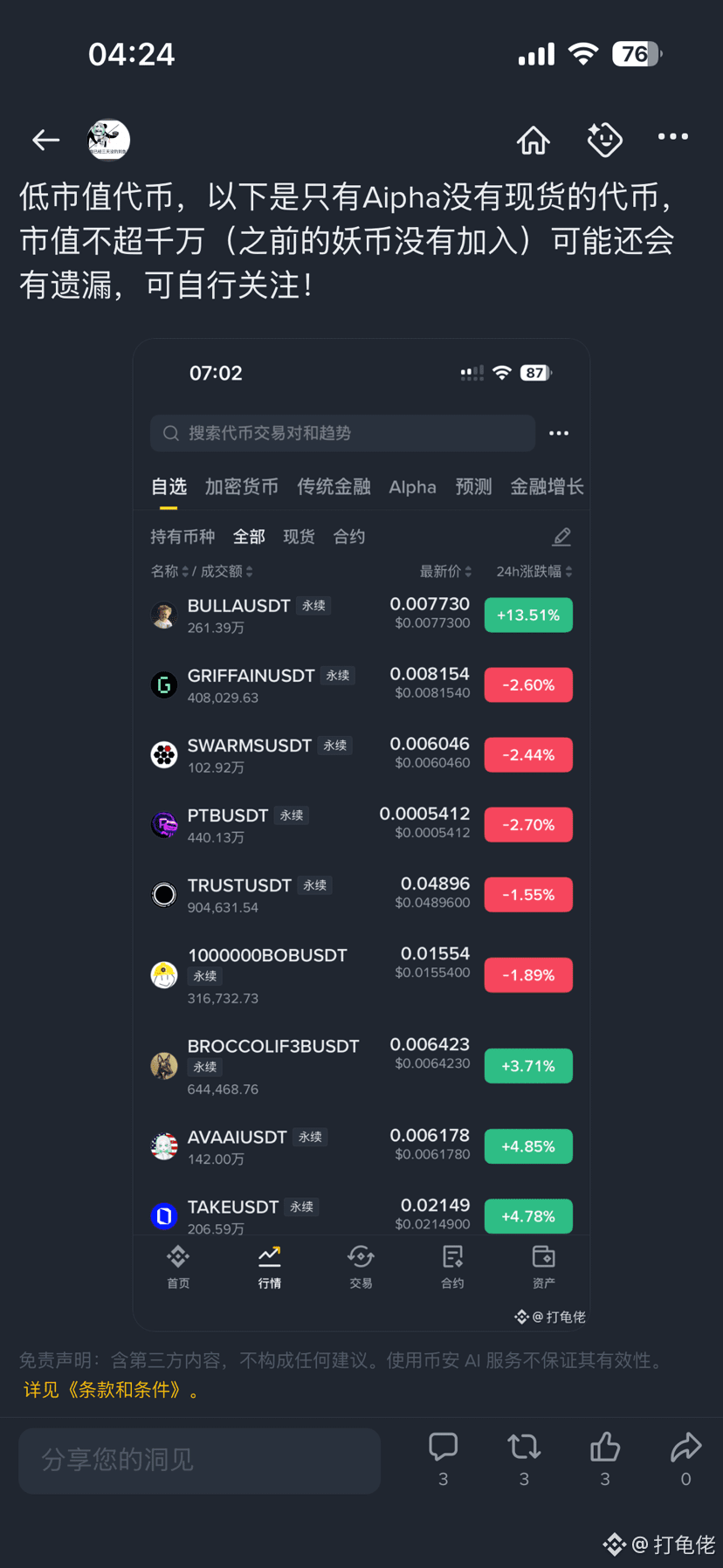
$AKE This kind of sentiment, once it continues, will cause the main players to shift their attention to other low-market-cap tokens. The following are tokens that Aipha doesn’t have spot holdings for, with market caps not exceeding ten million (the previous hype coins were not included). There may still be omissions—please feel free to keep an eye on them!
2
1
7.9k
·
--
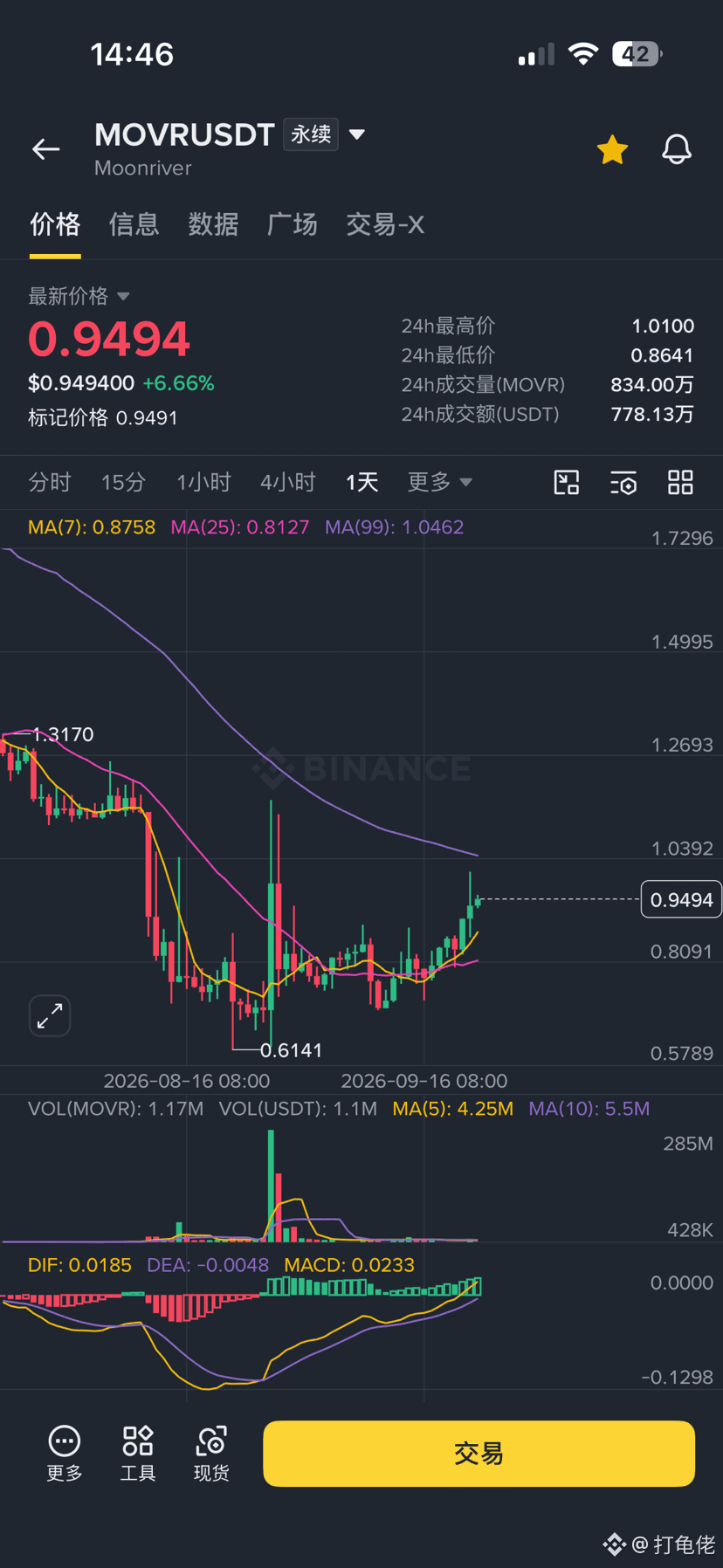
$MOVR can't hold the contract, then hold spot!
$MOVR can't hold the contract, then hold spot!
打龟佬
·
--
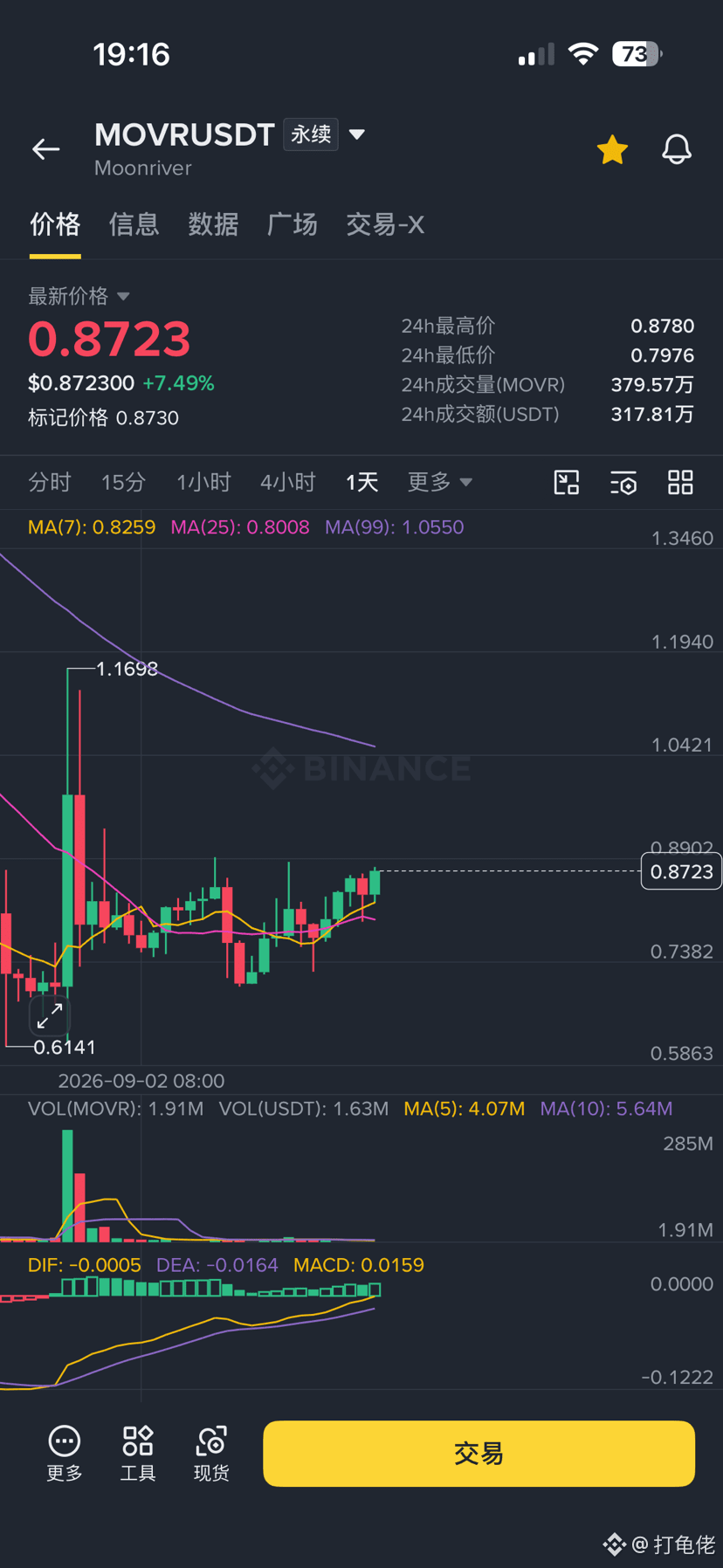
$MOVR daily chart is still stable—are there still people who are buying?
1
1
1
1.8k
·
--
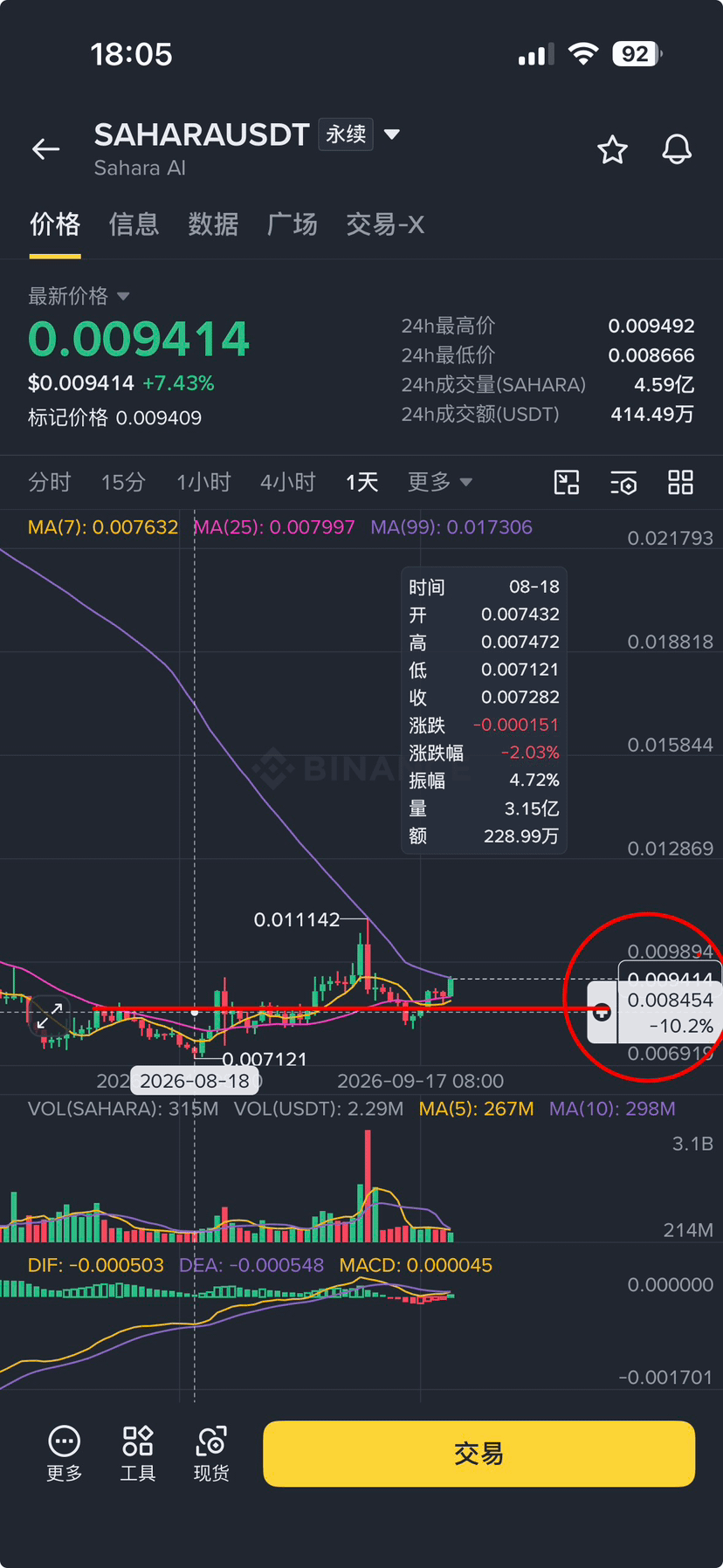
You can raise the stop-loss after buying $SAHARA ; the take-profit is up to you to decide—no advice on it. How much profit you make is up to you!
You can raise the stop-loss after buying $SAHARA ; the take-profit is up to you to decide—no advice on it. How much profit you make is up to you!
打龟佬
·
--
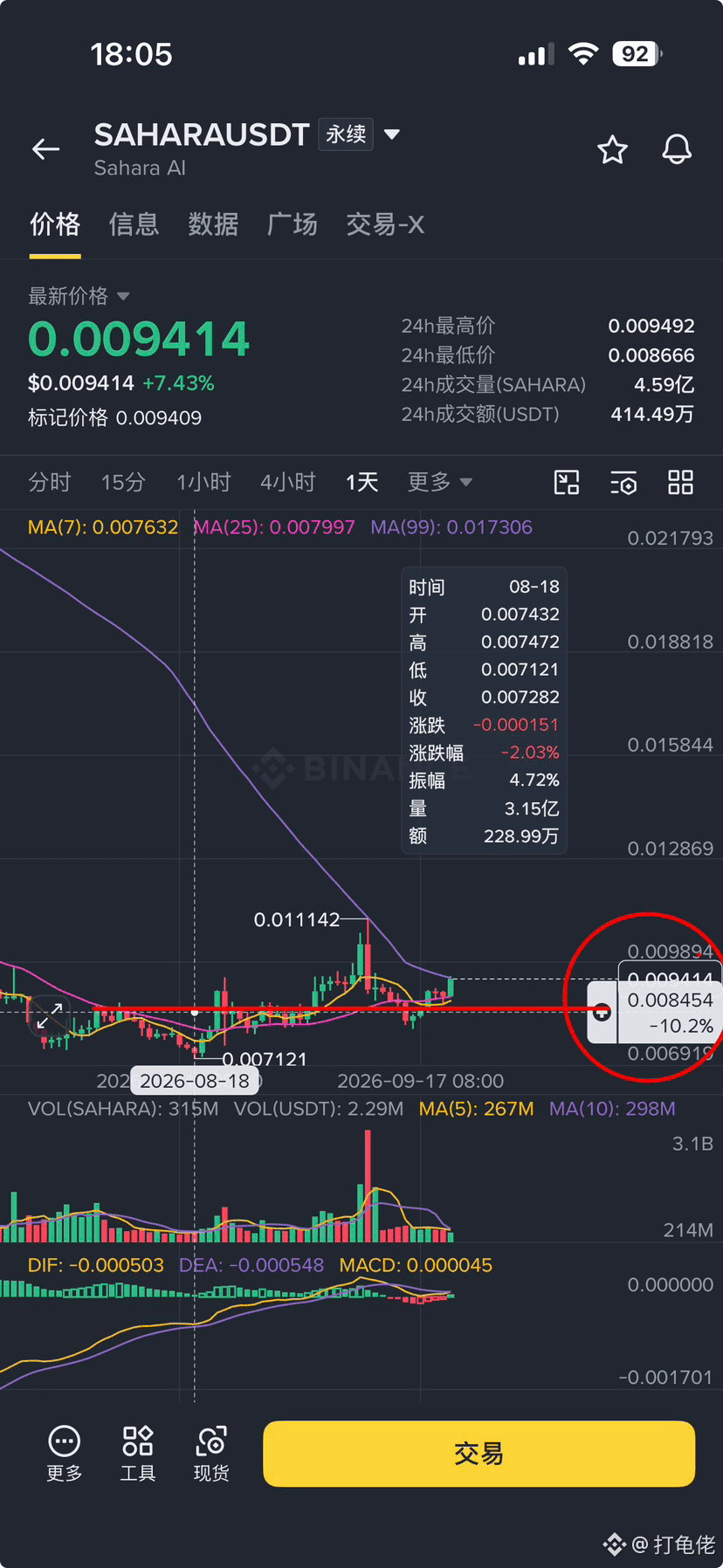
Watch $SAHARA for long entries, place your stop loss near the loop position!
1
2
1.5k
·
--
$MOVR daily chart is still stable—are there still people who are buying?
$MOVR daily chart is still stable—are there still people who are buying?
打龟佬
·
--
$MOVR Keep following the bulls!
1
1
3.6k
·
--
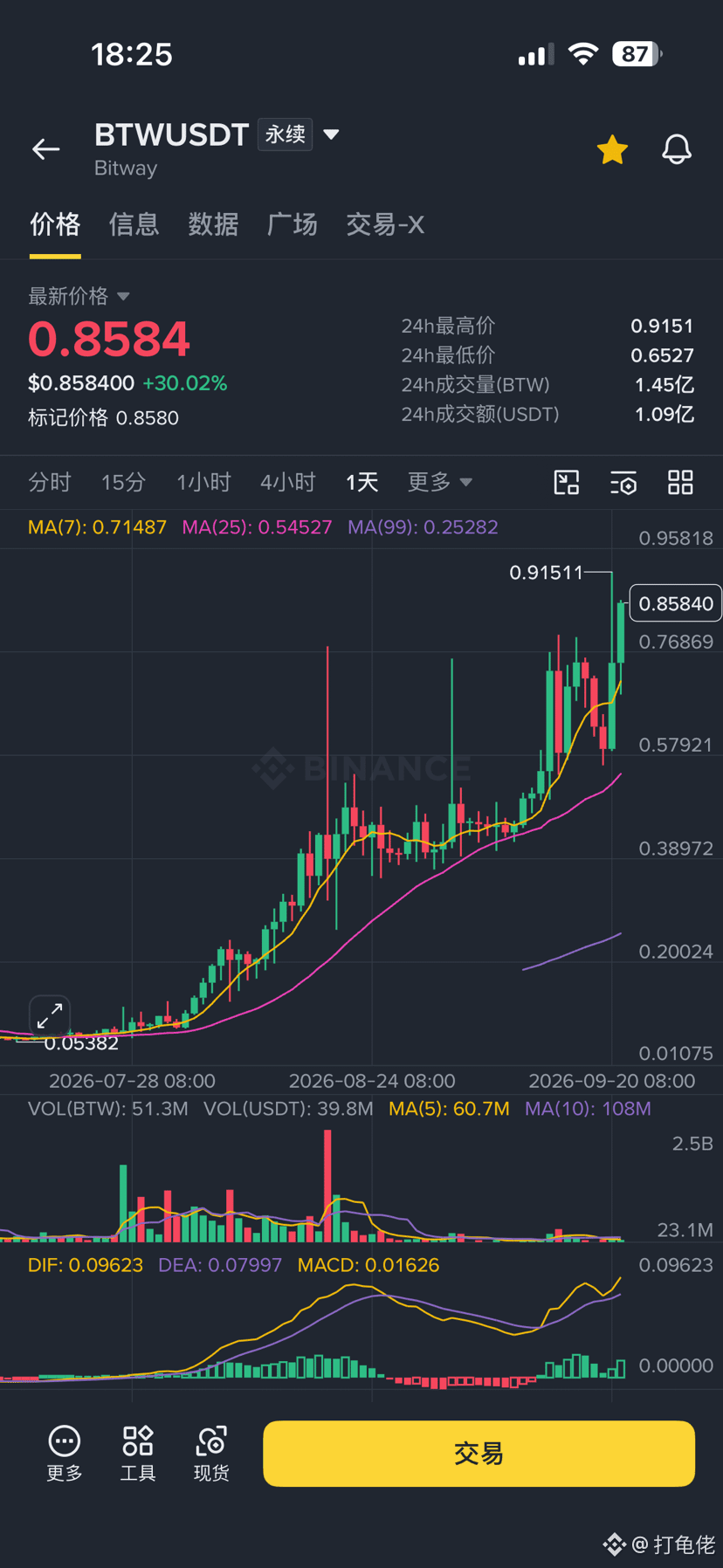
Those you can’t hold back are often very strong, haha
Those you can’t hold back are often very strong, haha

1
2
2.2k
·
--
Watch $SAHARA for long entries, place your stop loss near the loop position!
Watch $SAHARA for long entries, place your stop loss near the loop position!
2
1
2
3.2k
·
--
When there’s no market, would you choose to stay in cash? Most probably wouldn’t, right!
Do you feel that if you don’t hold any positions, you might miss the move? Actually, have you thought about this: being afraid to miss out is what makes people chase price up impulsively. When trading, you must think about risk first!
A lot of people go all-in every day, so busy they don’t even have time to take their feet off the ground. They hold all kinds of tokens—whether they can really make money, they’re not even sure in their own hearts!
Staying in cash is actually about executing your rules—when there aren’t any underlying assets that meet the criteria at the moment.
The tokens that meet the criteria must score three things: they’re cheap enough, the logic is solid, and you can understand them. All three are indispensable!
“Understand” is especially important! Money made by luck that you don’t understand will eventually have to be lost back. Understanding the market is the hardest and most core thing!
Staying in cash and waiting might mean missing opportunities, but the market is never short of chances—what it lacks is patience and your capital. Staying in cash is to protect your principal, so when a truly big opportunity comes, you have the confidence to take it. Missing the market isn’t the real loss—making the wrong move is what burns real money out of your pocket!
If you go all-in every day and then directly block all the room you’d need to correct your mistakes, how many times can you withstand being wrong? It’s all determined by your position size!
Staying in cash is keeping enough “bullets”—like a hunter waiting for prey, rarely firing random shots in the ordinary times.
Being in cash isn’t about being bearish on the future; it’s about waiting for certainty. First, survive. Then we can talk about how much you make. Staying in cash minimizes risk, and when the real opportunity worth entering arrives, you can firmly hold onto the big move!
So recently I haven’t really shared any tokens. I’m just waiting for a wave of opportunities—and waiting for a wave of market action!
When there’s no market, would you choose to stay in cash? Most probably wouldn’t, right!
Do you feel that if you don’t hold any positions, you might miss the move? Actually, have you thought about this: being afraid to miss out is what makes people chase price up impulsively. When trading, you must think about risk first!
A lot of people go all-in every day, so busy they don’t even have time to take their feet off the ground. They hold all kinds of tokens—whether they can really make money, they’re not even sure in their own hearts!
Staying in cash is actually about executing your rules—when there aren’t any underlying assets that meet the criteria at the moment.
The tokens that meet the criteria must score three things: they’re cheap enough, the logic is solid, and you can understand them. All three are indispensable!
“Understand” is especially important! Money made by luck that you don’t understand will eventually have to be lost back. Understanding the market is the hardest and most core thing!
Staying in cash and waiting might mean missing opportunities, but the market is never short of chances—what it lacks is patience and your capital. Staying in cash is to protect your principal, so when a truly big opportunity comes, you have the confidence to take it. Missing the market isn’t the real loss—making the wrong move is what burns real money out of your pocket!
If you go all-in every day and then directly block all the room you’d need to correct your mistakes, how many times can you withstand being wrong? It’s all determined by your position size!
Staying in cash is keeping enough “bullets”—like a hunter waiting for prey, rarely firing random shots in the ordinary times.
Being in cash isn’t about being bearish on the future; it’s about waiting for certainty. First, survive. Then we can talk about how much you make. Staying in cash minimizes risk, and when the real opportunity worth entering arrives, you can firmly hold onto the big move!
So recently I haven’t really shared any tokens. I’m just waiting for a wave of opportunities—and waiting for a wave of market action!
Do you feel that if you don’t hold any positions, you might miss the move? Actually, have you thought about this: being afraid to miss out is what makes people chase price up impulsively. When trading, you must think about risk first!
A lot of people go all-in every day, so busy they don’t even have time to take their feet off the ground. They hold all kinds of tokens—whether they can really make money, they’re not even sure in their own hearts!
Staying in cash is actually about executing your rules—when there aren’t any underlying assets that meet the criteria at the moment.
The tokens that meet the criteria must score three things: they’re cheap enough, the logic is solid, and you can understand them. All three are indispensable!
“Understand” is especially important! Money made by luck that you don’t understand will eventually have to be lost back. Understanding the market is the hardest and most core thing!
Staying in cash and waiting might mean missing opportunities, but the market is never short of chances—what it lacks is patience and your capital. Staying in cash is to protect your principal, so when a truly big opportunity comes, you have the confidence to take it. Missing the market isn’t the real loss—making the wrong move is what burns real money out of your pocket!
If you go all-in every day and then directly block all the room you’d need to correct your mistakes, how many times can you withstand being wrong? It’s all determined by your position size!
Staying in cash is keeping enough “bullets”—like a hunter waiting for prey, rarely firing random shots in the ordinary times.
Being in cash isn’t about being bearish on the future; it’s about waiting for certainty. First, survive. Then we can talk about how much you make. Staying in cash minimizes risk, and when the real opportunity worth entering arrives, you can firmly hold onto the big move!
So recently I haven’t really shared any tokens. I’m just waiting for a wave of opportunities—and waiting for a wave of market action!
6
2.2k
·
--
Many people can make money with a small position size, and then grow confident and start increasing to a larger position—which usually leads to losses, doesn’t it? Actually, it’s not the market targeting you; it’s that your mindset changes!
First is the position load ratio: a small position size keeps you within your psychological comfort zone. You can stay calm and observe the market, making judgments strictly according to trading rules. But once your position exceeds the psychological boundary you can tolerate, your attention gets hijacked by real-time unrealized gains and losses. A little up, a little down—every move tugs at your heart. What increases isn’t truly trading opportunities; it’s the psychological burden weighing on you!
Next is the volatility amplification value: with the same degree of market movement, a small position makes it feel like just a normal market signal. But with a large position, it instantly turns into emotional pressure that “stings.” The market itself doesn’t change at all—what gets amplified is your position, which magnifies every rise and fall. As a result, your sensitivity to trading outcomes skyrockets too!
Then there’s patience compression rate: you initially planned to wait until the market structure fully played out before acting. But the heavier the position, the shorter the time you can stay calm and hold. What was once deliberate observation slowly turns into doubts and hesitation. And once you accumulate enough hesitation, it directly transforms into impulsive actions. In the end, just before the market truly reaches the result, you get pushed out early by emotions—missing the subsequent move for nothing!
Finally, execution consistency: with a small position, you can calmly and repeatedly execute the same set of trading rules. But once the position size increases, temporary subjective judgment easily takes over your decision-making. You sell too early because you can’t resist today; tomorrow you switch your position on the spur of the moment again because you get carried away. As the execution path becomes more and more chaotic, the method that could originally produce stable profits loses repeatability—completely destroying its stability!
Many people can make money with a small position size, and then grow confident and start increasing to a larger position—which usually leads to losses, doesn’t it? Actually, it’s not the market targeting you; it’s that your mindset changes!
First is the position load ratio: a small position size keeps you within your psychological comfort zone. You can stay calm and observe the market, making judgments strictly according to trading rules. But once your position exceeds the psychological boundary you can tolerate, your attention gets hijacked by real-time unrealized gains and losses. A little up, a little down—every move tugs at your heart. What increases isn’t truly trading opportunities; it’s the psychological burden weighing on you!
Next is the volatility amplification value: with the same degree of market movement, a small position makes it feel like just a normal market signal. But with a large position, it instantly turns into emotional pressure that “stings.” The market itself doesn’t change at all—what gets amplified is your position, which magnifies every rise and fall. As a result, your sensitivity to trading outcomes skyrockets too!
Then there’s patience compression rate: you initially planned to wait until the market structure fully played out before acting. But the heavier the position, the shorter the time you can stay calm and hold. What was once deliberate observation slowly turns into doubts and hesitation. And once you accumulate enough hesitation, it directly transforms into impulsive actions. In the end, just before the market truly reaches the result, you get pushed out early by emotions—missing the subsequent move for nothing!
Finally, execution consistency: with a small position, you can calmly and repeatedly execute the same set of trading rules. But once the position size increases, temporary subjective judgment easily takes over your decision-making. You sell too early because you can’t resist today; tomorrow you switch your position on the spur of the moment again because you get carried away. As the execution path becomes more and more chaotic, the method that could originally produce stable profits loses repeatability—completely destroying its stability!
First is the position load ratio: a small position size keeps you within your psychological comfort zone. You can stay calm and observe the market, making judgments strictly according to trading rules. But once your position exceeds the psychological boundary you can tolerate, your attention gets hijacked by real-time unrealized gains and losses. A little up, a little down—every move tugs at your heart. What increases isn’t truly trading opportunities; it’s the psychological burden weighing on you!
Next is the volatility amplification value: with the same degree of market movement, a small position makes it feel like just a normal market signal. But with a large position, it instantly turns into emotional pressure that “stings.” The market itself doesn’t change at all—what gets amplified is your position, which magnifies every rise and fall. As a result, your sensitivity to trading outcomes skyrockets too!
Then there’s patience compression rate: you initially planned to wait until the market structure fully played out before acting. But the heavier the position, the shorter the time you can stay calm and hold. What was once deliberate observation slowly turns into doubts and hesitation. And once you accumulate enough hesitation, it directly transforms into impulsive actions. In the end, just before the market truly reaches the result, you get pushed out early by emotions—missing the subsequent move for nothing!
Finally, execution consistency: with a small position, you can calmly and repeatedly execute the same set of trading rules. But once the position size increases, temporary subjective judgment easily takes over your decision-making. You sell too early because you can’t resist today; tomorrow you switch your position on the spur of the moment again because you get carried away. As the execution path becomes more and more chaotic, the method that could originally produce stable profits loses repeatability—completely destroying its stability!

5
2.2k
·
--
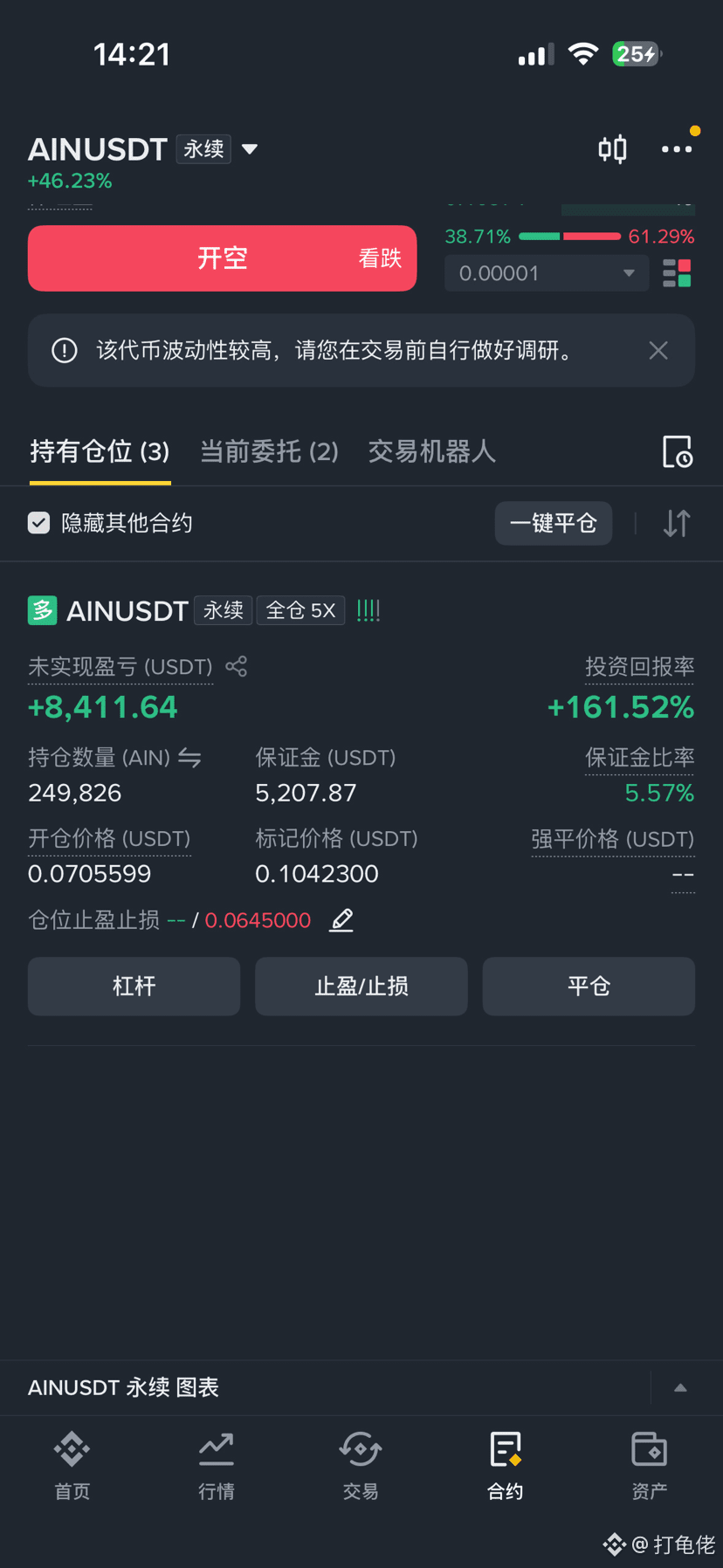
$AIN this more than a week hasn't been a waste!
$AIN this more than a week hasn't been a waste!

1
2.2k
·
--
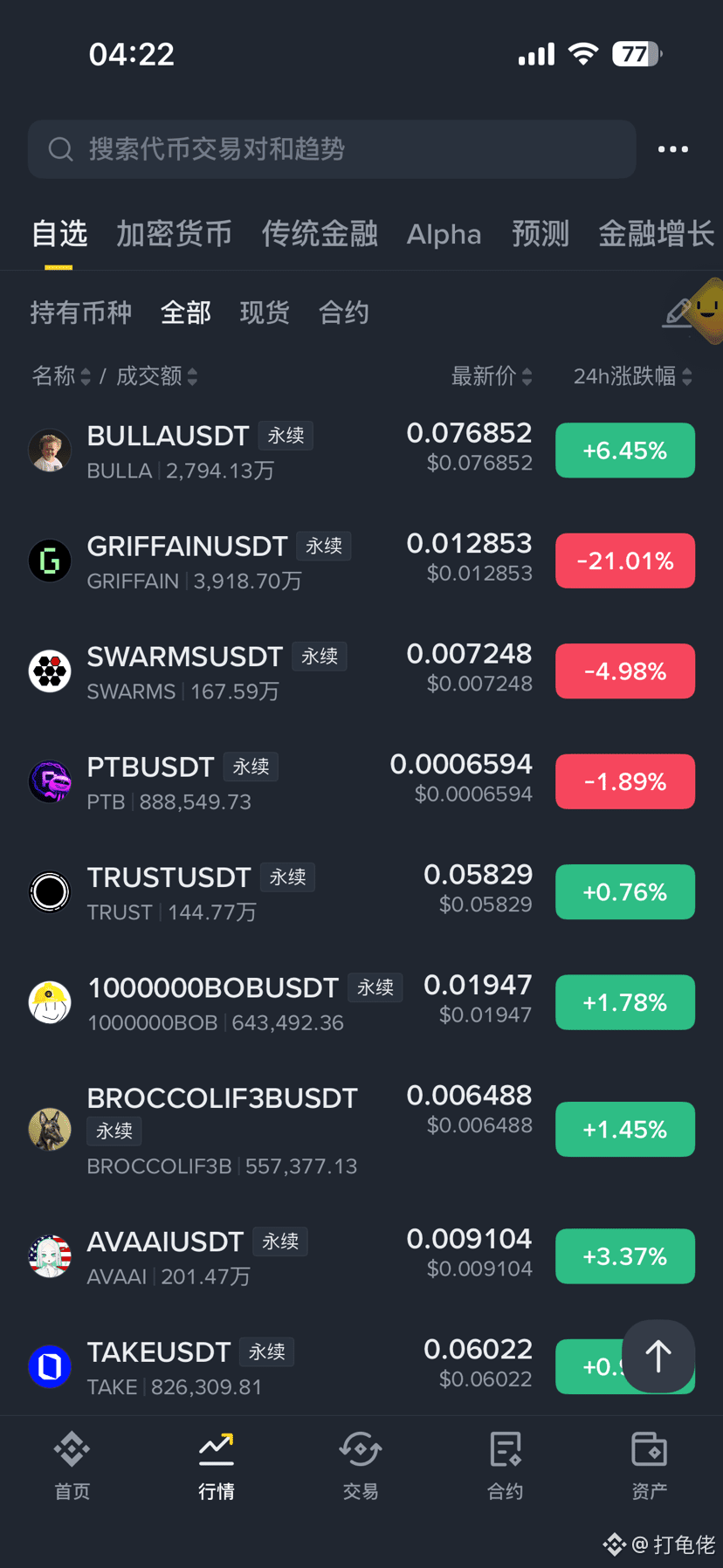
Now looking back, none of those tokens we were talking about back then turned out to be bad!
Now looking back, none of those tokens we were talking about back then turned out to be bad!
2
6
5.8k
·
--
After a big drop, a rebound is inevitable. You can check the relevant points yourself: $COLLECT !
After a big drop, a rebound is inevitable. You can check the relevant points yourself: $COLLECT !
1
3.5k
·
--
It’s going down and you’re afraid to buy; it’s going up and you’re chasing the price—does that sound like you?
It’s going down and you’re afraid to buy; it’s going up and you’re chasing the price—does that sound like you?
4
1.5k
·
--
Going long has more upside; going short has more speed.First of all, why does going long make more money? The lower limit of asset prices is zero (ignoring extreme derivatives), but the upper limit is infinity. As a bull market progresses, the price of a given asset can rise two, three times, or even more—stacking economic growth, inflation, and compound returns like a snowball. The profit potential for longs is unlimited, as long as the trend remains. Time is the friend of the long side.
Why does going short make money faster? The spread rate of fear in human nature is far faster than that of greed. Once the market crashes, it triggers leverage liquidations and cascading forced liquidations. In mainstream markets, there are always more long positions than short ones. Longs cut losses and sell, clearing and algorithmic forced liquidation follow, and on top of that, panic-driven sellers and follow-on selling further contribute. These three forces, in an extremely short time, overwhelm buy-side depth, creating a liquidity vacuum, and the price drops violently.
Going long has more upside; going short has more speed.
First of all, why does going long make more money? The lower limit of asset prices is zero (ignoring extreme derivatives), but the upper limit is infinity. As a bull market progresses, the price of a given asset can rise two, three times, or even more—stacking economic growth, inflation, and compound returns like a snowball. The profit potential for longs is unlimited, as long as the trend remains. Time is the friend of the long side.
Why does going short make money faster? The spread rate of fear in human nature is far faster than that of greed. Once the market crashes, it triggers leverage liquidations and cascading forced liquidations. In mainstream markets, there are always more long positions than short ones. Longs cut losses and sell, clearing and algorithmic forced liquidation follow, and on top of that, panic-driven sellers and follow-on selling further contribute. These three forces, in an extremely short time, overwhelm buy-side depth, creating a liquidity vacuum, and the price drops violently.
Why does going short make money faster? The spread rate of fear in human nature is far faster than that of greed. Once the market crashes, it triggers leverage liquidations and cascading forced liquidations. In mainstream markets, there are always more long positions than short ones. Longs cut losses and sell, clearing and algorithmic forced liquidation follow, and on top of that, panic-driven sellers and follow-on selling further contribute. These three forces, in an extremely short time, overwhelm buy-side depth, creating a liquidity vacuum, and the price drops violently.
1
5
1.1k
Log in to explore more content
Join global crypto users on Binance Square
⚡️ Get latest and useful information about crypto.
💬 Trusted by the world’s largest crypto exchange.
👍 Discover real insights from verified creators.
Email / Phone number