
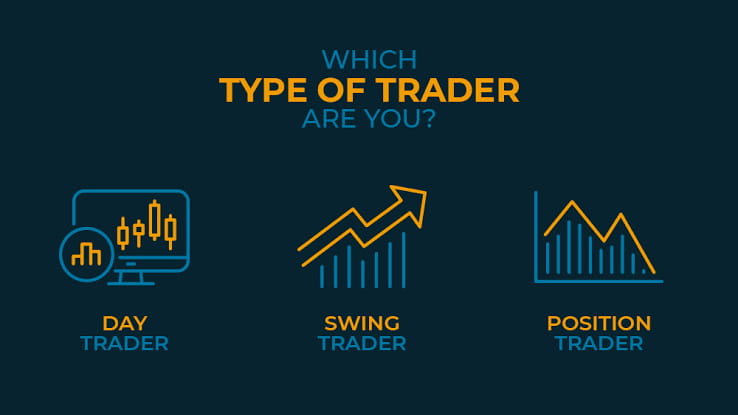


There are 6 different type of traders that trades to make money in market with different style .
In this article i will explain those types. Let me know in the comments which type of the #crypto trader you are.
1. Day Traders
Day traders are traders who buy and sell stocks or other financial instruments within a single trading day. They aim to make quick profits by taking advantage of short-term price fluctuations. Day traders often use technical analysis and rely on short-term market trends to identify trading opportunities.
2. Swing Traders
Swing traders hold positions for a few days to several weeks, taking advantage of medium-term market trends. They aim to capture short-term price movements or "swings" in the market. Swing traders rely on technical analysis, patterns, and indicators to make trading decisions.
3. Position Traders
Position traders hold positions for weeks, months, or even years, with the goal of capitalizing on long-term market trends. They tend to ignore short-term fluctuations and focus on overall market direction. Position traders use fundamental analysis to identify undervalued or overvalued assets and rely on broader economic trends.
4. Algorithmic Traders
Algorithmic traders use sophisticated computer algorithms to execute trading strategies automatically. These algorithms can analyze large amounts of data, identify market patterns, and execute trades at high speeds. Algorithmic trading is prevalent in high-frequency trading and can be used for various strategies, including arbitrage, trend following, or statistical analysis.
5. Scalpers
Scalpers are traders who aim to make multiple small profits from quick trades. In scalping, traders exploit price discrepancies and market inefficiencies in very short timeframes, often seconds or minutes. Scalpers rely on technical indicators, high-speed trading, and tight bid-ask spreads to generate profits.
6. Fundamental Traders
Fundamental traders base their trading decisions on fundamental analysis, focusing on economic data, financial statements, news events, and other factors that impact the intrinsic value of an asset. They aim to identify undervalued or overvalued assets based on their long-term prospects. Fundamental traders usually have a longer-term investment horizon and make trading decisions based on the underlying value of the asset.