


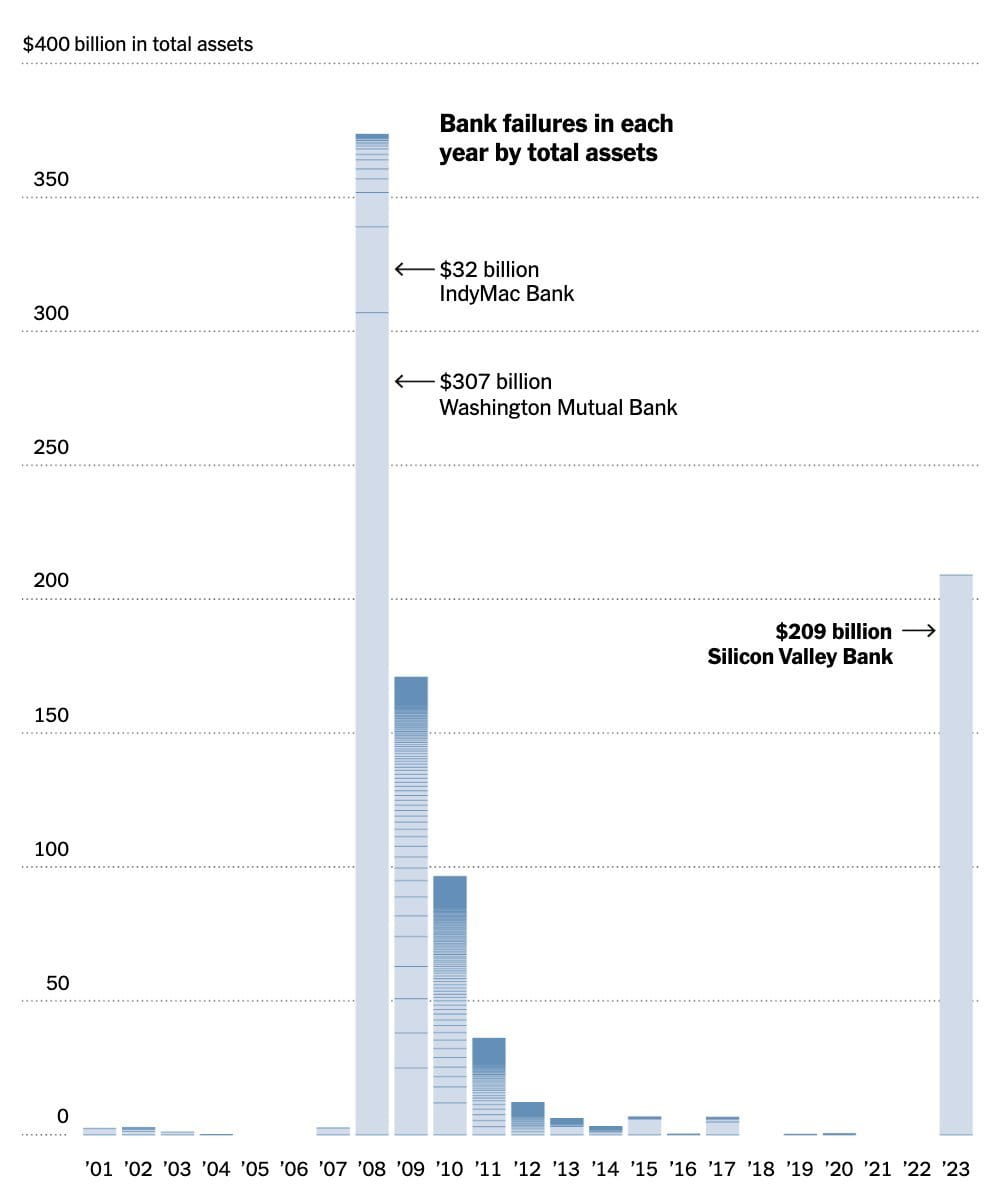
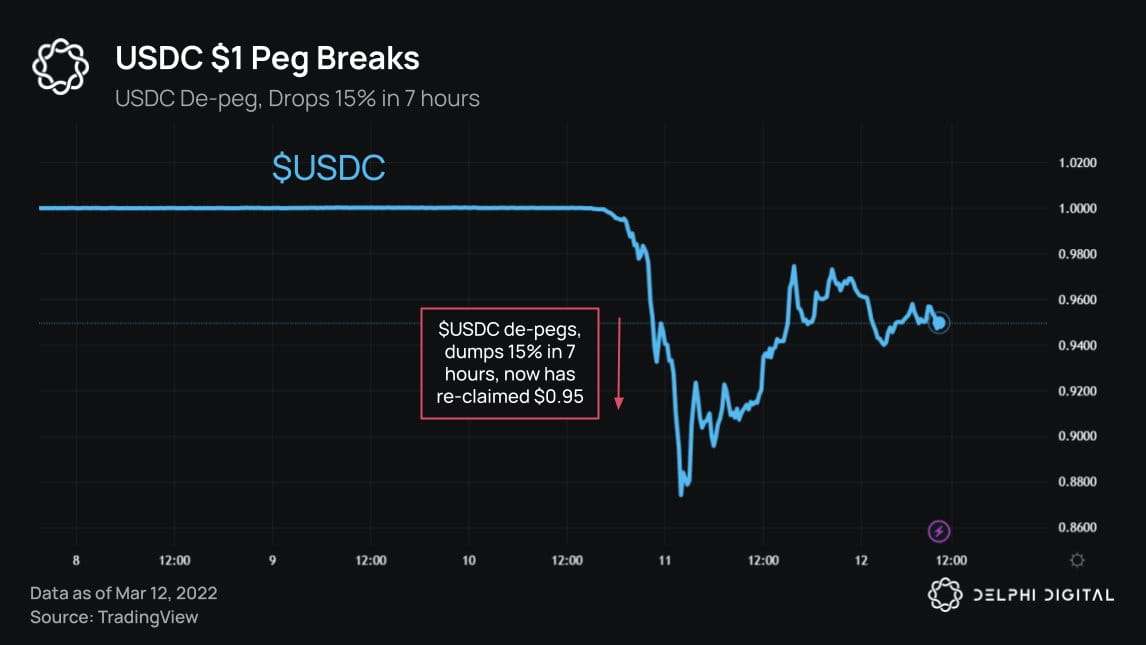
Silicon Valley Bank’s collapse is the largest bank failure since 2008. The bank run has made its way into the crypto ecosystem with the 2nd largest stablecoin $USDC de-pegging to hit a low of $0.85.
The story begins with a recent massive increase in unrealized losses for banks holding bonds. Long term bonds on bank balance sheets are decreasing in value as interest rates rise. Bonds designated as Held-to-Maturity don't get marked down to their Fair Market Value (FMV).
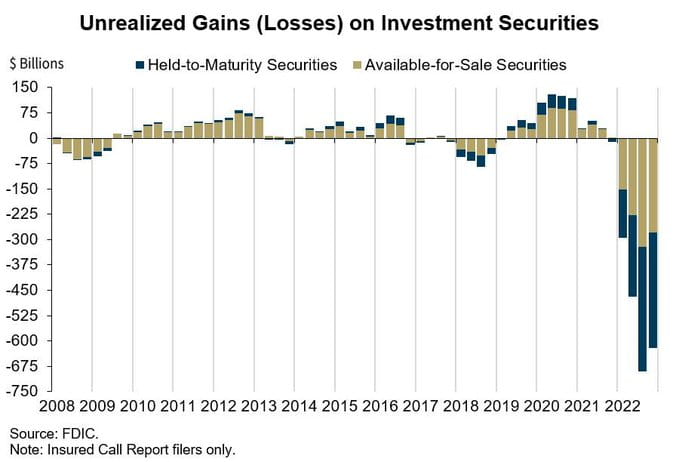
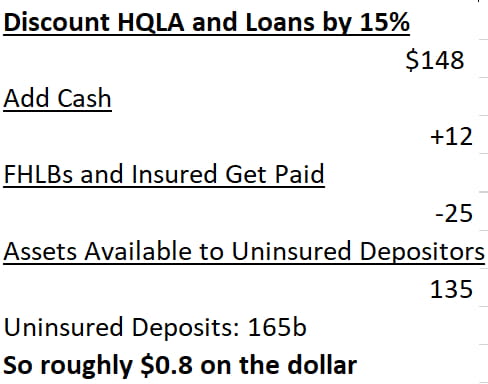
Problems begin for banks with these bonds if banks are forced to sell these depreciating bonds to generate liquidity, as now they realize these losses at their FMV. This is what happened with Silicon Valley Bank as customers tried to pull out $42B on Thursday, March 9th.
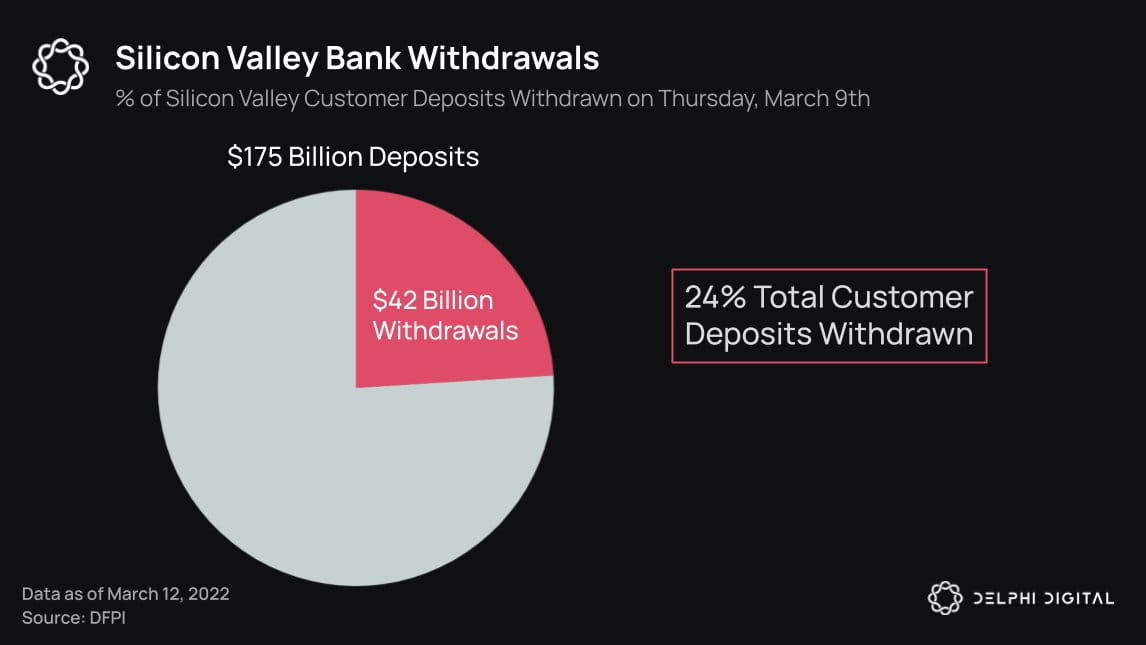
Silicon Valley Bank is the 18th largest bank in the United States with roughly $209 billion in total assets and $175 billion in total deposits. To meet the $42B in withdrawals SVB was forced to start liquidating their bond portfolios.
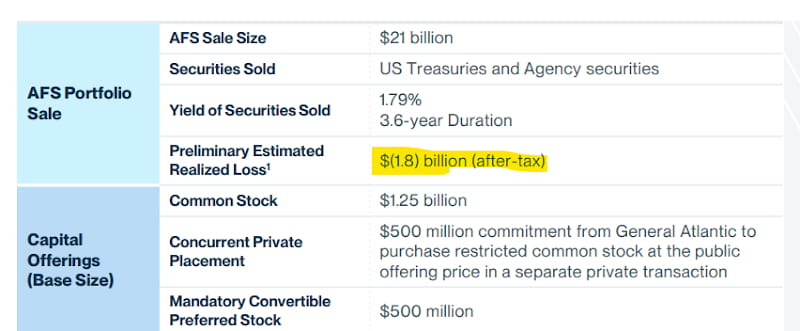
Silicon Valley Bank lost $1.8 Billion when they were forced to sell their $21 billion available-for-sale bond portfolio that was now marked down lower than what they had purchased them for. They now had essentially lost customer deposits to become insolvent.
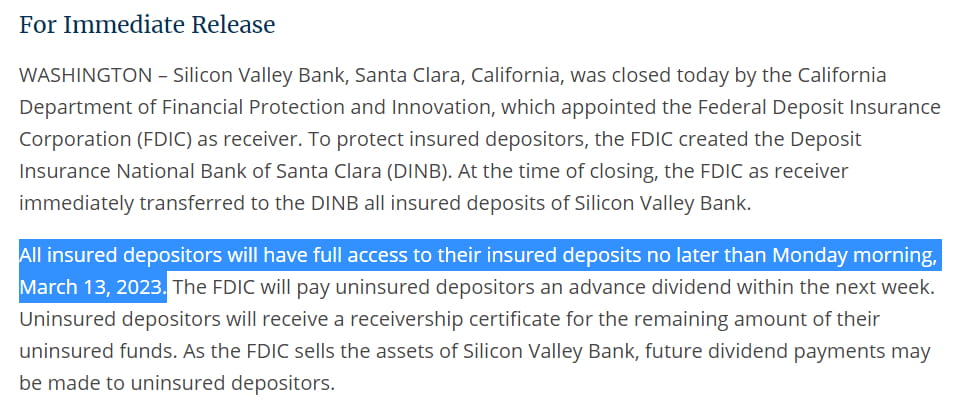
SVB was forced to halt withdrawals and the FDIC took over SVB in receivership. The FDIC will figure out whether the bank will be fully wound down or sold to another bank in whole or parts. Insured depositors will have full access to their FDIC-backed $250K on Monday.
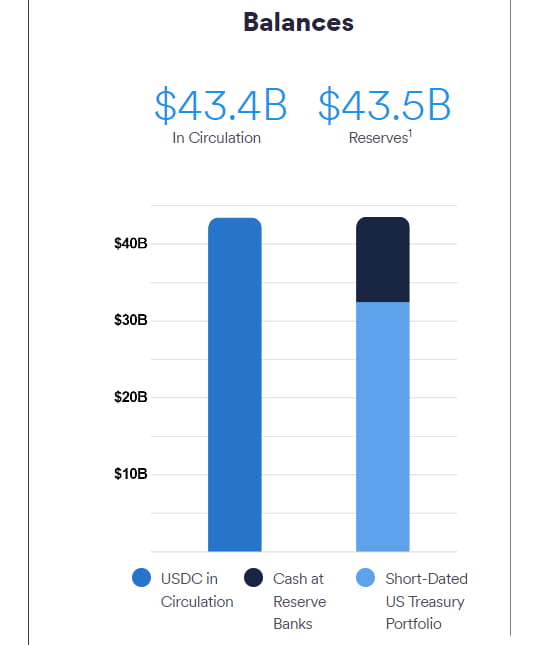
SVB banks half of all US startups (65,000). 93% of the deposits at SVB are uninsured, meaning that these startups could miss payroll on Monday. One organization that holds money in SVB is Circle, the backers of $USDC. $3.3B of the $43.5B reserves backing $USDC are at SVB.
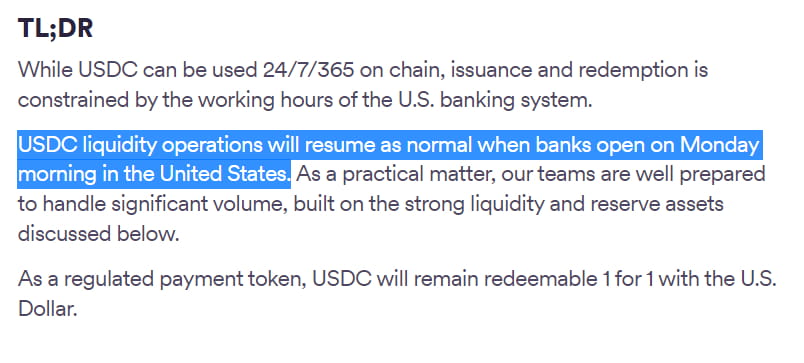
On Friday, Circle halted USDC redemptions until Monday as banks aren't open on weekends. Both Binance and Coinbase paused their feeless USDC stablecoin conversions. The $USDC $1 peg then broke with USDC dropping as low as 85 cents across major exchanges.
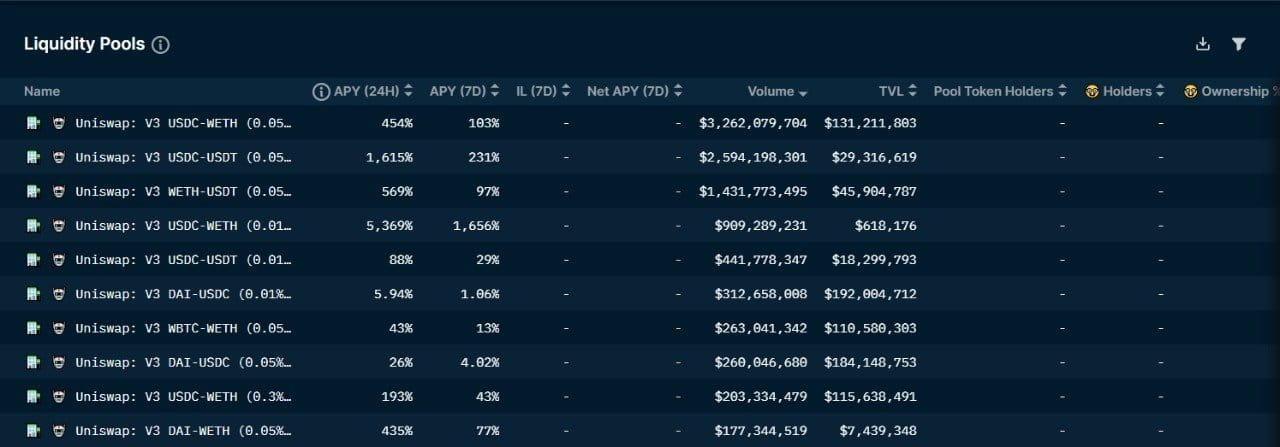
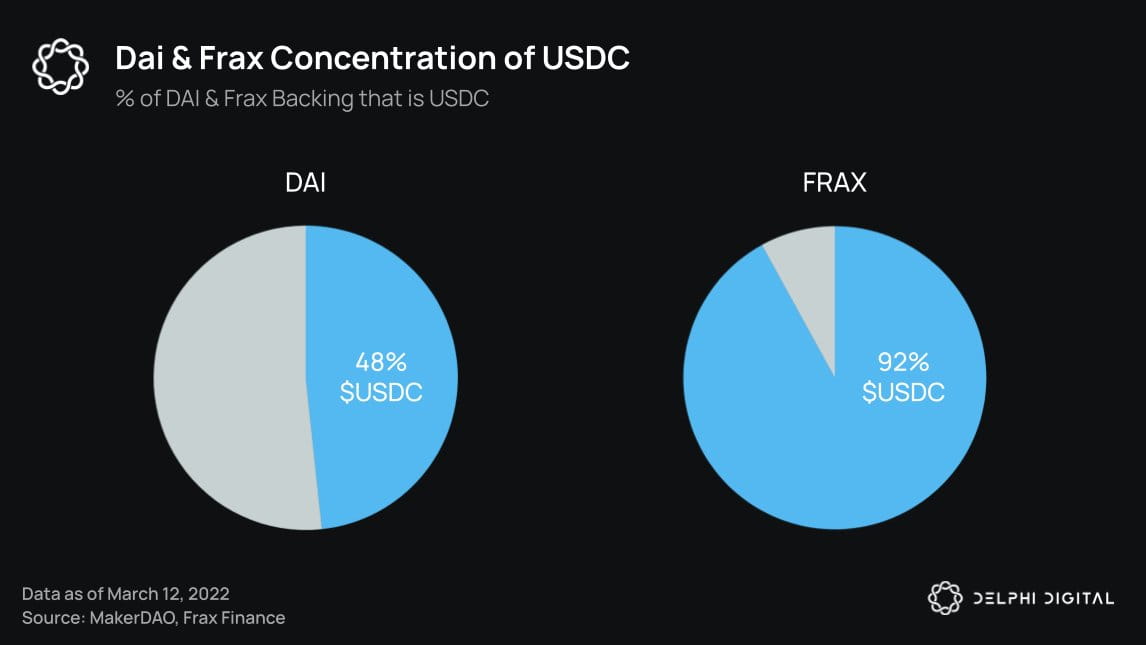
As $USDC de-pegged, chaos ensued. Eight of the top 10 decentralized exchange liquidity pools use USDC or DAI (48% $USDC backed) as one of the pairs.
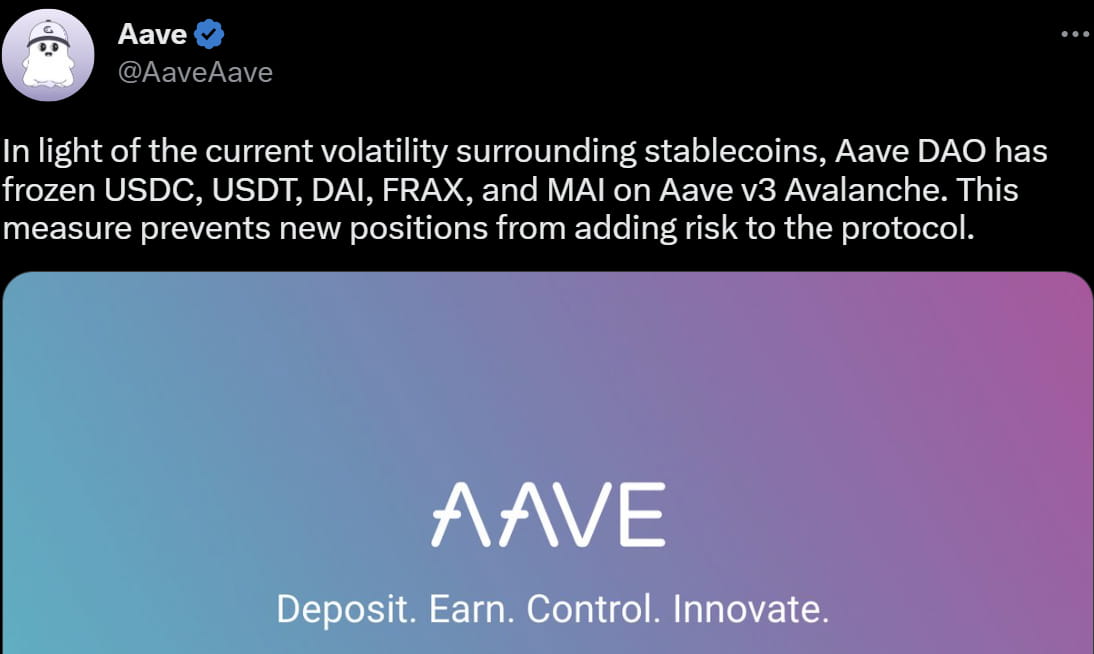
Aave, the leading decentralized lending market was forced to freeze positions.
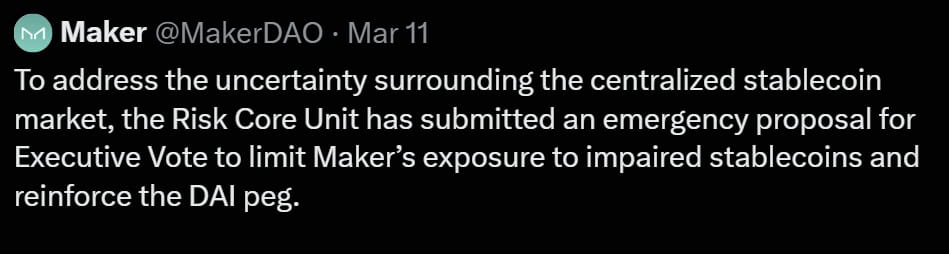
MakerDAO, a leading decentralized supply coin backer was forced to limit their exposure to $USDC.
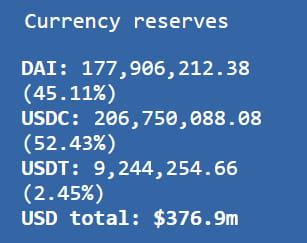
Curve, a leading Stablecoin exchange’s 3pool was drained of USDT, leaving barely any liquidity for USDC or DAI (which is 48% backed by USDC) to swap for USDT. Tether (USDT) is the largest stablecoin by marketcap and has firmly held its $1 peg through the turmoil.
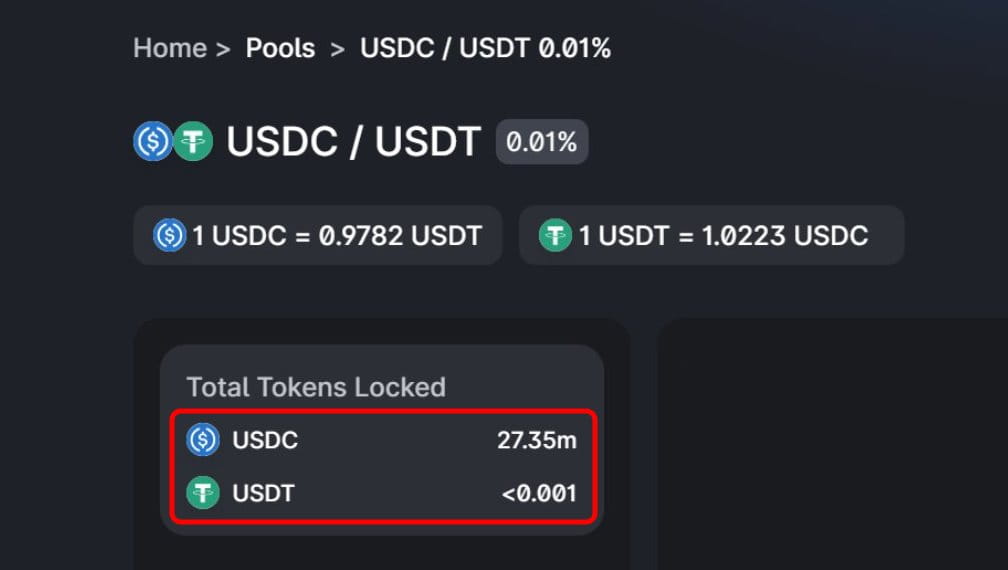
Uniswap's USDT/USDC pool was also drained of $USDT. Over $70M of $USDT liquidity was taken out of this pool by traders and LPs.
On top of this, some top stablecoins are backed by $USDC, leading to even more de-pegs. $DAI, the 4th largest stablecoin with a $1.4B market cap hit a low of 86 cents. $FRAX, the 6th largest stablecoin with a $1B market cap hit a low of 88 cents.
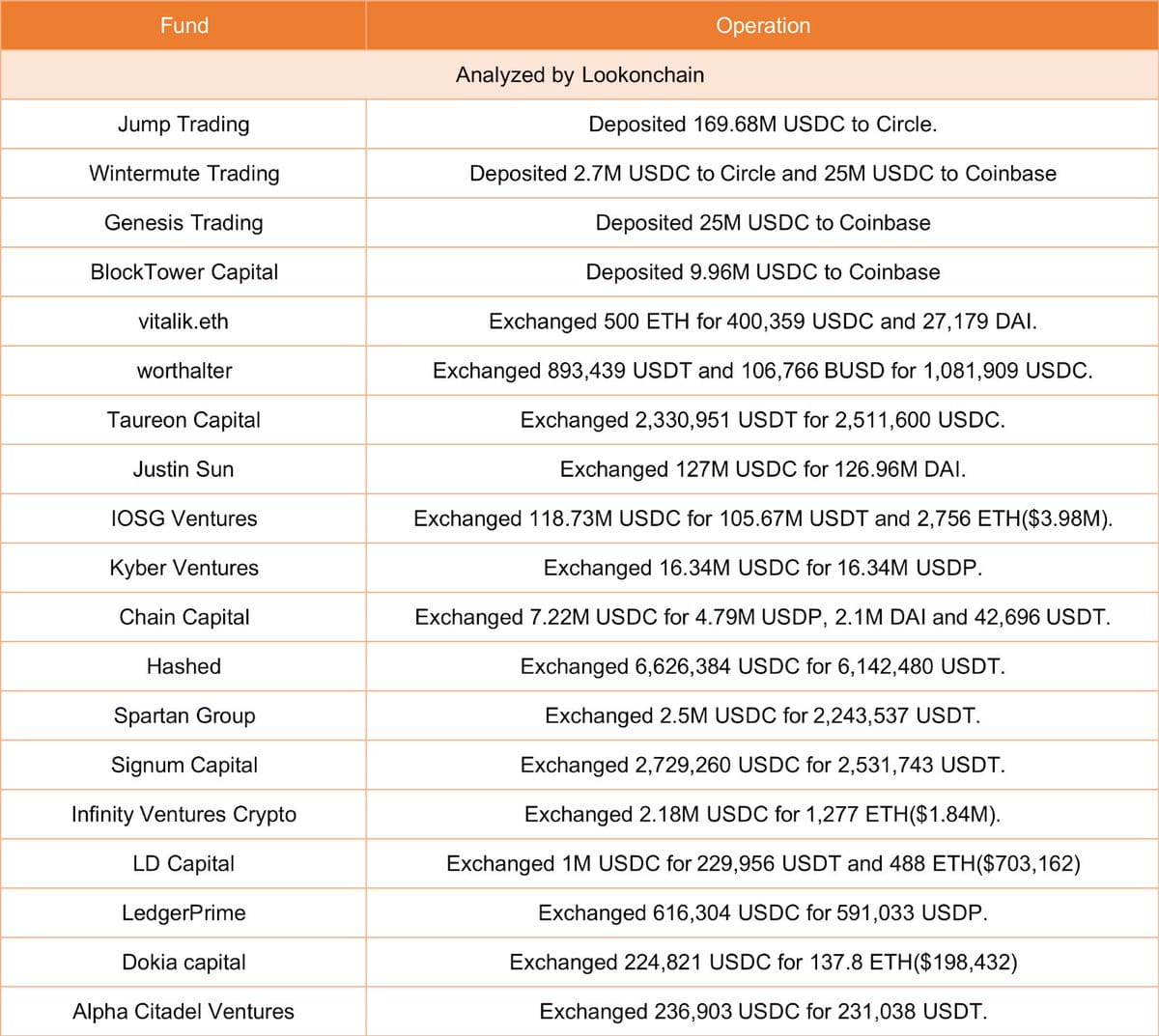
The entire decentralized finance ecosystem experienced a massive stress test, leaving questions about DeFi’s exposure to centralized risks. In the midst of the chaos, funds and big players started shuffling money around in an on-chain frenzy.
Low liquidity weekend conditions exacerbated the panic with general market PTSD from UST/FTX. Circle has said that redemptions will open up on Monday along with expressing they believe the $3.3B transfer they initiated out of SVB on Thursday may be honored on Monday.
Circle has a profitable business model that actually benefits from rising interest rates via generating yield with U.S. treasuries. If a hole in Circle's balance sheet materializes, they may be able to fill it via revenue generation.

The main concern is that as $USDC redemptions increase, the backing percentage of $USDC decreases as well. Based on an 80% recovery assumption, Circle could potentially fill a $660M hole in 5.8 months, but this requires no liquidation of their treasuries.
Circle has assured the market that they will cover any shortfall with company resources and possibly external capital while the SVB situation is rectified. The market is currently pricing $USDC at 95 cents, as all Silicon Valley Bank depositors wait for a resolution.
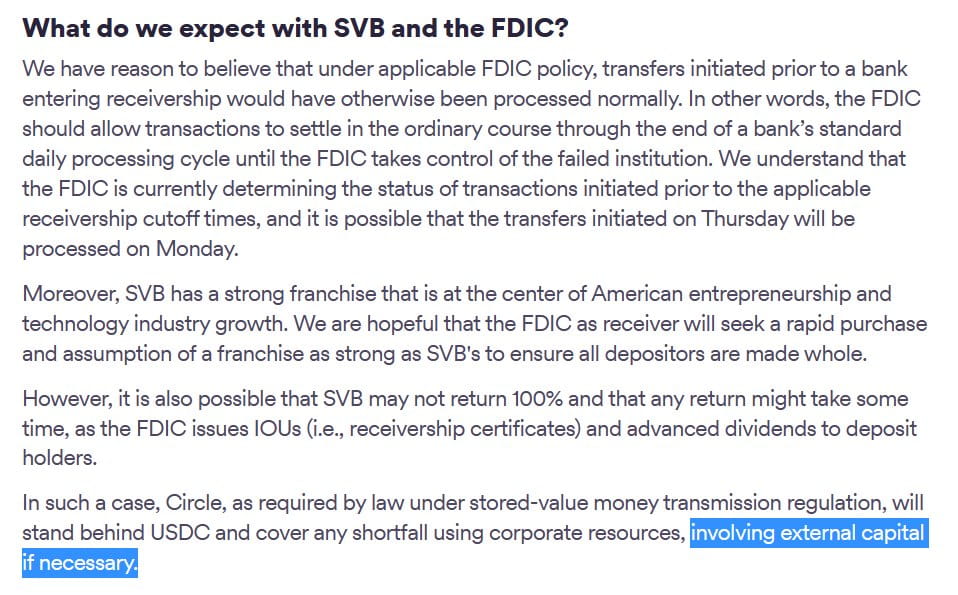
US Treasury Secretary Janet Yellen has said she is working with regulators to stem fallout. Reuters has said U.S. authorities are preparing "material action" to shore up SVB deposits. Bloomberg has reported an FDIC auction of Silicon Valley Bank is currently underway. 
A joint statement by the Treasury, Federal Reserve, and FDIC has been made: "Depositors will have access to all of their money starting Monday, March 13. No losses associated with the resolution of Silicon Valley Bank will be borne by the taxpayer."
Lets hope that this fiasko gets solved ASAP. Thanks Delphi Digital for providing the deep research and facts!
Could be this be the end of banking? The new ATH for Bitcoin? A revolution? What do you think? Tell me in the comments.